

Best Time To Climb Mount Takao Travel Guide
Plan best time to climb mount takao with top picks, neighborhood context, timing tips, and practical booking advice for a smoother trip.
On this page
Mount Takao — Takaosan to locals — sits at the western edge of Tokyo, less than an hour from Shinjuku by train. At 599 meters it is genuinely climbable in a half day, yet it rewards repeat visits in every season. Cherry blossoms arrive in April, deep autumn color peaks in November, and the winter solstice brings the Diamond Fuji phenomenon to the summit.
This guide covers the seasonal timing question directly, then walks through the trails, the cable car, key attractions, food, festivals, and the one timing mistake that ruins more first-timer visits than any other. Use it to match your trip to what you actually want to experience.
When Is the Best Time to Visit Mount Takao?
Autumn is the most popular season and for good reason. November is peak koyo (autumn leaf viewing) month on the mountain, when the slopes turn red, orange, and gold. The Momiji Matsuri festival runs throughout November with food stalls, traditional performances, and drumming alongside the trail. Expect crowds — weekends in early November can feel like a theme park queue — but a mid-week visit in the second half of the month gives you the color with far shorter waits for the cable car.
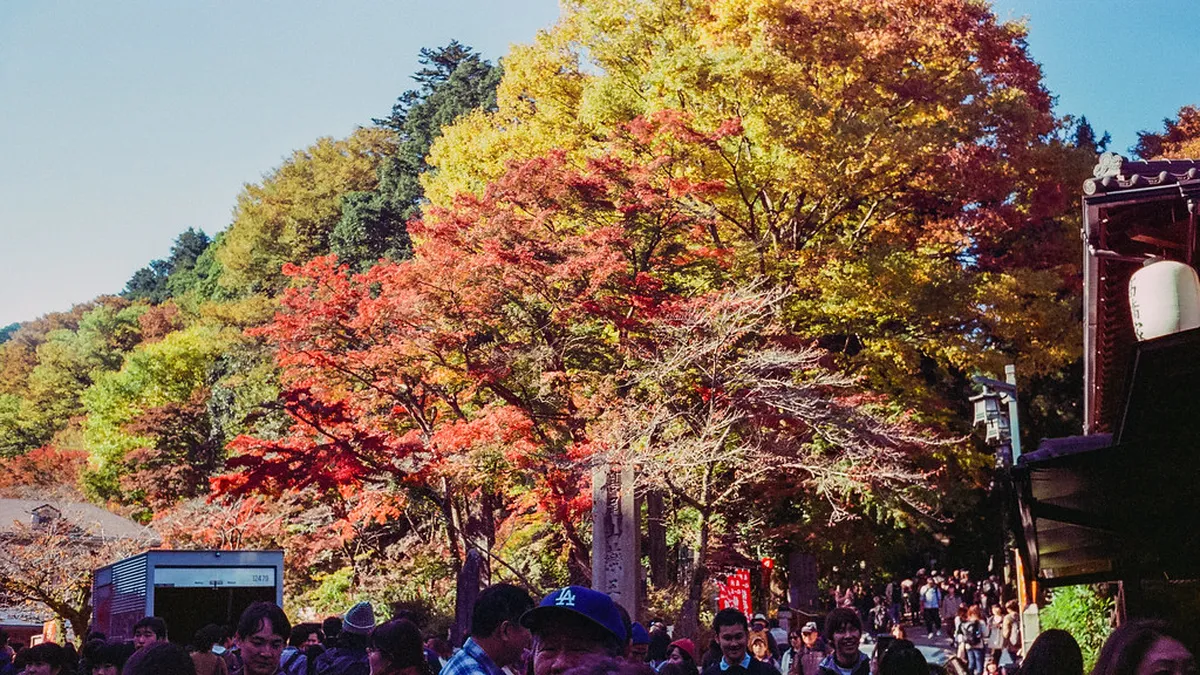
Spring is the second most popular window. Cherry blossoms bloom along the lower trails and around the cable car station from late March to mid-April, though the exact dates shift year to year. The Wakaba Matsuri (young leaves festival) follows in April and May with tea ceremonies and outdoor performances. Spring crowds are lighter than autumn, making it the better choice for families with young children.
Summer (July to September) brings the lushest greenery and a mountain breeze that is noticeably cooler than central Tokyo. The Beer Garden opens in mid-June and runs to mid-October, making an evening visit viable. The downside is humidity: start before 09:00 if you are planning a full trail ascent in July or August.
Winter is the quietest season and the one with the sharpest Mount Fuji views. From mid-December to early January the summit offers the chance to witness Diamond Fuji (see below). Trails are uncrowded and the cable car runs without queues. Bring an extra layer — the summit is several degrees colder than the city, and the trail can be icy after overnight frost.
Getting from Tokyo to Mount Takao
The closest station is Takaosanguchi on the Keio Line. From Shinjuku Station take the Keio Line Semi-Special Express toward Takaosanguchi — the journey takes just under an hour and costs ¥430 each way. If you miss the semi-express, change at Kitano for the local; the fare is the same. Do not confuse Takaosanguchi with the earlier Takao Station, which is a JR stop useful for connecting from the Chuo Line but is a 10-minute walk further from the trailhead.
When you exit Takaosanguchi Station, turn right and follow the path for about 500 meters to reach the cable car and chairlift stations. The main Trail 1 entrance is just beyond. The full day-trip logistics from Tokyo including IC card tips and last-train timing are covered in more detail in our day-trip guide.
A Keio 1-Day Takao ticket (¥1,690 as of 2026) bundles a day's Keio and Inokashira Line travel, a round-trip cable car and chairlift ride, and admission to the Monkey Park and Wild Plant Garden. It is good value if you plan to use both the cable car and the Monkey Park. Ordinary IC fares are cheaper if you are hiking both ways and skipping those attractions.
Hiking Mount Takao
Mount Takao has six numbered trails plus the Inariyama Trail, covering a range of difficulty levels. Trail 1 (Omotesando Trail) is the most-used route: 3.8 km, mostly paved, passing Yakuo-in Temple and several food stalls before the summit. It takes about 90 minutes at a moderate pace. The pavement makes it accessible for older visitors and families with small children, but it is the most crowded option on weekends.
Trail 6 (Biwa Waterfall Trail) is the most challenging at 3.3 km and involves stream crossings and some rocky sections. It runs from the base all the way to the summit loop and passes a small waterfall about halfway up. It is significantly quieter than Trail 1 on busy days and offers a more authentic mountain feel. The Inariyama Trail (3.2 km) is another base-to-summit route known for having flowers or foliage in every season.
Shorter options suit those who ride the cable car up: Trail 2 (0.9 km, easy forest loop) and Trail 5 (0.9 km summit loop) are both walkable in under 30 minutes. Trail 4 crosses the Miyama suspension bridge — the only one of its kind on the mountain — and connects to the summit loop. A popular combination is to ride the cable car up, walk Trail 2 past the Monkey Park, join Trail 1 to Yakuo-in, then summit via Trail 5. From the upper station that circuit takes about 90 minutes.
The full hike from Takaosanguchi Station to the summit lookout is about 4 km and takes slightly under two hours. There are public toilets at the base station, near the cable car upper station, and at the summit. Vending machines are available at the midway observation deck and at the top, though prices are roughly double street level — bring water from the base.
Cable Car and Chairlift
Both the cable car and the open-air chairlift depart from stations at the base of Trail 1 and arrive near the Kasumidai observation deck, roughly halfway up the mountain. From the upper stations it is about 40 minutes of walking to the summit. Each ride costs ¥490 one way (¥250 for children) or ¥950 return for adults. During the autumn leaf season the cable car runs until 21:15 to coincide with Beer Garden hours.
The cable car is a 6-minute covered ride and Japan's steepest, climbing 1,000 meters of track from Kiyotaki Station (210 m elevation) to Takaosan Station (472 m). It runs every 15 minutes from 08:00 to 17:00 (later in peak season). The chairlift takes 12 minutes, is open-air on a twin-seater chair, and runs from 09:00 to 16:00. The chairlift gives a better view of the surrounding forest but is not suitable for visitors with heavy packs or young children who cannot board while the chair is moving.
Wait times are generally short on weekdays — typically under 10 minutes even in autumn. Weekend afternoons during peak season can stretch to 20–30 minutes. Consider riding up on the chairlift and descending on the cable car to experience both. Lockers are available at both the lower and upper stations if you want to stash a bag before hiking on.
Don't Miss the Last Cable Car Down
One mistake first-timers make repeatedly is misjudging the descent. The standard cable car last ride down is around 17:30 in spring and autumn, and as early as 16:30 in winter. Outside of Beer Garden season (when the cable car runs to 21:15), if you linger at the summit or Yakuo-in Temple until late afternoon you will find the cable car closed and face a 90-minute downhill walk in fading light.
Trail 1 is paved and manageable in the dark with a torch, but it is genuinely unpleasant after heavy rain, and Trail 6 becomes hazardous. Check the last departure time posted at the cable car station before you head up. If you are planning a Diamond Fuji or sunset summit visit in December, factor in the walk down — the cable car will almost certainly have stopped running by the time the sun drops behind Fuji around 16:00.
Yakuo-in Temple
Yakuo-in is the dominant cultural site on Mount Takao, located on Trail 1 about 15–20 minutes below the summit. Founded in 744 during the Nara period, the temple was built on imperial orders as a centre for Buddhist practice in eastern Japan. It was later restored in the 14th century by the priest Shungen Daitoku, who introduced Shugen-do mountain ascetic practices that still define the temple's character today.
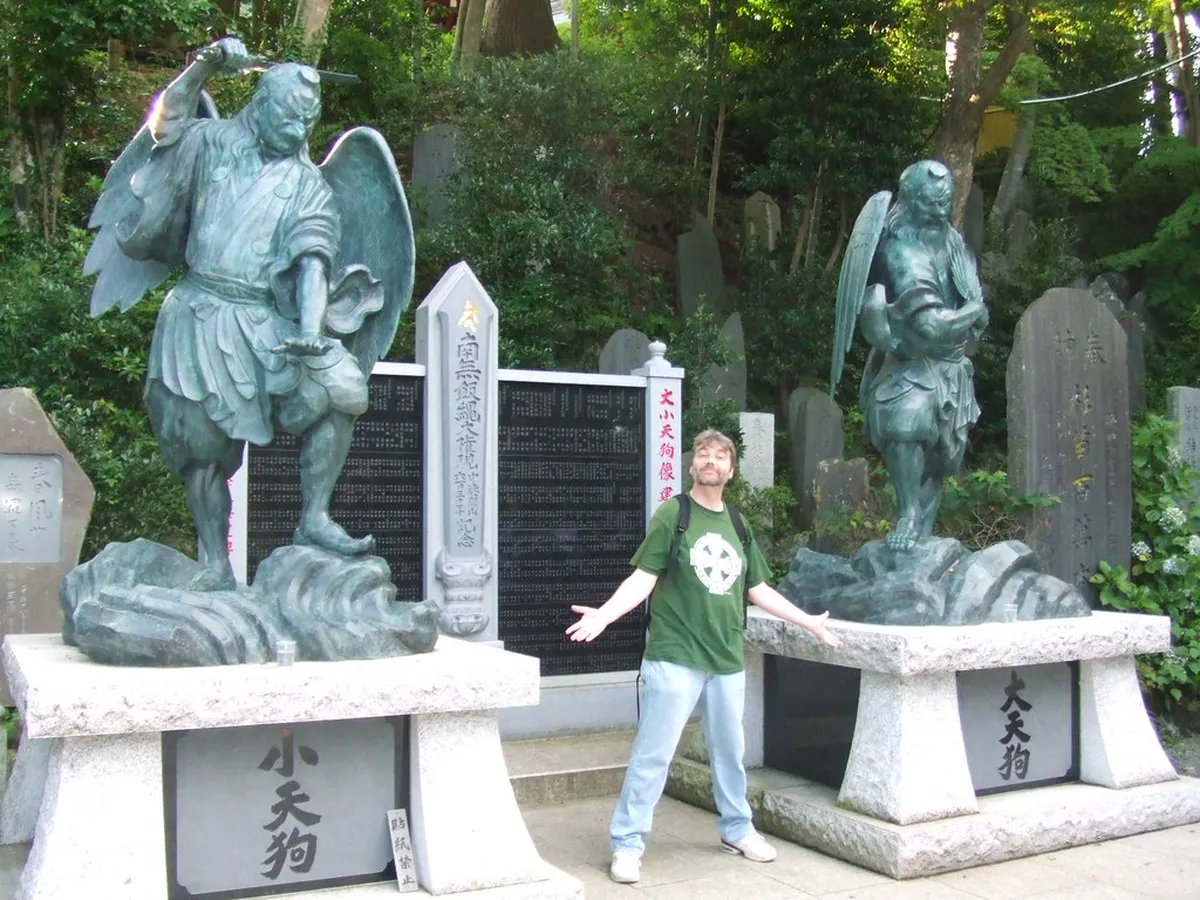
The most photographed features are the tengu statues in the gate guardian houses. Tengu are mythical mountain beings depicted in two forms at Yakuo-in: one with a long pointed nose, one with a crow's beak. They appear throughout the temple grounds on carvings, lanterns, and decorative friezes. The elaborate woodwork on the Izuna Gongen-do hall has been compared to the shrines of Nikko — the similarity is intentional, sharing the same decorative tradition.
The temple is free to enter and is reached via Trail 1. It is open throughout the day. If you want to try shōjin ryōri — traditional Buddhist vegetarian cuisine — the temple offers this by reservation only, and reservations can only be made in Japanese. For most visitors the grounds alone are worth 20–30 minutes. The temple is especially striking in November when the maple trees inside the compound change color. See the full Yakuo-in Temple guide for details on the religious calendar and the fire-walking ceremony.
Monkey Park and Wild Plant Garden
The Mt Takao Monkey Park sits just past the upper cable car and chairlift stations, a five-minute walk from the Kasumidai observation deck. Around 60 Japanese macaques live here in a semi-natural habitat. Guides are known for being good storytellers, and some individual monkeys answer to their names. The animals can be observed up close. The park is open from 09:30 to 16:30 in most seasons, subject to change.
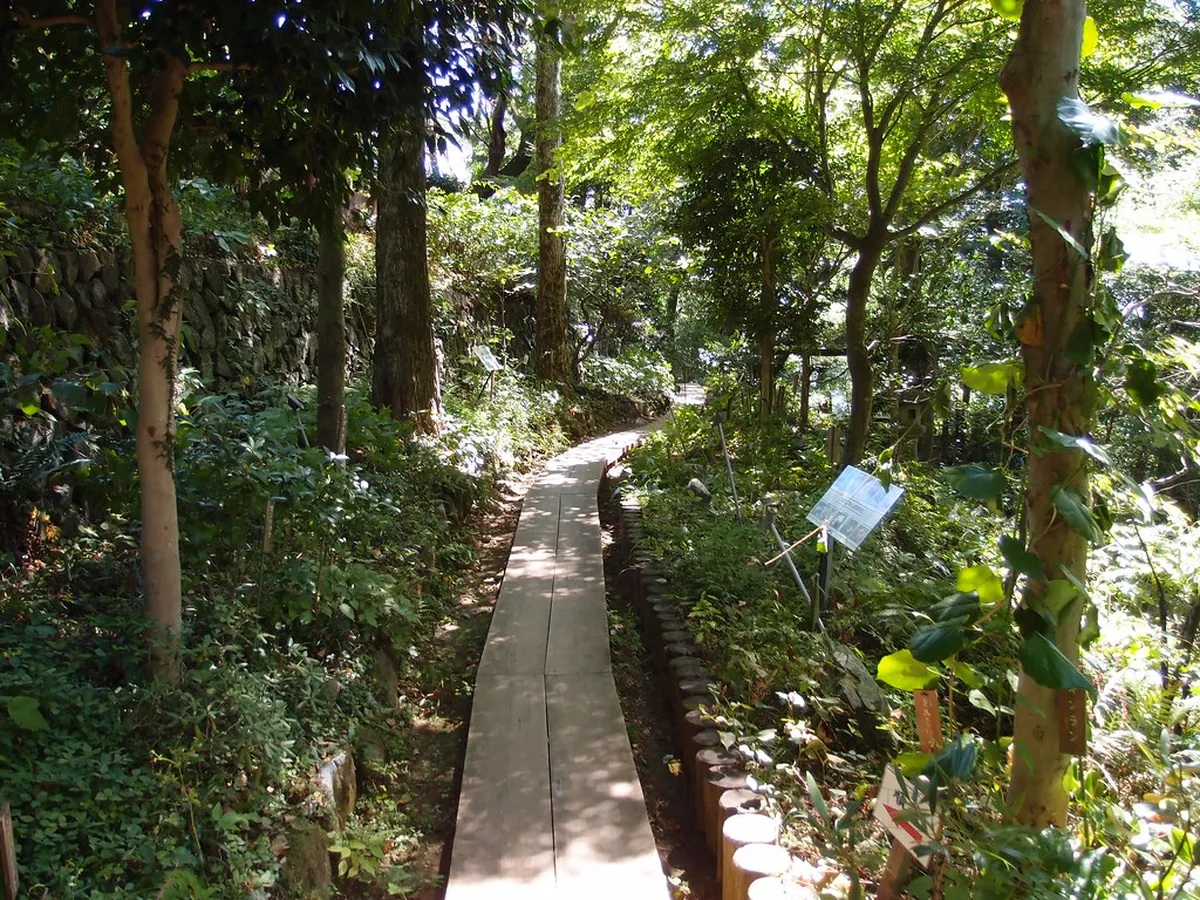
The adjacent Wild Plant Garden displays over 300 species of native grasses that were nearly lost from the mountain following development. Spring and early summer are the best times to see the garden at its most colorful. A single ¥500 admission ticket covers both the Monkey Park and the Wild Plant Garden.
Worth noting: if you have already bought the Keio 1-Day Takao ticket, entry is included. If you are skipping the cable car and hiking Trail 1 from the base, the Monkey Park is a logical stop before continuing to Yakuo-in Temple. Allow 30–45 minutes for both attractions. See the dedicated Monkey Park guide for the full feeding schedule and tips for visiting with children.
What to Eat on Mount Takao
Mount Takao has its own regional food specialty: tororo soba. This is cold soba noodles in broth topped with grated mountain yam (tororo), which was traditionally served to pilgrims ascending the mountain because of its supposed strength-building properties. Several restaurants at the base and along Trail 1 serve it. The most famous is Takahashiya, which has been serving tororo soba for 170 years and is located directly across from the cable car station. The building contains a 150-year-old persimmon tree growing through its interior.
The Beer Garden, about five minutes' walk from the upper cable car station, runs from mid-June to mid-October, open daily 13:00–21:00. It operates as an all-you-can-eat-and-drink buffet with Japanese and international dishes — 90 minutes per sitting. The outdoor seating has views toward central Tokyo. On clear days the Tokyo Skytree is visible from the terrace. Reservations are recommended on weekends. More information and booking are available on the official Beer Garden website.
Beyond the Beer Garden, food options on the mountain are deliberately limited. Vendors near the midway observation deck sell snacks, drinks, and light meals. There is a food kiosk at the summit. A small stall near the cable car lower station is known for Hokkaido-style cheese tarts, sold in both warm and cold versions — worth a stop. Vending machines are scattered along Trail 1 but charge nearly double city prices. Bring at least one water bottle from the base.
Festivals on Mount Takao
The mountain has been a sacred site for over 1,000 years and the festival calendar reflects that depth. The year opens with Geikosai on 1 January, a dawn ceremony at the summit where priests chant sutras and blow conch shells as the sun rises. Setsubun on 3 February adds a Yakuo-in twist: local sumo wrestlers participate in the demon-banishing ritual, making it livelier than most urban Setsubun events. Because Setsubun is not a public holiday, a weekday occurrence means far smaller crowds.
The Hiwatarisai fire-walking ceremony takes place on the second Sunday of March. Shugen-do practitioners walk across burning coals, and members of the public can attempt it too. Green branches are burned to start the fire, which creates thick aromatic smoke — stand upwind. The Wakaba Matsuri runs through April and May with outdoor tea ceremonies and traditional music performances celebrating the season's new leaves.
The Momiji Matsuri in November is the biggest event of the year. The entire mountain is lit up on weekend evenings during peak koyo, food stalls line the trail, and sake and taiko drumming fill the lower area near the cable car station. If you are visiting for the autumn color, a weekday in the second or third week of November gives you the foliage at its peak with a fraction of the weekend crowd.
Diamond Fuji and Summit Views
The summit stands at 599 meters above sea level. On clear days the view takes in Mount Fuji to the west and the Tokyo metropolitan skyline to the east. Winter and early spring give the clearest sightlines because lower humidity keeps the air sharp. Summer views are frequently hazy by midday.
Diamond Fuji occurs when the setting sun aligns precisely with the peak of Mount Fuji, creating a diamond-like flare. From the summit of Mount Takao it is visible around 16:00 on clear days during mid-December to early January. The phenomenon is weather-dependent — a single cloud over Fuji's peak is enough to obscure it. Plan to be at the summit by 15:30 to secure a position. Remember that the cable car will have stopped running by the time you descend, so factor in the walk back.
Beyond Fuji, the summit area is a wide flat platform with benches, a food kiosk, and toilet facilities. If you want to continue hiking, the Takaosan-Jimbasan trail from the summit leads to the Itchōdaira observation deck and beyond to Mount Kobotoke-Shiroyama. In spring, Itchōdaira is a popular cherry blossom picnic spot and is quieter than the main summit. The further you go, the fewer people you encounter.
Onsen After the Hike
Keio Takaosan Onsen Gokurakuyu sits directly next to Takaosanguchi Station — turn right as you exit the ticket gates. It is a natural alkaline hot spring offering indoor and outdoor baths, including a cypress bath, a seasonal bath that rotates with the months, a sauna, and an outdoor carbonated spring. The outdoor baths look toward the mountain, which is particularly atmospheric during the autumn leaf season.
Entry costs ¥1,100 for adults on weekdays and ¥1,300 on weekends and holidays (¥550 and ¥650 for children respectively). The onsen is open from 08:00 to 22:45 with last entry at 22:00. Tattoos are not permitted, even covered. Towel rental is available. The official Takaosan Onsen website has current seasonal pricing. A soak here after a full day on the mountain is one of the most effective ways to recover before the train back to the city.
Takao 599 Museum
The Takao 599 Museum at the mountain's base covers the ecology, geology, and cultural history of Mount Takao. Exhibits include preserved specimens of local flora and fauna, trail maps, and seasonal displays. Entry is free. Opening hours are 08:00–17:00 from April through November and 08:00–16:00 from December through March, with some irregular closing days throughout the year.
The museum is useful both as a pre-hike orientation and as a rainy-day or rest-day alternative. It has a cafe and rest area and is located close enough to Takaosanguchi Station to visit without committing to a full trail day. Families with children who are curious about the local wildlife tend to get more out of it than casual day-trippers, but the trail information panels are genuinely useful for first-timers choosing between routes.
Frequently Asked Questions
Is Mt. Takao hard to climb?
Mount Takao offers various trails, catering to different fitness levels. Trail 1 is paved and considered easy, suitable for beginners and families. More challenging natural trails, like Trail 6, are available for experienced hikers. The cable car and chairlift also provide an easier ascent.
Are there bears on Mt. Takao?
Yes, there are small Japanese black bears on Mount Takao, though sightings are rare. The mountain's official website provides information on bear safety and precautions. Always stay on marked trails and avoid hiking alone in remote areas.
How long does it take to hike up Mount Takao?
Hiking from Takaosanguchi Station to the summit typically takes about 90 minutes to two hours. This depends on the chosen trail and your pace. Using the cable car or chairlift can cut the hiking time significantly, reducing it to around 40-60 minutes from the upper station.
When to go to Mount Takao?
The best time to climb Mount Takao is during spring (April-May) for cherry blossoms or autumn (October-November) for vibrant foliage. Weekdays are preferable to avoid crowds. Winter offers clear views of Mount Fuji, while summer provides a cooler escape from city heat.
The best time to climb Mount Takao in 2026 depends on what you want to experience. Autumn delivers the most dramatic scenery but brings the largest crowds; winter is quieter with the sharpest Fuji views. Whatever month you go, start early, check the last cable car time before you head up, and leave enough time for a soak at the onsen on the way out.
The mountain rewards specificity. Know which trail you want, which festivals are running, and which food you intend to seek out. A well-planned half-day trip here is consistently more satisfying than an aimless full day.
For tickets, hours and visitor details, see our Mt Takao Cable Car Visitor Guide and Mount Takao attractions hub.
Free: The Tokyo Essentials guide
Top things to do, where to stay, a perfect day plan, getting around, and the best time to go — a Tokyo mini-guide you can take offline.
You might also like


Continue reading
More guides you'll find useful


