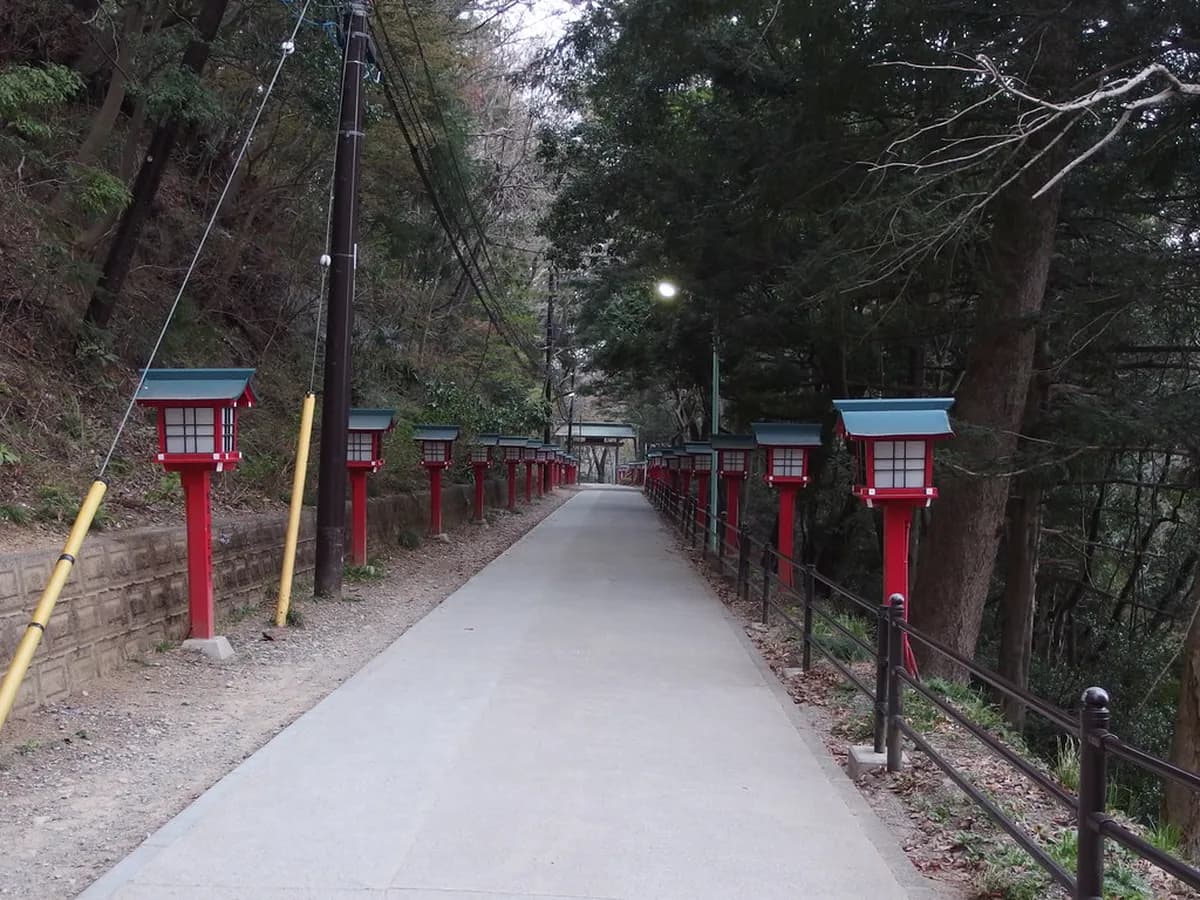
Mount Takao Monkey Park Travel Guide
Plan mount takao monkey park with top picks, neighborhood context, timing tips, and practical booking advice for a smoother trip.
On this page
Mount Takao's Monkey Park and Wildflower Garden sits at the mid-station of the mountain, about a 40-minute ride and short walk from central Tokyo. It is the main reason many visitors make the trip to Hachioji, and it delivers: around 70 Japanese macaques living in a semi-natural enclosure on the forested mountainside, with scheduled feedings and an adjacent garden showcasing over 500 native plant species.
This guide covers what to expect at the monkey park itself, how the troop behaves during feeding time, how to combine the park with the Wildflower Garden and the rest of Mount Takao, and the practical details — access, costs, and timing — you need for 2026.
What the Monkey Park Actually Is
The official name is Mt. Takao Monkey Park and Wild Plants Garden, located at the Monkey Park Station stop on the cable car or lift line. The park houses a troop of around 70 Japanese macaques — locally called nihonzaru — in an open semi-wild enclosure on the mountain slope. This is not a cage-based zoo. The monkeys move freely within a large wooded area and keepers enter the space during feeding times.
Japanese macaques are sometimes called "snow monkeys," though that term is more precisely associated with the Jigokudani hot-spring troop in Nagano. The Takao macaques do not bathe in hot springs, but they are the same species: the northernmost non-human primates on earth, capable of tolerating temperatures well below zero. At Mount Takao they remain active year-round, and their behavior changes noticeably with the seasons — infants appear in spring, and the troop clusters tightly in winter.
Entry to the monkey park and wildflower garden is charged separately from the cable car. The fee is modest and goes toward the animals' care. Check the Mount Takao Travel Guide page for current pricing before your visit, as fees are occasionally revised.
Macaque Troop Behavior: What to Watch For
The troop is organized as a matriarchal hierarchy. An alpha male leads, but a monkey's social rank is determined by its mother's standing — rank is matrilineal. The alpha typically occupies the most comfortable, shaded spot in the enclosure, attended by lower-ranked troop members who groom him. Grooming is one of the primary social activities: it strengthens relationships, diffuses tension, and signals alliances. If you watch the troop for ten minutes you will see it happening constantly among multiple pairs.
Feeding time draws the most activity. A keeper enters with a bucket of seeds and the troop's hierarchy immediately becomes visible: the alpha eats first, higher-ranked individuals crowd in next, and lower-ranked monkeys wait or dart in opportunistically. Young juveniles are bold and occasionally steal food directly from the keeper's bucket. Nursing mothers stay on the periphery, clutching infants who cling to their fur. Babies spend roughly the first six to eight months of life in near-constant contact with their mother before gradually venturing further.
Male macaques are driven out of their birth troop around age six or seven, pushed by the alpha and senior males to prevent inbreeding and competition. You may see solitary or sub-adult males on the edges of the enclosure — these are often recent outcasts working out where they belong next. Spring and early autumn are the best seasons for visible infant activity and high-energy troop dynamics. Arrive at feeding time if you can; ask at the entrance gate for the day's schedule.
Wildflower Garden and the Mid-Station Area
Directly adjacent to the monkey enclosure is the Wildflower Garden — a maintained slope showcasing over 500 species of plants that grow naturally on Mount Takao. The composition changes with each season: spring brings violets and magnolias, summer sees ferns and hydrangeas in the lower sections, autumn shifts to gentians and chrysanthemums, and winter reveals the bare structure of the mountain's native forest. Signage identifies the plants, making this genuinely educational for families.
The mid-station area where both attractions sit also has a restaurant and a small souvenir shop. This is a natural rest point before continuing the hiking trails up toward the summit. Most visitors spend 35 to 45 minutes between the monkey park and the garden before moving on. If you are hiking with children, the flat terrain here provides a good break before the steeper upper trail.
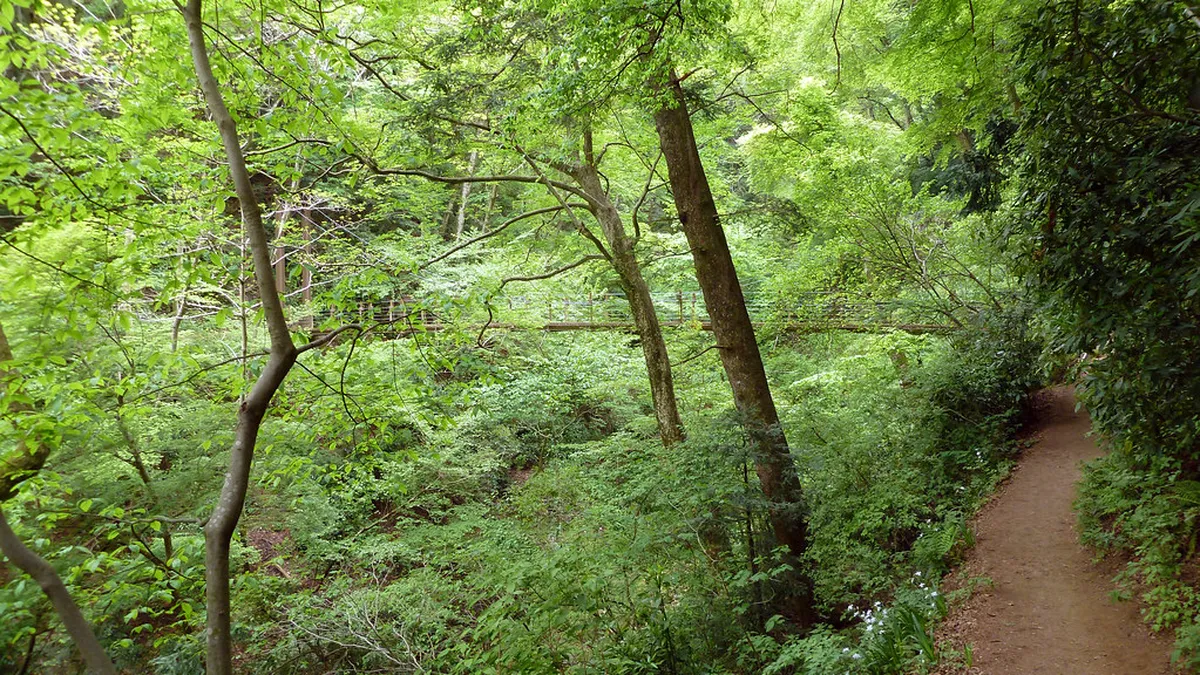
From the mid-station you can also take a short detour west to reach Mount Takao's suspension bridge — a roughly 15-minute walk. The bridge offers a clear view down into the forested valley and is a popular photography stop. It is not on the main trail to the summit, so budget the time separately if you want to include it.
Key Attractions Along the Trail to the Summit
Beyond the monkey park, the main trail (Trail 1) passes through a cedar tree avenue where the trees are considered sacred. The trunks are enormous — some are centuries old — and the canopy provides cool shade. Vendors here sell freshly made dango, a sweet glutinous rice dumpling on a skewer. It is the classic Mt. Takao trail snack and easy to eat while walking.
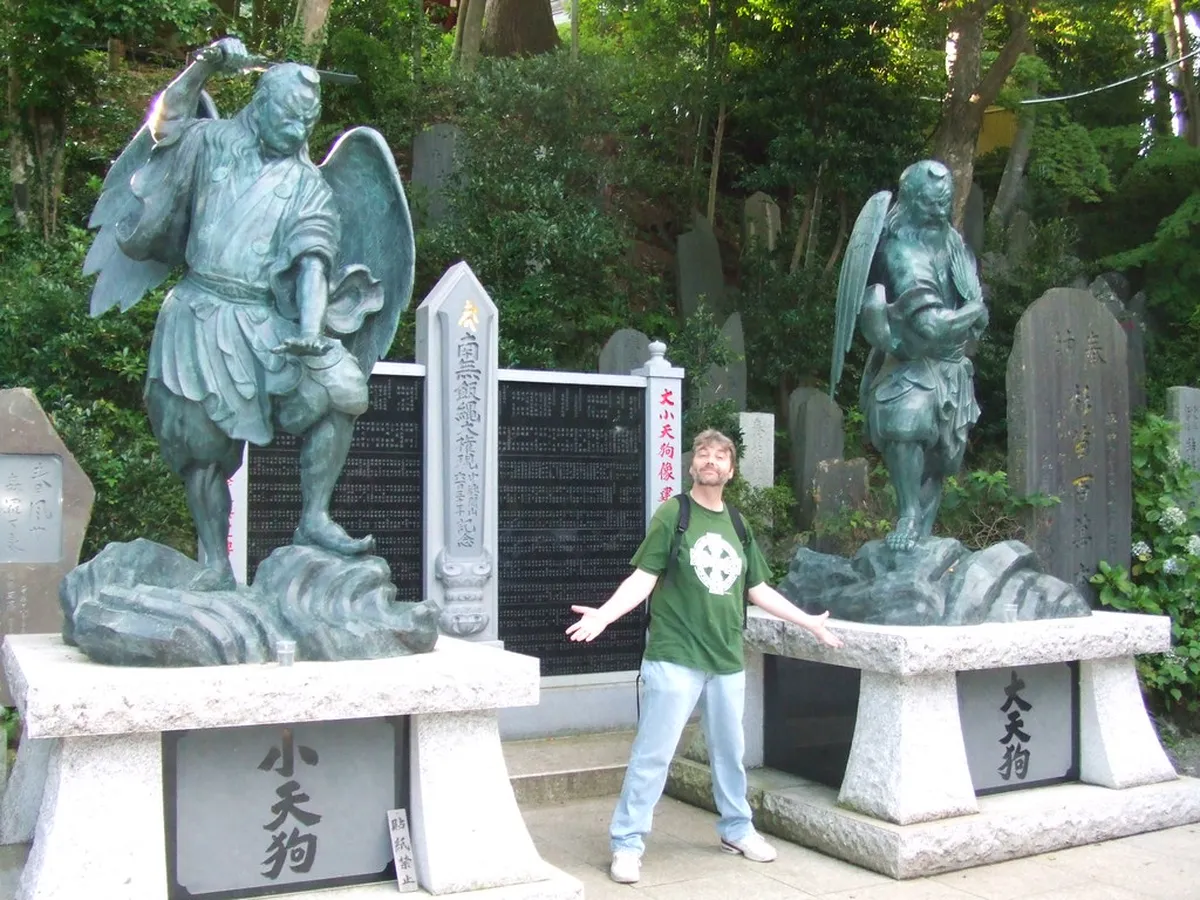
Further up the mountain is Yakuoin Temple, founded in 744 AD during the Nara period. The complex is dedicated to Izuna Daigongen, a deity tied to mountain worship, and the most distinctive feature is the pair of large Tengu statues — mythical winged creatures believed to protect the mountain. The temple is an active pilgrimage site; visitors come to pray for health and safe travel. Each shrine on Mt. Takao has its own stamp, and many Japanese visitors carry blank calligraphy books to collect them.
The summit is at 599 metres. A direct hike from the mid-station takes about 45 minutes at a steady pace. The view from the top on a clear day includes Tokyo's skyline to the east and Mount Fuji to the west-southwest. A noodle restaurant operates at the summit. Allow 45 minutes at the top for the view, food, and photographs before descending.
Takao 599 Museum: Cultural Context at the Base
The Takao 599 Museum sits three minutes' walk from Takaosanguchi Station — the last stop on the Keio Line from Shinjuku. Entry is free. The museum covers the ecology, geology, and wildlife of Mount Takao in a modern, well-lit space with interactive exhibits and mounted specimens. It is worth 25 to 30 minutes before you begin the ascent, particularly if you are visiting with children or if the mountain's biodiversity context interests you.
The museum has its own café, a good stop for coffee or a light breakfast if you have arrived early. The building is also only three minutes' walk from the cable car station, so it fits naturally into the beginning of the day without adding travel time. Mount Takao has a recorded history spanning over 1,200 years as a sacred site, and the museum communicates that depth clearly without requiring prior knowledge of Japanese history.
Family-Friendly and Budget-Friendly Planning
Mount Takao is one of the most visited mountains in the world, partly because of how accessible it is for all ages and budgets. The cable car and lift mean that families with young children, older visitors, and anyone who prefers not to hike the full ascent can still reach the monkey park and garden comfortably. The cable car ride takes seven minutes and offers treetop views of the mountain.
The Takao 599 Museum is free. The monkey park admission is modest. Packing your own snacks reduces food costs considerably — there are multiple picnic-friendly benches along the trail and at the summit. If you want a hot meal, the summit restaurant and a few vendors along Trail 1 cover the basics without tourist-trap pricing.
Children engage strongly with both the monkey feeding demonstrations and the wildflower garden's seasonal identification boards. The suspension bridge is also a highlight for older kids and teens. One practical note for families: bring a carrier or use the cable car for the ascent with toddlers, as the upper section of Trail 1 is steep and can be slippery when wet.
How to Get There and Plan Your Day
Takaosanguchi Station is the end of the Keio Line from Shinjuku Station. The journey takes approximately 60 minutes and runs frequently throughout the day. No reservation is needed — buy a standard IC card fare or a one-day Keio pass. The station is compact and the cable car station is clearly signposted from the exit.
A workable day structure: arrive at Takaosanguchi by 10:00, spend 25 minutes at the Takao 599 Museum, take the cable car at around 10:30, visit the monkey park and wildflower garden (40 minutes), continue to the suspension bridge if you want it (adds 30 minutes), hike to Yakuoin Temple (15 minutes from mid-station) and then on to the summit (25 minutes further). Lunch at the summit, then descend via Trail 1 on foot or return by cable car. You are back at Takaosanguchi by mid-afternoon with time to spare for Shinjuku dinner.
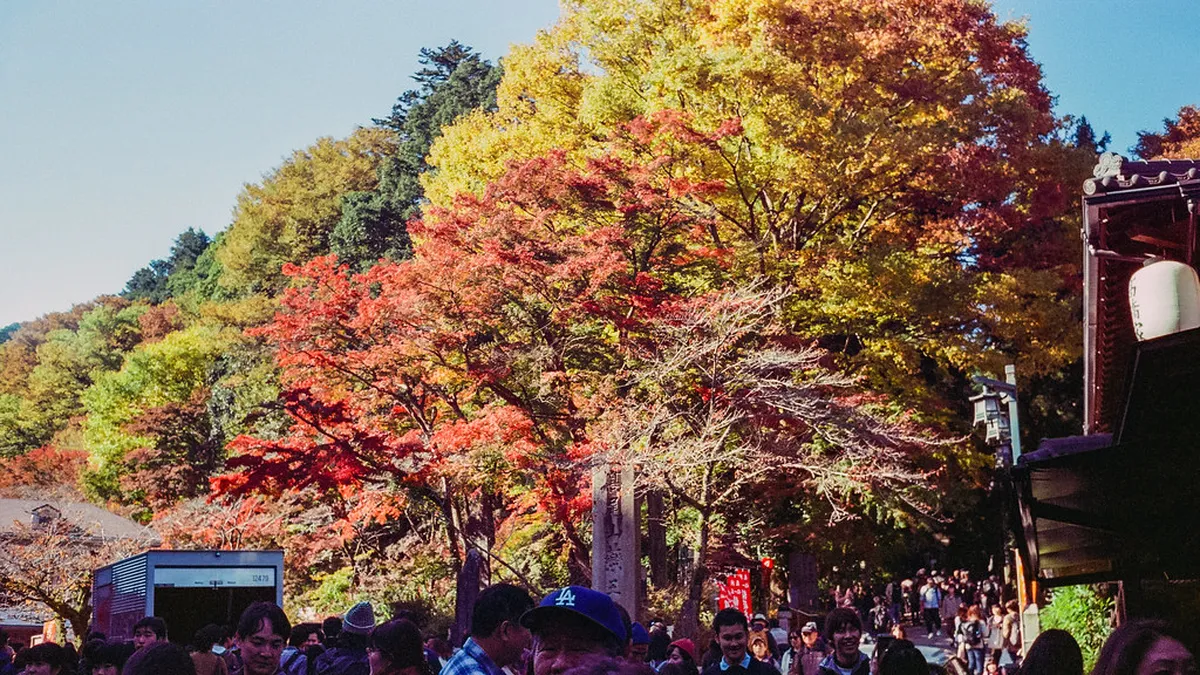
The busiest periods are weekends in autumn (late October through mid-November for fall foliage) and the Golden Week holidays in early May. Arriving before 10:00 on those days helps. Weekday visits in spring and early summer are the least crowded. The Mount Takao day trip guide covers seasonal timing in more detail. For current operating hours and trail conditions, the Japan Guide website keeps up-to-date information.
Mount Takao vs. Jigokudani: Which Monkey Park to Choose
Travelers researching Japanese monkey parks will encounter two main options: Mount Takao and Jigokudani Monkey Park in Nagano. They are genuinely different experiences and the choice depends on your itinerary and what you want to see. Jigokudani is famous for monkeys bathing in outdoor hot springs — a specific seasonal behavior driven by the extreme winter cold of the Nagano highlands. The hot-spring bathing is most dramatic from December through March. Getting there requires a bullet train to Nagano and local buses, making it at minimum a full-day trip from Tokyo, typically an overnight.
Mount Takao is a 60-minute commuter train ride from Shinjuku. The monkey park does not offer hot-spring bathing — the Hachioji climate is too mild — but it offers a closer, more behaviorally rich viewing experience at the semi-open enclosure where feeding interactions happen daily. If your priority is the iconic hot-spring image, go to Jigokudani in winter. If you want a half-day wildlife and hiking combination accessible from central Tokyo on any day of the year, Mount Takao is the practical choice and does not require adjusting your broader itinerary.
Frequently Asked Questions
Are there monkeys at Mount Takao?
Yes, Mount Takao is home to the Mount Takao Monkey Park. This park houses a group of Japanese macaques in a naturalistic setting. Visitors can observe these playful animals up close. The park also includes a Wild Grass Garden.
How long is the hike to monkey park?
The Mount Takao Monkey Park is located near the mid-station of Mount Takao. You can reach it via a short walk from the cable car or lift station. If hiking from the base, it depends on your chosen trail, but generally, it's a part of the ascent to the mid-point. The cable car ride itself takes about 7 minutes.
Is Mount Takao worth it?
Mount Takao is definitely worth visiting for its natural beauty, hiking trails, and cultural sites like Yakuoin Temple. The Mount Takao Monkey Park adds a unique wildlife element. It offers a refreshing day trip from Tokyo for nature and animal lovers. Many travelers find it a rewarding experience. You can read more on Reddit.com.
Is Japan monkey park worth it?
The Mount Takao Monkey Park is a great experience for observing Japanese macaques. It's especially enjoyable for families and those interested in wildlife. However, it's different from the famous Jigokudani Snow Monkey Park. Consider your interests to decide if this specific park aligns with your expectations.
Mount Takao's Monkey Park and Wildflower Garden is the centrepiece of a day that also covers a free nature museum, a 1,200-year-old temple, ancient cedar avenues, and panoramic summit views — all within an hour of Shinjuku on a standard commuter train. The macaque troop offers genuine wildlife behavior, not a performance: the feeding demonstrations reveal real social dynamics including hierarchy, grooming, and nursing that you can observe and understand with context.
Plan for a full day, arrive before 10:00 on busy weekends, and combine the monkey park with the upper trail and Yakuoin Temple for the most complete experience. The mountain rewards every season differently, making it equally worth returning to in autumn for the foliage as in spring for the infant macaques.
For tickets, hours and visitor details, see our Mt Takao Monkey Park & Wild Plant Garden Visitor Guide and Mount Takao attractions hub.
Free: The Tokyo Essentials guide
Top things to do, where to stay, a perfect day plan, getting around, and the best time to go — a Tokyo mini-guide you can take offline.
You might also like


Continue reading
More guides you'll find useful