

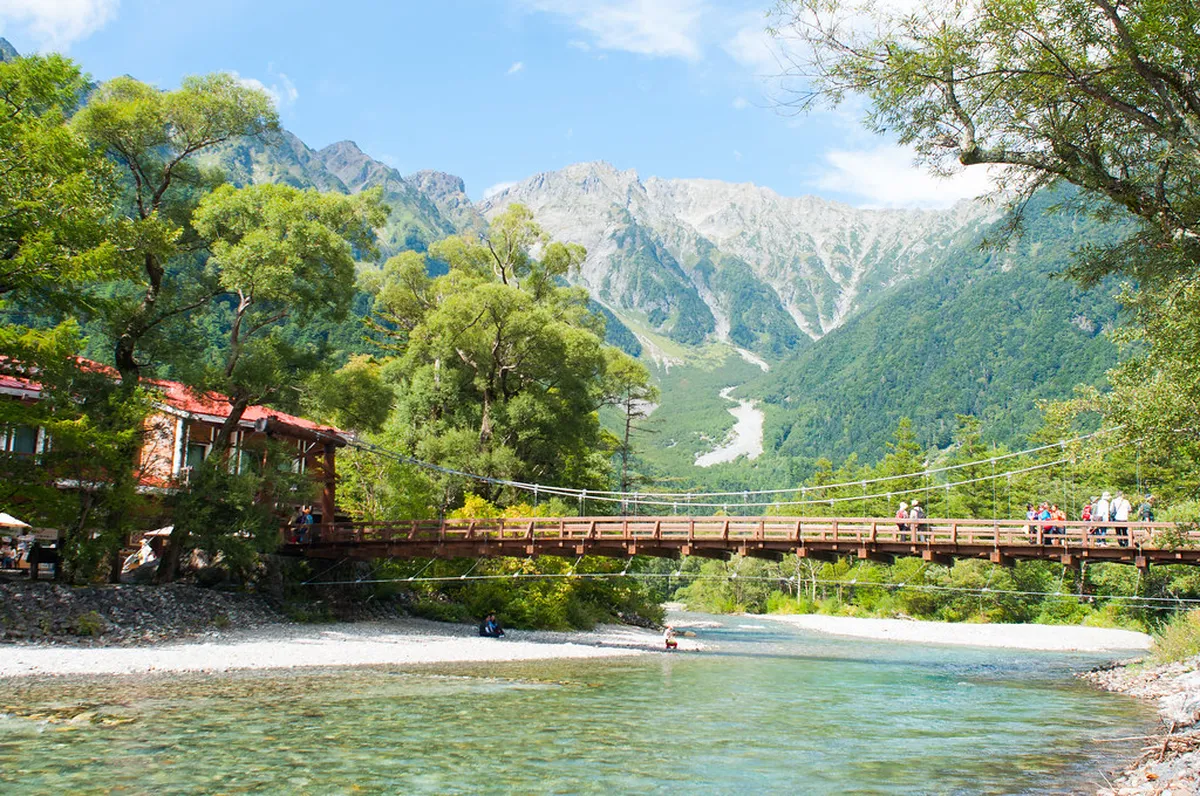
Kappa Bridge (河童橋, Kappabashi) is the defining landmark of Kamikochi, a wooden suspension bridge stretched 36.6 metres across the Azusa River. The Hotaka peaks rise directly behind it on clear days, making this one of the most photographed mountain scenes in Japan. The bridge sits at 1,505 metres elevation, roughly a five-minute walk from the main Kamikochi bus terminal.
This guide covers everything you need for a 2026 visit: how to reach the bridge by bus, what the area looks like each season, which walking routes start here, and the best time of day to arrive without fighting crowds.
What Is Kappa Bridge?
The current bridge dates to 1997 and is built from Japanese larch. It measures 36.6 metres long and 3.1 metres wide — wide enough to pass other visitors comfortably but not wide enough for cycling, which is prohibited in Kamikochi. The bridge is for pedestrians only.
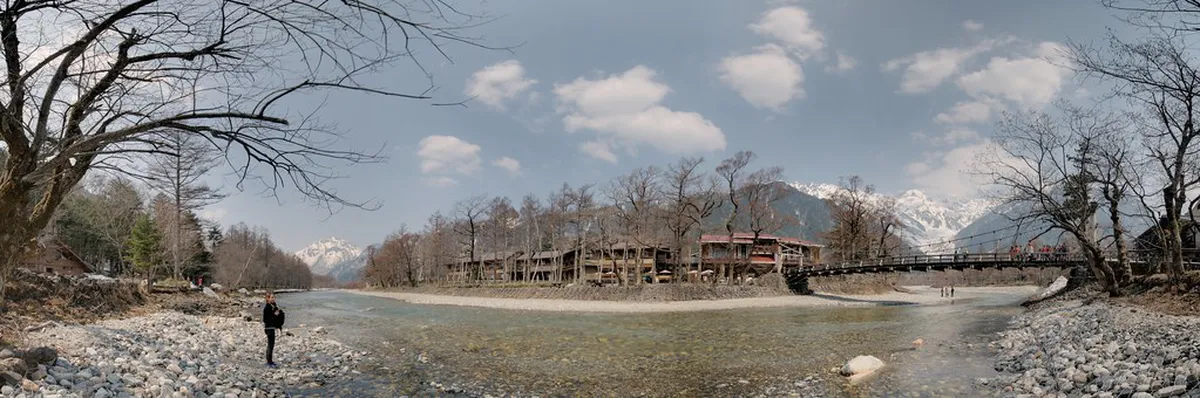
The name comes from kappa (河童), a mischievous water imp from Japanese folklore said to lurk in rivers. Kamikochi's early foreign visitors in the Meiji era translated the name loosely as "Goblin Bridge," but the correct English usage is Kappa Bridge or Kappabashi. The legend tied to the Azusa River gives the crossing an extra layer of local mythology worth mentioning to travel companions.
The bridge is freely accessible at any hour during the open season. There is no ticket gate and no admission fee for the bridge itself. The cost to reach it is the bus fare into Kamikochi, since private vehicles are banned from the valley.
How to Reach Kappa Bridge in 2026
Kamikochi has no road access for private cars. All visitors arrive by bus or taxi from one of two gateway towns: Matsumoto to the east or Takayama to the west. From Matsumoto Bus Terminal, the journey takes about 75 minutes (around ¥2,700 one way in 2026). From Takayama, buses cross the Abo Pass and take roughly 100 minutes (around ¥2,800 one way). Both routes are scenic; the Takayama approach involves a tighter mountain road with dramatic switchbacks.
Buses stop at the Kamikochi Bus Terminal. From there, Kappa Bridge is a flat five-minute walk along a well-maintained path through a stand of larch and birch. Follow the signs — you cannot miss it. The route passes the Kamikochi Visitor Center, where free walking maps and trail conditions are posted. Stop here before heading to the bridge if you plan a longer walk.
The valley is open from approximately mid-April to mid-November each year. In 2026 the opening ceremony is scheduled for 27 April; the closing date is 15 November. Services run at reduced frequency outside peak months (August and the October foliage season). Book return buses in advance during Golden Week (late April to early May) and October, when demand can outpace capacity.
Kappa Bridge Through the Seasons
Spring (late April to May) brings snow-capped peaks and fresh greenery. The contrast between white summits and pale green riverbanks is at its sharpest. Crowds are light compared to summer, and the air is cold — overnight temperatures near the valley floor can drop below 5°C even in May. Bring a warm layer.
Summer (July to August) is Kamikochi at full capacity. Families, school groups, and foreign tourists pack the bus terminal area. The bridge itself gets congested by mid-morning. Arrive before 08:00 to walk across and photograph it without waiting for gaps in foot traffic. Afternoon thunderstorms are common in August — carry a compact rain jacket.
Autumn (late September to late October) is the most visually spectacular period. The larch trees turn gold and the mountain ridges go rust-red. Peak colour around Kappa Bridge typically falls in the second and third weeks of October, though the exact timing shifts by a week or two each year. This is also the busiest and most expensive period for accommodation.
Why the Bridge Looks So New Every Spring
Kappa Bridge is not simply closed for winter — the structure is partially dismantled each November before the valley shuts. The wooden decking and suspension components are removed, stored, and reinstalled the following April. This annual cycle is why the 1997 bridge still looks pristine nearly three decades later, despite carrying hundreds of thousands of visitors each season.
The dismantling happens after the official closing ceremony, when park staff and the Kamikochi Hotel Association jointly carry out the work before heavy snow makes access impossible. The same practice protects other infrastructure in the valley. If you visit just before closing day in mid-November, you may see preparatory work already under way — a surprisingly moving reminder that this landscape is actively maintained, not simply preserved behind a fence.
Walking Routes Starting from Kappa Bridge
The bridge is the natural hub for Kamikochi's flat valley walks. Most routes are unpaved but well-maintained and suitable for ordinary trainers — you do not need hiking boots for the main paths. Allow at least a half-day to do any of them properly.
The downstream walk to Taisho Pond takes about 50 minutes one way (roughly 2.5 km). The path follows the Azusa River through open marshland with views back toward the Hotaka ridge. Taisho Pond was formed in 1915 when a Yake-dake volcanic eruption dammed the river; dead silver-fir trees still stand in the water, a dramatic contrast to the living forest around them.
The upstream walk to Myojin Pond is 4 km and takes about 70 minutes one way. The trail hugs the riverbank through dense mixed forest before reaching Hotaka Shrine and the sacred pond. An admission fee of ¥300 applies to enter the inner pond area beside the shrine. This route is one of the best in Kamikochi for bird-watching — Japanese wagtails, dippers, and occasionally golden eagles are spotted along this stretch.
The Weston Monument is a 15-minute walk west of the bridge along the riverside. Walter Weston, the British missionary who introduced Kamikochi to the Western world in the 1890s, is commemorated with a bronze bas-relief set into a cliff face above the river. A small festival is held here each June. It is an easy addition to any Kappa Bridge visit.
Photography at Kappa Bridge
The classic composition frames the bridge mid-shot with Yake-dake or the Hotaka peaks behind it. The best light falls in early morning when the sun is low and mist rises off the Azusa River. By 09:00 on busy days the bridge is crowded enough to make a clean foreground shot difficult. Aim for 07:00–08:00.
From the south bank, shooting upstream frames the bridge against Okuhida's ridgeline. From the north bank, look downstream to catch the river bends and larch forest. Both banks are easily reached on foot. The spot directly below the bridge — at water level on the gravel bar — gives a low angle that most visitors never try. It is accessible by a short scramble down from the north-side path.
Autumn adds the most obvious drama, but the spring shots with snow on the peaks and pale-green reflections in the water are less commonly seen online and make for a more distinctive portfolio. If you are shooting with a smartphone, the wide-angle default lens works better than zooming in for this view.
Facilities Near the Bridge
Kamikochi Imperial Hotel and Gosenjaku Hotel are both within a few minutes' walk. Both have restaurants open to non-staying guests during lunch hours. The Imperial Hotel's dining room faces the mountains and is worth the slightly higher prices if you want a sit-down meal with a view. Several smaller shops and a café cluster near the bus terminal sell hot drinks, soft-serve ice cream, and basic supplies. Cash is safer than cards at the smaller stalls.
Staying overnight in Kamikochi shifts the experience entirely. Day-trippers begin arriving around 09:00 and leave by 17:00, so the hours before and after are near-silent. Both main hotels and the Nishi-Itoya Mountain Lodge offer accommodation at different price points. Book 3–6 months ahead for October weekends. If you are not staying overnight, the last buses back to Matsumoto and Takayama typically depart before 18:00 — confirm the timetable for your specific date.
Frequently Asked Questions
What is the best time of year to visit Kappa Bridge?
The best time to visit Kappa Bridge is typically from late April to early November. During this period, Kamikochi is fully open, and the weather is suitable for hiking. Autumn, from late September to October, offers spectacular fall foliage around the bridge.
Are there any entrance fees to see Kappa Bridge?
There are no direct entrance fees to see Kappa Bridge itself. However, there is a bus fare to enter Kamikochi, as private vehicles are restricted. This fee covers transportation into the protected national park area.
Can you walk across Kappa Bridge?
Yes, visitors can absolutely walk across Kappa Bridge. It is a pedestrian-only bridge and serves as a popular viewpoint and starting point for many trails. Take your time to enjoy the views of the Azusa River and surrounding mountains.
How long should I spend at Kappa Bridge?
You can spend anywhere from 30 minutes to several hours at Kappa Bridge. Many visitors pause for photos and to enjoy the scenery. If you plan to explore nearby trails like the one to Myojin Pond, allocate at least half a day.
Kappa Bridge is the obvious starting point for any Kamikochi visit, but the surrounding valley rewards those who go beyond the first viewpoint. The short walks to Taisho Pond and Myojin Pond are among the finest easy hikes in the Japanese Alps, and the bridge itself looks different every hour as light and mist shift across the water. Plan to arrive early, pack layers, and keep the return bus time in mind.
For authoritative information, refer to the Kappa Bridge on Wikipedia and Kappa Bridge official site.