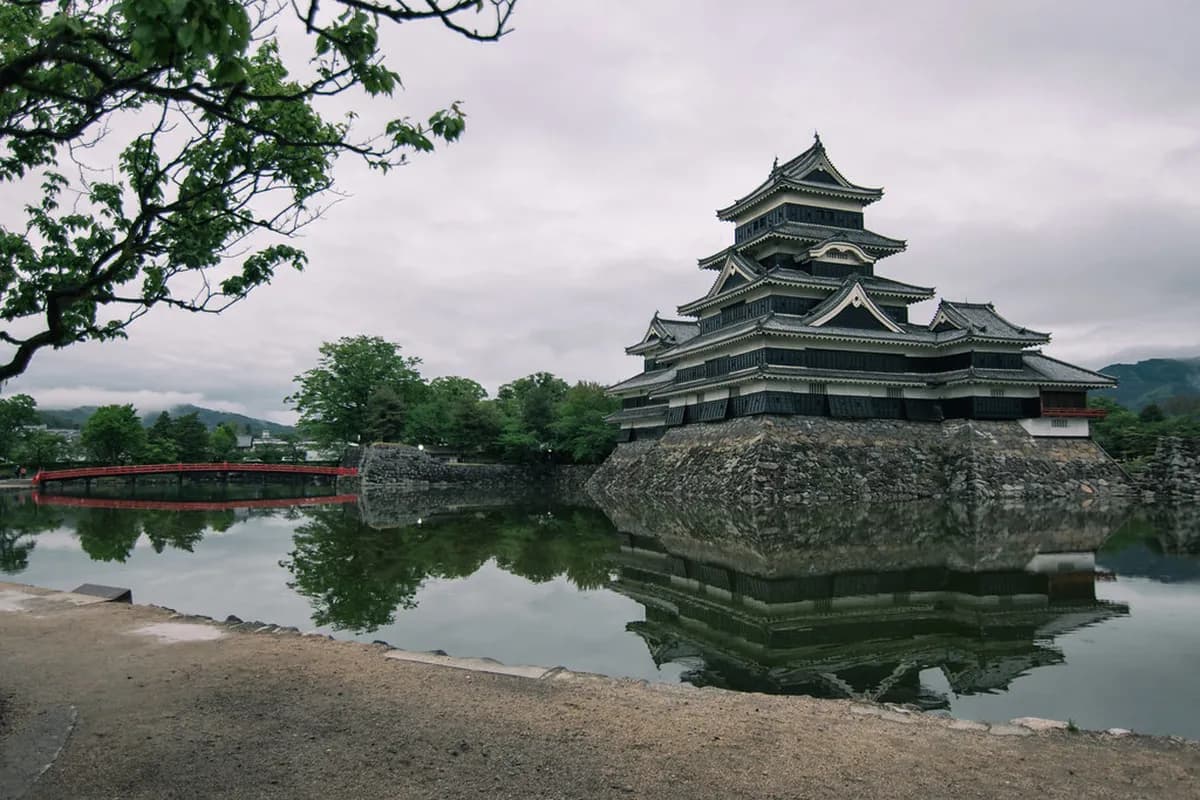
Matsumoto Castle stands as one of Japan's most striking original fortresses and a designated National Treasure.
Known as the Crow Castle due to its black exterior, this landmark is the anchor sight in central Matsumoto and one of the best places to understand samurai-era defensive architecture.
This 2026 visitor guide focuses on the practical decisions that shape the visit: how to arrive, when to enter the main keep, what to expect on the stairs, and how to pair the castle with nearby Matsumoto sights.
How to Get to Matsumoto
Reaching this historic city is convenient from major hubs like Tokyo or Nagoya. The Limited Express Azusa train connects Shinjuku Station to Matsumoto in roughly three hours, and the Japan Rail Pass can cover the JR portion of this scenic mountain journey. Verify the latest schedules on the Visit Matsumoto Access Guide before your departure.
Bus travel offers a budget-friendly alternative for those coming from Shinjuku, Takayama, or other parts of the Japanese Alps route. If you are arriving after the Tateyama Kurobe Alpine Route, the Shinano-Omachi to Matsumoto train connection is a common next step and usually takes about an hour. Most long-distance buses arrive at the terminal located just across from the main train station.
Walking from Matsumoto Station to the castle takes about fifteen to twenty minutes on flat city streets. Local transit options include the Town Sneaker buses that loop around the main tourist sites, which helps if you are traveling with children, luggage, or limited walking time. Check the Matsumoto City Official Tourism site for current route maps, and consider a day pass if you plan to link the castle, Nawate Street, Nakamachi Street, and the art museum in one day.
Essential Matsumoto Castle Visitor Information
Understanding the basics ensures a smooth entry into this iconic National Treasure of Japan. Adult admission is ¥1,300 for a paper or same-day ticket, or ¥1,200 for an electronic ticket. Elementary and middle school students pay ¥400, and preschoolers enter free. Combination tickets with other museums are available starting at ¥1,500, which can make sense if you are also visiting the Matsumoto City Museum.
| Ticket | Adult | Elem./Jr. High Student | Preschool | Notes |
|---|---|---|---|---|
| Same-day (paper) | ¥1,300 | ¥400 | Free | Buy at gate |
| Electronic ticket | ¥1,200 | ¥400 | Free | ¥100 saving vs gate price |
| Combination (castle + museum) | from ¥1,500 | Varies | – | Best if visiting Matsumoto City Museum same day |
Arrive close to the 08:30 opening on a weekday to beat tour-bus crowds. Volunteer English-language guides (ALSA) are available for free at the gate when present. The Uzumi-bashi red bridge gives the best moat reflection shots — calm mornings work better than afternoons.
The castle is generally open daily from 8:30 AM to 5:00 PM, with last entry at 4:30 PM. During Golden Week (around April 25–May 6, 2026) hours extend to 8:00 AM–6:00 PM, the summer/Obon period (August 8–16, 2026) has extended hours, and the New Year period runs 10:00 AM–3:30 PM. Check the Official Matsumoto Castle Guide before you go, especially around holidays.
Crowds are heaviest during cherry blossom season, autumn foliage, Golden Week, and long weekends. The castle park and moat area are free to enter, so you can photograph the exterior even if the main keep has a long queue. For the paid interior, arrive close to opening on a weekday if you want a quieter climb through the wooden towers.
Most travelers spend about 45 to 60 minutes inside the paid tower route, but the full visit can take closer to two hours if you add exterior photos, the museum area, and a slow walk around the moat. April is popular for cherry blossoms, late October often brings strong autumn color, and winter can be beautiful when snow frames the black keep. If your schedule is tight, treat the tower interior as the fixed-time activity and leave the free park views as your flexible backup.
Exploring the Crow Castle: What to See Inside
The interior of the main keep preserves its original wooden structure from the sixteenth century. Visitors must remove their shoes at the entrance and carry them in a plastic bag throughout the route. This system protects the old floorboards, but it also means you should wear comfortable socks and avoid bulky footwear that is awkward to carry.
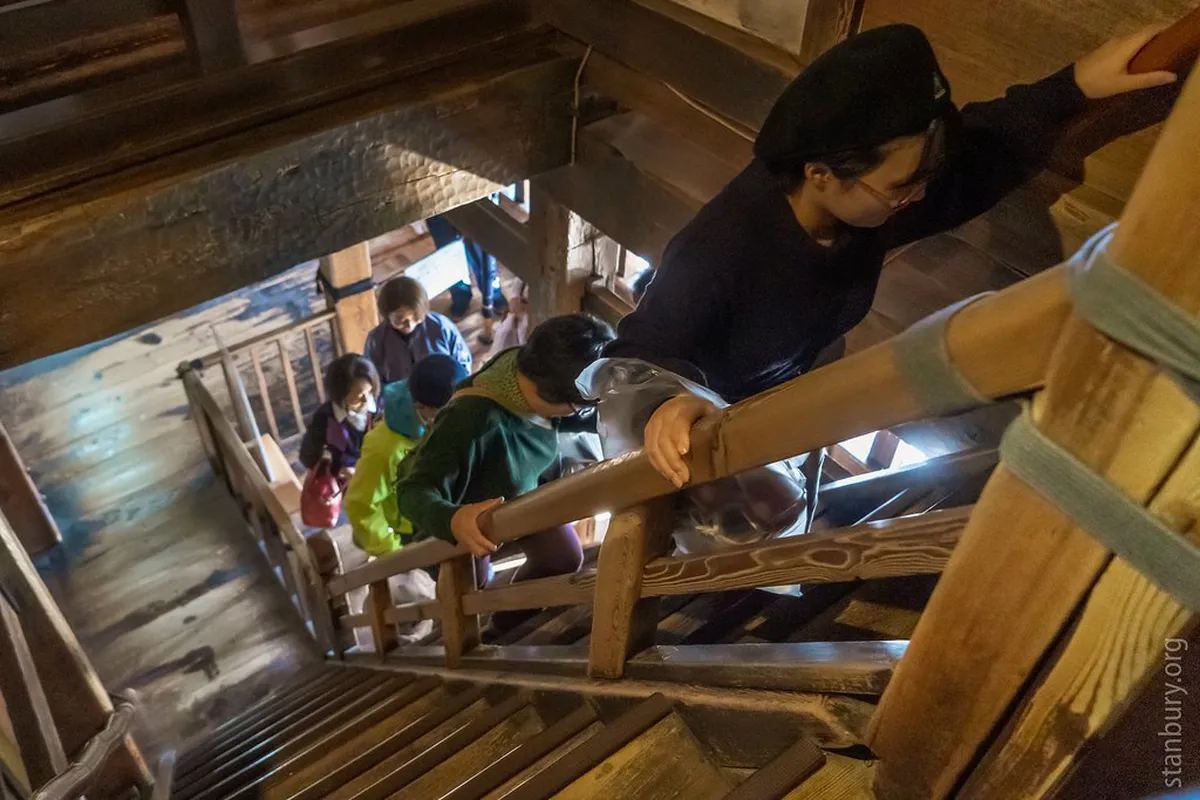
The interior involves very steep staircases including a 61-degree incline. Remove your shoes at the entrance and carry them in a bag throughout. Wheelchairs, strollers, and large backpacks cannot navigate the keep interior. The exterior moat walk and gardens are a strong alternative for visitors who prefer to skip the stairs.
Entering the Main Tower is the most memorable part of the visit, but it is also physically demanding. Navigating the six floors requires climbing steep, narrow wooden staircases, including one section with a 61-degree incline. Hold the handrails, move slowly when traffic backs up, and expect low beams in several areas.
The tower route is not a good match for wheelchairs, strollers, large backpacks, or visitors who are uncomfortable on steep stairs. The exterior park, moat paths, bridge views, and castle lawn still give a strong sense of the site without entering the keep. Families with young children should decide before buying tickets whether everyone is comfortable carrying shoes and climbing in single-file traffic.
The third floor contains a fascinating architectural secret known as the hidden level. From the outside, the keep appears to have five stories, but inside it has six floors, including this windowless dark floor that helped conceal soldiers during conflict. Look for the displays of matchlock guns, armor, and castle-defense details as you move through the upper levels.
Best Things to Do in Matsumoto Beyond the Castle
After touring the fortress, explore the historic atmosphere of Nakamachi Street nearby. This Nakamachi-dori area features traditional white-walled storehouses that now house craft shops, cafes, galleries, and local food stops. It is a natural lunch break after a morning at the castle, especially if you want Shinshu soba or handmade souvenirs.
Art lovers should prioritize a visit to the Matsumoto City Museum of Art for its unique exhibits. The museum celebrates the work of Yayoi Kusama, who was born in Matsumoto, and its large polka-dot outdoor sculpture makes the city feel different from other castle towns. Pairing the castle with the museum gives your day both samurai architecture and modern Japanese art.
Walk along Nawate Street, also called Nawate-dori, to see the quirky frog-themed shops along the river. This pedestrian path offers street snacks, small shops, and an easy link between the castle area and downtown. It works especially well as a low-pressure stop if the main keep queue is longer than expected.
Recommended Matsumoto itinerary (1-2 Days)
A single day in Matsumoto allows enough time to see the main castle and old streets. Start at Matsumoto Station's tourism office for maps if you need them, then reach the castle near opening before the largest tour groups arrive. Spend midday around Nakamachi and Nawate for lunch and shopping, then end with the Matsumoto City Museum of Art before catching an evening train.
If you are visiting as a day trip from Tokyo, keep the plan compact and book your return train with enough buffer after the art museum. Travelers continuing to Nagoya, Kyoto, Nagano, or the Alpine Route should use Matsumoto as a practical transfer point rather than squeezing every sight into the same afternoon. The most common mistake is underestimating the castle queue and then rushing the rest of the city.
Staying for two days lets you explore the stunning nature of Kamikochi in the Alps. This highland valley offers world-class hiking trails and crystal-clear river views, but bus access is seasonal and weather-sensitive, so confirm 2026 transport before building your plan around it. It is an essential addition for anyone who enjoys outdoor photography and fresh air.
You can also use your second day to visit Daio Wasabi Farm in nearby Azumino. The farm is one of the largest in Japan and features clear spring water channels, water wheels, and wasabi-themed snacks. It is easier than Kamikochi as a soft second-day option if you want a slower departure from Matsumoto.
Where to Stay in Matsumoto
Choosing the right base depends on your travel style and next destination. Hotels near Matsumoto Station offer the most convenience for early train departures, late arrivals, and luggage storage. This area has many business hotels, restaurants, and easy access to buses toward the castle and surrounding sights.
Staying closer to the castle park provides a more historic and quiet atmosphere. Several boutique inns and guesthouses sit within walking distance of the moat, making sunrise or evening walks around the black keep much easier. This area suits travelers who care more about atmosphere than station convenience.
Consider a traditional ryokan if you want a more relaxed Japanese stay. Many inns offer hot spring baths and multi-course dinners, while the Asama Onsen area is a short bus or taxi ride from the city center. It is a good fit after a long sightseeing day, but less convenient if your main goal is a fast one-night transit stop.
Book earlier than usual for cherry blossom weeks, autumn weekends, and festival dates because the city also attracts domestic travelers. If prices near the castle rise, staying by the station is usually the better compromise: you keep easy luggage access, can still walk to the castle, and have more backup dining options at night.
Practical Travel Tips for Your Visit
Taking advantage of local expertise can greatly enhance your understanding of the site. The Alps Language Service Association, or ALSA, provides volunteer guides who work for free at the gate when available. These guides can explain details that are easy to miss on a self-guided route, from the hidden floor to defensive features built into the keep.
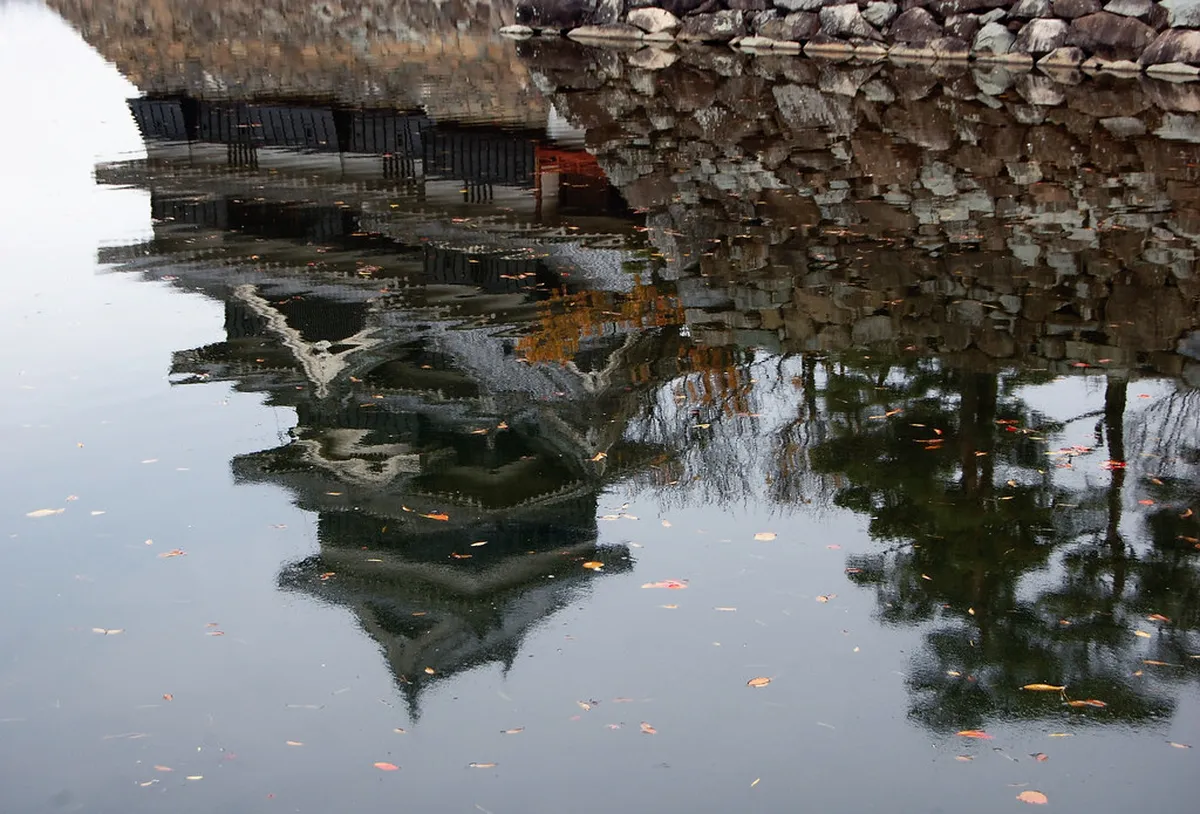
Photographers should head to the red Uzumi-bashi bridge for the best castle views. This spot allows you to capture the black keep reflected in the still moat water, sometimes called the inverted castle view. Calm mornings are usually better than afternoons because the light is softer and the water is less disturbed.
- Use the volunteer guide service
- Source: ALSA Volunteer Guides
- Cost: Free service
- Languages: English, French, and Spanish
- Meeting: Near the castle gate when volunteers are present
- Plan around accessibility limits
- Main keep: Original stairs, no elevator route through the tower
- Best alternative: Castle park, moat, and exterior views
- Common issue: Steep stairs can slow queues inside
- Tip: Skip the tower interior if stairs, knees, or balance are a concern
- Avoid common mistakes
- Timing: Do not arrive just before last entry
- Footwear: Wear socks and shoes that are easy to remove
- Photos: Visit Uzumi-bashi bridge early for reflections
- Tickets: Compare same-day, electronic, and combination options before buying
- Manage your luggage
- Storage: Station coin lockers
- Size: Small to large
- Price: Varies by locker size
- Availability: Best near station exits
Frequently Asked Questions
Is Matsumoto Castle worth a day trip from Tokyo?
Yes, it is worth the trip if you enjoy history and unique architecture. The three-hour train ride is scenic and manageable for a full day. You can find more details in our Matsumoto city guide to plan your route efficiently.
How many stairs are in Matsumoto Castle?
There are approximately 140 stairs spread across the six interior levels. Some sections are very steep with a 61-degree incline. Visitors should be in good physical health to reach the top observation deck safely.
Do you need to book Matsumoto Castle tickets in advance?
Advance booking is generally not required for individual travelers at the castle. You can buy tickets at the gate upon arrival using cash or cards. During peak holidays, arrive early to secure your entry during busy time slots.
What is the best time of year to visit Matsumoto?
Spring and autumn offer the best weather and most beautiful scenery for visitors. April brings cherry blossoms while late October features vibrant fall foliage. Winter is also lovely for seeing the black castle against white snow.
Matsumoto Castle remains a must-see destination for anyone exploring the Japanese Alps region.
The combination of samurai history and modern art makes the city truly unique.
Use this guide to ensure your trip to the Crow Castle is unforgettable and smooth.
For more castle guide details and planning, explore our complete Matsumoto attractions reference.
To verify current details, consult the Matsumoto Castle on Wikipedia.