9 Best Beaches in Okinawa: Ultimate Guide (2026)
Discover the 9 best beaches in Okinawa, from main island favorites to hidden gems. Get expert tips on where to stay, what to do, and how to plan your perfect beach getaway.
On this page
Okinawa sits at the southern tip of Japan, and its beaches look nothing like the rest of the country. The water runs turquoise, the sand is powdery white, and you can see clear to the coral 10 metres down. This guide covers the best beaches across the whole prefecture — main island classics around Motobu, the snorkelling paradise of the Kerama Islands, Kabira Bay and Yonaha Maehama on the outer islands — so you can pick the right beaches for your trip in 2026.
One honest note upfront: your choice of base matters more than any single beach. If you stay in Naha for the whole trip, the best beaches require 90 minutes of driving each way. The sections below will help you match the right beaches to the right base and transport plan.
Quick Answer: Top 3 Beaches and Best Area to Stay
For first-time visitors pressed for time, the three beaches that deliver the most with the least planning effort are Emerald Beach (easy family day inside Ocean Expo Park), Sesoko Beach (best all-round natural beach on the main island), and Yonaha Maehama (the standout beach if you fly to Miyako Island). All three have parking, facilities, and lifeguards during peak season.
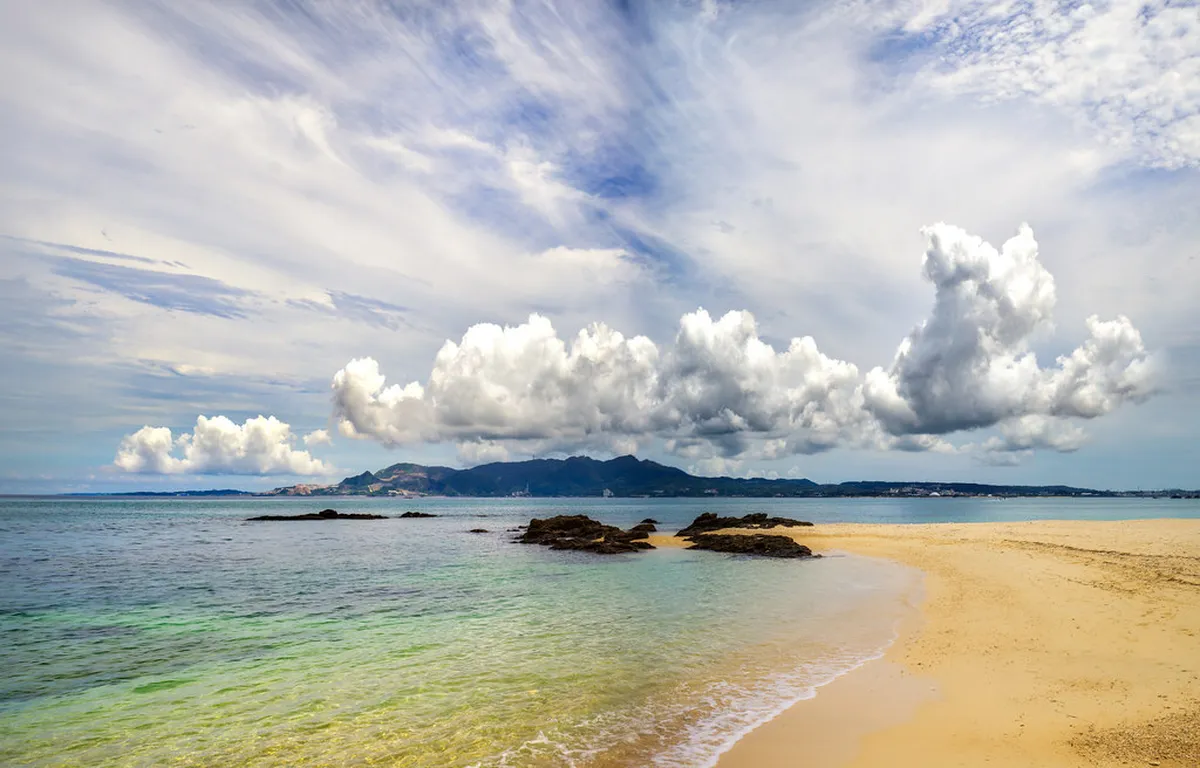
For a base, stay around Motobu on the main island rather than Naha. Emerald Beach, Sesoko Beach, and Nagahama Beach are all within 20 minutes of each other from there. Naha is a fine city base, but it adds a long daily commute to reach Okinawa's best sand. If the outer islands are your priority — Kerama, Miyako, or Ishigaki — you fly or ferry from Naha and sleep on the island itself.
Why Okinawa's Beaches Are Uniquely Amazing
Most visitors arrive expecting temple culture and come away stunned by the water. Okinawa's position in the Kuroshio Current keeps sea temperatures around 23–28 °C from May through October, and the surrounding fringing reefs filter the water to exceptional clarity. You can snorkel in knee-deep water at many beaches and still see nudibranchs and sergeant-major fish threading through coral heads below you.
What separates Okinawa from other Asian tropical destinations is the combination of Japanese infrastructure with a genuinely tropical environment. Facilities — showers, lockers, clean restrooms, lifeguards — are excellent at managed beaches, but the natural beaches further north feel wild and uncrowded. Even in August, the busiest month, many of the spots below feel quiet by the standards of Bali or Phuket.
The Ryukyuan cultural backdrop adds another layer. Gusuku castle ruins sit above some beaches, small fishing shrines dot rocky headlands, and the local Okinawan cuisine — Okinawa soba stalls, sea-grape salads, freshly grilled agu pork — is found at roadside spots near even the most remote shores. Okinawa rewards slow travel more than almost anywhere else in Japan.
Planning Your Okinawa Beach Trip: Key Decisions
The first decision is timing. The swimming season runs roughly April to October, with the sweet spot being late May to June (before the typhoon peak) and September to November (after typhoon season, with warm but less humid weather). July and August are hot, humid, and typhoon-prone, though the sea is warmest then. Check our full breakdown of the Best Time To Visit Okinawa: Month-by-Month Guide & Weather before booking flights.
The second decision is transport. Almost every worthwhile beach on the main island requires a car. Buses exist but run infrequently and stop far from the sand. Renting a car from Naha Airport is straightforward, typically costs ¥5,000–¥9,000 per day for a compact, and changes the trip completely. Our guide to Renting a Car in Okinawa: Your Essential Guide & Tips covers licence requirements for international visitors and toll-road tips.
The third decision is whether to add outer-island beaches. Flying to Miyako takes 50 minutes from Naha (from around ¥6,000 one way on Peach Aviation if booked early). The ferry to Zamami in the Kerama Islands takes 50–70 minutes and costs ¥3,140–¥5,970 return. If you are on a week-long trip, one night on Zamami or two nights on Miyako added to three nights in Motobu covers the full range of what Okinawa offers. See our Okinawa Island Hopping Itinerary & Guide: Best Islands & Tips guide for logistics.
The Best Beaches on Okinawa Main Island
The main island's finest beaches cluster in the north, on and around the Motobu Peninsula. Driving north from Naha on Route 58 takes about 90 minutes, but once you are based there the beaches are stacked close together. Here are the five that consistently deliver.
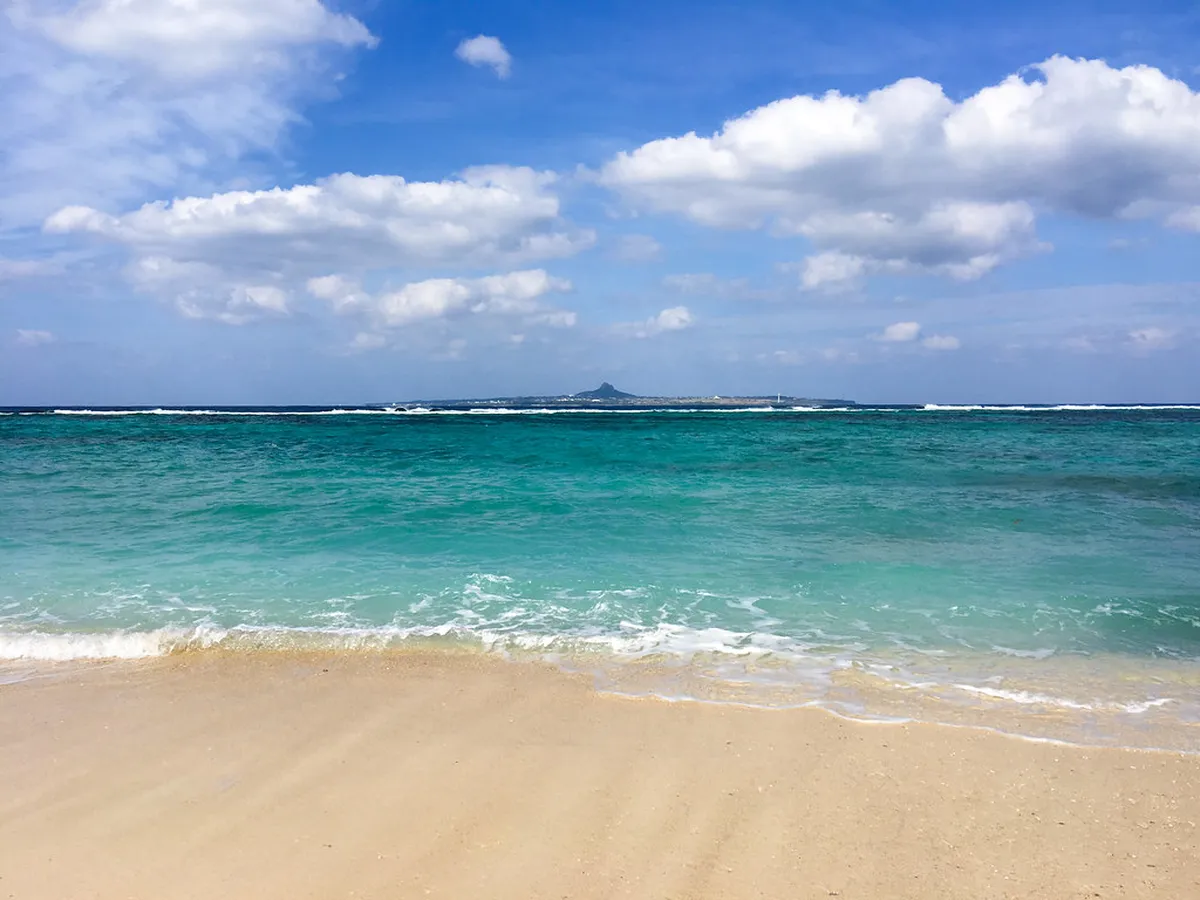
Emerald Beach — best for families and easy beach days
Emerald Beach sits inside Ocean Expo Park, 5 minutes from the Churaumi Aquarium. It is partly man-made but maintains genuinely beautiful water, divided into three zones: Play (shallow, ideal for children), Rest (calmer swimming), and View (walking and photography). Facilities are excellent — clean restrooms, coin lockers, showers, and a café. Lifeguards operate 8:30–17:30 from March to November; the beach closes December to February. Entry is free; parking at the adjacent lot costs around ¥1,000. Come on a weekday morning if possible, especially in July and August when Japanese families fill it.
Sesoko Beach — best all-round natural beach
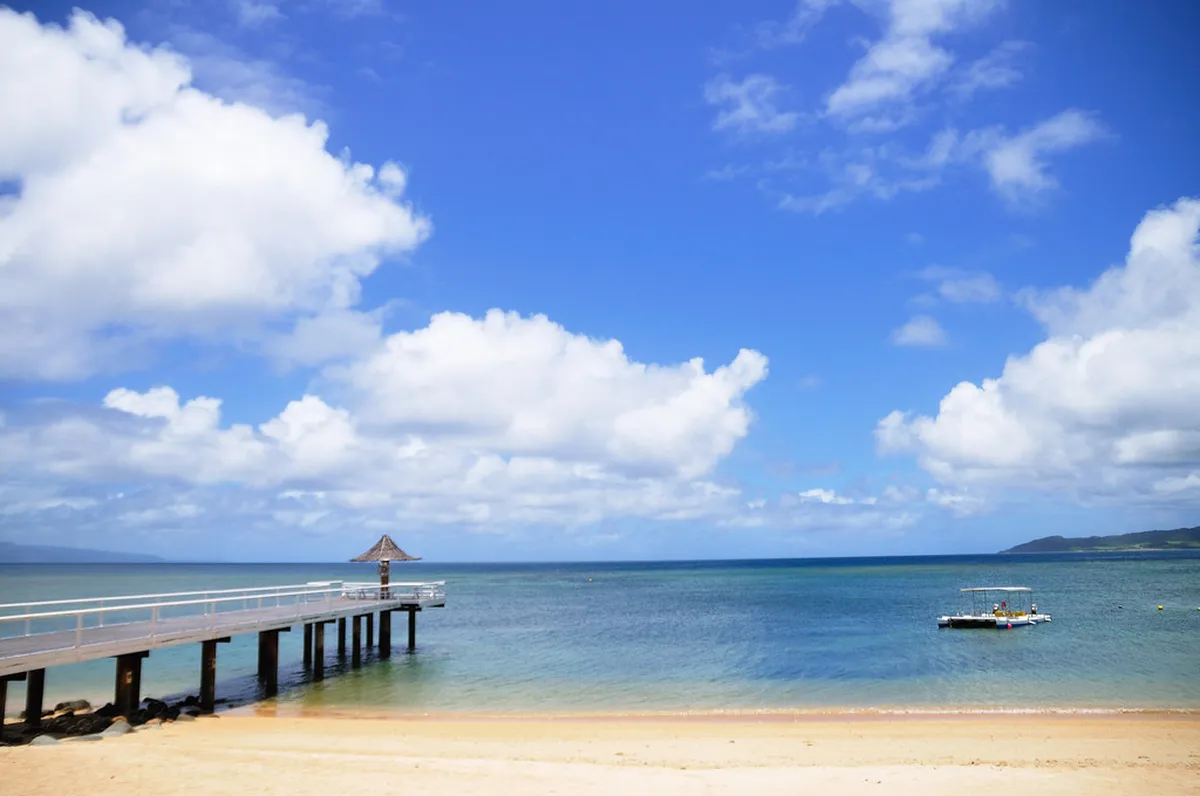
Sesoko Island connects to the main island via a short bridge, so no ferry is needed. The beach is natural rather than managed, with soft white sand and some rocks that make for decent snorkelling right from shore. The water colour here — a layered gradient from pale mint to deep cobalt — is what most people picture when they imagine Okinawa. Access is free; parking costs ¥500–¥1,000 depending on the car park you use. There are no official closing hours, but arrive by 09:00 on summer weekends to secure a spot. The Hilton Okinawa Sesoko Resort sits directly on the beach if you want a resort stay with direct sand access.
Nagahama Beach — best for sunsets
Nagahama is a small, quiet beach near Motobu Town, best visited from late afternoon. The sunsets here are reliably dramatic — wide open to the East China Sea with no obstruction — and the beach is a local favourite rather than a tourist trap. Access is free, parking is limited roadside pull-offs, and there are no facilities, so bring your own supplies. Currents can be unpredictable; swim only when conditions look calm and no warning flags are posted.
Okuma Beach — best for quiet resort escapes
Okuma Beach is managed by the Okuma Private Beach and Resort in northern Okinawa, near Kunigami Village. Day visitors pay around ¥1,000 per person and get access to the long, flat stretch of pale sand with calm, clear water well suited to swimming. The surrounding forest adds shade, and the resort rents kayaks and paddleboards. Hours run 09:00–18:00. The drive from Motobu is about 30 minutes north — worth it if you want to escape the crowds entirely.
Hentona Beach — best wild and untouched experience
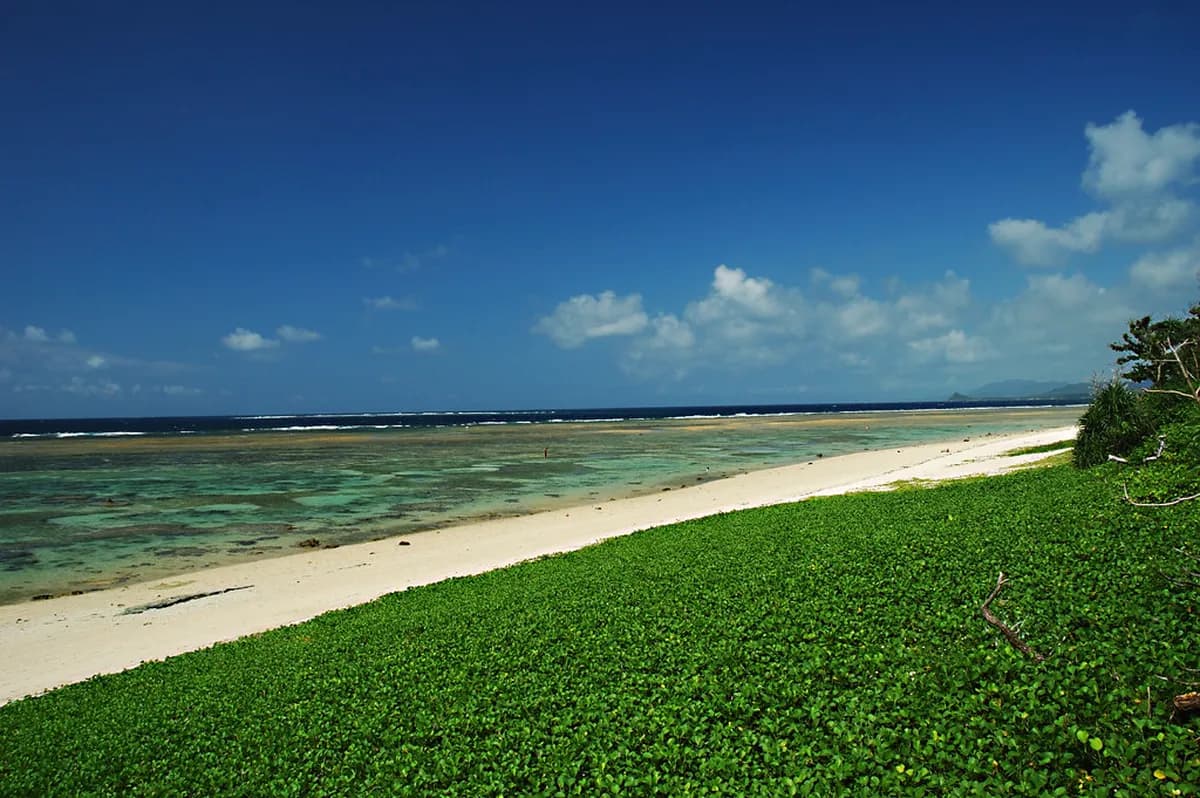
In the far north of the main island, near Kunigami, Hentona is the kind of beach that looks like a film set. There are no facilities, no entry fee, no lifeguards — just raw, dramatic coastline with volcanic rock formations and sea the colour of glacial melt. It rewards photographers at sunrise and hikers who do not mind having a beach almost entirely to themselves. Bring everything you need, watch currents carefully, and check the weather before making the drive.
Beyond the Main Island: Okinawa's Outer Island Beaches
The outer islands are where Okinawa's beaches reach another level. The water is clearer, the coral richer, and the crowds smaller. Each island group has a distinct character — Kerama for snorkelling, Miyako for long white-sand swims, Ishigaki and Taketomi for turquoise shallows and cultural charm. Getting there takes effort, but the payoff is significant.
Furuzamami Beach, Zamami Island — best snorkelling in Okinawa
Furuzamami Beach consistently ranks among the top beaches in all of Japan, and it earns that ranking. The coral garden that begins 20 metres from shore is extraordinarily healthy, with sea turtles a common sighting rather than a lucky accident. The Kerama Blue — the specific shade of cobalt the water turns here — is genuinely unlike anything on the main island. Ferry from Naha's Tomari Port to Zamami takes 50 minutes on the high-speed ferry (¥3,140 one way) or 2 hours on the slow ferry (¥1,570). A short local bus or 15-minute walk from the port reaches the beach. Snorkel gear rental is available on the island. Lifeguards operate April through October, 09:00–17:00.
Yonaha Maehama Beach, Miyako Island — longest white-sand beach
Maehama stretches for 7 kilometres, wide enough that even in high season it never feels crowded. The sand is extraordinarily fine — almost talcum-powder texture — and the water stays very shallow for a long way out, making it excellent for swimming. Sunrise here is worth the early alarm. Access is free with ample free parking. Water sports operators along the beach rent jet skis and offer parasailing from around ¥3,000. Miyako is a 50-minute flight from Naha or a 3-hour ferry; most visitors fly in. You can also pair Maehama with Sunayama Beach, a 10-minute drive north, where a natural rock arch frames the sea for one of Okinawa's most photographed compositions.
Kabira Bay, Ishigaki Island — the look-only beach that surprises first-timers
Kabira Bay is famous for a reason: the view of shallow, multicoloured water threading between forested islets is one of the most striking coastal scenes in Japan. Glass-bottom boat tours run from the shore (around ¥1,050 per adult) and offer an excellent look at the bay's black pearl oyster farms and marine life. But swimming is not permitted in Kabira Bay — the pearl farms occupy the water, and currents around the islets are strong. This catches many first-time visitors off guard, since online photos suggest a perfect swimming spot. Plan to spend 1–2 hours at the viewpoints and on a boat tour, then head to Sukuji Beach or Yonehara Beach (both on Ishigaki's north coast, 20–30 minutes by car) for actual swimming. Ishigaki is reached by a 1-hour flight from Naha.
Kondoi Beach, Taketomi Island — shallow turquoise lagoon
Taketomi is a 10-minute ferry from Ishigaki (¥700 each way) and best explored by bicycle rental (¥500/hour from shops near the port). Kondoi Beach faces west and fills with shallow, bath-warm turquoise water that is perfect for wading, paddling, and watching the star-shaped sand grains that Taketomi is famous for. The beach is small enough that it can get busy mid-morning with day-tripping groups from Ishigaki — arrive before 10:00 or after 14:00 for the most peaceful experience. Facilities include changing rooms and a small stand renting snorkel gear.
Best Okinawa Beach Base: An Honest Recommendation
Where you sleep shapes your entire beach experience. Here is how the main options stack up based on what kind of trip you are taking.
Motobu (northern main island) is the best all-round base for beach-focused travellers. Emerald Beach, Sesoko Beach, Nagahama Beach, and Churaumi Aquarium are all within 20 minutes. Accommodation ranges from budget guesthouses to the Orion Hotel Motobu Resort. Downside: there is no nightlife and restaurant options are limited — you are here to beach, not to dine and socialise.
Onna Village (central main island) suits travellers who want a polished resort stay and easier access from Naha Airport (about 60 minutes versus 90 minutes to Motobu). Manza Beach and Maeda Point are close. The Busena Terrace and several international chain hotels are based here. Trade-off: the beaches in this area are good but not as dramatic as the north.
Naha works if you mainly want Shuri Castle, Kokusai Street, and a base for day trips. But the main island's best beaches are 90 minutes away, and a day of beach hopping becomes a 4-hour round trip. Stay in Naha for one or two nights at the start or end of your trip, not as your primary beach base.
On the outer islands: For Kerama beaches, spend at least one night on Zamami to experience the reef at its best — morning snorkelling before the ferry day-trippers arrive. For Miyako, two nights lets you cover Maehama and Sunayama properly. For Ishigaki, three nights gives you time for Kabira, a day on Taketomi, and swimming beaches on the north coast.
Where to Stay Near Okinawa's Best Beaches
Near the main island's northern beaches, options split neatly by budget. For a practical and affordable base near Emerald Beach and the Ocean Expo Park area, small family-run guesthouses in Motobu town cost ¥4,000–¥7,000 per person. The mid-range Churaumi Village offers apartment-style rooms with more space than a standard hotel room. For resort comfort, the Orion Hotel Motobu Resort and Spa sits close to Emerald Beach and offers direct beach access, multiple pools, and a spa. If Sesoko Beach is your priority, the Hilton Okinawa Sesoko Resort gives you the most convenient location on Sesoko Island itself, with a private beach section and infinity pool.
On the outer islands, accommodation on Zamami is mostly guesthouses and minshuku (family-run Japanese B&Bs) at ¥5,000–¥10,000 per night with meals. Book far in advance for July and August — the island has limited rooms and they fill months ahead. On Miyako, a wider range of hotels and resorts lines the coast near Maehama. Taketomi has just a handful of traditional guesthouses inside the village; staying overnight — after day-trippers leave — is one of the most atmospheric experiences in all of Okinawa. On Ishigaki, the main town has business hotels from ¥8,000 and resort options from ¥25,000.
Essential Tips for Your Okinawa Beach Day
Check tide tables before you go, especially for beaches like Kondoi on Taketomi (which transforms at low tide into wide exposed sandflats) and Kabira Bay (best viewed on a clear calm day when the water colour is most vivid). The tideschart.com site covers all Okinawa locations and updates daily.
Sun protection here is serious. Okinawa sits at 26° North, roughly the same latitude as Miami, and the UV index regularly hits 11 or 12 in midsummer. Wear SPF 50+ sunscreen, apply it before reaching the beach, and reapply every 90 minutes. A rash guard is practical for both UV protection and mild jellyfish defence — box jellyfish are occasionally present in summer months. Swim only within roped safety zones where lifeguards are on duty, and check posted warning flags before entering the water.
Carry cash. Many beach car parks, snorkel rental shops, and roadside food stalls on the outer islands do not accept credit cards. ¥5,000–¥10,000 in small bills per day is a practical amount. And bring your own water — hydration is easily underestimated under the Okinawan sun, and convenience stores on the outer islands can be sparse.
Are Okinawa Beaches Safe for Swimming?
For most beaches listed here, yes — with the usual caveats. The major managed beaches (Emerald Beach, Nirai Beach, Sesoko, Furuzamami, Maehama) have lifeguards during their operating hours and designated swimming zones that avoid dangerous currents. These are safe for confident swimmers and families with children.
The key hazards to know: habu jellyfish and box jellyfish appear in warmer months (July–September), particularly in calmer bays. A full-body rash guard or a UV-protective swimsuit eliminates most risk. Habu sea snakes are present in Okinawan waters and are venomous, but they are extremely timid and bites are rare — almost always provoked. Blue-ringed octopus have been recorded in the region; never pick up any octopus smaller than your fist from a rock pool.
Natural beaches without lifeguards — Hentona, Nagahama, many outer-island coves — require more self-judgement. Strong rip currents develop quickly around headlands and through narrow passages between islets, and they are difficult to spot from shore. If the water looks choppy around rocks or the surface is churned, stay out. Always tell someone onshore where you are swimming if you are at a remote beach alone.
One important note on Kabira Bay specifically: do not attempt to swim there regardless of how inviting it looks. The prohibition is enforced, the currents are genuinely dangerous, and the pearl farms make the bay unsuitable for swimming. Take the glass-bottom boat instead.
Frequently Asked Questions
Are Okinawa beaches safe for swimming?
Yes, Okinawa beaches are generally safe for swimming, especially those with lifeguards and designated swimming areas. Always check for warning signs regarding currents or marine life, and consider wearing a rash guard for extra protection against sun and occasional jellyfish.
What is the best time to visit Okinawa for beach activities?
The best time for beach activities in Okinawa is typically from April to June and September to November. During these periods, the weather is pleasant with less rain and comfortable temperatures, avoiding the peak summer heat and typhoon season. For more detailed seasonal advice, check our guide on the Best Time To Visit Okinawa: Month-by-Month Guide & Weather.
Is snorkeling popular at Okinawa beaches?
Snorkeling is extremely popular in Okinawa due to its crystal-clear waters and abundant coral reefs. Many beaches, particularly Furuzamami Beach, offer excellent opportunities to see diverse marine life just a short swim from shore. You can easily rent gear at most popular beach locations.
Are there any free beaches in Okinawa?
Yes, many of Okinawa's most beautiful beaches, like Sesoko Beach and Hentona Beach, offer free access. While parking might incur a small fee, enjoying the sand and sea itself is often without charge. Resort beaches sometimes have an entrance fee for day visitors.
Okinawa's beaches span a remarkable range — from the managed, family-friendly ease of Emerald Beach to the raw solitude of Hentona, from the snorkelling richness of Furuzamami to the look-but-don't-swim spectacle of Kabira Bay. No single beach represents the prefecture, and the best trips combine a few days on the main island with at least one outer-island detour.
Plan your transport before anything else: a rental car for the main island and a clear itinerary for which outer islands you will fly or ferry to. With that in place, Okinawa's beaches will take care of the rest. Start planning your 2026 visit using the links throughout this guide for timing, transport, and what else to do on the islands once you pull yourself off the sand.
Free guide: Japan's Hidden Gems
12 under-the-radar places beyond Tokyo & Kyoto — with the best season to visit each and a local tip you won't find in the guidebooks.
You might also like
Continue reading
More guides you'll find useful