Miyakojima Beaches: 10 Best, Yonaha Maehama & More
Ten Miyakojima beaches ranked by water clarity and access, from white-sand Yonaha Maehama to quieter coves, with 2026 safety tips, seasons and car advice.
On this page
Our editors have driven the coastal roads of Miyako Island end to end to build this Miyakojima beaches guide for 2026. Miyakojima sits southwest of Okinawa's main island, ringed by reef flats and sand so pale it looks almost white from the air. Ten beaches make our list, chosen for water clarity, ease of access, and the kind of scenery that keeps visitors coming back.
This guide reflects prices, hours, and access details checked against official Miyakojima tourism sources as of July 2026. We also flag which stretches have no lifeguard and where currents run strongest, a detail most roundups skip. Expect calm lagoon coves suited to young swimmers alongside open reef breaks for stronger, more confident ones.
10 Best Miyakojima Beaches to Add to Your List
Miyakojima's beaches split roughly into two moods: long open stretches of sand and small, sheltered coves tucked behind reef and rock. Sunayama and Aragusuku lean toward the cove side, framed by wind-carved rock arches that draw photographers at sunset. Yonaha Maehama and Sunset Beach lean toward the open-sand side, with room to spread out even in August.
Snorkeling quality varies a lot by beach, since some sit over living reef and others are just sand and swimming water. Yoshino Umi Kaigan and Imgya Marine Garden reward snorkelers with turtles, reef fish, and calm, shallow entry points. Beyond the sand, our Miyakojima attractions guide covers bridges, gardens, and viewpoints worth pairing with a beach day.
Every entry below notes typical cost, rough hours, and how to get there, since Miyakojima rewards a bit of planning. None of these beaches charge an entrance fee, though parking and gear rental add small costs at a few spots. Ranked roughly from the most iconic to the most overlooked, here are our ten picks for 2026.
- Yonaha Maehama Beach
- Yonaha Maehama runs for about seven kilometers of pale sand along Miyakojima's southwest coast.
- Tourism rankings have called it one of Asia's best beaches, and the shallow turquoise water backs that up.
- Entry is free, though parking near the Kurima Bridge overlook runs about 300 to 500 yen.
- Marine sport operators here rent jet skis and banana boats from roughly 3,000 yen, mostly April through October.
- Midday sand gets hot enough to need water shoes, so pack a pair before you go.
- Sunayama Beach
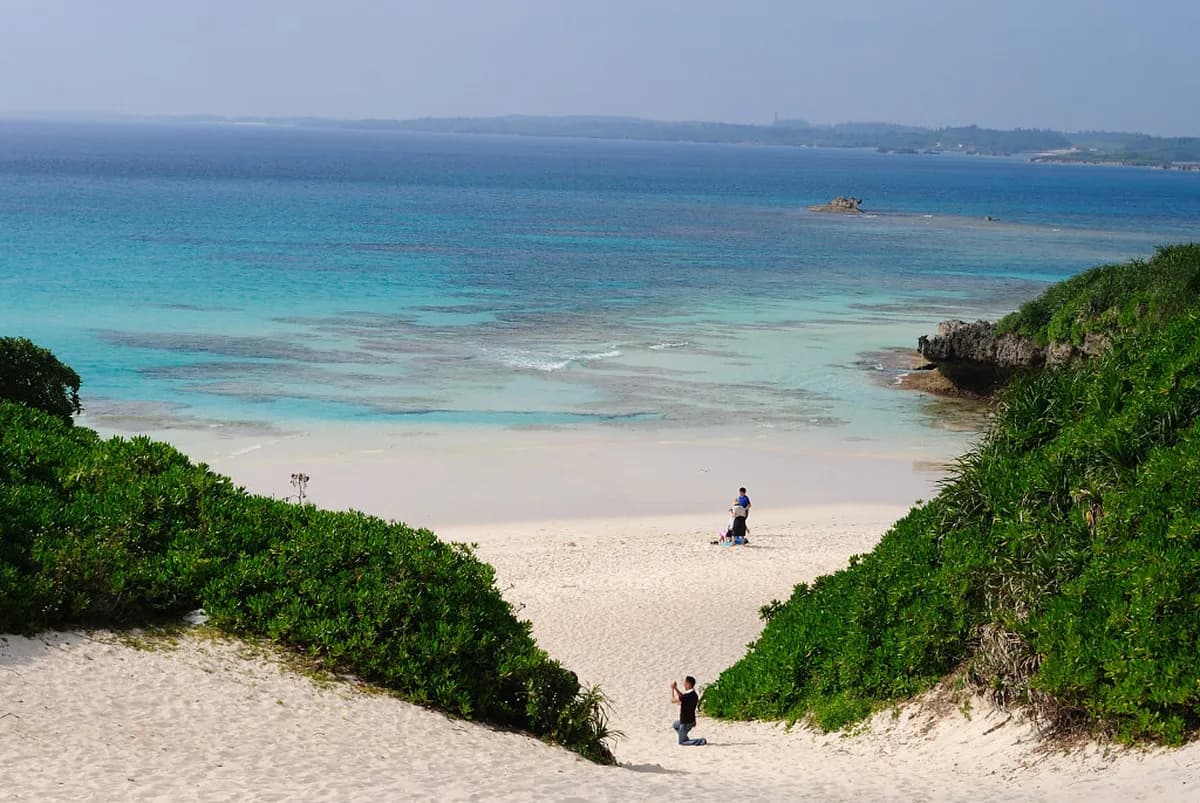
- Sunayama Beach hides a wind-carved rock arch just past a short dune path near Hirara.
- The walk from the parking area takes about five minutes through soft sand and low pines.
- Entry is free and there is no lifeguard, so treat the current near the arch with respect.
- Sunset here draws a steady crowd, and the beach has no lighting once the sun drops.
- Arrive an hour before sunset in July and August if you want a clear spot on the sand.
- Aragusuku Beach
- South of Shigira, Aragusuku Beach offers a smaller rock arch and calmer shallows than Sunayama.
- Free public parking fills up fast, so plan to arrive before 10am in July and August.
- Snorkeling over reef patches close to shore suits beginners better than Miyakojima's open-ocean beaches.
- There is no rental shop on site, so bring your own mask and fins.
- Calmer water here makes it a solid pick for families with younger swimmers.
- Shigira Beach
- Guests based at Miyakojima's main resort cluster rarely walk far to reach Shigira Beach.
- The public strip is free to use, even though loungers nearer the hotels stay guest-only.
- A beach house nearby rents snorkel sets for about 1,500 to 2,500 yen for a half day.
- Shade is scarce along this stretch, so bring your own umbrella or pop-up tent.
- Calm, shallow water here makes it one of the easier spots for first-time snorkelers.
- Sunset Beach on Irabu Island
- Sunset Beach sits on Irabu Island, a short drive across the toll-free Irabu Bridge.
- Its west-facing shoreline gives an unobstructed view once the sun starts dropping toward the water.
- Parking is free, and a small beach house rents kayaks and paddleboards from about 2,000 yen an hour.
- Surf runs calmer here than on Miyakojima's main-island beaches, even during peak August crowds.
- Fewer visitors make it here than to Yonaha Maehama, so afternoons stay noticeably quiet.
- Painagama Beach
- Families staying without a rental car often head to Painagama Beach, the closest sand to Hirara port.
- No bridge crossing is needed, which matters most for visitors arriving straight off the ferry.
- Entry is free, but there is no rental shop, so bring your own gear.
- Early morning visits beat the cruise-ship day-trip crowd that tends to arrive by mid-morning.
- The cove stays calm on most days, which suits younger children well.
- Sawada-no-hama Beach near Tori-ike
- Sawada-no-hama Beach sits beside Tori-ike, the twin sinkhole ponds linked to the sea by underwater tunnels.
- A five-minute walk connects the beach to the Tori-ike lookout point above the ponds.
- Facilities are minimal here, so bring your own water and sun protection.
- Local dive shops use this cove to launch cavern dives, priced from about 12,000 to 18,000 yen.
- Quieter than the main-island beaches, it suits travelers chasing a slower pace over long swims.
- Yoshino Umi Kaigan Beach
- Yoshino Umi Kaigan on the east coast is Miyakojima's best-known off-the-beach snorkeling spot.
- Green sea turtles and reef fish turn up regularly over its calm, shallow reef flat.
- Entry is free, while guided snorkel tours run roughly 3,000 to 5,000 yen per person.
- A rising tide brings the most fish activity, so time your visit around the tide chart.
- The exposed reef at low tide calls for water shoes rather than bare feet.
- Imgya Marine Garden
- Imgya Marine Garden on Irabu Island pairs a shallow snorkeling cove with a glass-bottom boat ride.
- Boat trips run about 25 to 30 minutes and cost roughly 1,500 to 2,000 yen per person.
- Beach access itself is free, and the tide pools suit first-time snorkelers and kids well.
- Boats generally run from 9am to 5pm, with seasonal breaks worth checking ahead of a visit.
- A sheltered lagoon here stays calm even when a typhoon stirs up waves elsewhere on the island.
- Boragawa Beach and Its Coastal Cave Walk
- Boragawa Beach, near Painagama, opens onto a quiet coastal path most visitors skip entirely.
- A ten to fifteen minute walk along the coast leads to a hidden sea cave.
- There are no facilities along the route, so carry water and wear closed shoes.
- Entry to the beach itself is free, and the walk costs nothing beyond your own time.
- This is a good half-hour add-on for travelers who have already covered Painagama nearby.
When Is the Best Time to Swim in Miyakojima?
Swimming season on Miyakojima runs roughly from April through October, when sea temperatures hold near 24 to 29 degrees Celsius. Typhoons pass through most often in August and September, sometimes closing beaches and ferries for a day or two. Winter water stays swimmable for the hardy, but few visitors bother once temperatures drop toward 21 degrees.
July and August bring the heaviest crowds, plus the highest hotel rates of the year. May, June, and October offer calmer beaches, cooler air, and noticeably better rates on resort rooms. Water clarity tends to peak once the rainy season wraps up, usually by early June.
For seasonal averages and current conditions, the Miyakojima city nature information page is a reliable official source. Check it before booking marine activities tied to a specific week of your trip. Conditions can shift quickly once a typhoon system starts forming near the wider Okinawa island chain.
Beach Safety: Currents, Jellyfish, and No Lifeguards
Most of Miyakojima's beaches have no lifeguard on duty, even during peak summer weekends. Strong rip currents form near rock arches and reef breaks, including around Sunayama and Aragusuku. Swim within a marked or obviously sheltered cove rather than pushing out toward the open reef edge.
Habu kurage, a type of box jellyfish, appear most often from June through September. Some beaches post nets or warning flags during peak jellyfish weeks, though not every beach does. A rash guard or light wetsuit cuts sting risk far more than sunscreen alone.
Wind direction matters almost as much as the tide chart for choosing which beach to visit each day. A southerly wind keeps north-facing coves like Sunayama and Yonaha Maehama calm and clear. When the wind swings north, south-facing stretches such as Boragawa and Aragusuku turn calmer instead.
Reef shoes matter more here than at a typical sand beach, since exposed coral and sea urchins cut easily at low tide. Check tide tables before snorkeling trips to Yoshino or Imgya, since low tide leaves less swimmable depth. The official scenic spots page lists current advisories for specific coves.
Getting Around Miyakojima's Beaches by Car
A rental car is close to essential for reaching Miyakojima's beaches, since public transit barely covers the coastline. Most agencies cluster near Miyako Airport, with compact cars running roughly 4,000 to 7,000 yen a day in peak season. Book weeks ahead for July and August, when the island's smaller rental fleet sells out.
Three toll-free bridges connect the main island to its satellites: Irabu, Kurima, and Ikema. The Irabu Bridge alone stretches 3,540 meters, making it the longest toll-free bridge in Japan. Crossing any of the three adds sweeping reef views without costing a single yen.
Driving times run short island-wide, rarely more than 40 minutes between the farthest beaches. Gas stations sit mostly around Hirara, so fill the tank before heading toward Irabu or Shimoji. Rental agencies require an International Driving Permit for most non-Japanese visitors, so arrange one before you fly.
Where to Stay Near Miyakojima's Best Beaches
Shigira's resort cluster puts you steps from Shigira Beach and a short drive from Aragusuku and Yonaha Maehama. Room rates here run higher, often from about 20,000 yen a night in peak season. The Blue Ocean Hotel & Resort MIYAKOJIMA sits in this bracket, within easy reach of several beaches on our list.
Hirara town offers a cheaper base, with guesthouses and business hotels from around 6,000 to 10,000 yen. Painagama Beach sits within walking distance, and restaurants stay open later than they do near the resorts. A car still helps for reaching Yonaha Maehama or the Irabu-side beaches from town.
Irabu Island itself has a smaller but growing set of guesthouses near Sunset Beach and Imgya Marine Garden. Staying there trims the daily bridge commute if those two spots anchor your trip. Book resort rooms three to six months ahead for July and August, since the best properties sell out early.
Is This Miyakojima Beaches Guide Enough for Your Trip?
We would treat Sawada-no-hama as a scenic stop rather than a swimming destination. Its rocky shoreline near Tori-ike suits photos more than long swims. Boragawa's cave walk is a pleasant half-hour add-on, not a beach worth building a full day around. Both still earn a spot on this list, just not as your one big beach day.
Four or five days is enough to reach every beach on this list without rushing between bridges. Pair this guide with our Miyakojima itinerary for a day-by-day plan across the island. First-time visitors do well starting at Yonaha Maehama, then working outward toward Irabu and Shimoji.
Miyakojima rewards travelers chasing clear water and quiet sand over nightlife or shopping. If that trade-off suits you, this island earns a spot on any Okinawa itinerary. For more day-trip ideas around Japan, browse the JapanActivity travel blog.
Frequently Asked Questions
What is the best beach in Miyakojima?
Yonaha Maehama tops most lists, with about seven kilometers of pale sand and calm, clear water. Sunayama Beach is the top pick for photos, thanks to its wind-carved rock arch. Your best choice depends on whether you want long swims or a scenic stop.
When is the best time to swim in Miyakojima?
Swimming season runs from April through October, when sea temperatures hold between 24 and 29 degrees Celsius. July and August bring the warmest water but also the biggest crowds and highest hotel rates. May, June, and October offer calmer beaches and better value.
Are Miyakojima's beaches safe for swimming?
Most beaches have no lifeguard, so currents near rock arches and reef edges deserve real caution. Box jellyfish appear most often from June through September, and a rash guard helps reduce sting risk. Stick to sheltered coves if you are an unsure swimmer.
Do I need a car to see Miyakojima's beaches?
Yes, a rental car is close to essential, since public transit barely reaches the coastline. Three toll-free bridges connect Irabu, Kurima, and Ikema to the main island. Compact cars run roughly 4,000 to 7,000 yen a day, so book ahead for summer.
Ten beaches, three free bridges, and water clear enough to see your own feet make Miyakojima worth the flight from mainland Japan. Pack reef shoes, check the tide chart, and treat the currents with the same respect locals do. Watch the wind direction each morning, since it decides which side of the island stays calmest that day.
Whether you anchor your trip at Yonaha Maehama or split nights between Hirara and Irabu, the island rewards a slower pace. Save this Miyakojima beaches guide before you go, and build the rest of your 2026 itinerary around it.
Free guide: Japan's Hidden Gems
12 under-the-radar places beyond Tokyo & Kyoto — with the best season to visit each and a local tip you won't find in the guidebooks.
You might also like


Continue reading
More guides you'll find useful