Miyakojima Travel Guide: Beaches, Bridges, Diving (2026)
Plan a Miyakojima trip with the best beaches, free inter-island bridges, diving spots, and hotel picks for a smoother 2026 visit to Okinawa.
On this page
Miyakojima lies roughly 400 kilometers east of Taipei, closer to Taiwan than to mainland Japan. This flat coral island skips the mountains and rivers found elsewhere in Okinawa Prefecture. That flat geology filters rainwater through porous limestone, which is why the surrounding sea looks so vividly turquoise.
Five islands make up the Miyako group, and free bridges connect four of them to the main island. Visitors come mainly for wide white-sand beaches, off-the-beach snorkeling, and dramatic coastal viewpoints like Higashi-Hennazaki cape. This guide covers the must-see sights, the free bridges worth driving, and the practical planning details for 2026.
Key Takeaways
- Rent a car before you land, since Miyakojima has no train line and only limited local buses.
- Cross Irabu Ohashi and the island's other bridges for free; none of them charge a toll.
- Check wind direction daily, since it affects beach and snorkel conditions more than the season does.
- Plan three to four days for the main sights, and book cars or dive trips early for 2026.
Must-See Miyakojima Attractions and Beaches
Miyako Main Island holds most of the destination's headline sights, starting with its beaches. Yonaha Maehama Beach stretches for about seven kilometers of white sand, one of the longest in Japan. Even on a busy holiday weekend, the beach rarely feels crowded because of its sheer length. Parasailing operators here offer aerial views over the turquoise shallows for those wanting a different angle.
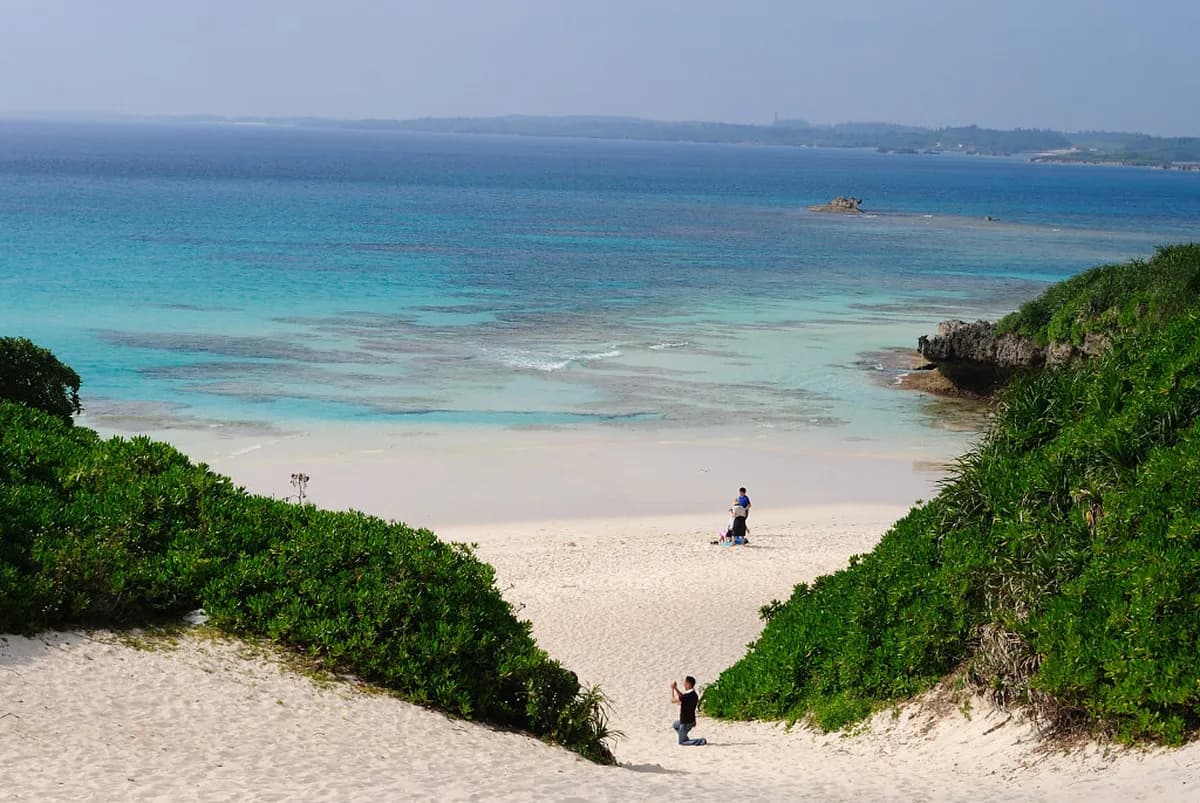
Sunayama Beach is a short walk downhill from its car park, and it rewards the effort. Its famous rock arch now wears a protective safety net, but the aqua-to-navy color gradient still steals the show. For a different kind of view, drive out to Higashi-Hennazaki, the island's easternmost cape. A slim white lighthouse marks the tip, and the surrounding limestone cliffs make a dramatic sunrise spot.
Imgya Marine Garden, also called Imugya Lagoon, is a shallow reef pool sheltered from open swell. It stays calm even when a typhoon churns up the open coast, making it a reliable back-up plan. Families with young children can wade safely near shore while stronger swimmers snorkel deeper sections for clownfish and soft coral.
For a budget-friendly stop, the Atarasu Farmers Market near the airport sells fruit, vegetables, and local sweets for less than supermarket prices. Roadside honesty stalls work on the same idea: drop coins in a box and take fresh produce home. Our complete Miyakojima beaches guide maps every beach by wind direction and tide timing.
- Yonaha Maehama Beach
- Stretches nearly seven kilometers along Miyako Main Island's south shore.
- Parasailing and jet-ski rentals operate right on the sand.
- Better for sunbathing and swimming than for snorkeling.
- Sunayama Beach rock arch
- A short downhill walk from the car park leads to the shore.
- The signature limestone arch now wears a protective safety net.
- Calm southerly wind days bring the clearest, bluest water.
- Higashi-Hennazaki Cape and lighthouse
- Marks the easternmost tip of Miyako Main Island.
- A white lighthouse and dramatic cliffs frame sunrise photos.
- Coastal rocks here were tossed inland by a 1771 tsunami.
- Imgya Marine Garden (Imugya Lagoon)
- A shallow, reef-sheltered lagoon that stays calm during storms.
- Good for young children wading and for snorkeling near the bridge.
- Clownfish and soft coral cluster around the shallow rock edges.
- Atarasu Farmers Market
- Sells fresh produce and local sweets near the airport.
- Prices usually run lower than the island's supermarket chains.
- A handy stop right before a flight home.
- Tako Park and Makiyama Observatory
- A giant red octopus statue marks a shaded, kid-friendly rest stop.
- The bird-shaped observatory nearby gives sweeping views toward Irabu Ohashi.
- Both spots are free to visit and easy to combine in one stop.
Free Bridges That Connect the Miyako Islands
Four bridges link Miyako Main Island to its smaller neighbors, and every one of them is free to cross. Irabu Ohashi is the headline act at 3,540 meters, generally regarded as Japan's longest toll-free bridge. It opened in 2015 and turned a once ferry-only trip to Irabu Island into an easy ten-minute drive.
Kurima Ohashi carries traffic to Kurima Island, a quieter spot known for hidden coves and beach camping. Ikema Ohashi heads north to Ikema Island, passing over water so clear it looks shallow even where it isn't. Shimoji Island connects onward from Irabu via a short causeway, with no separate bridge fee involved.
Unlike many scenic bridges on mainland Japan, none of the Miyako Islands charge a toll or bridge fee. That makes island-hopping by rental car cheap compared with toll-heavy routes near Tokyo or Osaka. Pull into the marked lay-bys partway across Irabu Ohashi for photos, since stopping mid-span isn't allowed.
For a broader look at combining Miyako with nearby islands, our guide to island hopping around Okinawa covers ferry and flight connections. Ishigaki and the Yaeyama Islands sit within reach for travelers who want to extend the trip.
Diving and Snorkeling in Miyako Blue Waters
Shimoji Island holds Miyako's best-known dive sites, including a cluster of flooded limestone caves nicknamed the blue caves. Boats drop divers at cave mouths where sunlight bends through the water in shafts of deep blue. Both certified divers and confident snorkelers can access parts of the cave system, depending on conditions.
Sea turtle sightings are common near Aragusuku Beach and Wai Wai Beach on Miyako Main Island. Morning high tide tends to bring turtles closer to shore to feed on seagrass beds. Local guides ask visitors to keep a respectful distance and never chase or touch the turtles.
Visibility shifts with the wind, so plan snorkel stops around the forecast rather than a fixed itinerary. Southerly winds favor north-facing coves, while northerly winds calm the south-facing bays instead. Booking a half-day boat trip with a local dive shop takes that guesswork off your plate.
Our Miyakojima diving and snorkeling guide lists specific entry points, tide windows, and shop recommendations. Gear rental typically runs a modest daily fee, cheaper than bringing your own equipment on the flight.
Getting There and Getting Around Miyakojima
Miyako Airport (MMY) receives direct flights from Naha, Tokyo Haneda, and several other Japanese cities. A nonstop flight from Haneda takes roughly three hours, similar to flying from Tokyo to Ishigaki. From Naha, the hop down to Miyako is closer to fifty minutes.
There is no train line and only a limited local bus network on the island. A rental car is effectively required to reach the beaches, bridges, and viewpoints covered in this guide. Expect to pay roughly a few thousand yen per day for a small car, insurance included.
Book your car well ahead of travel, especially around Japanese holiday weeks and typhoon season in 2026. Rental fleets on the island shrank after the pandemic, and demand can outstrip supply during peak months. An international driving permit or a JAF Japanese translation of your home license is required at pickup.
Domestic sites often list lower rates than English-language booking platforms for the same car class. Renting through the Japanese version of Rakuten Travel usually turns up better prices, though it helps to have a Japanese reader confirm the booking.
Our guide to getting to Miyakojima breaks down flight routes, airport transfers, and car rental counters in more detail. It also covers backup options if a typhoon delays your flight.
Where to Stay in Miyakojima
Yonaha Maehama's beachfront strip holds the island's best-known resorts, including Miyakojima Tokyu right on the sand. Expect roughly 12,000 to 25,000 yen a night for a standard resort room in this area, more for ocean-view suites.
Hirara town, the island's commercial center, suits travelers who want restaurants and nightlife within walking distance. Nishizato Street is lined with izakaya bars and late-night spots, and guesthouse rooms here often run under 8,000 yen. It's also the most practical base for early flights, since it sits close to the airport.
Shimojishima and Irabu Island offer quieter boutique stays and traditional Okinawan guesthouses away from the main tourist strip. These suit families or small groups who want a slower pace after a day of diving or driving.
Our where to stay in Miyako guide compares neighborhoods, price bands, and which areas suit families versus couples. It also flags which properties sit closest to the airport for early departures.
For a wider spread of listings, the Japanese Rakuten Travel site often shows more availability and better cancellation terms than international booking apps. Machine translation in your browser makes the Japanese listings easy enough to navigate.
Planning a Smooth Miyakojima Trip
Most travelers spend three to four days on Miyako, enough time for the main beaches, one bridge drive, and a snorkel or dive outing. Add a fifth day if you want to include Shimoji's blue caves or a slower loop around Irabu Island.
Weather here swings more on wind direction than on calendar season, which is why locals check the forecast daily. A southerly wind calms the north-facing beaches, while a northerly wind does the opposite for south-facing coves. Building a flexible day-by-day plan beats locking every beach to a fixed date.
The table below uses long-term averages from Japan's Meteorological Agency to set rough expectations, not guarantees. Sea temperature rarely drops below the low twenties even in winter, so a wetsuit rental usually solves any chill.
Our Miyakojima itinerary guide lays out sample three- and five-day schedules with backup rainy-day options. It also flags which sights to prioritize if a typhoon shortens your trip.
- Spring (March to May)
- Air highs sit near 25 degrees Celsius with the sea warming toward 24.
- Rain stays light before the mid-May rainy season begins.
- A good window for calmer winds and lower typhoon risk.
- Rainy season (mid-May to mid-June)
- Short downpours interrupt otherwise sunny stretches on most days.
- Sea temperatures climb past 26 degrees even during this window.
- Flexible daily plans work better than a fixed hour-by-hour schedule.
- Typhoon season (August to September)
- At least one storm typically crosses the Miyako Islands each year.
- Flights and ferries can pause for a day or two around landfall.
- Clear skies usually return within a few days once a storm passes.
- Winter (December to February)
- Air highs hover near 21 degrees Celsius, mild by most standards.
- Sea temperatures drop toward the low twenties, still swimmable for many visitors.
- Crowds thin out and hotel rates tend to soften.
Explore More Miyakojima Guides
Plan a Miyako Island trip — how to get there, the best beaches, diving and snorkelling, and a 3-day itinerary across the bridges.
Plan Your Miyako Trip
- How to Get to Miyakojima: Flights & Transfers 2026
- Miyakojima Itinerary: The Perfect 3 Days for 2026
- 10 Best Miyakojima Beaches to Visit in 2026
- Miyakojima Diving and Snorkeling Guide 2026
Wider Okinawa
Going deeper on this theme? Our What to Eat in Miyakojima guide covers it in detail, with the practical planning this page leaves out.
Frequently Asked Questions
Is Miyakojima worth visiting?
Yes, if you want beaches and water clarity that rival anywhere else in Japan without the crowds of Okinawa Main Island. Expect long white-sand stretches, calm reef lagoons, and easy access to sea turtle snorkeling. The trade-off is a car-dependent layout and fewer restaurants than a bigger island, so plan accordingly.
How do I get to Miyakojima, Okinawa?
Fly into Miyako Airport (MMY) on a direct flight from Tokyo Haneda, which takes roughly three hours, or connect through Naha in about fifty minutes. There are no train links, so plan to rent a car right at the airport for the rest of your stay.
How many days do you need in Miyakojima?
Three to four days covers the main beaches, one scenic bridge drive, and a snorkeling or diving outing without rushing. Add a fifth day for Shimoji's blue caves or a slower pace around Irabu Island. Our Miyakojima itinerary guide breaks this down day by day.
Is Okinawa expensive to visit?
Okinawa generally costs less than Tokyo or Kyoto for lodging and food, though Miyakojima's resort beaches can push prices higher in peak season. Guesthouse rooms in Hirara often run under 8,000 yen a night, while beachfront resorts can reach 20,000 yen or more. Car rental and flights are usually the biggest costs.
Do you need a rental car on Miyakojima?
Yes, a rental car is close to essential since the island has no train and only limited local buses. Beaches, bridges, and viewpoints sit spread across the island, often a 20 to 40 minute drive apart. Book your car months ahead during busy 2026 travel weeks, since fleets are smaller than before.
Miyakojima rewards travelers willing to rent a car and chase good wind conditions across its beaches and bridges. The free inter-island bridges alone make for one of Japan's most scenic half-day drives.
Pair a few days here with wider exploring using our Okinawa attractions guide for the main island and beyond. Book your flights, car, and any dive trips early, especially if you're traveling during the 2026 summer peak.
For ticket prices, opening hours and visitor details on each sight, browse our Miyakojima attractions hub.
Free guide: Japan's Hidden Gems
12 under-the-radar places beyond Tokyo & Kyoto — with the best season to visit each and a local tip you won't find in the guidebooks.
You might also like


Continue reading
More guides you'll find useful