
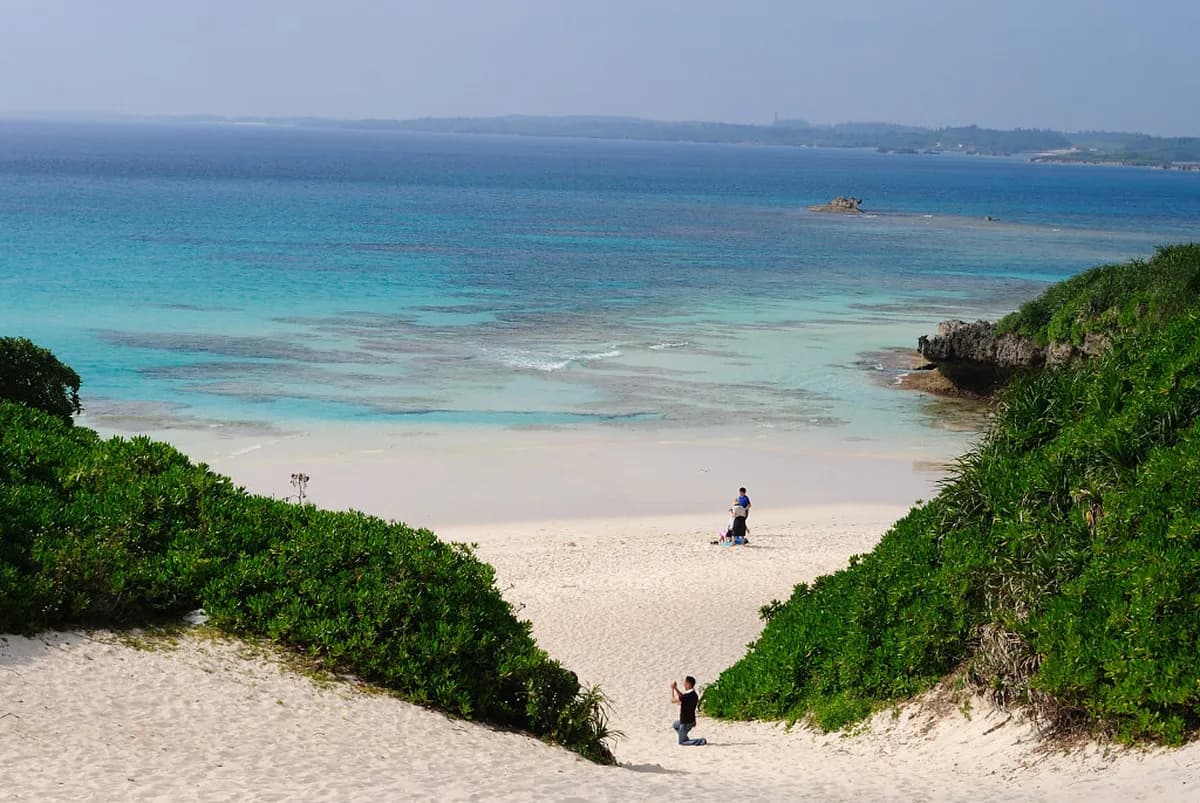
Sunayama Beach is a true highlight of Miyakojima, captivating visitors with its stunning natural beauty. This guide helps you plan an unforgettable visit to this iconic spot. You will discover its unique features and how to make the most of your time there.
The beach is famous for its picturesque arch rock and pristine white sand. Many travelers consider it a must-see on any Miyako Island itinerary. Prepare for an incredible experience as you explore this natural wonder.
This comprehensive guide provides essential details for your trip. Learn about access, parking, and the best times to visit. We also cover activities, safety tips, and how to integrate Sunayama Beach into your broader Miyakojima adventure.
Sunayama Beach: An Overview of Miyakojima's Iconic Spot
Sunayama Beach ("Sand Mountain Beach," 砂山ビーチ) sits on Miyako's northwest coast in the Nikadori area of Hirara, and it is one of the most photographed spots on the island in 2026. It gets its name from the sand dune every visitor has to cross to reach the shore. The beach itself is a short crescent of fine white sand facing turquoise water, framed by a natural rock arch on one side of the bay.
The arch is the reason Sunayama shows up in almost every Miyakojima photo feed: centuries of wave and wind action have carved a limestone opening that perfectly frames the sea behind it. It's one of Miyako Island's top attractions, and because it faces northwest, it's also one of the better places on the island to catch a beach sunset with the arch as a silhouette.
Sunayama Beach is free, open 24/7, and just 15 minutes by car from Hirara town, so it's easy to fold into a half-day or full-day plan. Most visitors spend 60-120 minutes here between the walk in, photos, and a swim, though photographers often linger longer for the light.
How to Get to Sunayama Beach: Access and Parking
A rental car is effectively required. Miyako has no public transit route that reaches Sunayama Beach, and taxi fares from Hirara add up quickly if you're staying for a few hours. The drive from central Hirara takes about 15 minutes; from Miyako Airport (MMY) it's roughly 9km and 20 minutes, and from Shimojishima Airport (MMD) it's around 22km and 35-40 minutes.
Follow the signs for Sunayama Beach once you're on the coast road; it leads directly to a free parking lot that holds about 30 cars. On clear weekends and holidays this lot fills by around 10:00, so arrive before 9:30 or after 14:00 if you want an easy spot and a quieter beach.
Consider renting a car for your Miyakojima trip well before peak season (roughly May through October), when demand for vehicles island-wide is highest and parking pressure at Sunayama is worst.
The Sunayama Beach Experience: Climbing the Dune and the Arch Rock
The journey to the beach is part of what makes Sunayama memorable. From the parking lot, a short path shaded by pandanus and screwpine trees leads to the base of the dune; the climb to the top takes about 2-3 minutes. From the lot, you can't see the ocean at all — just the wall of pale sand ahead of you.
Cresting the dune is the "walk-up reveal" people talk about: the turquoise bay appears all at once, framed by green vegetation on either side. It's worth pausing at the top for a moment before heading down — the view is arguably better from up there than it is on the sand. Descending takes only a few seconds and drops you straight onto soft white sand.
The Arch Rock stands at one end of the cove, carved into uplifted coral cliffs. For the classic shot, step back a few paces rather than standing directly beneath the arch — occasional falling rock has been reported at the cliff face, and the extra distance also lets you fit the whole formation in frame.
Morning side-light brings out the texture in the limestone, while sunset turns the arch into a dark silhouette against an orange sky — a direct result of the beach's northwest-facing orientation. Midday sun (roughly 10:00-14:00) is best if you want the water itself to read as saturated "Miyako Blue" rather than the rock formation.
Best Time to Visit Sunayama Beach for Photos and Relaxation
Your ideal visit time depends on what you're after. For the most saturated Miyako Blue water, aim for direct overhead sun between 10:00 and 14:00 on a clear, low-wind day. For the Arch Rock itself, sunset is the highlight — the northwest-facing bay puts the rock in silhouette against the evening sky, which is the shot most first-time visitors come away with.
To avoid the crowd that builds around the dune and parking lot, arrive before 9:30 or come back after 14:00; both windows are quieter and the light is softer for portraits.
Spring (April-May) and fall (October-November) bring the most reliable weather with fewer tourists. Summer (July-August) is peak season with the warmest water but also the biggest crowds, plus the start of box jellyfish season (roughly May through October) — wear a rash guard if you plan to swim during these months, since there are no protective nets here. Winter (December-February) has cooler water, around 20°C, but the bay still photographs beautifully on a clear day.
Explore other Miyakojima beaches if you want a flatter, easier alternative on days when the dune or the crowds aren't appealing.
Activities at Sunayama Beach: Swimming, Snorkeling, and More
Swimming near the shore is the most popular activity, and the gentle shallows suit families in calm conditions. This is not an officially patrolled swimming area, so treat it as a "swim at your own risk" beach rather than a resort pool.
Snorkelers can reach a live coral reef roughly 30-50 meters offshore; fins make the swim out easier, and a buddy is worth having given the lack of lifeguards. Stick close to shore if conditions look choppy — the reef is a "photo-only day" call on windy afternoons.
Photography is arguably the main draw, whether that's the Arch Rock, the dune reveal, or the wider cove. Sunbathing on the soft sand rounds out a typical visit, and because the beach is small, it rarely feels crowded even on a busy day.
Safety Tips for Enjoying Sunayama Beach
There are no lifeguards on duty at Sunayama Beach. Swim within your abilities, stay reasonably close to shore, and never swim alone — currents can pull harder than they look, especially further out toward the reef.
Two hazards are specific to this beach: falling rock at the Arch Rock cliff face, so don't linger directly underneath it, and box jellyfish (habu kurage) from roughly May to October, when a rash guard or skin suit is a sensible precaution since there are no protective nets.
When snorkeling, avoid touching or standing on the coral — it takes decades to recover from a single footprint. Reef-safe, mineral-based sunscreen protects both your skin and the reef, and packing out everything you bring in (there are no bins on the beach) keeps the cove as clean as you found it.
Stay hydrated and seek shade during peak sun hours; there's little natural shade on the sand itself, so bring your own if you're staying more than an hour.
Facilities and Amenities at Sunayama Beach
Basic public restrooms and outdoor rinse showers sit near the parking area, though operation can be seasonal. There are no shops, vending machines, or restaurants on-site, so bring your own water and snacks, or plan lunch in Hirara before or after your visit.
The dune crossing is worth planning around if you're travelling with young children, older relatives, or anyone with mobility limitations. The sand is soft and the climb is short but genuinely steep, and the return trip back up feels more strenuous than the walk in — a baby carrier works far better here than a stroller, which cannot cross the dune at all.
Pack a beach blanket, a microfiber towel, and a bag for your own trash, since there are no bins on the beach itself. A shaded rest at the parking area or a quick stop in Hirara afterward is an easy way to bookend the visit.
Integrating Sunayama Beach into Your Miyako Island Itinerary
Sunayama Beach fits neatly into a full-day loop around the north of the island. Start early — before the 9:30 parking crunch — for swimming and photos while the light is still soft, then head into Hirara for lunch and a taste of Okinawan cuisine and fresh seafood.
In the afternoon, drive across the Irabu Ohashi Bridge, Japan's longest toll-free sea bridge, and continue to 17END on Shimoji Island to watch aircraft pass low overhead on final approach. A day built this way — morning beach, midday bridge, afternoon lighthouse or reef stop — runs about six to seven hours door to door.
Close the loop back at Sunayama or a nearby west-facing beach for sunset, since the same northwest orientation that frames the Arch Rock at dusk also delivers one of the better sunset views on this side of the island.
Nearby Attractions and Day Trip Ideas from Sunayama Beach
Miyakojima has several beaches near Sunayama worth weighing against each other depending on who's in your group and how much climbing you want to do:
- Sunayama Beach — the Arch Rock and the dune reveal, but a steep sand climb each way; best suited to photographers and travelers comfortable with a short, strenuous walk.
- Yonaha Maehama Beach — flat, easy access and seven kilometers of sand about 25 minutes south; the better choice for families, older travelers, or anyone who'd rather skip the dune.
- Shimoji Island Blue Cave — about 20 minutes away, with genuinely good snorkeling and diving if Sunayama's shore reef feels too thin.
Beyond the beaches, Higashi-Henna Misaki Lighthouse is roughly 35 minutes from Sunayama and worth the drive for panoramic cliff views, while Imgya Marine Garden, about 20 minutes away, suits a gentler, shore-based snorkel if you're traveling with less confident swimmers.
Frequently Asked Questions
Why is it called Sunayama Beach, and what does it mean?
Sunayama Beach translates to 'Sand Mountain Beach' in Japanese. This name perfectly describes the prominent sand dune visitors must climb to reach the shore. The dune creates a dramatic reveal of the stunning turquoise bay.
How much time should you plan for visiting Sunayama Beach?
Plan to spend at least 1-2 hours at Sunayama Beach. This allows time for the walk to the beach, swimming, relaxing, and taking photos of the Arch Rock. If you plan to snorkel, allocate more time.
What's the best time of day for photos at Sunayama Beach?
The best time for vibrant 'Miyako Blue' photos is between 10:00 AM and 2:00 PM when the sun is directly overhead. For softer light and fewer shadows, consider visiting early morning or late afternoon. The Arch Rock looks stunning in various lighting conditions.
Are there lifeguards at Sunayama Beach?
No, there are no lifeguards on duty at Sunayama Beach. All visitors swim at their own risk. It is important to exercise caution and avoid swimming alone, especially if you are not a strong swimmer.
Can you snorkel at Sunayama Beach?
Yes, snorkeling is possible at Sunayama Beach. The live coral reef is located about 30-50 meters offshore. Swim out to discover diverse marine life. Remember to bring your own snorkeling gear as rentals are not available on site.
Sunayama Beach stands as a true gem of Miyakojima, offering unparalleled natural beauty and a unique visitor experience. Its iconic Arch Rock and pristine waters make it a must-see destination. This guide provides all the necessary information for a memorable trip.
From planning your access and timing to enjoying activities and ensuring safety, you are now well-equipped. Integrate this stunning beach into your broader Miyako Island adventure for an unforgettable journey. Prepare to be enchanted by its charm and breathtaking scenery.
Remember to respect the environment and local customs during your visit. Leave no trace to help preserve Sunayama Beach for future generations. Enjoy the magic of this incredible Japanese paradise.
For authoritative information, refer to the Sunayama Beach guide on Japan Guide and Sunayama Beach on Wikipedia.