Renting a Car in Okinawa: Your Essential Guide & Tips
Navigate Okinawa with ease! Discover everything about renting a car, from booking and requirements to driving tips, parking, and avoiding common mistakes.
On this page
Okinawa, Japan's tropical paradise, truly comes alive when explored by car. Public transportation is limited outside of Naha, making a rental car almost essential for experiencing the island's hidden beaches and historical sites. From spontaneous detours to remote cafes to reaching the stunning beaches of Northern Okinawa, a rental car transforms your itinerary. This guide covers everything you need to know about renting a car in Okinawa in 2026, from securing your vehicle to navigating local roads.
Do You Actually Need a Car in Okinawa?
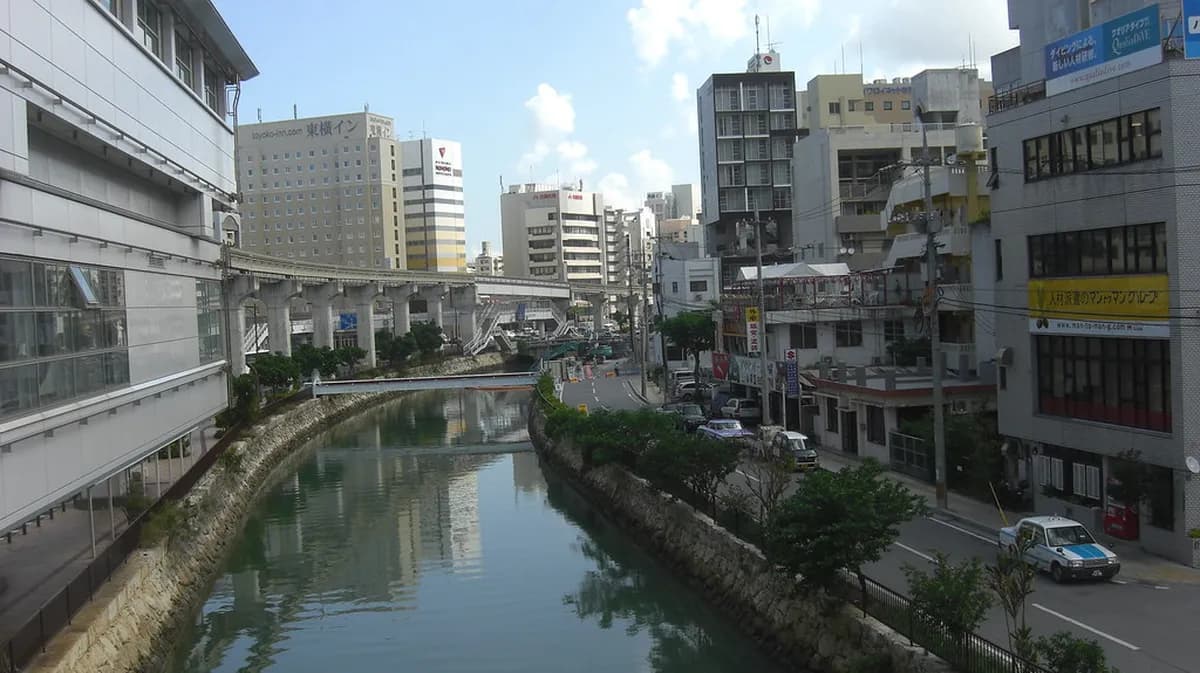
The answer depends entirely on where you plan to go. Within Naha city, you do not need a car. The Yui Rail monorail connects Naha Airport to Shuri Castle and Kokusai Dori efficiently, and taxis cover the gaps. If your trip is Naha-only, skip the rental and see the full guide to getting around Naha instead.
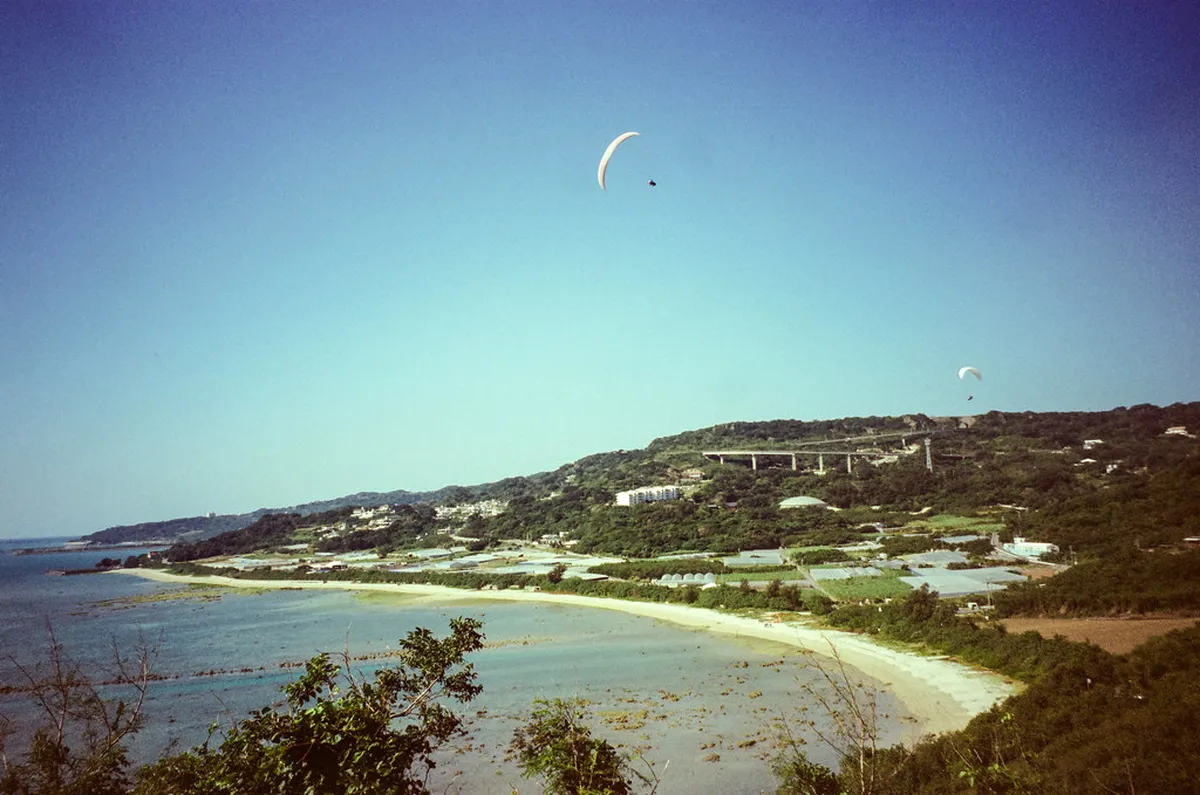
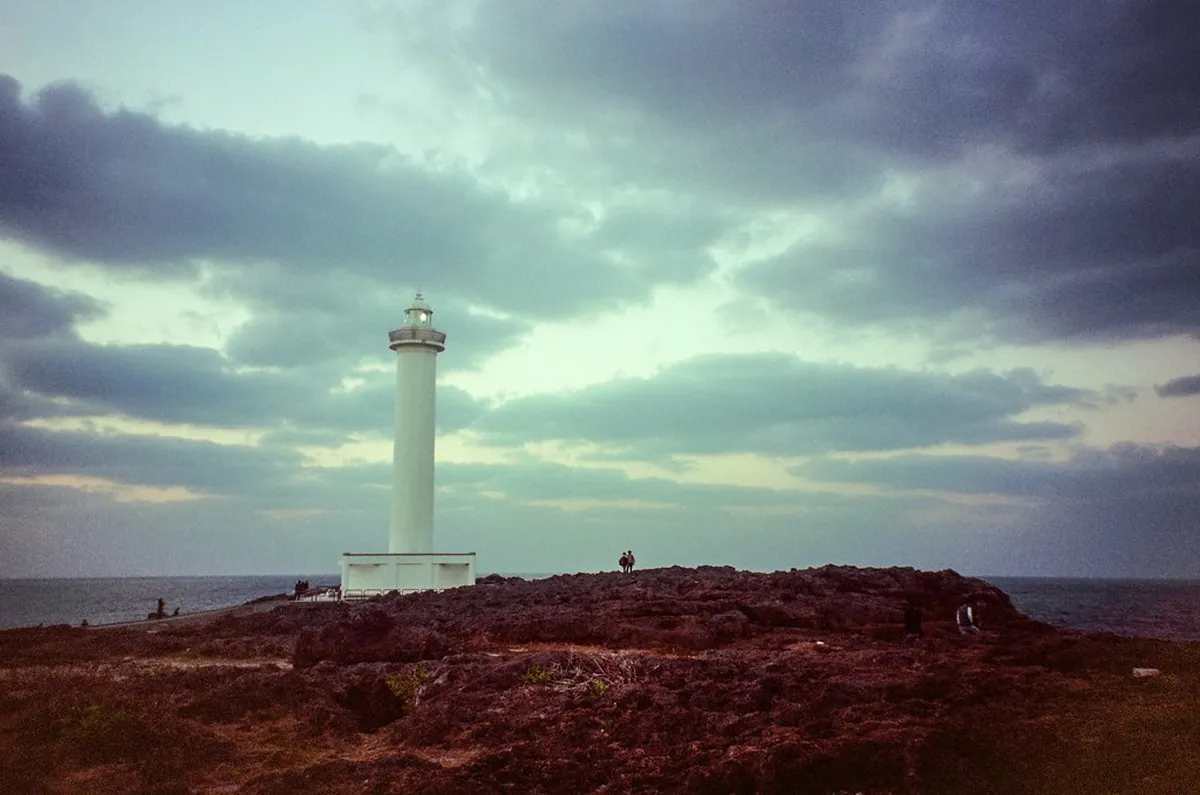
The moment you leave Naha, the picture changes completely. Buses to the north run infrequently — sometimes one or two per hour on the main route, with long waits at transfer points. Reaching Churaumi Aquarium by bus from Naha takes around 2.5 hours each way and requires a transfer. By car on the expressway it is about 90 minutes. The further north you go, the worse the bus situation becomes. Cape Hedo at the island's tip is essentially unreachable without your own wheels.
The financial case also holds up for most travelers. A daily car rental for ¥4,000–¥8,000 is competitive with two or three taxi fares, and significantly cheaper than the ¥2,000-plus bus fare each way to Nago. For couples or families, the per-person math is even more compelling.
Essential Requirements for Renting a Car
Japan has strict documentation rules, and Okinawa rental counters enforce them without exception. The single most common reason travelers are turned away is missing paperwork — so sort this before you fly.
Most nationalities need an International Driving Permit (IDP) issued under the 1949 Geneva Convention, presented alongside their original home-country license and passport. The IDP must be obtained in your home country before you travel — Japan does not issue them. Note that the 1968 Vienna Convention IDP is not accepted in Japan; confirm your country issues the 1949 Geneva version.
A separate rule applies to drivers from Germany, France, Belgium, Monaco, Switzerland, Slovenia, and Taiwan. These countries have bilateral agreements with Japan, so their drivers instead need an official Japanese translation of their domestic license — either from the Japan Automobile Federation (JAF) or from their country's embassy in Japan. An IDP alone will not work for these nationalities. Check the Japan Automobile Federation website to confirm your country's requirement.
- Your original home-country driver's license
- International Driving Permit (1949 Geneva Convention) — most nationalities
- Official JAF Japanese translation — Germany, France, Belgium, Monaco, Switzerland, Slovenia, Taiwan
- Passport (for identity verification)
- Credit card for deposit and payment
- Age: most companies require 21 or older; some accept 18–20 with a surcharge
How to Rent a Car in Okinawa
Book online in advance. During summer (July–August), Golden Week, and Obon, rental stock across Okinawa sells out weeks ahead. Booking at least four to six weeks before peak periods is not excessive. For shoulder season (October–November, March–April), two to three weeks usually suffices, but earlier is always better for price.
The best pickup point is Naha Airport (OKA). Every major company has a counter or shuttle pickup at the domestic terminal. After collecting your bags, follow the "Rent-A-Car" signs to the dedicated shuttle bay on the ground floor. Shuttles run every five to fifteen minutes and take about ten minutes to reach the rental offices clustered just south of the airport. Allow 30–60 minutes for paperwork, vehicle inspection, and setup — more during peak periods.
At the counter, confirm your insurance coverage, request an ETC card if you want expressway convenience, and ask whether a child seat is needed. Inspect the car carefully before driving off and photograph any existing marks. Most companies provide a diagram to mark pre-existing damage — use it. Return the car with a full tank; the nearest petrol station to the rental cluster south of the airport is on Route 331 before the Naha IC.
Top Car Rental Companies in Okinawa
Several reputable companies operate at or near Naha Airport. Most offer English-language support at their main counters and GPS systems with English menus. Prices below are indicative 2026 daily rates for a compact car in standard season.
- OTS Rent-A-Car — Okinawa's most tourist-facing local brand. Strong English support, ETC card packages, and good shuttle frequency. Daily rates from around ¥4,000. Okinawa-specific focus means staff are familiar with typical tourist routes. See OTS RENT-A-CAR.
- Times Car Rental — Major nationwide chain with a large fleet and multiple drop-off options. Rates are competitive, usually ¥4,500–¥7,000 for a compact. Good for travelers who want a familiar, standardized experience. See Times CAR RENTAL.
- Toyota Rent a Car — Reliable vehicles, well-maintained fleet, slightly higher price point (¥5,500–¥9,000) but very consistent service. Good choice if you prefer a specific model type.
- Nippon Rent-A-Car — Competitive pricing and a broad fleet including minivans for groups. Useful if the above three are sold out during peak periods.
When selecting a company, factor in the ETC card option, airport shuttle frequency, and whether they stock kei cars (the small 660cc box-shaped cars). Kei cars are perfectly adequate for two people and light luggage, easier to park on narrow roads, and typically cost ¥1,000–¥2,000 per day less than a standard compact. For four adults with large suitcases, step up to a compact or mid-size.
Insurance Options for Rental Cars in Okinawa
All rentals include basic liability coverage as required by Japanese law, but this covers third-party claims only. You will almost certainly want to add the optional damage coverage at the counter. Standard supplemental insurance (called Non-Operation Charge or NOC waiver) typically adds ¥1,000–¥2,000 per day and covers you for vehicle repair costs minus a deductible if you damage the car.
A full NOC waiver — zero deductible — costs around ¥1,500–¥3,000 more per day. For most travelers the mid-tier option (reduced deductible) offers a practical balance. If your home credit card includes international car rental insurance, check the policy carefully: many cards exclude Japan, and almost none cover the NOC (the lost-revenue charge the rental company levies while the damaged car is off the road). That NOC can run ¥50,000–¥150,000 for significant damage, which is why the waiver matters.
Driving in Okinawa: Rules, Tips, and What to Expect
Japan drives on the left, with right-hand-drive vehicles. The adjustment takes most drivers one to two hours before it starts to feel natural. The most common moment of confusion is turning left from a junction — resist the instinct to cut across to the right lane. Stay wide, stay left, and let the road guide you. Traffic outside Naha is genuinely light, so you have room to concentrate.
Speed limits: 30–40 km/h in urban streets, 50–60 km/h on main roads, and 80 km/h on the expressway. Speed cameras are present on expressways and some main roads. Japan's drink-driving law is zero-tolerance — any detectable alcohol means an automatic fine and arrest, with serious consequences for everyone in the vehicle.
One Okinawa-specific hazard both competitors underplay: the road surface. Okinawa's asphalt contains limestone aggregate, which becomes noticeably slippery when wet. Rain arrives quickly in the tropics and the roads lose grip fast. Reduce speed earlier than you think necessary when braking in the wet, and give extra following distance. This is especially relevant on the winding coast roads in the north.
- All passengers must wear seatbelts — enforceable fine for the driver if any passenger is unbelted
- Children under six must be in a child seat — request one when booking, typically ¥500–¥1,000 per day
- No mobile phone use while driving; hands-free is permitted
- Bus lanes operate on weekday mornings and evenings in Naha — stay out of them
- About 80% of accidents in Okinawa occur in car parks — take extreme care reversing in tight lots
Navigating Okinawa: GPS, Map Codes, and Apps
Most rental cars include a built-in GPS with an English language option. The key difference from Western navigation: Japanese GPS units use map codes (a unique number for each location) rather than street addresses. Entering a map code is faster and more reliable than trying to type addresses in romaji. Before your trip, look up the map codes for Churaumi Aquarium (553 075 797*74), Cape Manza (206 311 804*55), and any other key stops. Most attraction websites list their map code on the access page.
Google Maps works well throughout Okinawa and handles real-time traffic. If your rental car's GPS is Japanese-only, Google Maps on a mounted phone is a perfectly workable alternative. Road signs on national routes display both Japanese and roman characters, so you will not need to read kanji to navigate main highways. In smaller villages, rely on the GPS.
The Okinawa Expressway: Tolls, ETC Cards, and Driving North
The Okinawa Expressway (沖縄自動車道) runs from Naha IC in the south to Kyoda IC near Nago in the north — roughly 57 km. It is the fastest route for any destination north of Urasoe, including American Village, Cape Manza, and Churaumi Aquarium. Without the expressway, you are on congested coastal roads that can add 30–45 minutes each way, particularly on weekends and holidays when Route 58 through Chatan backs up.
The full run from Naha IC to Kyoda IC costs approximately ¥1,020 in cash (2026 rate). With an ETC card the same section runs around ¥810 — a modest saving, but the real value is speed through the toll gate. ETC-equipped cars pass through without stopping. Cash payers queue in the general lane. Rent the ETC card from your rental company: it typically costs ¥330–¥550 per day as an add-on, and the toll savings plus time saved usually justify it on any multi-day trip north of Naha.
For Churaumi Aquarium, exit at Kyoda IC and follow Route 449 west to Motobu. For Cape Manza and the resort coast, exit at Okinawa South IC or Okinawa North IC and head west on Route 6. Google Maps will route you correctly once you set the destination. Note that the expressway speed limit is 80 km/h and is camera-enforced.
Parking Your Rental Car in Okinawa
Outside Naha, parking is easy. Virtually every tourist attraction, roadside restaurant, and beach access point has a free or inexpensive car park. Budget zero stress for parking once you are north of Okinawa City.
In Naha and around Kokusai Dori, expect paid parking in multi-story garages or coin lots. Hourly rates run ¥100–¥300 per hour, or ¥400–¥700 for a full day. Many coin lots use a locking plate in the parking space: after you park, a metal plate rises under the car to lock it in place. To leave, pay at the fare machine in the lot, enter your space number, and the plate lowers after payment. Do not delay moving the car — the plate re-locks after a set time regardless of whether you have paid, requiring you to pay again.
Never park on the roadside in Naha without a clear "parking permitted" sign. Fines are common and towing is used in high-restriction zones near the monorail stations. Hotel parking is usually ¥500–¥1,000 per night; confirm when booking if your hotel charges separately.
Fueling Up: Gas Stations and Fuel Types
Most rental cars run on regular unleaded gasoline — レギュラー (regyuraa) — dispensed from a pump with a red handle. Confirm the fuel type with the rental company before driving off; using diesel in a petrol car causes serious engine damage. The other common fuel types are ハイオク (high-octane, yellow handle) and 軽油 (diesel, green handle).
Full-service stations are still common in Okinawa. Pull up and an attendant will ask what you need. Say "regyuraa man-tan onegai shimasu" (regular, full tank please) and they handle the rest. At self-service stations, select レギュラー on the screen, choose 満タン (full tank), and pay at the pump. Credit cards are accepted at most pumps, though some rural stations are cash only. Allow around ¥160–¥175 per litre in 2026 for regular fuel.
Return the car with a full tank — this is standard policy at all companies, and they will charge a penalty rate (typically ¥250+ per litre) if you return it low. Fill up at a station near the rental office, not at the overpriced station immediately adjacent to the airport terminal.
Common Mistakes to Avoid When Renting a Car in Okinawa
Arriving without the correct documentation is the single most disruptive mistake. If you forget your IDP or JAF translation at home, the rental company will not serve you, and you cannot get the document in Japan. Double-check the paperwork requirement for your specific nationality before you travel.
Booking a car that is too large is the second most common error. A full-size sedan feels unwieldy on the narrow village roads in the north and is harder to park at beach access points with tight turning circles. For two people, a kei car is genuinely sufficient. For four people, a standard compact is enough unless you have multiple large suitcases.
Other pitfalls worth knowing:
- Booking a hotel without confirming parking — some smaller Naha guesthouses do not have on-site parking
- Ignoring rental office opening hours — several companies stop accepting late returns after 20:00 or 21:00; check before booking a late-evening return
- Underestimating travel time on weekends — Route 58 along the west coast backs up badly on Saturday and Sunday afternoons between Naha and Chatan; use the expressway instead
- Skipping the vehicle inspection photos — take photos of every panel before leaving the lot, even if staff wave you through quickly
- Driving in Naha unnecessarily — the monorail is faster and parking adds cost; park at a Yui Rail station car park and take the train for central Naha errands
Rental Car Travel Times to Okinawa's Top Attractions
These times are from Naha Airport (OKA) via the expressway where applicable, under moderate weekday traffic. Add 15–30 minutes on weekends and holidays, particularly between Naha and Okinawa City. See also the full guide to getting between Okinawa regions for multi-day itinerary planning and the Okinawa attractions overview for deciding which sites to prioritize.
- Kokusai Dori, Naha: 15–20 minutes — easiest to reach by monorail; park at a Yui Rail station instead
- Shuri Castle, Naha: 25–30 minutes — free parking on site
- American Village, Chatan: 40–50 minutes via expressway (Okinawa South IC exit)
- Cape Manza: 55–65 minutes via expressway (Okinawa North IC, then west)
- Churaumi Aquarium, Motobu: 85–100 minutes via expressway to Kyoda IC, then Route 449 — allow a full day
- Nago Pineapple Park: 80–95 minutes, near Kyoda IC
- Cape Hedo (northernmost tip): 120–150 minutes — plan an early start; no direct bus alternative exists
- Okinawa World (Nanjo, south): 30–40 minutes south of the airport via Route 507
Frequently Asked Questions About Car Rental in Okinawa
Planning a trip to Okinawa often brings up several questions about car rental. Here are answers to some of the most common queries to help you prepare.
Frequently Asked Questions
How much does a rental car cost in Okinawa?
Daily rental costs typically range from ¥4,000 to ¥8,000 / ~$27 to ~$54, depending on the car size and rental duration. Additional costs include insurance, ETC card fees, and fuel. Booking in advance can help secure better rates.
Which renting a car in Okinawa options fit first-time visitors?
First-time visitors should choose a major rental company like OTS or Times Car Rental. They offer good English support and comprehensive insurance options. Opt for a smaller, automatic car for easier navigation on narrow roads.
What should travelers avoid when planning renting a car in Okinawa?
Avoid arriving without an International Driving Permit (IDP) as you cannot rent a car. Do not ignore local traffic rules, especially speed limits and parking regulations. Also, avoid last-minute bookings during peak travel seasons.
Is renting a car in Okinawa worth including on a short itinerary?
Yes, even for a short itinerary (3-4 days), renting a car is highly recommended. It maximizes your time, allowing you to see more attractions efficiently. Public transport limitations make a car invaluable for quick exploration.
What should I do in case of an accident or breakdown?
In case of an accident, first ensure everyone's safety and call the police (110) and your rental company immediately. For a breakdown, contact your rental company's emergency roadside assistance. They will guide you through the next steps.
Renting a car in Okinawa unlocks the full potential of your visit. The monorail handles Naha; beyond that, the car handles everything else. Sort your IDP or JAF translation before you leave home, book early for peak season, add the ETC card for the expressway north, and take the time to inspect the vehicle before driving off. The roads are relaxed, the scenery is extraordinary, and the north of the island is genuinely unreachable any other way.
Free guide: Japan's Hidden Gems
12 under-the-radar places beyond Tokyo & Kyoto — with the best season to visit each and a local tip you won't find in the guidebooks.
You might also like


Continue reading
More guides you'll find useful