
10 Best Kagoshima Private Onsen for a Relaxing Soak (2026)
Discover the top 10 kagoshima private onsen spots for 2026. Get expert advice on costs, locations, and booking tips for a perfect soak in Japan.
On this page
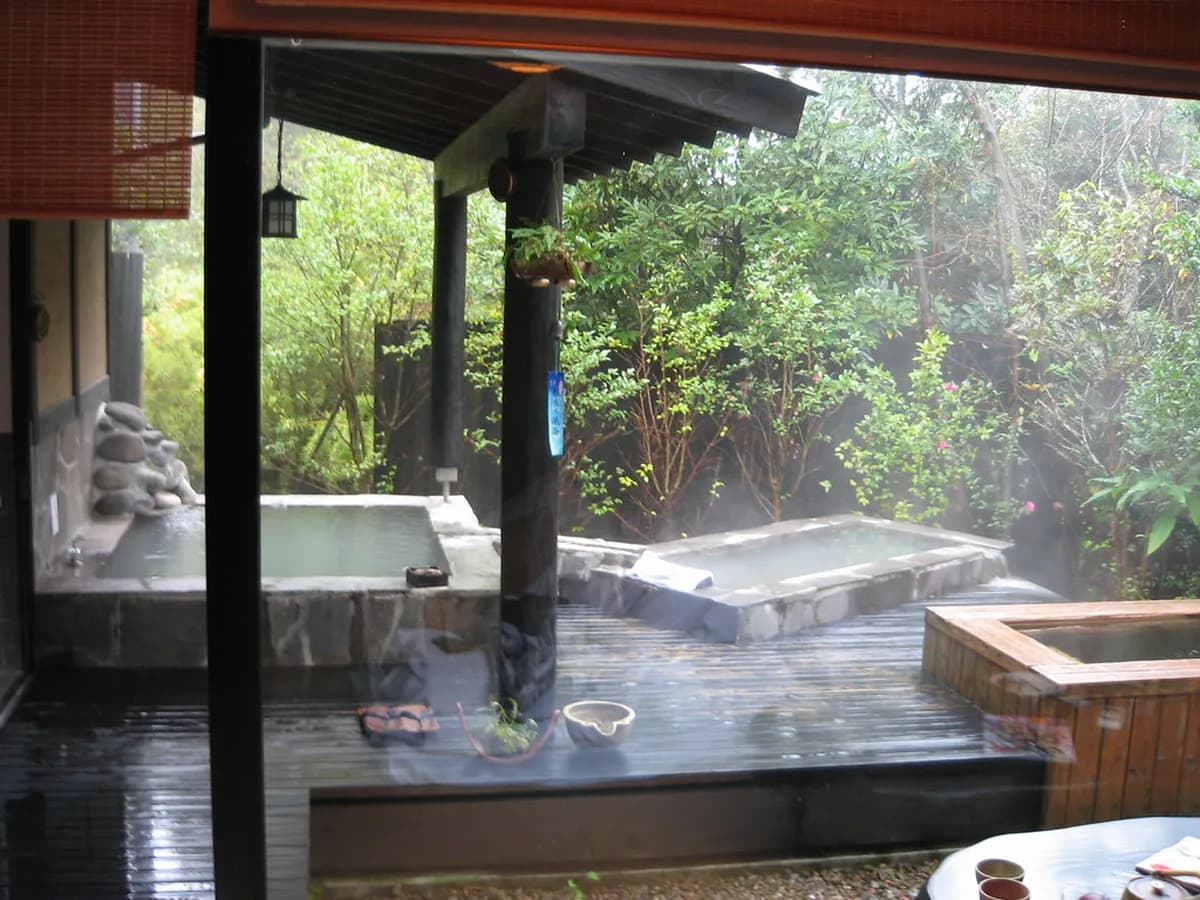
Kagoshima is one of Japan's strongest hot spring prefectures because its baths are tied directly to volcanic ground, coastal springs, and old neighborhood bathhouses. A kagoshima private onsen is the easiest way to enjoy that water with a partner, children, mixed-gender family, or visible tattoos without navigating a crowded public bath.
The best choice depends less on luxury and more on access, water type, and booking rules. Shiroyama is the city-view option, Kirishima gives you sulfur mountain water, Hioki has unusual green and dark mineral springs, and Ibusuki or Tarumizu work better if your route already points south or across Kinko Bay.
Planning Your Kagoshima Private Onsen Visit
Plan private baths as timed stops, not casual drop-ins. Many family baths are first-come, first-served, and the best-known rooms can be gone by late afternoon on Saturdays, Sundays, and holiday periods. For 2026, assume you need cash, a towel, and enough buffer for a phone call or short wait unless you are staying overnight at a hotel with reservable in-room or chartered baths.
Private onsen rooms (kashikiri) typically cost ¥800–¥2,000/hour for two people at local bathhouses, and more at luxury hotels. Always call ahead to confirm availability — especially on Saturdays and public holidays when family baths book out quickly.
Kagoshima city is easiest for travelers without a car, especially if you are based near Tenmonkan, Kagoshima-Chuo, or Shiroyama Hotel Kagoshima. Kirishima, Yusui, Hioki, Ibusuki, and Tarumizu reward drivers because bus frequency drops outside the main corridors. Use the transport guide before committing to a rural bathhouse with a tight last-entry time.
Private bath prices in Kagoshima are often modest compared with famous resort towns. Local kashikiri rooms commonly run about JPY 800 to JPY 2,000 per hour for two people, while hotel-based baths or private open-air rooms can cost more or require an overnight stay. Check the official Kagoshima-Kankou.com site and each facility's own notices before travel, especially around volcanic weather, maintenance closures, and public holidays.
Kagoshima Shiroyama Onsen
Kagoshima Shiroyama Onsen is the cleanest first choice when you want a private-feeling hot spring experience without leaving the city. Its appeal is the view: Sakurajima rises across Kinko Bay, so the bath feels tied to Kagoshima even if you only have one night in town. This is the option to prioritize for couples, first-time visitors, and travelers who do not want to rent a car.
The trade-off is that Shiroyama is more polished and hotel-like than the countryside baths below. If you need a guaranteed private bath, confirm the exact room or plan an overnight stay rather than assuming the main public bath will solve privacy concerns. It pairs well with a short Kagoshima itinerary because you can combine city sightseeing, dinner, and a soak without losing half a day to transport.
Yoshimatsu Onsenkyo "Haraguchi Onsen"
Haraguchi Onsen in Yusui is the most distinctive private bath for travelers who care about water character. Competitors repeatedly single it out for its black moor spring, a plant-derived mineral water that locals often compare to coffee. The private bath has a practical, local feel rather than a resort atmosphere, which is exactly why onsen-focused travelers make the detour.
Use Haraguchi when your route already includes northern Kirishima, Ebino, or a rental car loop through Yusui. The reported family bath price is around JPY 800 per hour for two people, but bring cash and call ahead because hours and room availability can change. It is less suitable for travelers who want English-heavy service, luxury amenities, or a quick stop from central Kagoshima.
Momiji Onsen
Momiji Onsen in Hioki earns its place because the water is not just hot; it is visually memorable. The spring is known for a clear, faint green color and a smooth sulfur feel, with a simple bathhouse setting that keeps the focus on the water. If your idea of a Kagoshima private onsen is mineral quality over hotel service, this is one of the strongest candidates.
The main constraint is capacity. The private or family bath is limited, so this is not the place to leave until the end of a busy day. Competitor data lists opening hours from early morning to 21:00 on most days, with first and third Wednesday closures, but verify before going in 2026. Momiji works best as part of a Hioki or Fukiage onsen day rather than as a standalone trip from the city.
Yunomoto Onsen "Yamaguchi Onsen"
Yamaguchi Onsen is a good pick when you want a neighborhood bathhouse with serious water rather than a sightseeing facility. The Yunomoto area has long been known for everyday hot spring bathing, and that makes the experience feel local, inexpensive, and direct. It is especially useful for repeat visitors who have already done Shiroyama or Kirishima and want a quieter stop.
Expect fewer English explanations and fewer resort amenities. That is part of the appeal, but it means you should know the basic bathing flow before you arrive: pay at the desk, wash first, keep towels out of the tub, and finish before the posted last-entry time. If you are nervous about etiquette, consult a comprehensive onsen bathing guide and start with a hotel bath first.
Fukiage Onsen "Shinyu Onsen Ryokan"
Shinyu Onsen Ryokan in Fukiage is the better Hioki choice for travelers who want a ryokan setting without committing to a full luxury stay. The water is known for a dark green sulfur character and visible mineral deposits, which makes it feel more distinctive than a standard clear alkaline bath. It is a strong match for couples who want privacy but still prefer an old onsen town atmosphere.
The practical catch is weekend availability. Competitor notes indicate that private or family bath bookings may not be available on Saturdays, Sundays, and holidays, so weekday planning matters. The listed private bath fee is around JPY 1,500 per hour for two adults, and the bathhouse has historically run long daily hours, but confirm closures before building a detour around it.
Shinyu Onsen "Kokumin Syukusya Shinmoeso"
Kokumin Syukusya Shinmoeso is the Kirishima option for travelers chasing cloudy white sulfur water. The private bath is not as large as the main open-air bath, but the appeal is soaking in that strong volcanic water without sharing the space. Choose it if you are already visiting Kirishima Shrine, the highland viewpoints, or other mountain attractions.
The key detail is timing. Competitor information flags that the private or family bath closes earlier than the main baths, around 16:00, even though general bath hours run later. Build this stop before late afternoon, bring cash for a fee from about JPY 1,000, and check current access because Kirishima mountain roads and facilities can be affected by weather or volcanic advisories.
Ibusuki Onsen "Muranoyu Onsen"
Muranoyu Onsen is the best fit if your Kagoshima plan already includes Ibusuki's sand baths. It is an old bathhouse with changing mineral color, sometimes brown and sometimes milky, which signals natural water rather than a heavily staged spa. The appeal is history, price, and convenience more than private luxury.
Use it as a second soak after the sand bath experience or as a low-cost local stop near Ibusuki Station. Competitor data lists daily hours from 07:00 to 22:00 and a public bath price around JPY 300, but private availability should be checked locally before you rely on it. If your priority is a romantic private open-air tub, choose Shiroyama, Fukiage, or a hotel room bath instead.
Kaigata Onsen "Enoshima Onsen"
Enoshima Onsen in Kaigata is the coastal pick for travelers who want Sakurajima from the opposite side of the bay. Its standout feature is freshness: competitor notes describe a strong natural flow rate that keeps the bath water constantly replenished. The setting is simple, but the location makes it memorable if you like rural coastal routes.
This is not a casual city stop. You will usually need the Sakurajima ferry plus onward driving, or a longer Tarumizu route by car. It works best for travelers already exploring Sakurajima, Kanoya, or the Osumi Peninsula. Avoid it if you are relying only on trains from Kagoshima-Chuo.
Myoken Onsen "Tajima Honkan"
Tajima Honkan in Myoken Onsen is the nostalgic choice near Kagoshima Airport. The bathrooms are older and plainer than resort baths, but that is the point: Myoken is a real hot spring district with river scenery, traditional buildings, and water that locals use for specific bathing purposes. It is a good final stop before a flight if you have a car and a few hours spare.
The area is roughly a short bus or drive from the airport, but schedules still matter. Competitor data lists bath hours around 08:00 to 20:30 and low public bath fees, while private bath arrangements should be confirmed directly. Choose Tajima Honkan for atmosphere and convenience near Kirishima, not for polished spa design.
Kirishima Kanko Hotel
Kirishima Kanko Hotel is the most comfortable Kirishima answer for travelers who want private hot spring access attached to a proper stay. Its higher-category rooms include private open-air baths, and the hotel also offers larger hot spring facilities with views toward Sakurajima on clear days. This is the right move when you want the water, dinner, breakfast, and mountain setting handled in one booking.
The cost is higher than a day-use family bath, but the logistics are easier. It is about 30 minutes from Kagoshima Airport and roughly one hour from central Kagoshima by car, so it works well on arrival night or before departure. Families should also compare room types because some rooms are better for children, while couples may value the private bath rooms more than the public-bath variety.
| Property | Location | Private Bath Price | Best For |
|---|---|---|---|
| Shiroyama Hotel (kashikiri) | Kagoshima City | Hotel rate (varies) | City stay + Sakurajima view |
| Haraguchi Onsen | Yusui (Kirishima area) | ~¥800/hour for 2 | Unique black moor spring |
| Momiji Onsen | Hioki | Limited private rooms | Rare green mineral water |
| Fukiage Shinyu Onsen Ryokan | Fukiage (Hioki) | ~¥1,500/hour for 2 (weekdays only) | Dark green sulfur water |
| Kirishima Kanko Hotel | Kirishima | In-room private bath (overnight) | Mountain stay + Sakurajima view |
| Muranoyu Onsen (Ibusuki) | Ibusuki | ~¥300 public; private varies | Post-sand bath soak |
How to Book and Choose the Right Private Bath
The biggest mistake is choosing by photo alone. For a short city stay, pick Shiroyama because access beats novelty. For unusual water, prioritize Haraguchi, Momiji, Shinyu Onsen Ryokan, or Shinmoeso. For a route-based soak, choose Muranoyu for Ibusuki, Enoshima for Tarumizu and Sakurajima, or Tajima Honkan for the airport and Myoken area.
Call or message before you travel if the private bath is the reason for the trip. Ask three questions: whether the family bath is open that day, whether reservations are accepted, and when the final private-bath entry is. Small bathhouses may not take cards, may rent towels separately, and may close one room for cleaning without updating English pages.
Travelers with tattoos should still choose private rooms where possible. Kagoshima is often more relaxed than famous resort towns, but public bath rules vary by property and by the staff on duty. A private room removes the uncertainty and makes the experience smoother for mixed-gender couples, parents with children, and anyone who simply wants quiet.
Is a Private Onsen Worth the Extra Cost?
A private onsen is worth it when privacy changes the quality of the experience. Couples can soak together, parents do not have to split by gender, and travelers with tattoos avoid awkward policy questions. It also helps heat-sensitive visitors because many private baths allow short breaks and, in some rooms, slight temperature adjustment with cold water.
The water is usually the same source as the main bath, so you are paying for control, not better minerals. If you are comfortable with public bathing, a JPY 300 to JPY 500 local bath can be better value than a private room. If you only have one soak in Kagoshima, though, a private session is a calm way to understand why kagoshima onsen culture is so strong.
What to Skip: Common Onsen Mistakes
Skip any rural bath that forces a rushed connection. A private bath stops being relaxing when you are watching the clock for the last bus, so choose city or hotel options unless your transport is solid. Also avoid peak local bathing hours from about 17:00 to 19:00 on weekends, when family baths are more likely to be occupied.
Do not wear silver jewelry into sulfur-heavy baths at Kirishima or Fukiage — the minerals will tarnish silver quickly. Soak in 10–15 minute intervals, drink water between sessions, and step out if you feel lightheaded. These precautions apply equally to private and public baths.
Do not wear jewelry into sulfur-heavy baths, especially around Kirishima and Fukiage, because the minerals can discolor silver. Do not soak continuously for long stretches; use 10 to 15 minute intervals, drink water, and step out if you feel lightheaded. Finally, do not assume every "private bath" is open to day visitors. Some of the best rooms are attached to overnight stays, which is why checking prices and booking rules matters before you leave Kagoshima city. For full onsen etiquette rules, review the core bathing steps and safety guidelines before your first soak.
Frequently Asked Questions
Can I use a private onsen if I have tattoos?
Yes, private onsen rooms are the best option for travelers with tattoos. Since the room is for your exclusive use, there are no restrictions regarding body art. This allows you to soak comfortably without any concerns about local bathhouse policies.
How much does a private onsen in Kagoshima cost?
Most private baths charge a rental fee between 1,000 and 3,000 yen per hour. This is usually in addition to the standard per-person entry fee. High-end luxury hotels may charge more, while rustic countryside spots are often very affordable.
Do I need to book a kagoshima private onsen in advance?
Many local bathhouses operate on a first-come, first-served basis for their private rooms. However, luxury hotels and popular ryokan often allow or require advanced reservations. It is best to call ahead or check their website if you have a specific time in mind.
Kagoshima's private onsen scene is strongest when you choose by route and water style rather than by a generic top-10 ranking. Shiroyama is the smoothest city choice, Haraguchi and Momiji are the mineral-focused standouts, Kirishima is best for sulfur and hotel stays, and Ibusuki or Tarumizu make sense when your wider itinerary points that way.
For 2026, the safest plan is to confirm hours, bring cash, and build enough time around the bath so the soak does not become another transport errand. Do that, and a private hot spring can become one of the most memorable parts of a Kagoshima trip.
Free: The Kagoshima Essentials guide
Top things to do, where to stay, a perfect day plan, getting around, and the best time to go — a Kagoshima mini-guide you can take offline.
You might also like


Continue reading
More guides you'll find useful


