How to Visit Itsukushima Shrine: Floating Torii Gate & Tide Times (2026 Guide)
2026 guide to visiting Itsukushima Shrine: tide tables for April-November, ferry schedule (¥200, 10 min), ¥300 shrine entry, best photo spots, and FAQ on the floating torii gate.
On this page
How to Visit Itsukushima Shrine: Floating Torii Gate & Tide Times (2026 Guide)
When does the Itsukushima Shrine torii appear floating? The Great Torii gate appears to float when the Miyajima tide rises above 250 cm, typically for about 2-3 hours around each high tide. Miyajima has two high tides and two low tides daily that shift roughly 50 minutes later each day, so always check the official 2026 tide table for your exact visit date before locking in ferry times.
Seeing the massive vermillion gate rising from the Seto Inland Sea is a bucket-list experience for travelers in Japan. This iconic structure belongs to the sacred Itsukushima Shrine, a UNESCO-listed site famous for its unique relationship with the ocean. Most visitors arrive without checking the water levels and miss the specific view they wanted, which is exactly what this guide solves.
The island of Miyajima experiences significant tidal shifts twice a day, completely changing the landscape around the shrine. Planning your trip around these natural cycles in 2026 ensures you get the most out of your time in Hiroshima. Whether you want to walk to the base of the gate or see it floating, timing is everything, and this guide gives you the exact metrics, ferry schedule, photo spots, and 2026 tide windows you need.
Quick Facts: Itsukushima Shrine and the Great Torii
Itsukushima Shrine is a stunning Shinto complex located on the island of Miyajima in Hiroshima Bay. This site earned its place as a UNESCO World Heritage Site due to its incredible architecture and spiritual history. It serves as one of the most important cultural landmarks in the entire Chugoku region.
The shrine is easily accessible from downtown Hiroshima via a combination of local trains and a short ferry ride. Most travelers find that exploring the island takes a full day to appreciate the various Hiroshima attractions nearby. The atmosphere changes significantly as the sun sets and the day-trip crowds begin to leave.
Visiting hours typically run from early morning until sunset, though the shrine remains illuminated at night for external viewing. You should expect to pay a small admission fee to enter the main corridors of the wooden complex. These funds help maintain the delicate structures that face constant exposure to salt water and wind.
- Standard Shrine Entrance Fees
- Adults: 300 Yen
- High School: 200 Yen
- Children: 100 Yen
- Payment: Cash preferred
- Ferry Access from Miyajimaguchi
- Duration: 10 minutes
- Frequency: Every 15 minutes
- Cost: 200 Yen each way
- Passes: JR Pass accepted
Understanding Miyajima Tide Levels: When Does the Torii Actually "Float"?
Many travelers feel confused by tide charts because they do not know which numbers matter for their photos. To see the O-Torii gate truly 'floating' on the sea, the tide must reach a height of at least 250 centimeters. At this level, the water fully covers the base and creates a beautiful reflection on the surface.
If you visit when the water is between 150 and 200 centimeters, the gate will look like it is sitting in a shallow puddle. This mid-level tide is often the least photogenic time for visitors who want that classic island look. Try to check the specific hourly forecasts to avoid arriving during these transition periods.
Conversely, the tide must drop below 100 centimeters for you to walk out onto the seabed safely. When the water recedes this far, the ground becomes firm enough for visitors to approach the massive camphor wood pillars. This experience offers a completely different perspective on the scale of the engineering involved.
Low Tide vs. High Tide: Which Experience Should You Choose?
High tide offers the most traditional and ethereal view of the shrine and its famous gate. This is the best time for photography, especially during the 'Blue Hour' just after sunset when the lights turn on. You can see why this is considered one of the 12 best things to do in Hiroshima for first-time visitors.
Low tide provides a more interactive experience that allows you to examine the gate's construction up close. You can see the intricate details of the pillars and the thousands of coins wedged into the wood by previous visitors. Please respect the structure by not adding more coins, as the metal can damage the ancient wood.
Some travelers worry about the 'mud factor' when the water recedes from the bay. While the area near the shrine can be a bit slippery, the sand around the gate itself is surprisingly firm. Wear comfortable walking shoes that you do not mind getting slightly damp or sandy during your exploration.
How to Check Official Miyajima Tide Times in English
The most reliable way to plan your visit is by using the Miyajima Official Tide Table provided by local authorities. This chart shows the high and low points for every day of the year in 2026 and beyond. You should look for the 'cm' column to find the specific heights mentioned earlier.
Remember that the times for high and low tide shift by about 50 minutes each day. If high tide is at noon today, it will likely be closer to 1:00 PM tomorrow. This means you cannot simply rely on someone else's photos from a previous trip to guess the schedule.
Weather conditions like heavy rain or strong winds can also slightly impact the actual water levels you see. High-pressure systems might keep the water lower than predicted, while storms can push the sea higher. Check the forecast on the morning of your trip to ensure your timing remains accurate.
2026 Miyajima Tide Table: Sample Dates (April-November)
The peak travel window for Miyajima runs April through November, covering cherry blossom season, summer fireworks, and the famous autumn foliage. The sample dates below show realistic high and low tide windows for 2026, but treat them as a planning reference and confirm exact times with the official tide table within 7-10 days of your visit. Tides shift roughly 50 minutes later each day, so a Monday window does not match a Tuesday window.
- Sat 4 April 2026 (cherry blossom season): high tide ~07:30 (310 cm) and ~19:50 (290 cm); low tide ~13:40 (60 cm). Best floating window: 06:00-09:00 morning light.
- Sun 3 May 2026 (Golden Week): high tide ~08:10 (300 cm) and ~20:30 (280 cm); low tide ~14:20 (80 cm). Crowds peak — arrive on first ferry.
- Sat 6 June 2026: high tide ~09:00 (270 cm) and ~21:20 (250 cm); low tide ~15:10 (110 cm). Possible rainy season, bring waterproofs.
- Sat 4 July 2026: high tide ~10:00 (260 cm) and ~22:20 (255 cm); low tide ~16:00 (100 cm). Good evening floating window with lit-up gate.
- Sat 1 August 2026: high tide ~07:50 (300 cm) and ~20:10 (290 cm); low tide ~13:50 (70 cm). Plan around the heat — early morning recommended.
- Sat 5 September 2026: high tide ~08:40 (290 cm) and ~21:00 (280 cm); low tide ~14:50 (90 cm). Cooler temperatures, fewer crowds than summer.
- Sat 3 October 2026: high tide ~07:20 (310 cm) and ~19:30 (300 cm); low tide ~13:30 (50 cm). Excellent for both floating and walking views.
- Sat 7 November 2026 (peak autumn foliage): high tide ~09:30 (280 cm) and ~21:50 (260 cm); low tide ~15:40 (90 cm). Pair with maple viewing in Momijidani Park.
For the floating effect, target tides at 250 cm or higher; for walking out to the base, target tides at 100 cm or lower. The two daily peaks are roughly 12 hours apart, so a single day usually offers one strong floating window and one strong walking window. Use the official Miyajima tide chart for hourly precision before you travel.
2026 Ferry Schedule: JR Miyajima Ferry vs Matsudai Ferry
Two ferry companies operate the 10-minute crossing from Miyajimaguchi pier to Miyajima island, and both depart from adjacent terminals. As of 2026 the standard fare on both is ¥200 one way (¥400 round trip) for adults, ¥100 for children. Ferries run roughly every 15 minutes between 06:25 and 22:14 in the high season, with reduced frequency on the earliest and latest sailings.
- JR Miyajima Ferry — operated by JR West. Free with a JR Pass or JR West Sanyo-San'in pass. Between 09:10 and 16:10 the JR ferry takes a slight detour past the Great Torii so you get a sea-level photo opportunity from the boat. Use this if you have any JR pass active during your trip.
- Matsudai (Miyajima Matsudai Kisen) Ferry — privately operated, slightly faster boarding on busy mornings, and the only option on a few of the earliest and latest sailings. Pay ¥200 cash or IC card at the gate. Use this if you do not have a JR pass and the line is shorter at your departure time.
- How to reach Miyajimaguchi: from Hiroshima Station take the JR Sanyo Line bound for Iwakuni (~25 min, ¥420) or the Hiroden tram line 2 from downtown (~70 min but scenic, ¥290). The JR train is included with any JR pass.
Buy round-trip tickets when you arrive in the morning so you do not queue twice; both companies honor return tickets across the same day. If you are linking this trip with the bomb dome and Peace Park, our Hiroshima and Miyajima 1 day itinerary shows the exact ferry-and-tram timing that fits both into a single day.
Best Photo Spots: From Shore vs At the Gate
The torii gate photographs differently depending on whether you shoot from shore at high tide or from the seabed at low tide, and the best angles are not the obvious ones from the ferry pier. Plan to walk a short loop along the foreshore and the inland trail behind the shrine to capture both the floating reflection and the towering up-close perspective in a single visit.
- Omotesando shoreline (north side) — wide shot of the shrine corridors with the gate framed beyond. Best at high tide (250 cm+) one hour before sunset for warm-side light.
- Itsukushima Shrine western platform — taken from inside the paid shrine area looking out through the corridors. Requires the ¥300 admission. Best at high tide for the classic mirror reflection.
- Sand flats directly under the gate — only accessible at low tide (below 100 cm). Walk beneath the camphor pillars for scale shots. Bring shoes you do not mind getting damp.
- Tsutsumigaura Beach (15-min walk south) — wide-angle of the gate against forested mountains. Far fewer crowds than the main shrine waterfront.
- Mt. Misen ropeway upper station — aerial perspective looking down at the gate, shrine, and Hiroshima Bay. Best in clear weather; the ropeway closes at 17:00.
- Night illumination (sunset to 23:00) — gate is lit by floodlights every night. The reflection at high tide on a calm sea is the iconic blue-hour shot.
If you are island-hopping or staying overnight to catch the night-lit gate, the Miyajima island complete visitor guide covers ryokan options, late-evening logistics, and the deer-friendly streets behind the shrine.
Entry Fees and Opening Hours in 2026
What is the Itsukushima Shrine entry fee in 2026? Adult admission is ¥300, high school students ¥200, and elementary/junior high students ¥100. A combined ticket with the Treasure Hall costs ¥500 for adults and ¥400 for high schoolers. Cash is preferred at the entrance booth, though IC card payment is now accepted at the main gate.
- Shrine opening hours: 06:30-18:00 (March-October 14), 06:30-17:30 (October 15-November), 06:30-17:00 (December-February). Closing time is when the last entry is allowed; visitors inside can stay 15-20 minutes longer.
- Treasure Hall: 08:00-17:00 daily, ¥300 separate or ¥500 combined.
- Daiganji Temple (next door): free, 08:30-17:00.
- Mt. Misen Ropeway: 09:00-17:00 (last up 16:30, last down 17:30). Round trip ¥2,000 adults, ¥1,000 children.
The shrine grounds and the foreshore around the gate are free to access at any time, including overnight. You only pay the ¥300 if you want to walk the famous covered corridors over the water. Most photographers find the corridor admission worth it for the framed shots, but the gate itself is photographable for free from the shoreline. For a fuller half-day plan that includes Daisho-in temple and Mt. Misen, see our Miyajima day trip from Hiroshima route.
Can You See Both Tides in One Day? (Sample 6-Hour Itinerary)
It is entirely possible to see both faces of the torii gate if you plan a 'bridge' itinerary. Since the gap between high and low tide is roughly six hours, you can fill the middle of your day with other activities. This strategy is perfect for those following a Hiroshima 1 day itinerary who want a complete experience.
Start your morning at high tide to capture the floating gate while the morning light is soft. Afterward, head away from the coast to explore the island's interior while the tide begins to recede. This prevents you from standing around waiting for the water levels to change. If you are visiting from Osaka or Kyoto, our Hiroshima 1 day itinerary from Osaka and Kyoto shows how to slot Miyajima in without losing time on the bullet train.
Spend your mid-day hours taking the ropeway up Mt. Misen or visiting the serene Daisho-in Temple. By the time you hike back down or return to the village, the tide will likely be low enough for a walk. This balanced approach ensures you see every aspect of the island without feeling rushed.
- Morning High Tide Session
- Activity: Shrine photography
- Duration: 1.5 hours
- Best for: Classic views
- Tide level: 250cm+
- Mid-Day Island Exploration
- Activity: Mt. Misen hike
- Duration: 3 hours
- Best for: Panoramic views
- Tide level: Receding
- Afternoon Low Tide Walk
- Activity: Walk to gate
- Duration: 1 hour
- Best for: Close-up photos
- Tide level: 100cm or less
Forecasting Your Own Tide: The 50-Minute Shift Rule
Most guides tell you to "check the tide table" but skip the math that lets you sanity-check a date. Miyajima sits in a semi-diurnal tidal zone, meaning two highs and two lows roll through every lunar day of 24 hours and 50 minutes. That extra 50 minutes is why the high-tide clock advances day to day — if today's morning peak hits at 07:30, tomorrow's lands closer to 08:20, and a week later it has slid past 13:30 into the afternoon.
For a quick forecast, take a known reference high tide and add roughly 50 minutes per day to project the next morning peak, then add 12 hours and 25 minutes for that day's evening peak. Tide height also follows the lunar cycle: spring tides (the highest highs and lowest lows) cluster around the new and full moon, while neap tides — softer swings that may not clear 250 cm at all — fall in between. The 2026 new moons during peak travel season are 17 April, 17 May, 15 June, 14 July, 12 August, 10 September, 10 October, and 9 November, with full moons two weeks later.
If your trip date lines up with a neap tide, you may need to accept a 220 cm "almost floating" view rather than the textbook 280 cm reflection. Travelers with flexible plans should aim for the three days bracketing a new or full moon for the strongest contrast between high and low. Cross-reference any prediction with the official chart inside seven days of arrival because atmospheric pressure and wind shift the actual readings by 10-30 cm.
Festivals, Fireworks, and 2026 Event Calendar
Itsukushima Shrine hosts some of Japan's most photogenic festivals, and timing your visit to one transforms an already-iconic landmark into something genuinely rare. Each festival is tide-dependent, so the priests deliberately pick dates that align with high water — checking the festival schedule alongside the tide chart removes the guesswork.
- Kangensai (Music Festival) — held on the 17th day of the sixth lunar month, which falls on Saturday 1 August 2026. Court musicians perform Gagaku aboard ornately decorated boats that circle the torii at high tide after sunset. Arrive on Miyajima by 16:00 to claim a shoreline spot.
- Toka-sai (Peach Blossom Festival) — 16-18 April 2026. Bugaku dance performances are held inside the shrine's high stage; combine with cherry blossom viewing across the island.
- Chinkasai (Fire Festival) — 31 December 2026 into New Year's Eve. Giant pine torches are lit on the foreshore — the only night the shrine stays open past midnight.
- Miyajima Water Fireworks — historically held in late August, the famous over-water hanabi was suspended in 2020 and remains paused in 2026. Confirm with the Hatsukaichi tourism board before booking around it.
- Tamatori-sai (Pearl Snatching Festival) — late August. Loincloth-clad swimmers race to grab a sacred wooden ball thrown into the bay at high tide.
The Great Torii itself completed a major three-year restoration in December 2022, so visitors in 2026 see the gate without the scaffolding that obscured photos from 2019 to late 2022. Vermillion paint was fully refreshed and the camphor pillars were structurally reinforced, which means the next major restoration is unlikely before the late 2030s.
Typhoon Season and Storm Surge: The Risk No Guide Mentions
August and September are statistically the highest-tide months on Miyajima, but they are also typhoon season for western Japan. When a typhoon tracks within 300 km of Hiroshima Bay, low-pressure suction can lift water levels 30-60 cm above the predicted tide, and onshore winds drive an additional storm surge that occasionally floods the shrine corridors. The Japan Meteorological Agency issues a "takashio" (storm surge) warning when surge exceeds 60 cm — at that threshold both ferry companies suspend service, sometimes with under three hours' notice.
If your trip falls between mid-August and mid-October, monitor the JMA typhoon page the morning of your visit. A typhoon 24-48 hours out usually still permits ferry operation but produces dramatic skies and unusually high tides — often the photographers' dream window. A typhoon within 12 hours typically halts the JR ferry first because its slightly larger boat handles chop worse than the Matsudai vessels. Keep your hotel in central Hiroshima refundable on these dates so you can pivot to Miyajima a day earlier or later.
The flip side: cold winter highs from Siberian high-pressure systems push water levels lower than predicted, sometimes pulling a 130 cm forecast down to 90 cm. December and January visitors regularly find walking access to the gate available even during nominal "high tide" hours. Pack thermal layers and treat any winter visit as a low-tide opportunity by default.
Miyajima Deer, Oysters, and Overnight Stays
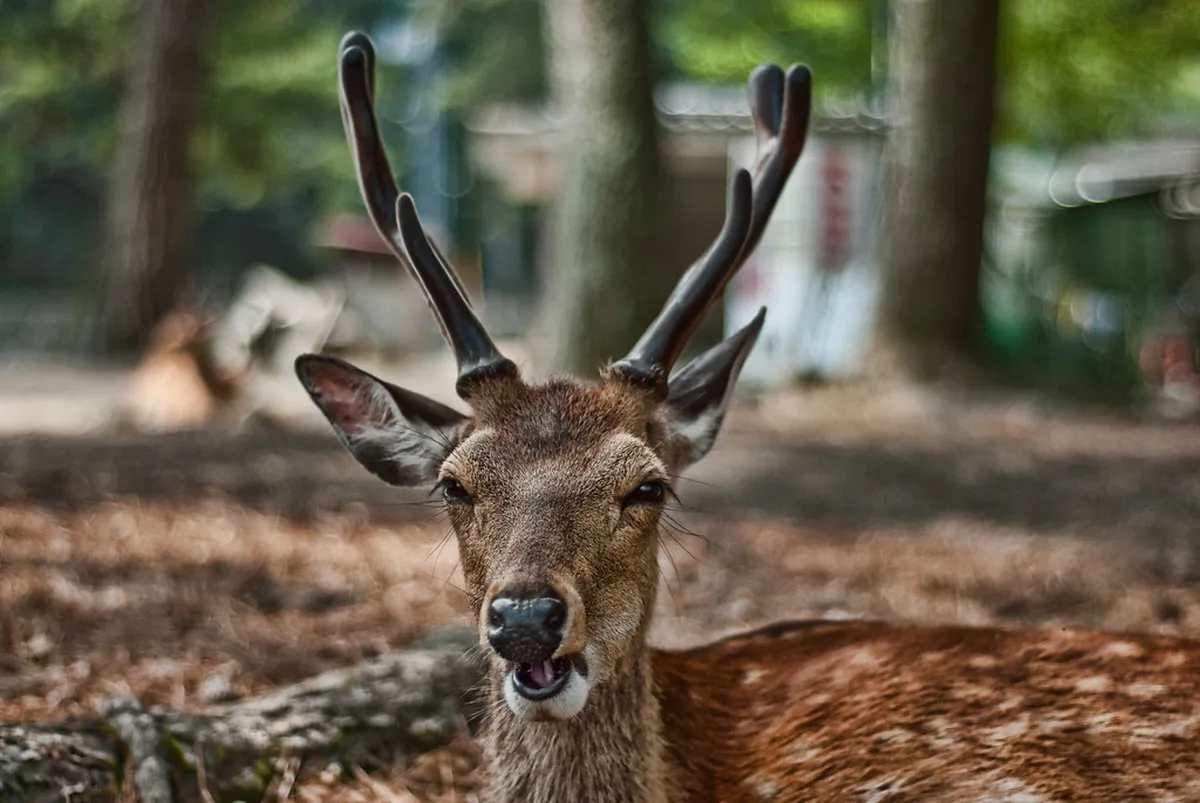
Miyajima's roughly 500 free-roaming sika deer are considered messengers of the gods and are protected by shrine tradition. Unlike Nara, feeding deer on Miyajima is officially prohibited and the local deer are surprisingly assertive — they will pull paper maps, train tickets, and momiji manju wrappers straight out of an open hand. Keep food sealed in a zipped bag and dispose of all paper inside trash bins behind shop counters.
Hiroshima Bay produces some of Japan's most prized oysters, and Miyajima's main shopping street, Omotesando, is the cheapest place to eat them fresh. Grilled oysters run ¥400-600 per pair from late October through March, with the deepest flavor in January and February. Anago-meshi (sea-eel rice bowls) are the island's other signature dish — Ueno Anagomeshi near the ferry pier has run continuously since 1901, and lines top 45 minutes by noon. Momiji manju, maple-leaf-shaped cakes filled with red bean or custard, cost about ¥100 each and make portable souvenirs.
Day-trippers miss the two best windows on Miyajima: the night illumination from sunset to 23:00, and the dawn high tide before the first 09:00 ferry arrives from Hiroshima. Booking even one night at a Miyajima ryokan gives you both for the price of skipping a Hiroshima hotel — expect ¥18,000-35,000 per person with two meals at ryokans like Iwaso, Kinsuikan, or Jukeiso. Budget travelers can stay at the Backpackers Miyajima guesthouse from around ¥4,500.
Beyond the Gate: Architecture, Omamori, and Sacred Forests
The shrine buildings themselves use the elegant Shinden-zukuri style, which was popular among Heian-Period nobles for residential palaces — Itsukushima is one of the only surviving large-scale examples in Japan. Architects built the entire complex on stilts to protect it from the rising tides of the Seto Inland Sea, and the design creates the illusion that the red corridors are drifting on the water's surface. For a broader look at what the city offers beyond this island, see our guide to the 15 best things to do in Hiroshima in 2026.
Look closely at the floorboards to see the 'sukima' or small gaps between the planks. These gaps are not a mistake; they allow water pressure to escape upward during high tides or storms. Without this clever engineering, the force of the waves would lift the heavy wooden floors and destroy the shrine — the same trick has carried the structure through more than 800 years of typhoons.
Before leaving, many visitors stop at the Treasure Hall to see ancient artifacts donated by the Taira clan, including hand-painted Heian sutras designated as National Treasures. The shrine also sells omamori amulets in the ¥500-1,000 range, with specific versions for traffic safety, academic success, and safe childbirth. The maple-leaf cakes called Momiji Manju were invented on Miyajima in 1906 and remain the island's signature souvenir.
Planning Your Visit: Day Trips from Hiroshima and Practical Tips
Reaching the island from the city center is straightforward via the JR Sanyo Line to Miyajimaguchi Station. From there, you choose between two ferry companies that operate frequent services throughout the day. If you want a more scenic route, consider the Hiroshima World Heritage River Cruise directly from the Peace Park, which docks beside the shrine pier at high tide and runs roughly four times daily for ¥2,200 one way. If you are pairing the shrine with the city's memorial sites, our Hiroshima and Miyajima 1 day itinerary covers the full route, timing, and transport logistics.
Budget travelers should compare individual tickets against the Hiroden one-day pass (¥700) and the Visit Hiroshima Tourist Pass, which bundles trams, buses, and the JR ferry. You can find detailed breakdowns in our guide on Hiroshima travel budgets to see which option fits your style. Note that visitors arriving by ferry now pay a ¥100 Miyajima Visitor Tax (introduced October 2023) collected automatically with your ticket — bring exact coins or use an IC card.
Miyajima is especially beautiful during the autumn months when the maple trees in Momijidani Park turn vibrant red and orange, typically peaking 15-25 November in 2026. Check the best season to visit Hiroshima for autumn colors to time your trip. Regardless of the season, bring a light jacket because the sea breeze cuts colder than the city forecast suggests, and pack waterproof shoes if any rain is expected on a low-tide day.
Frequently Asked Questions
What is the best tide level to see the floating torii gate?
The gate looks best when the tide is at least 250 centimeters high. At this level, the water completely surrounds the base of the pillars. This creates the famous 'floating' effect that is perfect for photography. Check the official tide tables before you travel to find these specific windows.
Can you walk to the Miyajima torii gate at low tide?
Yes, you can walk to the base when the tide drops below 100 centimeters. The seabed is firm enough for walking, though it may be slightly damp. This is a great time to see the camphor wood construction up close. Afterward, you can head back to the city to eat Hiroshima okonomiyaki for dinner.
How long does it take to get from Hiroshima to Itsukushima Shrine?
The journey typically takes about 45 to 60 minutes from Hiroshima Station. This includes a 25-minute train ride to Miyajimaguchi and a 10-minute ferry crossing. You should also allow time for the short walk from the ferry pier to the shrine entrance. The ferry runs very frequently during daylight hours.
Is Itsukushima Shrine worth visiting at low tide?
Absolutely, as low tide allows you to appreciate the massive scale of the gate from directly underneath. While you lose the floating effect, you gain the ability to explore the seabed and see the shrine's foundations. Many visitors find the architectural details more impressive when the water is gone. It offers a unique perspective most people miss.
Do I need to buy ferry tickets to Miyajima in advance?
No, you do not need to book ferry tickets in advance for the standard crossing. Tickets are easily purchased at the Miyajimaguchi pier via vending machines or staffed counters for ¥200 one way. If you have a JR Pass, the JR ferry is included at no extra cost. Simply show your pass at the gate before boarding the boat.
Is the floating tide or low tide a better visit?
Both are worth seeing, but if you only have time for one, the floating high tide (250 cm+) is the iconic photo most travelers expect. Low tide (below 100 cm) is the better experience for understanding the gate's scale because you can walk to the base. The smartest plan is to time a 4-6 hour visit so you catch one floating peak and one walking window in the same day.
Is the Itsukushima Shrine torii lit up at night?
Yes, the Great Torii and the shrine corridors are illuminated nightly from sunset until 23:00, year round. The lit-up gate at high tide on a clear evening produces the iconic blue-hour reflection photograph. Day-trippers from Hiroshima often miss the illumination because they take the last ferry back at around 22:14 — staying in a Miyajima ryokan or extending the day is the only way to enjoy it without rushing.
Is Itsukushima Shrine wheelchair accessible?
The main shrine corridors and the ferry terminals are wheelchair accessible, with ramps at the shrine entrance and an accessible toilet near the main hall. The seabed walk to the torii at low tide is uneven and not wheelchair friendly. The Mt. Misen ropeway lower station is reachable by accessible bus from the pier, and the cabins themselves can accommodate a folding wheelchair.
Is it worth visiting Miyajima in the rain?
Yes — light rain often produces the most atmospheric shrine photos because mist softens the surrounding mountains and the wet wood of the corridors deepens in color. The shrine corridors are covered, so you stay mostly dry once inside. Skip Mt. Misen in heavy rain (visibility drops and the ropeway sometimes closes for high wind), and bring waterproof shoes if you want to walk to the gate at low tide on a wet day.
Mastering the tide times is the most important step in planning your visit to this sacred island. For a streamlined city schedule, our Hiroshima 1 day itinerary pairs well with a Miyajima morning so you can cover both landmarks in a single trip. By targeting the 250cm or 100cm thresholds, you can guarantee the specific experience you want to see. Each phase of the tide offers a unique beauty that highlights the harmony between Japanese architecture and nature.
Remember to combine your shrine visit with other local gems like Mt. Misen or the local shopping streets. This ensures your day is productive regardless of what the water is doing at any given hour. A little bit of preparation goes a long way in making your Hiroshima trip truly memorable.
Whether you are walking on the seabed or watching the gate float from a distance, Miyajima never fails to impress. Keep your tide chart handy and enjoy one of Japan's most iconic views. Safe travels as you explore the spiritual heart of the Seto Inland Sea.
 Horyu-ji Temple Visitor Guide Travel GuideMay 18, 2026