10 Best Things to Do in Yokohama Chinatown (2026)
Discover the best of Yokohama Chinatown with our guide to 10 essential street foods, top-rated restaurants like Jukeihanten, and must-see temples.
On this page
10 Essential Things to Eat and Do in Yokohama Chinatown (2026)
Yokohama Chukagai is the largest Chinatown in Asia, packed into roughly 0.2 square kilometres of lantern-lit streets just south of Yamashita Park. Over 600 shops and restaurants sit between ten ornate gates, and a single afternoon here can shuttle you between Cantonese roast meats, Taiwanese baked buns, and Fujian-style temples without crossing a major road.
This yokohama chinatown guide was refreshed in May 2026 with current 2026 pricing, opening hours, and the latest rules on walking-while-eating that several stalls now post in English. Whether you are arriving from Tokyo for a few hours or basing yourself in Minato Mirai, the strategy below will help you sample widely without burning out on fried dough by 2pm.
Use the quick summary as a triage, then read the comparison and night-photography sections before you go. They are the parts most travellers wish they had seen before queueing for the wrong thing. For the wider neighbourhood context, see our Yokohama itinerary.
Free: The Yokohama Essentials guide
Top things to do, where to stay, a perfect day plan, getting around, and the best time to go — a Yokohama mini-guide you can take offline.
Quick Summary: Best Bites, Sit-Downs, and Photo Spots
If you only have two or three hours, anchor your visit around these picks. They cover the three reasons most people come: street food, a proper sit-down meal, and the photo you will actually post.
- Best street food: Yaki Shoronpo (pan-fried soup dumplings) from Houtenkaku on Chuka Daido, around 500-700 yen for four.
- Best sit-down: Jukeihanten Shinkan for Szechuan Mapo Tofu, lunch sets from 2,200 yen.
- Best photo spot: the Zenrin-mon Gate at blue hour (around 30 minutes after sunset) when the gold lacquer reads warm against the deep blue sky.
- Best dessert: MeetFresh taro ball bowls, 850-1,300 yen, with seating to cool off in summer.
- Best free landmark: Kuan Ti Miao Temple, dedicated to the god of prosperity.
Must-See Yokohama Chinatown Landmarks and Attractions
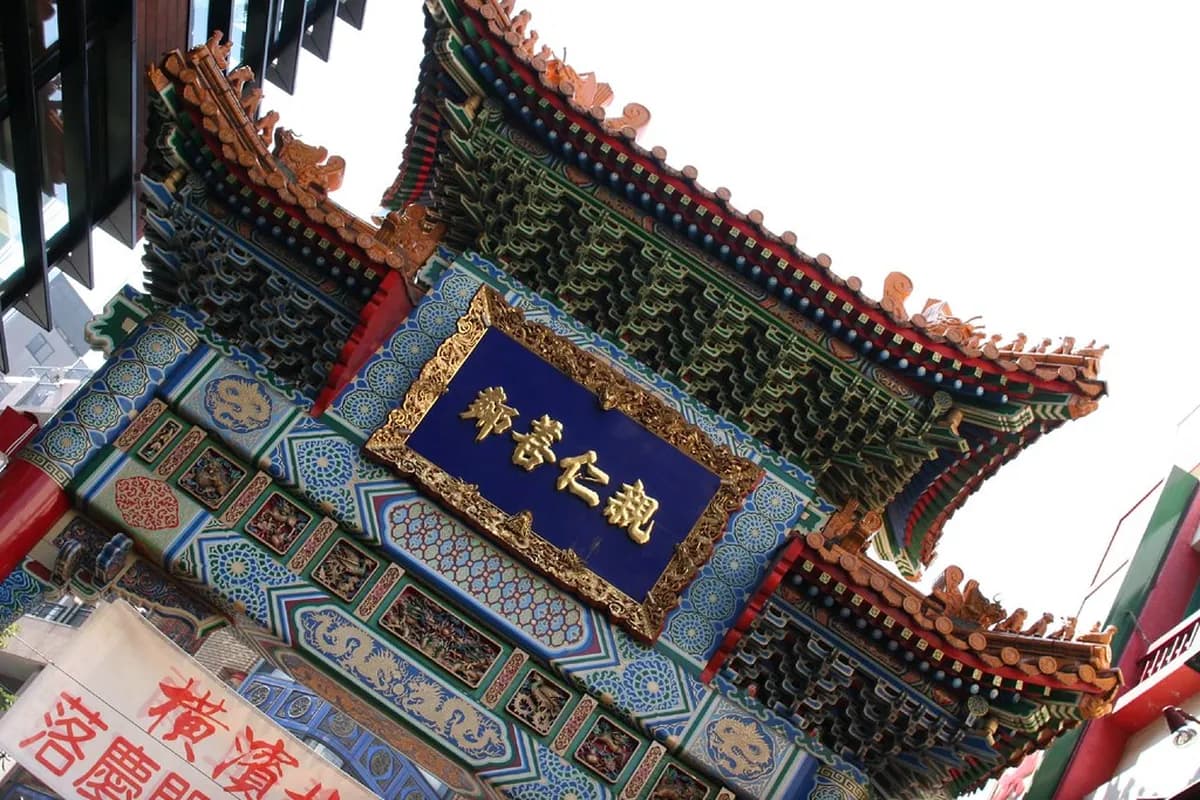
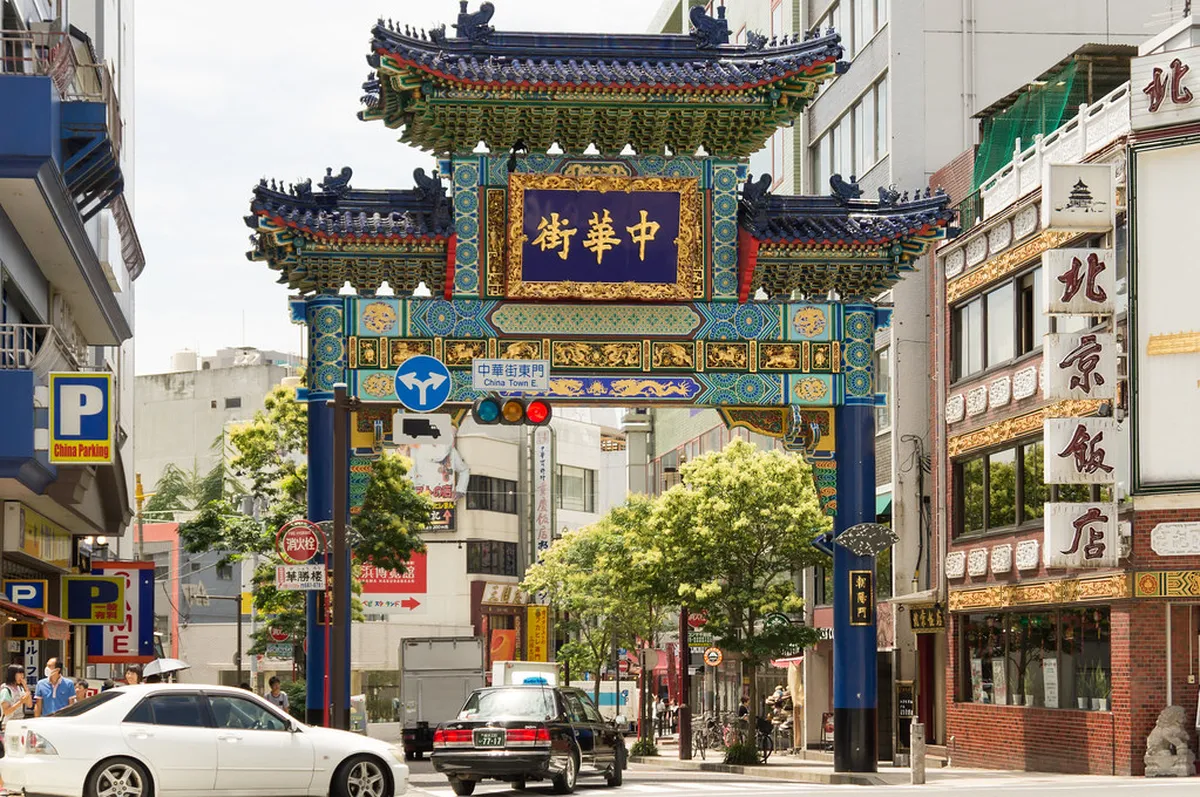
The ten gates orient the entire district. Zenrin-mon on the east side is the headline shot, but Choyo-mon (south) and Genbu-mon (north) get far fewer tourists and read just as well on camera. Each gate represents a guardian and a cardinal direction, which is why locals use them like compass points when giving directions.
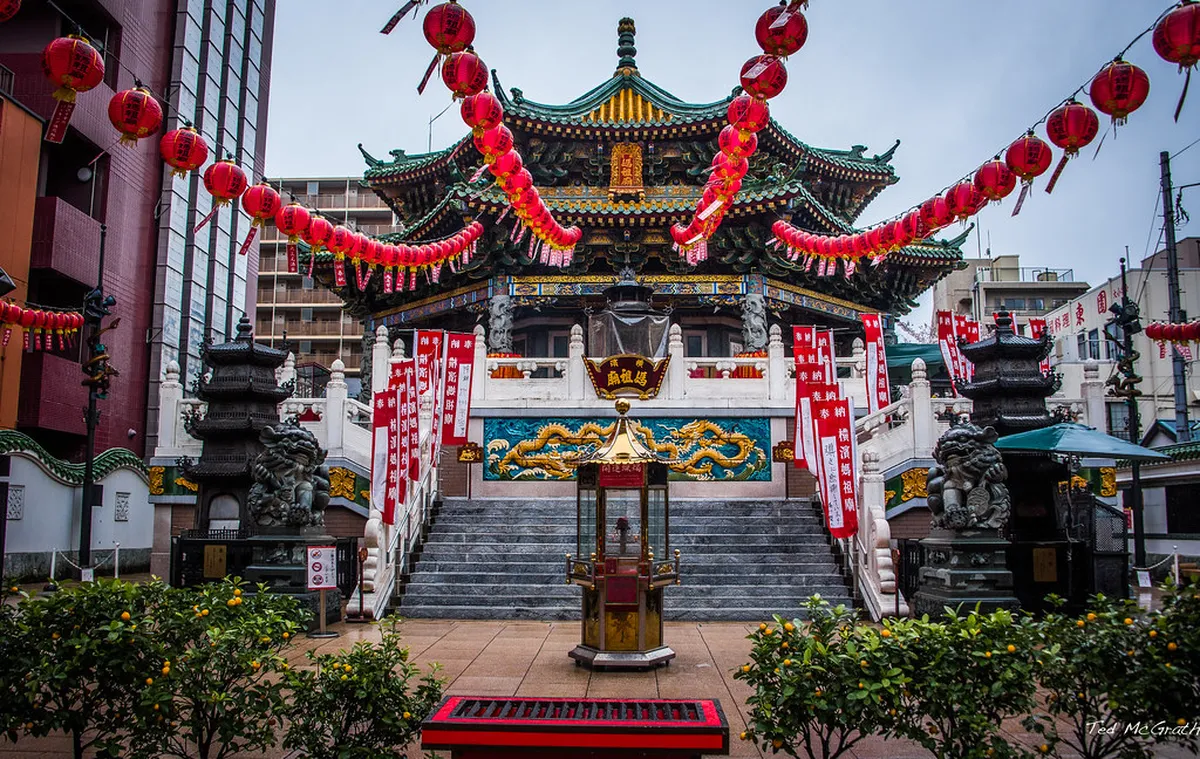
Inside the gates, two temples anchor the cultural side of the visit. Kuan Ti Miao, on Chuka Daido, honours Guan Yu, the god of prosperity and business; locals come to pray before opening shops. Entry to the courtyard is free, with a 500 yen incense set if you want to enter the prayer hall. The temple is open 09:00-19:00 daily.
A few blocks south, Mazu-miao honours the Goddess of the Sea in stunning blue, red, and gold Fujian-style architecture. Same hours (09:00-19:00), same free entry to the grounds. According to the Official Yokohama Chinatown Development Association, Mazu-miao was completed in 2006 and is one of the few examples of this regional Chinese temple style outside southern China.
For wider context on what surrounds the gates, our Yokohama attractions guide covers the harbour and Minato Mirai side.
Yokohama Chinatown Street Foods to Try
Street food is the reason most visitors come. Prices below reflect May 2026; most stalls are cash-only, so withdraw 5,000 yen at the 7-Eleven on Chuka Daido before you start.
- Yaki Shoronpo (pan-fried soup dumplings): 500-700 yen for four. Pierce the top to let steam escape before biting.
- Panda-man (panda-shaped steamed buns): 350-500 yen each, sweet bean or pork.
- Koshou Mochi (Taiwanese black pepper bun): 400-500 yen, baked tandoor-style.
- Age Goma Dango (fried sesame ball): 200-300 yen, best eaten hot from Rouganmon Sweets.
- Mensen (Taiwanese oyster noodle soup): 700-900 yen, a good warm stop in winter.
- Annindofu (apricot kernel pudding): 400-600 yen, the lightest dessert and a palate cleanser.
For etiquette on eating these without irritating shop owners (most stalls now ask you to stand and finish near the counter), see our Yokohama food guide.
Most street stalls in Chinatown are cash-only. Withdraw 5,000–10,000 yen at the 7-Eleven on Chuka Daido before you start your food crawl, as very few stalls accept IC cards or credit cards.
| Street Food | Price (2026) | Notes |
|---|---|---|
| Yaki Shoronpo (pan-fried soup dumplings) | 500–700 yen (4 pcs) | Pierce top before eating to release steam |
| Panda-man (steamed bun) | 350–500 yen each | Sweet bean or pork filling |
| Koshou Mochi (black pepper bun) | 400–500 yen | Baked tandoor-style |
| Age Goma Dango (fried sesame ball) | 200–300 yen | Best eaten hot |
| Annindofu (apricot kernel pudding) | 400–600 yen | Light palate cleanser |
| Mensen (Taiwanese oyster noodle soup) | 700–900 yen | Good warm stop in winter |
Jukeihanten vs. Manchinro: Which Heavyweight to Book
These are the two restaurants most often recommended for a proper sit-down meal, and they are not interchangeable. Pick based on what you want to eat and how dressy you want the evening to feel.
Chinese Restaurant Jukeihanten Yokohama Chukagai Shinkan specialises in Szechuan, and the signature Mapo Tofu (1,800 yen a la carte) is genuinely spicy in the Sichuan numb-hot sense, not the diluted Japanese version. Lunch sets run 2,200-3,500 yen; dinner courses 6,000-12,000 yen. The Shinkan branch (open 11:30-21:00) is the larger, more modern of the two locations and easier to walk into without a reservation on weekdays.
Manchinro Main Store, founded in 1892, is the old-money Cantonese pick. Dim sum is the headline here, with weekend lunch sets from 3,800 yen and signature courses around 8,000-15,000 yen. The dining rooms are formal, the service crisp, and reservations are essentially mandatory on weekends. Open 11:00-22:00.
Short version: pick Jukeihanten for Szechuan heat, lower entry price, and easier walk-ins; pick Manchinro for refined dim sum, historic atmosphere, and a meal that doubles as the evening's main event.
MeetFresh Yokohama Chinatown: The Dessert Stop That Saves Your Afternoon
MeetFresh is the Taiwanese dessert chain that locals use as an air-conditioned reset between savoury stops. The Chinatown branch sits on Chuka Daido near the East Gate and is open daily 11:00-21:00. A standard taro ball bowl with grass jelly and tapioca runs 850-1,100 yen; signature shaved ice mountains go up to 1,300 yen and easily share between two.
The bowls arrive warm or cold depending on the recipe (herbal jelly is served warm year-round), which is why MeetFresh works as well in February as it does in August. There is indoor seating for about 30, but on weekend afternoons expect a 15-minute wait between 13:00 and 16:00.
Pair this with the food-coma strategy below: hit MeetFresh after two heavy savoury stops and you will reset enough appetite to keep tasting for another hour.
The "Food Coma" Walking Route: How to Last Past Lunch
The mistake most first-timers make is queueing for three fried items in a row at the East Gate and then stalling. Alternating heavy and light keeps your appetite live and your photos better lit (you walk further, see more gates).
A workable two-hour route: start at Zenrin-mon with one Yaki Shoronpo set, walk five minutes to Kuan Ti Miao for the temple break, then a Panda-man for the photo and the kids. Cut south to Mazu-miao, light snack with Annindofu, then sit down at MeetFresh for a taro bowl. Finish with one savoury sit-down: dim sum at Saiyuki or a Mapo Tofu lunch set at Jukeihanten.
If you are travelling Yokohama with kids, the Panda-man stop and MeetFresh tend to be the highlights, and both come with somewhere to sit.
Vegetarian, Vegan, and Halal Tips for Chinatown
Chinatown is pork-heavy, and many stalls use lard even in items that look vegetarian. A few practical filters help. Look for Annindofu (apricot kernel milk pudding), Age Goma Dango (sesame balls, usually filled with red bean paste), most steamed bun stalls that sell anman (red bean) and goma (sesame) varieties, and MeetFresh, which has clearly labelled vegetarian taro and grass-jelly bowls.
Avoid: most chukaman with unmarked filling, anything sold as "special" or "house" steamed bun (usually pork), and street xiao long bao. Strict vegans should be aware that egg and dairy appear in many bun doughs and most desserts; MeetFresh and Annindofu are the safer fallbacks.
For halal, two restaurants near the West Gate have introduced halal-certified menus in 2025-2026; check signage at the entrance, as certifications change yearly. Tap water is safe everywhere, and most sit-downs will substitute rice for noodles on request.
Yokohama Chinatown at Night: Lantern Photography Guide
The district transforms when the lanterns switch on at sunset (around 17:00 in winter, 19:00 in summer). The gates are individually lit, and the contrast between the warm gold lacquer and the deep blue sky in the 20-30 minutes after sundown is the best window of the day.
Three spots that consistently shoot well: Choyo-mon Gate on the south side, the least crowded of the four cardinal gates, with a clean vertical composition; Kuan Ti Miao from across Chuka Daido, where the temple roof lines up with strings of red lanterns above the street; and the small alley behind Mazu-miao, where stall lights reflect off the wet stone after rain.
Practical settings: a phone in Night Mode handles the gates fine, but for handheld DSLR work, ISO 1600, f/2.8, 1/60s is the rough starting point. Tripods are tolerated outside the main Chuka Daido corridor but discouraged where foot traffic is dense.
How to Access Yokohama Chinatown from Tokyo
From central Tokyo, the most direct route is the Tokyu Toyoko Line from Shibuya, which through-runs onto the Minatomirai Line and terminates at Motomachi-Chukagai Station. Total time is 35-45 minutes, fare around 500 yen, and exit 2 puts you 30 seconds from the East Gate.
If you hold a Japan Rail Pass, take the JR Tokaido or Yokosuka Line to Yokohama Station, change to the JR Negishi Line, and get off at Ishikawacho Station (West Gate, five-minute walk). The pass does not cover the Minatomirai Line, so the JR route is usually the cheaper option for pass holders.
From Haneda Airport, the Keikyu Line to Yokohama Station then the Minatomirai Line takes about 45 minutes. From Narita, allow 90-110 minutes via the N'EX. Full transit detail in our guide on how to get to Yokohama from Tokyo.
Yokohama vs. Kobe vs. Nagasaki: How Japan's Three Chinatowns Differ
If you are planning a longer Japan trip and wondering whether to visit more than one, the three are genuinely different and not redundant. Yokohama is the largest (around 600 shops), the most touristed, and the most pan-Chinese in cuisine, with strong Cantonese, Szechuan, and Taiwanese representation.
Nankinmachi in Kobe is the smallest of the three, denser, and more snack-focused; you can walk it end-to-end in 15 minutes. Expect more Cantonese roast meats and butaman (pork buns), with less variety on the sit-down side. Shinchi in Nagasaki is the oldest, founded in the 17th century, and skews Fujian-influenced with a strong champon and sara udon tradition that you will not find in Yokohama.
If you have time for only one and food variety matters, Yokohama wins. If you want historical depth and a regional cuisine, Nagasaki is the more rewarding stop.
Parks, Gardens, and Outdoor Spots Around Chinatown
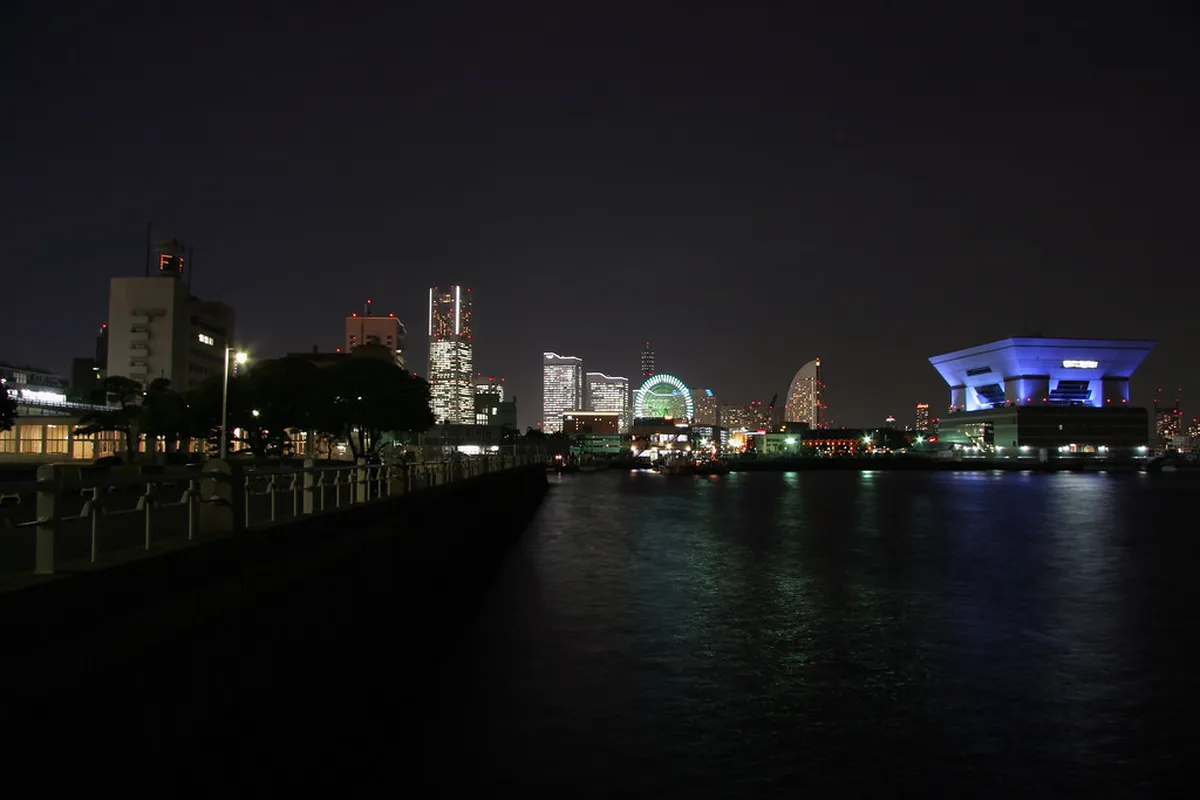
Five minutes east of the gates, Yamashita Park stretches along the harbour and is the obvious place to walk off a food coma. Free, open 24 hours, and home to the historic Hikawa Maru ocean liner. From the eastern end you can see Yokohama Bay Bridge.
For something more cultivated, head 15 minutes inland to Sankeien Garden, a 175,000 square metre traditional garden with relocated historic buildings, particularly worth it during cherry blossom (early April) and momiji (mid-November). Admission is 900 yen for adults.
Harbour View Park sits on the bluff above the Motomachi side and offers the best aerial perspective of Chinatown's rooftops at sunset. Free entry, with a rose garden that peaks in late May and October.
Museums, Art, and Culture Near Chinatown
If it rains, three indoor stops are within 20 minutes on foot. The CUPNOODLES Museum Yokohama in Minato Mirai is the family favourite; design-your-own-cup workshops run 500 yen and book out a week ahead on weekends. Full breakdown in our Cup Noodles Museum guide.
The Yokohama Port Museum near Sakuragicho covers Yokohama's role as Japan's first major treaty port in 1859, including access to the Nippon Maru sailing ship (combined ticket 800 yen). The Silk Museum, a short walk from the East Gate, traces Yokohama's silk export trade in a single, manageable hour (500 yen).
The Yokohama Marine Tower observation deck (1,000 yen adult) gives you the rooftop angle on Chinatown from 91 metres up. Check the official tower site for seasonal light shows.
Beyond the Gates: Minato Mirai and Motomachi
The Yokohama Air Cabin urban ropeway connects Sakuragicho Station to the Shinko Pier in about five minutes (1,000 yen one-way), and is the easiest way to bridge Chinatown with the Red Brick Warehouse area. Our Minato Mirai guide covers the warehouse, Cosmo World, and the waterfront promenade.
For something quieter, Motomachi Shopping Street, just south of the West Gate, has a distinctly European feel with independent boutiques, third-wave coffee, and a craft beer scene that has grown noticeably in 2025-2026. It is the obvious pairing with Chinatown if you want a Saturday afternoon that is half eating and half shopping.
Most of these stops connect with a Yokohama day trip from Tokyo without rushing, especially if you start by 10:30.
Know Before You Go
- Cash: most street stalls do not accept cards or IC. Withdraw 5,000-10,000 yen at any 7-Eleven before entering.
- Walking while eating: discouraged on Chuka Daido since 2023. Stand near the stall, finish, and bin the wrapper before moving on.
- Bins: there are very few public bins. Keep wrappers until you find one at a stall or a convenience store.
- Crowds: weekends and Chinese New Year (late Jan-Feb) are heaviest. Tuesday and Wednesday are quietest.
- Restaurants close mid-afternoon: many sit-downs close 14:30-17:00. Lunch by 13:30 or commit to dinner.
- Reservations: weekend dinner at Manchinro and Jukeihanten requires booking 2-3 days ahead.
- Best photo window: 30 minutes after sunset, when the gate lanterns and the sky balance.
Many Chinatown sit-down restaurants close between 14:30 and 17:00. Plan to eat lunch by 13:30 or commit to a dinner reservation. Weekend dinner at Manchinro and Jukeihanten requires booking 2–3 days ahead.
Concluding Your One or Two Day Yokohama Itinerary
For a half-day, arrive 10:30, walk the gates and one temple, hit three street foods, sit down for a Jukeihanten lunch set, and finish at MeetFresh by 14:30. You will be back in Shibuya by 16:00.
For a full day, add Yamashita Park, Marine Tower for the rooftop angle, and dinner at Manchinro to see the lanterns light up. For two days, base near Motomachi-Chukagai and add Sankeien Garden, the Air Cabin to the Red Brick Warehouse, and the CUPNOODLES Museum on day two.
See our Yokohama attractions guide for the broader city overview.
For related Yokohama deep-dives, see our Yokohama Food Guide and Cup Noodles Museum Yokohama guides.
Frequently Asked Questions
Is Yokohama Chinatown worth visiting?
Yes, it is absolutely worth visiting for the unique atmosphere and incredible food variety. It is the largest Chinatown in Asia and offers cultural experiences you won't find elsewhere in Japan. The district is especially vibrant during the evening when the lanterns are lit.
What is the best street food in Yokohama Chinatown?
The Yaki Shoronpo (pan-fried soup dumplings) and Panda-man (steamed buns) are the most popular choices. For dessert, the Annindofu (apricot seed pudding) is a refreshing local favorite. Most street snacks cost between $3 and $8 per serving.
How do I get to Yokohama Chinatown from Tokyo?
Take the Tokyu Toyoko Line from Shibuya Station directly to Motomachi-Chukagai Station in about 45 minutes. Alternatively, JR pass holders can take the JR Negishi Line to Ishikawacho Station. Both routes are frequent and very easy to navigate.
Yokohama Chinatown rewards visitors who plan the route, not just the meal. Pace yourself between heavy and light stops, time the gates for blue hour, and pick one sit-down meal that matches your appetite for spice or formality. Done that way, half a day here delivers more variety than most full-day food tours in Tokyo.
Bring cash, comfortable shoes, and a flexible appetite. We hope this guide helps you plan an unforgettable 2026 trip to Japan's most colourful and delicious enclave.
Free: The Yokohama Essentials guide
Top things to do, where to stay, a perfect day plan, getting around, and the best time to go — a Yokohama mini-guide you can take offline.
You might also like


Continue reading
More guides you'll find useful