

Hiroshima Late Night Food: 15 Spots Open Past 2 AM (2026)
Where to eat in Hiroshima after midnight: 15 izakayas, oyster bars and noodle shops open past 2 AM in Nagarekawa and Ekinishi, with closing times.
On this page
Hiroshima after dark is two cities stitched together. The Peace Memorial Park empties by 21:00, and the energy migrates two stops east on the tram to Nagarekawa, where five-story buildings stack izakayas, vinyl bars, and karaoke boxes on top of each other. A second pocket lives behind Hiroshima Station, in a retro alley grid known as Ekinishi.
This guide was refreshed in January 2026 with current hours, yen pricing, and the practical rules that catch first-time visitors out: the otoushi table charge, the last tram at 23:32, and the 22:00 taxi surcharge. For broader evening context, see our Hiroshima nightlife overview.
Below are 15 venues that consistently serve past midnight, plus the logistics, etiquette, and neighborhood reading skills you need to use them. Prices quoted are typical 2026 spend per person including one drink; expect 10–15% movement on weekends.
Nagarekawa: The Heart of Hiroshima's Late-Night Scene
Nagarekawa sits in Naka Ward, a five-minute walk from the Hatchobori tram stop on lines 1, 2, and 6. The official Hiroshima tourism guide calls it the best entertainment district in the Chugoku and Shikoku regions. The district is roughly six blocks of vertical multi-tenant buildings: each floor is a separate bar, izakaya, or club, with vinyl signage stacked from street level to the seventh storey. Most kitchens seat last orders at 02:00, and bars typically run until 03:00–05:00.
The energy peaks between 22:30 and 01:00, when downtown office workers, university students, and JMSDF crews from Kure overlap. Friday and Saturday it gets shoulder-to-shoulder around the Yagenbori alley; Sundays are noticeably quieter and easier for first-timers. If you are planning a route, our bar hopping guide sequences the better venues by closing time.
One quirk worth knowing: when the Hiroshima Carp play a home night game at Mazda Zoom-Zoom Stadium (about 30 home games April–October), the post-game crowd reaches Nagarekawa around 22:30 and queues form at the entrance of mid-priced izakayas. Check the Carp schedule before booking a 22:00 reservation; otherwise arrive by 21:30 or after 00:00.
Ekinishi: Retro Izakaya Dining Near Hiroshima Station
Ekinishi is the dimly lit alley grid directly west of Hiroshima Station's south exit, under the elevated highway. It is a five-minute walk from the Shinkansen platforms, which makes it the ideal first or last night of a trip when you have luggage at a station hotel. To pre-scout specific shops, the Tabelog Naka-ku izakaya directory ranks 35 counters by traveler reservations. The streets are narrow, mostly pedestrianised after 19:00, and lined with single-counter izakayas seating six to twelve people each.
The vibe is tabearuki — eating while walking from one tiny bar to the next. Most Ekinishi shops open 18:00 and last orders run between 23:00 and 01:00, with a few standouts (Baltan, DENIRO, Perezoso) holding out to 02:00 on weekends. The district leans cash-only: roughly 60% of counter shops do not accept cards, and many do not have an English menu. Pull cash from the 7-Eleven ATM inside Hiroshima Station before crossing under the highway.
Compared to Nagarekawa's vertical neon, Ekinishi feels like a Showa-era film set: low wooden facades, hand-painted noren curtains, and the smell of charcoal grills hitting the street. It is the better choice for solo travelers, couples, and anyone who wants to talk to the chef across the counter.
What's Still Open After the Last Tram?
The last Hiroden tram from Hatchobori leaves at 23:32, so if you are still out after that, you are committed to a taxi (a 20% late-night surcharge applies after 22:00) or to staying out until the 06:01 first tram. The good news: plenty of Hiroshima's late-night kitchens and bars run well past midnight, several until 4 AM.
- Open past 2 AM: Kadode (02:00), Negian Nagarekawa (02:30), Bar Alegre (02:30), Wine Bar ViVi (02:00) and Bakudan-ya for shime tsukemen (02:00).
- Open until 3 AM: Kaki-hiyokkoshoten oyster bar, MAC Bar and Yatai Sakaba Ichan.
- Open until 4 AM or later: Yakiniku Babachan (04:00), Sound Bar 111 (last orders 04:30) and Friendz International Bar (04:30 on weekends).
- Open 24 hours: Big Echo karaoke — the de facto safe haven to wait out the gap before the first tram.
Carry enough cash for the night, since many Ekinishi izakayas are cash-only and most sit-down venues add an otoushi seating charge of ¥300–800 per person.
Kadode: Traditional Izakaya Favorites Open Until 2 AM
Kadode occupies the ground floor of the Nakanoshima Building at 8-14 Yagenbori, a three-minute walk from Hatchobori. The kitchen runs 18:00–02:00 daily, with sashimi sourced from the Seto Inland Sea earlier that morning. The signature dish is grilled cow shoulder, a Hiroshima cut rarely seen outside the prefecture, alongside fried oyster and Setouchi fish cake.
Expect to spend ¥3,500–5,500 (roughly EUR 22–34) per person including two drinks. The otoushi here is typically a small simmered dish at ¥500. Counter seats are easier to grab than table seats after 22:30; reservations via phone (082-258-2867) are accepted but not always required on weeknights.
Negian Nagarekawa: Late-Night Specialty Green Onion Dishes
Negian builds its menu around Hiroshima's prized green onions, layered into okonomiyaki, tempura, and grilled-pork rolls. The Nagarekawa branch holds last orders at 02:30, which makes it one of the few Nagarekawa kitchens still firing after most izakayas close.
Budget ¥2,500–4,500 per head. The negi-tempura tower is the move; if you are vegetarian, ask for it without katsuobushi (bonito flakes), and skip the okonomiyaki since the standard batter contains seafood dashi. Card payment is accepted, English menu available on request.
Kaki-hiyokkoshoten: Fresh Hiroshima Oysters Past Midnight
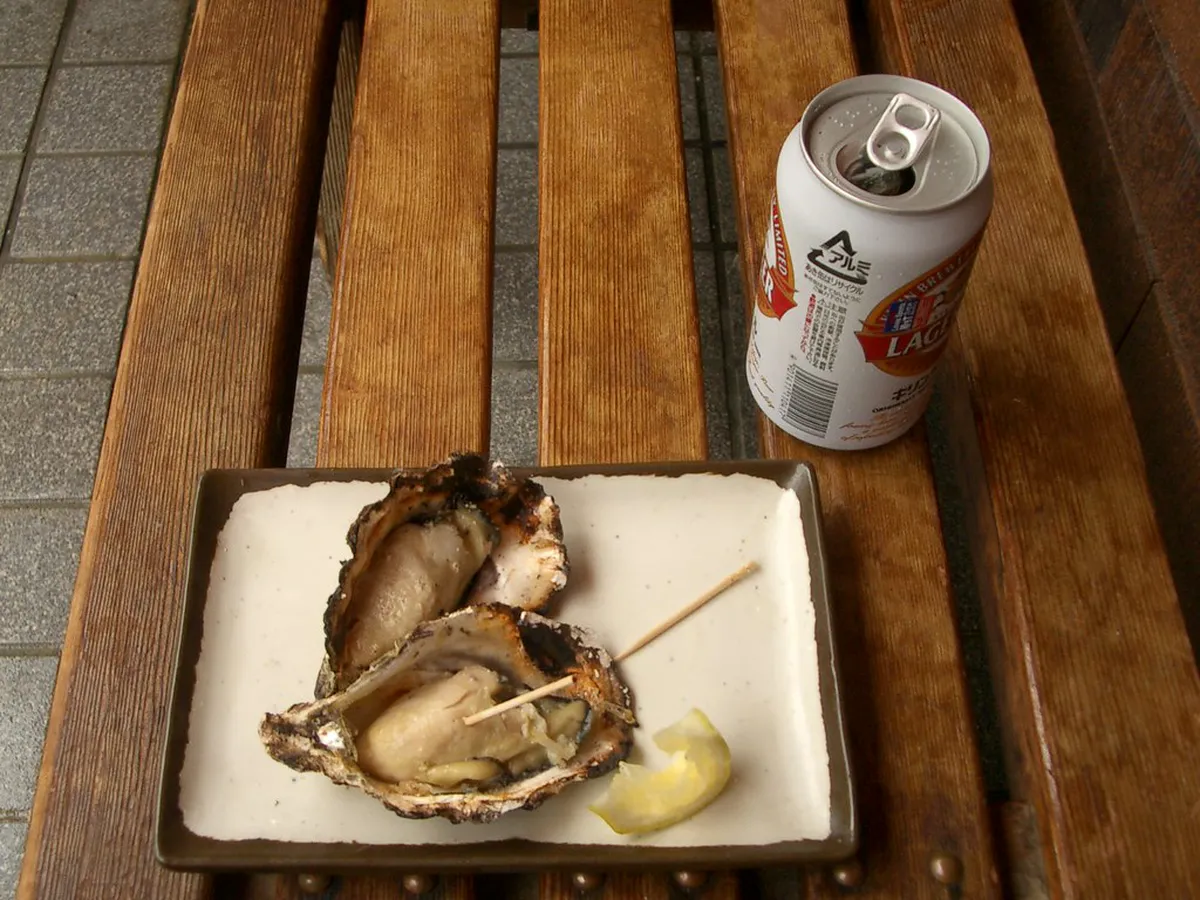
Located in Ebisucho, two minutes off Yagenbori, Kaki-hiyokkoshoten is the rare Hiroshima oyster bar that holds last orders at 03:00. Hiroshima Prefecture supplies roughly 60% of Japan's oysters, and this counter rotates through Etajima, Kurahashi, and Itsukushima varieties — staff will explain the salinity and shell shape of each.
A six-piece raw set runs ¥1,800; a mixed grilled-and-fried platter with a beer lands around ¥3,000–4,000. Counter seating only; the chef shucks in front of you. If you cannot eat raw shellfish in summer (the local rule of thumb is "no R, no raw" — avoid May through August), the kaki-furai fried option is excellent year-round.
Yakiniku Babachan: Savory Grilled Meats for Night Owls
Yakiniku Babachan's Shintenchi main store runs the latest yakiniku kitchen in central Hiroshima, with charcoal tables firing until 04:00. It is popular with the Nagarekawa hospitality crew finishing their own shifts, which gives the after-01:00 crowd a livelier, locals-only feel.
The wagyu set with five cuts runs ¥4,800; a casual pork-belly and beer order can be done for ¥2,500. Ventilation is excellent, but your jacket will still smell of charcoal — leave outerwear at the hotel. Cards accepted; reservations recommended on Friday and Saturday.
MAC Bar: The Legendary Vinyl and CD Dive in Tatemachi
MAC Bar has run since 1977, currently on the third floor of an unassuming building at 3-3-4 Tatemachi (find it via Google Maps). The room holds maybe 20 people, ringed by 6,000+ CDs and a working turntable. The owners are first-name friendly within one drink, and the international community treats it as a default meeting point.
Beers run ¥800–1,000, cocktails ¥1,000–1,400, no cover. Open 20:00 to 03:00, closed Sundays. There is a small smoking section by the back wall — non-smokers should sit closer to the door. Requests are taken; the owners will find an obscure track within 30 seconds.
Friendz International Bar & Grill: Hiroshima's Top Social Hub
Friendz is the default landing spot for solo travelers, language exchange groups, and JET teachers passing through. Located in Nagarekawa with English-speaking staff and an English menu, it removes the friction of decoding kanji at 01:00. The bar holds last orders at 04:30 on weekends.
Drinks ¥600–900, food ¥800–1,500. Friday hosts an unofficial English-Japanese language exchange from 21:00; Saturday leans toward live sport. Tap water is free without an otoushi here, which is unusual for the district and worth knowing if you are budget-conscious.
Bar Alegre: Sophisticated Cocktails and Intimate Vibes
Bar Alegre sits on the third floor of the Konii Building at 1-32 Horikawacho (map), a quieter pocket of Nagarekawa one block off the main strip. The room is dim, jazz-soundtracked, and seats around 14. The bartender works in the Japanese hotel-bar style: ask for a flavor profile (citrus-forward, smoky, dry), and a custom build appears.
Signature cocktails ¥1,400–2,200; the otoushi here is ¥800 (a chocolate or seasonal nut plate). Open 19:00–02:30, closed Mondays. Smart-casual dress; sneakers are fine, but vests and jackets fit the room. Reservations recommended on weekends.
ENTERTAINMENT SOUND BAR 111: Music, Drinks, and Energy
Sound Bar 111 sits dead-centre Nagarekawa with a Funktion-One-style rig and a small dance floor. It bridges the gap between a listening bar and a small club: DJs play house, R&B, and J-pop edits from 23:00, and the room peaks 01:00–03:00.
Cover is ¥1,500–2,500 with a drink ticket included on weekends, free on weekdays before midnight. Drinks ¥800–1,200 after that. Open Wednesday through Sunday, last orders 04:30. ID checks have tightened in 2026 — bring your passport, not just a hotel-key copy.
Wine Bar ViVi: Local Ingredients and Expert Wine Pairings
Wine Bar ViVi pairs natural and orange wines with small plates built from Setouchi seafood and Hiroshima vegetables. It is two minutes from Okonomimura and runs until 02:00. The owner sources directly from importers in Tokyo and rotates 80–100 labels.
Glasses ¥900–1,800, plates ¥1,200–2,400. The four-glass tasting flight at ¥3,500 is the most efficient way to cover the list. The room is small (16 seats) and books out for weekend dinner; arriving after 22:00 usually finds a counter spot. English menu available.
Yatai Sakaba Ichan: Casual Stall-Style Dining After Dark
Yatai Sakaba Ichan recreates the open-air food-stall format inside a covered Nagarekawa storefront. The kitchen leans heavily on grilled skewers, motsuni stew, and the local secret-spice yakitori sauce. It is the cheapest credible late-night meal in central Hiroshima.
Skewers ¥150–350 each, beer ¥500, full meal ¥1,800–2,800. Open until 03:00, no reservations, walk-ins seated at the bar. The room runs warm and loud — solo diners are welcome and almost always struck up by neighbors after one drink.
Oktav Classical Music Pub: A Refined Late-Night Alternative
Oktav is the antidote to Nagarekawa's bass: a small Naka Ward room with treated walls, a high-end speaker setup, and a programme of classical and jazz LPs played at proper volume. Conversation is allowed but kept low; phones are expected to be silent.
Drinks ¥1,000–1,600, snack plates ¥800–1,500. Open 20:00–01:30, closed Tuesdays. The owner takes requests and will pull rare pressings from the back room if you ask politely. A good post-dinner choice before bed if Sound Bar 111 is too much.
Big Echo Hiroshima Honten: The Ultimate Late-Night Karaoke Experience
Big Echo's Hontodori flagship runs private rooms 24 hours, which makes it the de facto safe haven once trams stop. After-midnight pricing is ¥600–900 per 30 minutes per person, plus a one-drink minimum (drink bar ¥500, "nomihoudai" all-you-can-drink ¥1,500/90 min).
The English-language song catalogue covers about 12,000 titles with subtitle support; food can be ordered to the room until 04:30. Free-time packages (¥1,800 from 00:00 to 05:00) are the cheapest way to wait out the gap before the first 06:01 tram. Bring your passport — they may scan it for entry.
Hiroshima Nightlife Guide: Transport, Table Charges, and FAQs
The last Hiroden tram from Hatchobori toward Hiroshima Station runs at 23:32; the last bus on most central routes is around 23:00. Knowing how to get around Hiroshima in advance saves a stressful 11 PM scramble. After 22:00, taxis charge a 20% late-night surcharge: a 2 km hop within the city centre is roughly ¥1,400–1,800, and a ride from Nagarekawa to a Hiroshima Station hotel runs ¥1,800–2,400. PASMO and Suica IC cards work on trams and taxis, but many small Ekinishi izakayas are cash-only.
Otoushi (お通し) is a small appetiser plate, ¥300–800 per person, charged automatically when you sit down at most izakayas and bars. It is not a tip, not optional, and not a scam — it functions as a cover charge. You cannot decline it by refusing the food. Budget for it once per venue.
The Nagarekawa neon belongs to two different industries: ordinary bars use horizontal signs in Japanese with prices listed; host clubs and hostess clubs use full-storey vertical light boxes with single first names (often in katakana) and faces of staff in tuxedos or evening wear. Touts in suits standing outside calling "onii-san" or "onee-san" are pulling for these venues. Walking in costs ¥10,000–30,000 per hour minimum; do not enter unless you intend to. Family-friendly izakayas and travel-targeted bars never use street touts.
The last Hiroden tram from Hatchobori toward Hiroshima Station departs at 23:32 on weekdays and 23:25 on Sundays. After that, taxis charge a 20% late-night surcharge from 22:00. A 2 km hop within the city centre costs roughly ¥1,400–1,800.
Vegetarian and gluten-free options are limited but not impossible: Negian (vegetable tempura without dashi), Wine Bar ViVi (cheese plates, salads), and Friendz (grilled vegetables and fries) are the most accommodating after midnight. Halal options are essentially unavailable in the late-night window — plan a dinner before 22:00 if needed. For a daytime palette refresher, our things to do in Hiroshima guide pairs well with this evening plan.
- Last tram from Hatchobori to Hiroshima Station: 23:32 weekdays, 23:25 Sundays.
- First morning tram: 06:01 from Hiroshima Station.
- Taxi late-night surcharge: 20% applied 22:00–05:00.
- Typical otoushi range: ¥300–800 per person, per venue.
- ATM tip: 7-Eleven inside Hiroshima Station accepts foreign cards 24h.
| Venue | Type | Last Orders / Close |
|---|---|---|
| Kadode | Izakaya (Nagarekawa) | 02:00 |
| Negian Nagarekawa | Green onion specialty | 02:30 |
| Kaki-hiyokkoshoten | Oyster bar | 03:00 |
| Yakiniku Babachan | Yakiniku | 04:00 |
| MAC Bar | Vinyl bar | 03:00 |
| Friendz International Bar | International bar | 04:30 (weekends) |
| Big Echo karaoke | Karaoke | 24 hours |
| Yatai Sakaba Ichan | Stall-style bar | 03:00 |
The Shime Custom: Ending Your Night with Spicy Noodles
Otoushi (the small appetiser charged when you sit) is ¥300–800 per person at most Nagarekawa and Ekinishi bars — it is not a scam but a standard seating fee. Budget for it once per venue and you won't be surprised by the bill.
Shime (締め) is the local convention of closing a drinking night with one final dish — almost always noodles or rice. In Hiroshima, the canonical shime is spicy tsukemen: thick cold wheat noodles dipped in a chili-and-sesame red sauce that supposedly settles the stomach and counters sake fatigue. Bakudan-ya in Shintenchi runs spice levels 1–20 (start at 3 if untested) and stays open until 02:00. Reimenya in Kanayamacho serves a milder cold-noodle version popular with summer crowds.
Tsukemen aside, ramen shops near Hatchobori see their second daily peak at 00:30. Crowded shops are a quality signal in Japan; if you walk past one with a queue at 01:00, that is the right shop. For a deeper noodle map, see our best Hiroshima ramen shops guide. A guided context for the food culture is offered through the Arigato Japan - Best of Hiroshima Food Tour.
For related Hiroshima deep-dives, see our best Hiroshima ramen shops, Hiroshima 2-day itinerary guides.
Frequently Asked Questions
What time do bars in Hiroshima usually close?
Most bars in the Nagarekawa district remain open until 2 AM or 3 AM. Some international pubs and karaoke boxes stay active until 5 AM or 6 AM. Check official sites for weekday variations.
Is it easy to find a taxi in Hiroshima after midnight?
Taxis are very easy to find at designated stands in Nagarekawa and Ekinishi. They are the primary transport once trams stop at 11:30 PM. Expect to pay a late-night surcharge of 20 percent.
Are there any budget-friendly late-night food options?
Yes, many noodle shops and small izakayas offer affordable meals for under $15. You can find more tips in our Hiroshima budget travel guide. Ramen and tsukemen are the best value.
Hiroshima after midnight rewards a small amount of preparation: keep ¥10,000 cash on you for Ekinishi, leave Nagarekawa before 23:32 if you want the last tram, and assume an otoushi at every sit-down venue. The 15 spots above cover the full late-night spectrum, from Showa-era oyster counters to a vinyl bar that has not changed its sound since 1977.
Sequence the evening to your stamina: dinner in Ekinishi by 21:00, drinks across Nagarekawa from 22:30, shime tsukemen at Bakudan-ya around 01:30, and Big Echo karaoke as the bridge to the 06:01 first tram. Done in that order, the city stays open as long as you do.
Free: The Hiroshima Essentials guide
Top things to do, where to stay, a perfect day plan, getting around, and the best time to go — a Hiroshima mini-guide you can take offline.
You might also like


Continue reading
More guides you'll find useful


