Nara Itinerary 2 Days: The Ultimate Guide to Japan's Ancient Capital
Plan the perfect 2-day Nara itinerary. Includes day-by-day temple routes, deer feeding tips, Ryokan recommendations, and transport guides from Kyoto and Osaka.
On this page
Most travelers rush through Nara on a day trip from Kyoto or Osaka and leave by mid-afternoon. Staying two nights reveals an entirely different city — quiet stone lantern paths at dusk, deer wandering an empty park at dawn, and teahouses in Naramachi that only open on weekday evenings. This guide is built for first-timers who want to see both the famous sights and the corners that day trippers never reach. Booking how to get to Nara in advance and securing accommodation nearby ensures a smooth arrival.
This article was updated for 2026 to reflect current temple admission prices, train fares, and the latest deer feeding rules. Nara's compact historic core means you can cover most of the big sites on foot on Day 1, then take local trains southwest for a completely different experience on Day 2. Forty-eight hours is the right amount of time to do it properly.
How to Get to Nara from Kyoto and Osaka
Both Kyoto and Osaka have two rail options to Nara: the JR line and the private Kintetsu Line. The difference matters more than most guides let on, because the two Nara stations sit about 2 km apart — and that gap affects how much walking you do on your first morning.
- From Kyoto — JR Nara Line: 45 minutes, ¥720. Arrives at JR Nara Station, roughly a 25-minute walk to Nara Park. Covered by JR Pass.
- From Kyoto — Kintetsu Limited Express: 35 minutes, ¥1,160. Arrives at Kintetsu-Nara Station, a 10-minute walk to the park entrance. Not covered by JR Pass but saves you time and shoe leather.
- From Osaka (Namba) — Kintetsu Nara Line: 40 minutes, ¥570. Arrives at Kintetsu-Nara Station. Fastest and cheapest option from Osaka.
- From Osaka — JR Yamatoji Kaisoku: 55 minutes, ¥810 from JR Osaka Station. Use only if you are on a JR Pass and prioritize cost savings over convenience.
Kintetsu Limited Express from Kyoto to Kintetsu-Nara takes just 35 minutes (¥1,160) and drops you within a 10-minute walk of the park — worth the upgrade if you want maximum morning time at Todai-ji before tour groups arrive.
The practical verdict: use Kintetsu Railway if you are paying out of pocket. The station drops you almost inside the park, which is a meaningful difference on a tight schedule. If you have a JR Pass and want to save the ¥1,160, factor in the extra 15 minutes of walking on Day 1 morning — temples open early and the park is best before 9:00 AM.
Within Nara, local buses run from both stations to outlying temples. The Nara Kotsu city bus loop (¥220 per ride, or a ¥500 day pass) connects Kintetsu-Nara Station, Todai-ji, and Kasuga Taisha in under 10 minutes. Walking between these three sites takes about 20 minutes total and is perfectly enjoyable in good weather.
Day 1: Nara Park, Todai-ji, and the Sacred Deer
Arrive early — 8:30 AM is ideal. The Nara Deer Park before the tour buses arrive is a completely different experience from midday. The 1,600-acre (660-hectare) park is still cool and quiet, and the roughly 1,200 sika deer are active and approachable. Walk north through the park toward the Nandaimon Gate, the 25-meter wooden entrance gate to Todai-ji, flanked by two enormous 13th-century guardian statues.
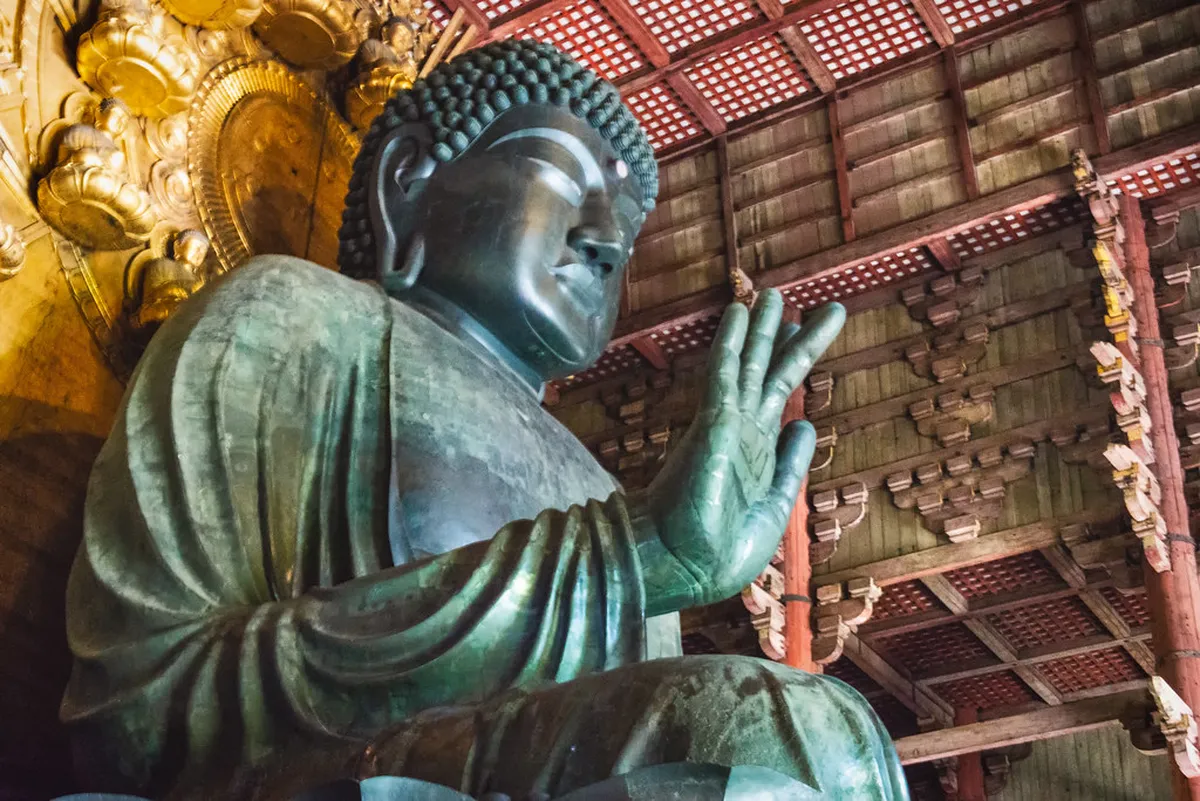
Todai-ji's Daibutsuden Hall opens at 7:30 AM (April–October) or 8:00 AM (November–March) and costs ¥600 to enter. The Great Buddha — 15 meters of bronze, cast in 752 — is one of those rare sights that genuinely exceeds expectations. After seeing the Buddha, look for the wooden pillar with a square hole cut near its base. The hole is said to be the same size as the Daibutsu's nostril. Crawling through it from right to left is believed to bring enlightenment in your next life. The gap is tight — roughly 37 cm wide — but most adults can manage it sideways. The queue grows long by 10:00 AM, so go immediately when you enter.
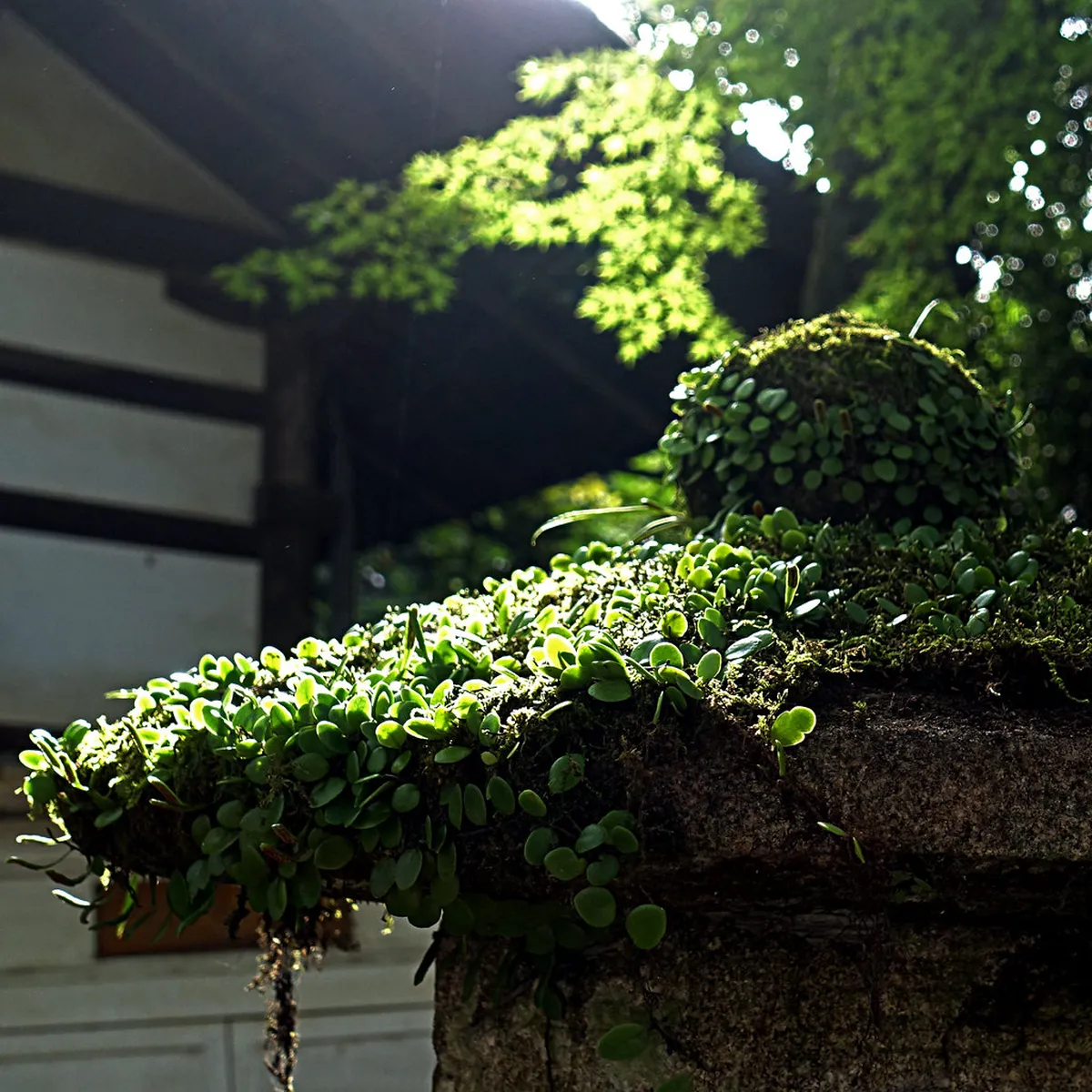
After Todai-ji, follow the stone lantern path east through the forest toward Kasuga Taisha Shrine. The 20-minute walk passes moss-covered stone lanterns donated by worshippers since the 8th century — there are roughly 3,000 total. The inner shrine charges ¥500 admission; the outer path is free. The attached Fujinami-no-ya Hall displays the hanging bronze lanterns year-round and is worth the short detour.
For lunch, head southwest toward Naramachi. The former merchant district runs along the lanes south of Sarusawa Pond and is full of converted machiya townhouses now operating as cafes and small restaurants. Try Nara food specialties like kakinoha-zushi (persimmon leaf sushi) or miwa somen (thin wheat noodles). Many places close between 14:00 and 17:00, so aim for a 12:30 lunch. After eating, walk past Nakatanidou on Hashimoto-cho — the mochi pounding schedule runs roughly every 30 minutes from around 10:00 to 17:00, but the 13:00–14:00 slot tends to be less crowded than mid-morning.
End Day 1 at Sarusawa Pond around 17:30. The Kofuku-ji five-story pagoda — Japan's second tallest at 50 meters — illuminates after sunset and reflects perfectly in the pond. This is one of the most photographed scenes in the city and almost no competitor guide covers it as a deliberate evening stop. Dinner in Naramachi follows naturally from here; the narrow lanes around Gangoji Temple have small izakayas and sake bars that stay lively until 22:00.
Day 2: Ancient Foundations and South Nara Exploration
Day 2 requires an early start because the southwest temple circuit involves trains. Catch the JR Yamato-ji Line from JR Nara Station (note: JR, not Kintetsu, for this leg) to Horyuji Station — 11 minutes, ¥210. From the station it is a 20-minute walk or short bus ride to the temple gate. Arrive by 9:00 AM before tour groups. If you prefer a more relaxed Day 2, consider day trips from Nara to nearby areas instead.
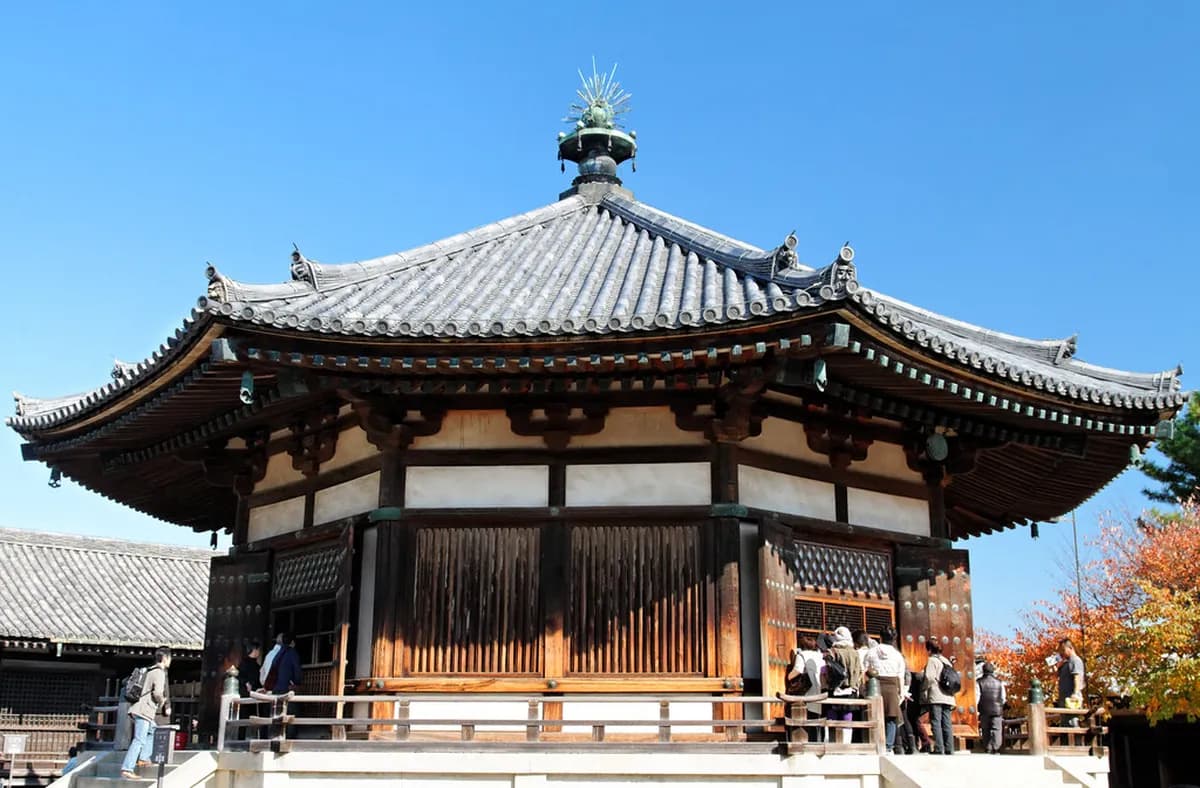
Horyu-ji is the oldest wooden structure in the world, built in 607 AD, and part of Japan's first UNESCO World Heritage listing. Admission is ¥1,500 — the most expensive single site on this itinerary, but the scale justifies it. The complex holds the five-story pagoda, the Golden Hall (Kondo), and the Yumedono octagonal hall. Behind Yumedono, the small Chuguji Temple sits beside a pond and houses the Miroku Bosatsu, a 7th-century seated Buddha with an expression described by art historians as among the most serene in Japanese sculpture. Chuguji charges ¥600 separately but offers a discounted combo with Horyu-ji.
From Horyu-ji, take the Nara Kotsu bus 97 from the Horyuji-mae bus stop (5 minutes' walk from the Great South Gate) toward Nishinokyo. Get off at Yakushi-ji Higashi-guchi — about 40 minutes. Yakushiji Temple (¥1,100, open 8:30–17:00) stands out for its vermillion-painted East Pagoda, one of the few original Nara-period structures to survive intact. The adjacent Toshodaiji Temple (¥1,000, open 8:30–17:00) is a 10-minute walk north and was founded in 759 by a Chinese priest to train Japanese monks. Both temples are quieter and more architecturally interesting to many visitors than the bigger-name sites on Day 1.
An alternative for Day 2 if you prefer countryside over temple-hopping: take the Kintetsu Yoshino Line south to Asuka (about 40 minutes from Kintetsu-Nara, ¥680). Rent a bicycle near Asuka Station (¥1,000–1,200 for a half-day) and explore the ancient keyhole-shaped burial mounds, the Ishibutai kofun tomb, and the stone carvings at Kameishi and Saruishi. Asuka was Japan's capital before Nara and feels genuinely rural and unhurried. This option works best for travelers who have already seen Horyu-ji on a previous trip.
Interacting with the Nara Deer: Etiquette and Safety
The sika deer in Nara Park are classified as national treasures. They are wild animals that happen to tolerate human presence — not domesticated pets. Understanding the difference makes the interaction better and safer for both you and the deer.
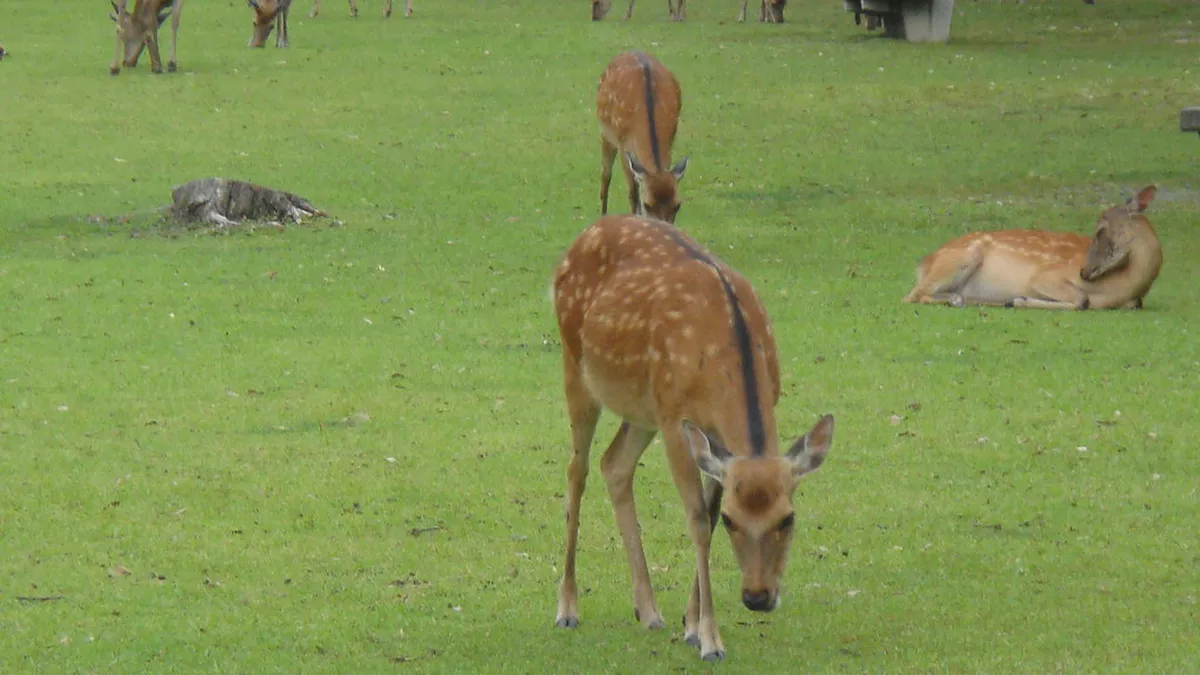
Deer crackers (shika-senbei) are sold by licensed vendors throughout the park for ¥200 per pack. Buy from official vendors only — the crackers are made from rice bran and wheat flour without added salt, which is safe for the deer. Do not feed them snacks, bread, or any human food, which causes digestive problems. Vendors typically operate from around 8:00 AM until stocks run out in the early afternoon.
- Bow to a deer before offering a cracker. Many deer have learned to bow back. If a deer bows at you, it is asking for food — not being polite.
- Hide the crackers behind your back or in a bag if you want the deer to leave you alone. Visible food triggers persistent nuzzling and the occasional headbutt.
- Do not make eye contact and back away slowly if a deer lowers its head — this is a charge posture, especially common in males (bucks) during the October rutting season.
- Antlers are trimmed each autumn in a ceremony called Shika no Tsunokiri. From late October through September the following year, male deer have full antlers and should be approached with more caution.
- Keep food and bags well away from fawns. Mother deer near fawns are more protective and may charge.
Children under about 10 should be supervised closely. The deer are genuinely gentle most of the time, but they are large animals (adult males weigh 70–90 kg) and a casual bump from a deer focused on food can knock a small child over. The best and safest interaction is early morning when the deer are calm and not in competition with other tourists for crackers.
Do not make eye contact and back away slowly if a deer lowers its head — this is a charge posture, especially common in males during the October rutting season when antlers are full.
Where to Stay: Best Ryokans and Hotels in Nara
Nara has a small but well-curated selection of accommodation. The best choices cluster around three areas: Naramachi (most atmospheric), the park perimeter near Sarusawa Pond (best views), and the streets immediately around Kintetsu-Nara Station (most convenient for transport).
Ryokans are the obvious choice for a first-time overnight stay. The experience — tatami rooms, futon bedding, multi-course kaiseki dinner, and communal onsen if the property has one — is genuinely different from a hotel. Book traditional inns at least three months ahead for cherry blossom season (late March–early April) and autumn color season (mid-November). Expect to pay ¥15,000–30,000 per person per night including dinner and breakfast at a mid-range ryokan. A handful of the inns near Nara's best ryokan district sit close enough to Sarusawa Pond to offer water views from upper-floor rooms.
For budget travelers, the area around Kintetsu-Nara Station has several clean guesthouses and capsule hotels from ¥3,000–5,000 per night. These are fine for solo travelers who plan to spend most of their time outside. Mid-range business hotels (¥8,000–12,000) near JR Nara Station are another practical option if you have a JR Pass and plan to leave early for Day 2's Horyu-ji leg from JR Nara Station directly. Staying close to Naramachi adds roughly 15 minutes of walking to the JR station but gives you easy access to the best evening dining.
Essential Dining: What to Eat in Naramachi
Nara has a specific food identity that most visitors never explore beyond convenience store onigiri. The standout local dishes are all rooted in the city's Buddhist temple culture and proximity to good agricultural land in Yamato Basin.
Kakinoha-zushi is the dish most associated with Nara. Seasoned rice is topped with cured mackerel or salmon, wrapped in a persimmon leaf, and pressed overnight. The leaf acts as a natural preservative and imparts a faint tannic fragrance. You can find it at Hiraso in the Naramachi district (a long-established shop that has been selling the same recipe for over 300 years) or as bento packs at both train stations. Miwa somen — thin wheat noodles from the Miwa region — appear on lunch menus across the city, usually served cold with dipping sauce in summer. Yoshino kuzu tofu and warabi mochi made from bracken starch are two dessert items worth trying at Naramachi teahouses.
For dinner on Day 1, the lanes around Gangoji Temple (a 5-minute walk from Sarusawa Pond) have the best concentration of izakayas. Many open at 17:30 and serve local Harushika or Miwa sake alongside small plates. Budget ¥2,500–4,000 per person for a full dinner with drinks. Most close by 22:00 on weekdays. Reserve a spot if you are visiting on a Friday or Saturday evening in October or November — the area fills up during autumn foliage season.
Practical Travel Tips for Your 2-Day Visit
| Day | Morning | Afternoon / Evening | Key cost |
|---|---|---|---|
| Day 1 | Nara Park deer, Nandaimon Gate, Todai-ji (opens 7:30 AM Apr–Oct) | Kasuga Taisha → Naramachi lunch → Sarusawa Pond at dusk | ¥800 Todai-ji; ¥500 Kasuga inner; ¥200 crackers |
| Day 2 | JR to Horyuji Station → Horyu-ji Temple (opens 8:00) | Bus to Yakushi-ji (¥1,100) + Toshodai-ji (¥1,000); or Asuka by Kintetsu + bicycle | ¥1,500 Horyu-ji; ¥1,000–¥1,200 bike rental |
Carry cash. Most smaller shrines, Naramachi teahouses, deer cracker vendors, and family-run restaurants do not accept cards. Major temples (Todai-ji, Horyu-ji, Kasuga Taisha inner shrine) accept IC cards at their ticket counters now, but having ¥5,000–10,000 in notes available keeps the day running smoothly.
Wear comfortable walking shoes. Day 1 in the central park and Naramachi involves 8–10 km of walking across gravel paths, stone steps, and uneven old-town lanes. Cobblestones in Naramachi are particularly hard on thin-soled footwear. Day 2 in the southwest temple district is less walking-intensive if you use buses, but Horyu-ji still involves a fair amount of time on your feet inside the complex.
A few more practical notes worth knowing before you arrive in 2026:
- Todai-ji opens at 7:30 AM April through October and 8:00 AM November through March. Closing time is 17:30 in summer and 17:00 in winter. Get there at opening to avoid queues for the pillar crawl.
- Mount Wakakusa (¥150 admission) is open daily from 9:00 AM to 17:00 and is closed from late November to late January. The 20-minute hike to the plateau above Nara Park gives the best elevated view of the city and Todai-ji from a distance — ideal for afternoon photography.
- The Shoso-in treasure house near Todai-ji opens only for a two-week special exhibition each autumn (typically late October–early November). Timed tickets sell out quickly. Check the Nara National Museum site if you are visiting during this window.
- Festivals: Omizutori at Todai-ji runs from 1–14 March and ends with fire torch ceremonies at 19:00 each evening. It is one of the most dramatic religious rituals in Japan and draws large crowds. Book accommodation six months ahead if you plan your visit around it.
- The Isuien Garden (¥1,200, open 9:30–16:30, closed Tuesdays) is a calm counterpoint to a busy Day 1 morning. If you want to break up the temple circuit, it fits naturally between Todai-ji and lunch in Naramachi.
Frequently Asked Questions
Is Kintetsu-Nara or JR Nara station better?
Kintetsu-Nara Station is better for most tourists because it is closer to the park. It saves you a ten-minute walk compared to the JR station. Use JR only if you have a Japan Rail Pass.
How much does it cost to feed the deer in Nara?
Deer crackers, known as Shika-senbei, cost exactly 200 JPY per pack. You can buy them from official stalls throughout the park. Please do not feed the deer any other human food.
Are temples in Nara open on Mondays?
Most major temples like Todai-ji are open daily throughout the year. However, some smaller museums and shops in Naramachi may close on Mondays or Tuesdays. Always check the official site before visiting.
See our Nara attractions guide for the broader city overview.
Nara is a city that rewards those who slow down and stay overnight. This 2-day plan ensures you see the famous landmarks and the hidden corners. I hope this guide helps you have a magical experience in the ancient capital. Enjoy your journey through the sacred forests and historic streets of Nara.
Free: The Nara Essentials guide
Top things to do, where to stay, a perfect day plan, getting around, and the best time to go — a Nara mini-guide you can take offline.
You might also like


Continue reading
More guides you'll find useful