Nara to Kyoto Train Guide: 5 Essential Travel Options
Compare the JR Nara Line and Kintetsu Kyoto Line. Learn about costs, travel times, JR Pass coverage, and the best stations for your Nara itinerary.
On this page
Traveling between Nara and Kyoto is one of the easiest inter-city moves in the Kansai region. Both ancient capitals are less than 50 km apart, and two competing rail networks connect them in under an hour. This nara to kyoto train guide compares every realistic option — JR, Kintetsu, sightseeing trains, and buses — so you can choose based on your pass, your budget, and which part of Kyoto you are heading to. For comparison, Osaka is similarly accessible and offers different cultural experiences.
The key choice is always JR versus Kintetsu. Your decision hinges on three variables: whether you hold a Japan Rail Pass, which Nara station is more convenient for your sightseeing, and where in Kyoto you plan to stay. A solid Nara Transportation Guide: 8 Essential Ways to Get Around will help you map this out before you arrive.
The JR Nara Line: Best for JR Pass Holders
The JR Nara Line runs between Kyoto Station and JR Nara Station, operated by JR West. It is the only route fully covered by the Japan Rail Pass at zero extra cost. If you already hold a pass, this is the obvious choice — the base fare without a pass is 720 yen. Trains depart from platforms 8–10 on the east side of Kyoto Station.
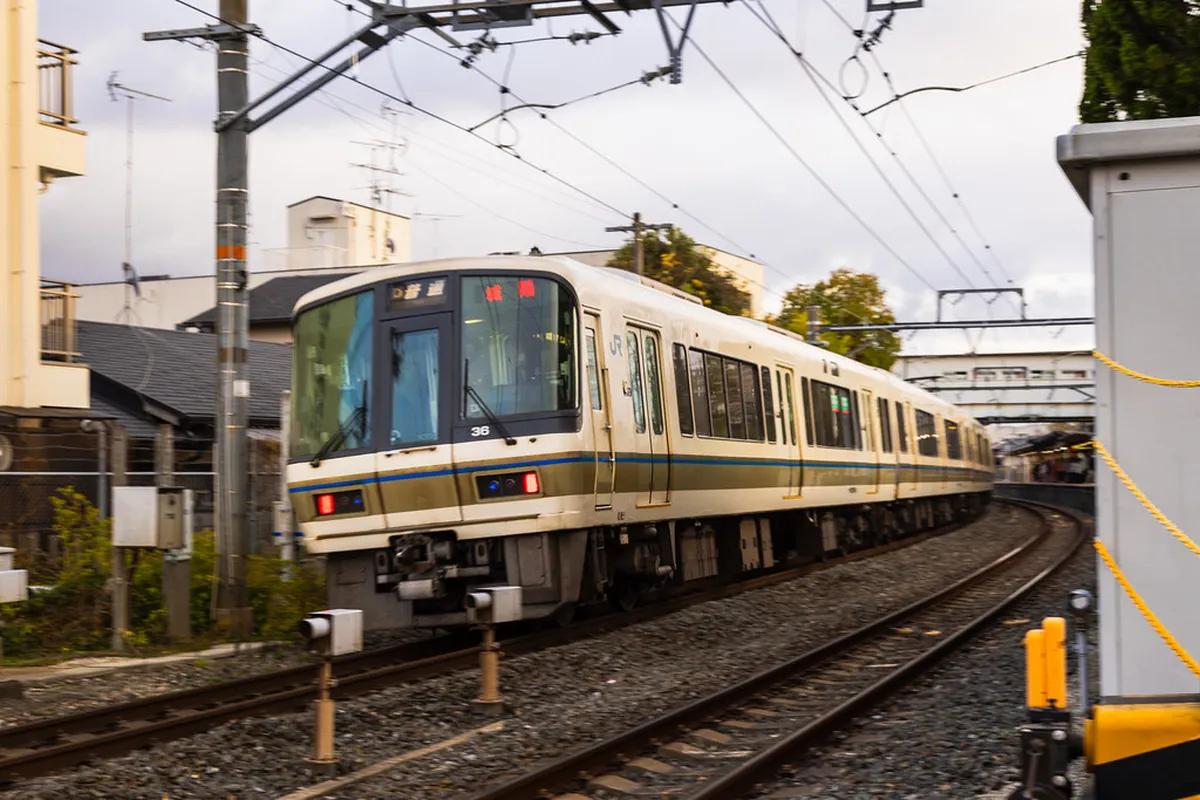
The Miyakoji Rapid is the service to board. It stops only at Uji and a handful of intermediate stations, completing the run in about 45 minutes. It typically departs twice per hour during daytime. Avoid local JR trains on this line — they stop at every station and take over 70 minutes, costing you precious morning time at the temples without saving a single yen.
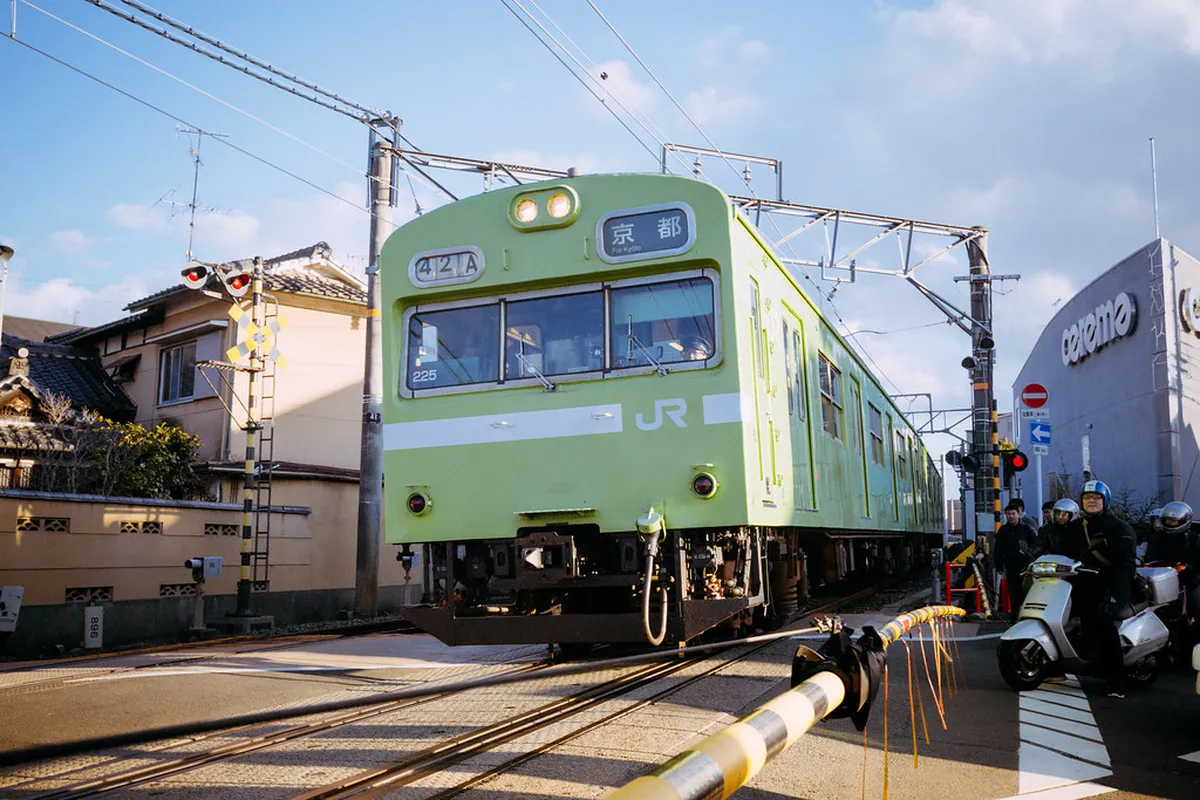
Kintetsu Express trains showing "Kokusaikaikan" or "Karasuma Oike" as their destination continue directly onto the Kyoto Municipal Subway Karasuma Line — a single ride that delivers you to Shijo Station without any transfer or extra ticketing.
A practical note for 2026: the Miyakoji Rapid can fill up on weekends and during peak foliage season (late November). There is no reserved seating on this service. If you are traveling with a large group during autumn, board early or catch the first departure of the morning to guarantee seats.
Check the JR West official site for live timetables before you travel. Schedules shift slightly between weekdays and weekends, and the first Miyakoji Rapid of the day departs Kyoto at approximately 06:11.
The Kintetsu Kyoto Line: Fastest and Most Convenient
The Kintetsu Kyoto Line is a private railway connecting Kintetsu Kyoto Station (inside the same building as JR Kyoto Station) to Kintetsu Nara Station. It is not covered by the JR Pass — you pay separately with an IC card or a paper ticket. Despite this, most travelers without a pass prefer Kintetsu because the station is closer to Nara's sights and the fares are slightly cheaper than the JR equivalent.
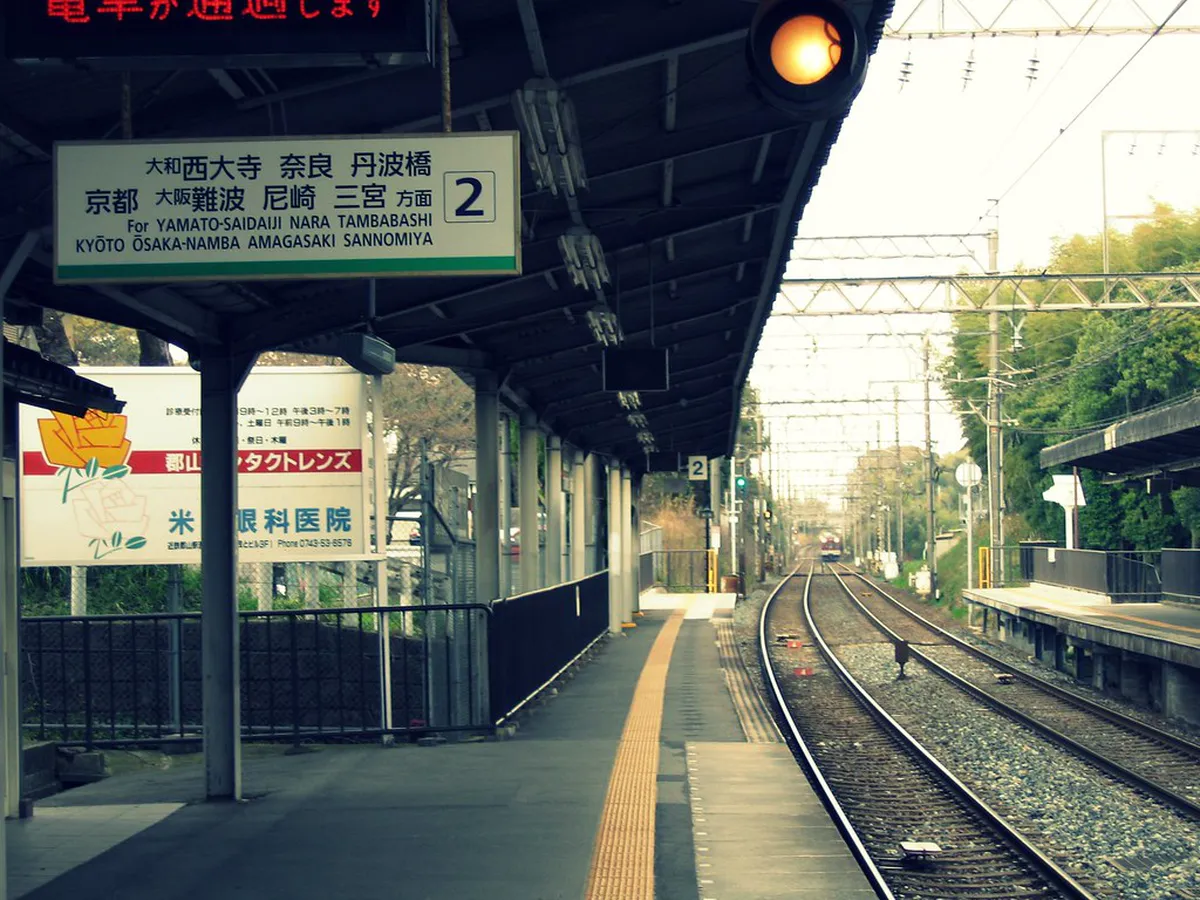
There are two service tiers. Express trains cost 620 yen and take 45 to 50 minutes. Many require a change at Yamato-Saidaiji, though through services running directly from Kintetsu Nara to Kyoto are common. Limited Express trains are non-stop to Nara in 35 minutes and cost 1,130 yen all-in (base fare plus the 520-yen limited express surcharge). Limited Express seats are reserved and considerably more comfortable — a worthwhile upgrade after a long day on your feet.
The Aoniyoshi is a premium sightseeing train operating on the same corridor. It features curved purple exterior panels, wood-accent interiors, and observation-style seating. The fare is comparable to the Limited Express. Advance reservations are required and it sells out during weekends and holidays, so book through the Kintetsu app or any major ticketing window as early as possible.
You can use Suica, ICOCA, or any standard IC card to pay the base Express fare on Kintetsu. If you want the Limited Express, you must purchase the reserved-seat supplement at the ticket counter or via a machine — IC cards alone do not cover the surcharge. Visit the Kintetsu Railway ticketing page for current pricing and pass options.
Comparing JR vs. Kintetsu: Price, Speed, and Comfort
Here is the direct comparison for 2026. The JR Miyakoji Rapid and the Kintetsu Express both take about 45 minutes and cost within 100 yen of each other (720 yen vs. 620 yen). The Kintetsu Limited Express wins on speed at 35 minutes but costs 1,130 yen. JR Pass holders pay nothing on JR, which makes that the clear best-value route regardless of the time penalty.
| Service | Time | Fare (2026) | JR Pass | Seats |
|---|---|---|---|---|
| Kintetsu Limited Express | 35 min | 1,130 yen | Not covered | Reserved |
| JR Miyakoji Rapid | 45 min | 720 yen (free with pass) | Covered | Non-reserved |
| Kintetsu Express | 45–50 min | 620 yen | Not covered | Non-reserved |
| JR Local Train | 70–75 min | 720 yen (free with pass) | Covered | Non-reserved |
IC cards (Suica, ICOCA) cover the base Kintetsu Express fare, but the Limited Express reserved-seat surcharge (¥520) must be paid separately at a ticket counter or machine — tapping IC at the gate alone will not cover it.
For budget travelers without a JR Pass, the Kintetsu Express at 620 yen is the cheapest option and arrives faster than the local JR. For luxury travelers who value comfort and speed above cost, the Kintetsu Limited Express or Aoniyoshi train is the pick. JR Pass holders should take the Miyakoji Rapid and use the time-savings argument to stop at Fushimi Inari or Uji on the same trip.
Frequency matters on a day-trip schedule. Kintetsu Express and Limited Express trains typically run more often than JR departures, which is an advantage when your afternoon schedule is fluid. Both lines operate from roughly 05:30 to 23:30 from each terminus. Last trains are well past dinner time, so there is no practical risk of getting stranded in Nara.
Navigating Nara: JR Nara Station vs. Kintetsu Nara Station
Many first-time visitors do not realize that Nara has two separate main stations roughly one kilometer apart. The choice between them affects how much you walk and where you begin your sightseeing. Kintetsu Nara Station sits underground on Nara's main shopping street, Higashimuki. It is about a 5-minute walk from Nara Park, putting you at the deer and Todai-ji much faster. If you are planning a Nara Day Trip from Kyoto: The Ultimate 1-Day Itinerary, arriving at Kintetsu Nara saves 15 minutes of walking each way.
JR Nara Station is a Western-style red brick building west of the city center. From there, Nara Park is a 15 to 20-minute walk or a short ride on the loop bus (Route 1 or 2, around 210 yen). The JR station has a larger tourist information center with English-speaking staff and maps — useful if you have not yet planned your day. Hotel clusters on the west side of the city are closer to JR Nara Station.
Coin lockers are available at both stations. Kintetsu Nara has lockers immediately inside the fare gates on the concourse level — sizes range from small (300 yen) to large (700 yen), but they fill quickly on busy days. The JR station has additional lockers on the street-level plaza with more large-size options. If you are traveling with rolling luggage, arriving at Kintetsu and storing bags there before walking to the park is the most efficient setup.
The 1km gap between the stations also matters when you are leaving Nara at the end of a long day. If you arrived on one line and want to return on the other — say, to catch a specific departure — budget 15 to 20 minutes to walk between them, or take a taxi for about 700 yen.
The Kintetsu–Karasuma Subway Through-Service: Reach Downtown Kyoto Without Transferring
This is one of the most useful but least-discussed features of the Kintetsu Kyoto Line. Certain Express trains from Kintetsu Nara Station do not terminate at Kintetsu Kyoto Station — they continue through Takeda Station onto the Kyoto Municipal Subway Karasuma Line, running north through the heart of Kyoto. From a single train you can reach Jujo, Toji, Kujo, Tofukuji, Tobakaido, Takeda, and then continue to Kyoto, Gojo, Shijo, Karasuma Oike, Imadegawa, Kuramaguchi, and all the way to Kokusaikaikan at the north end of the line.
This matters if you are staying near Shijo-Karasuma, Gion, or anywhere along the central Karasuma corridor — which is where many mid-range hotels cluster. Instead of arriving at Kyoto Station and then buying a subway or bus ticket to reach your accommodation, a through-service Kintetsu Express delivers you directly to Shijo Station in one continuous journey. The only additional cost is the subway portion, which is charged automatically on your IC card as you exit.
Not every Express train operates as a through service. Look for the destination listed on the platform display or the train's front signboard. Trains showing Kokusaikaikan or Karasuma Oike as the final destination are the through-service trains. Those showing Kyoto only will terminate at Kintetsu Kyoto Station. Check the Kintetsu app or the platform departure board before boarding to confirm.
Sightseeing Stops Along the JR Route: Uji, Fushimi Inari, and Tofukuji
One of the strongest reasons to choose the JR Nara Line — especially with a JR Pass — is the ability to break your journey at famous intermediate stations at no extra cost. Three stops stand out. Tofukuji (3 minutes from Kyoto Station) is the starting point for one of Kyoto's most photographed maple-leaf corridors, best visited in mid-November. The walk from Tofukuji Station to the temple gate is under 10 minutes.
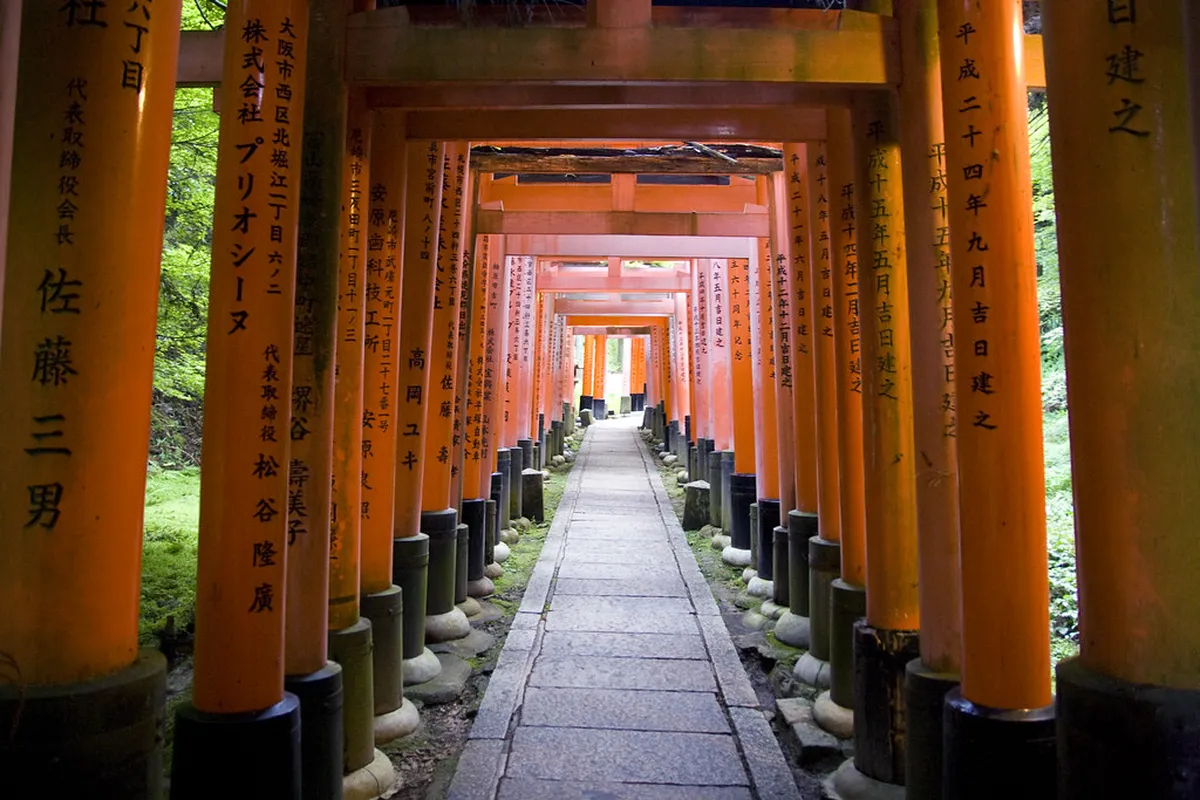
Fushimi Inari is one stop further (5 minutes from Kyoto). The thousands of torii gates of Fushimi Inari Taisha are within a 5-minute walk from JR Inari Station. There is no entrance fee. This is a practical first or last stop when you need to fill time around your Nara schedule — the mountain trails are accessible from dawn until midnight. Factor in at least 90 minutes if you want to walk even the lower loop.
Uji is about 17 minutes from Kyoto Station and famous for high-grade matcha and the 11th-century Byodoin Temple (¥1,000 entry). Uji sits on the JR Nara Line and is a natural half-day addition to a Nara trip for food travelers and history enthusiasts. The town is walkable from Uji Station in under 10 minutes. Combining Uji with Nara in a single day is ambitious but doable if you start at Fushimi Inari at 08:00.
None of these detours require extra payment if you hold a JR Pass — simply re-board at each station. Without a pass, each stop costs the incremental JR fare, so check the cumulative total before deciding whether the JR route beats Kintetsu on that specific day.
Alternative Transport: Express Buses and Airport Limousines
Trains are the right choice for the Nara–Kyoto leg in almost every scenario. There is no reliable direct highway bus between the two cities — the rail network makes a coach service redundant, and most operators do not run this route. Taxis exist but expect to pay 12,000 to 18,000 yen for a one-way private car, which makes sense only for groups of four with heavy luggage on a tight schedule.
Airport limousine buses are the exception worth knowing. If you are flying in or out of Kansai International Airport (KIX), a direct limousine bus serves Kintetsu Nara Station in about 90 minutes (around 2,050 yen in 2026). This is the most practical option when you have checked-in luggage — it avoids navigating Osaka station interchanges with suitcases. Check the Kansai Airport Limousine Bus timetable for current departure slots, as frequency drops in the evenings.
Itami Airport (Osaka Domestic, ITM) also has a direct bus to Kintetsu Nara Station in roughly 60 minutes (around 1,460 yen). This is the fastest airport-to-Nara ground connection available. See the Osaka Airport Transport timetable for Itami departures. If your itinerary ends in Nara rather than Osaka or Kyoto, landing at Itami and busing directly to Nara saves a significant amount of city transit time.
Frequently Asked Questions
Is the Kintetsu line covered by the Japan Rail Pass?
No, the Kintetsu line is a private railway and is not covered by the JR Pass. You must purchase a separate ticket or use an IC card. For JR Pass holders, the JR Nara Line is the recommended option for travel between these cities.
Which station is closer to Nara Park, JR or Kintetsu?
Kintetsu Nara Station is significantly closer to Nara Park and the Todai-ji Temple Visiting Guide area. It is only a 5-minute walk from the station exit. The JR station requires a 20-minute walk or a short bus ride to reach the park.
How long does the Miyakoji Rapid take from Kyoto to Nara?
The Miyakoji Rapid service takes approximately 45 minutes to travel between Kyoto Station and JR Nara Station. This service runs twice per hour. It is the fastest option for those using the JR network to visit the ancient capital.
Can I use a Suica card on the Kintetsu Nara Line?
Yes, you can use Suica, ICOCA, or any other major Japanese IC card on the Kintetsu line. Simply tap your card at the ticket gates when entering and exiting. This is the most convenient way to pay for the base fare on private lines.
Are there direct buses from Kyoto to Nara?
There are no regular direct highway buses between Kyoto and Nara because the train is so efficient. Most travelers find the rail options much faster and more frequent. Taxis are the only direct road alternative, but they are very costly for this distance.
For the wider city context, see our complete Nara attractions guide.
Choosing the right train between Nara and Kyoto depends on your pass, your accommodation location, and how much of the day you want to spend in transit. JR Pass holders should take the Miyakoji Rapid and consider adding Fushimi Inari or Uji as a free stop. Travelers without a pass should default to the Kintetsu Express for the lowest fare, or upgrade to the Limited Express for 35-minute service when time is short. Anyone staying near Shijo or central Kyoto should look for the Kintetsu through-service trains that continue directly onto the Karasuma Subway Line — they eliminate a transfer entirely.
Check current timetables on the official railway websites before heading out in 2026. Explore more tips on the Japan Activity Blog for planning your trip across the Kansai region.
Free: The Nara Essentials guide
Top things to do, where to stay, a perfect day plan, getting around, and the best time to go — a Nara mini-guide you can take offline.
You might also like


Continue reading
More guides you'll find useful