

Ohori Park Fukuoka: The Complete Visitor Guide
Plan your visit to Ohori Park in Fukuoka with our complete guide. Includes top attractions, transportation tips, seasonal highlights, and a pre-visit checklist.
On this page
Ohori Park is the green heart of central Fukuoka, a former castle moat reborn as a 40-hectare lakeside park beloved by joggers, families, and photographers. The two-kilometer pond loop, the Japanese strolling garden, and the Fukuoka Art Museum sit within a five-minute radius of Ohorikoen Station, making this the easiest half-day add-on to any city itinerary in 2026.
This guide covers the park's history as the outer moat of Fukuoka Castle, the must-see islands and bridges, museum and garden logistics, transit from Hakata and Tenjin, and a seasonal calendar for cherry blossoms, lotuses, and autumn maples. You will also find a pre-visit checklist with current 2026 fees, a coin-locker map, and a few photo spots even regulars overlook.
History and Origins of Ohori Park
Ohori Park was once an inlet of Hakata Bay that the Kuroda clan converted into the outer moat (ohori, literally "great moat") of Fukuoka Castle in the early 1600s. After the castle was abandoned in the Meiji era, the city reshaped the moat into a public park rather than filling it in. The park officially opened in 1929 and was modeled on West Lake in Hangzhou, China — which is why the curved bridges and island clusters feel more Chinese than typical Japanese.
The park is now a nationally registered monument, and the three central islands are named Yanagi-jima, Matsu-jima, and Shobu-jima. Understanding this layered history changes how you walk the loop. The straight northern shore mirrors the original moat wall, while the southern garden enclosure preserves the daimyo-era taste for stylized landscapes.
Migratory birds use the pond as a stopover, and you will see grey herons, pintails, and the occasional kingfisher year-round. Local birders gather near the eastern bridge at dawn with telephoto lenses. Bringing binoculars adds an extra layer to a morning visit that most casual tourists skip.
The Japanese Strolling Garden, Fukuoka Art Museum, and swan boats are all closed on Mondays. The main park grounds are free and open 24 hours — plan paid attractions on any day except Monday.
Must-See Ohori Attractions
The massive central pond defines the landscape and draws every visitor's attention. Three small islands sit in the middle of the water, connected by elegant stone bridges. Walking across these bridges allows you to experience the lake from a unique perspective. You can enjoy the cool breeze while watching large koi fish swim beneath the surface.
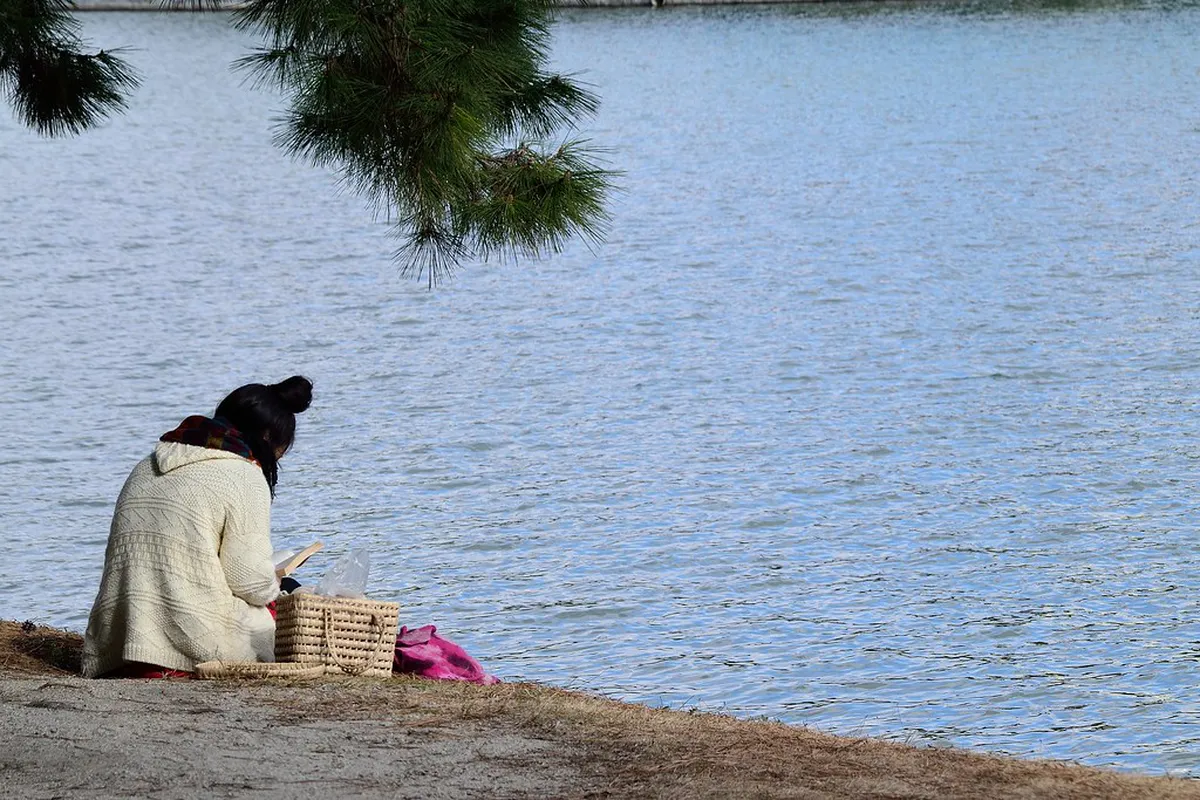
A paved path circles the entire pond for exactly two kilometers in a perfect loop. The trail is divided into lanes for walkers, runners, and cyclists, and the jogging surface uses a softer pavement to protect knees. Many travelers slot this scenic walk into their fukuoka itinerary as an easy morning anchor. Benches face the water every 30 meters or so, so finding a quiet rest spot is never a problem.
Traditional gazebos and stone lanterns dot the shoreline. The Ukimi-do Pavilion is the standout — a bright vermilion hexagonal hall connected to Matsu-jima island by a short bridge. It looks particularly stunning during golden hour, just before sunset, when the red pillars catch the warm light against the dark water.
Best Photo Spots and the Manyo Kahi Stone
Most guides point you to Ukimi-do Pavilion and stop there. Three less-obvious spots reward the extra walk. Matsushima-bashi, the second bridge from the east, frames the pavilion in the background and lines up perfectly with the sunset arc from late October through February. Stand on the western quarter of the bridge about 40 minutes before sundown.
On Matsu-jima island itself, hidden among the pine trees, sits the Manyo Kahi — a weathered stone inscribed with a Manyoshu poem written by a traveler bound for Korea who stopped at nearby Aratsu beach. Almost no English-language guide mentions it, and you will often have the spot to yourself even on busy weekends. It is a rare quiet pocket on a popular loop.
For skyline shots, walk to the southwestern corner near the boathouse at blue hour. The pavilion lights, the Fukuoka Tower silhouette in the distance, and reflections on the pond all line up. Bring a small travel tripod, since handheld shots after 19:00 tend to blur. These photo angles are some of the most rewarding Free Things to Do in Fukuoka, Japan for camera-carrying travelers.
Museums, Art, and Culture in Ohori
The Fukuoka Art Museum sits on the southeastern edge of the park grounds. It houses an impressive collection of ancient Buddhist statuary alongside modern masterpieces, including works by Salvador Dali, Joan Miro, and Yayoi Kusama. The Kuma Kengo-redesigned building reopened in 2019 and now blends concrete, wood slats, and large viewing windows that look back into the park.
Culture enthusiasts should also visit the Ohori Park Noh Theater near the northern entrance. This facility hosts traditional masked dramas in a beautiful, wood-scented hall. Performances require advance tickets, but the building's exterior and lobby give a free glimpse into the art form. Check the seasonal schedule online to see if a show aligns with your travel dates.
Scattered through the lawns you will find modern sculptures and small monuments that create an open-air gallery effect. Read the plaques as you pass — many of the artists are local Kyushu names rarely shown elsewhere.
Parks, Gardens, and Outdoor Spots in Ohori
The Japanese Strolling Garden (Nihon Teien) is a walled enclosure on the southern side of the pond and a clear step up in serenity. Inside its 12,000 square meters you will find a large waterfall, a dry kare-sansui rock garden, a tea house, and meticulously trimmed black pines. The main park is free, but this garden charges a small fee and is worth it for the silence alone.
In spring, the neighboring Maizuru Park becomes a sea of pink and white flowers, with roughly 1,000 cherry trees blooming in late March. You can walk between the two parks in five minutes. Consult a Fukuoka Cherry Blossom 2026: Bloom Dates, Best Parks & Spring Festival for the exact peak dates each year.
Summer brings vibrant greenery and blooming lotuses to the smaller ponds near the park edges. Autumn turns the maple trees inside the Japanese garden bright orange and red, peaking around mid-November. Winter is quieter and starkly beautiful when low fog hangs over the water at dawn.
Seasonal Calendar at a Glance
Ohori Park rewards repeat visits, and timing matters more than most blog posts admit. Use this calendar to align your trip with what you actually want to see, not just "spring or autumn."
- Late March to early April: cherry blossoms peak in adjacent Maizuru Park; evening illumination during the Fukuoka Castle Sakura Festival.
- Mid-April to early May: azaleas and tulips bloom, fewer crowds than cherry-blossom week.
- June: hydrangeas along the southern path; lotuses begin opening in the side ponds.
- July to August: lotus flowers fully open at sunrise; Ohori Fireworks Festival typically held the first Saturday of August (confirm 2026 date with the city).
- Mid-November: maple foliage peaks inside the Japanese Garden, usually a week later than Tokyo.
- December to February: low crowds, crisp light, and morning mist over the pond — best for photographers.
Family-Friendly and Budget-Friendly Options in Ohori
Families head straight for the Boathouse on the eastern shore. You can rent swan-shaped paddle boats or traditional rowboats for 30-minute sessions, with a single boat carrying up to four people. Being on the water is a fun way to see the islands from a fresh angle, and prices stay reasonable for a family of four.
The park also features well-maintained playgrounds with slides, climbing frames, and free outdoor fitness equipment. Drinking fountains and clean restrooms sit near every major play zone. Most facilities are free and open during daylight hours.
Budget-conscious travelers can enjoy the park's atmosphere without spending a yen. Pick up onigiri or pastries at the Lawson on Akasaka-dori for a picnic on the western lawn. This is one of the most enjoyable cheap mornings you can have in central Fukuoka.
The Starbucks Ohori Park location fills completely on weekends. Arrive before 09:00 for a window seat with pond views, or order to-go and use the bench cluster on the south side — same view with no wait.
How to Plan a Smooth Ohori Day
Start your morning early to dodge the largest crowds and the midday sun. A brisk walk around the lake is a refreshing way to begin a fukuoka 1 day itinerary. By 9:30 AM the Art Museum opens and by 10:00 AM the Japanese Garden is ready for visitors. This timing keeps your outdoor time cool and your indoor time during peak heat.
For lunch, try one of the highly-rated 12 Best Restaurants and Food Experiences in Fukuoka just outside the park gates. The neighborhood is famous for ramen and French-style bakeries. Jacques (ジャック 大濠店) is a beloved pastry shop a short walk south — order the Mont Blanc or the seasonal fruit tart. For a heartier meal, Genki Ippai serves a strong Hakata tonkotsu with extra-thin noodles; ask for kaedama (noodle refill) when you are halfway through.
Spend your afternoon inside the Art Museum or Japanese Garden when the sun is harshest. As evening approaches, claim a bench on the western shore for the sunset over the water — one of the most naturally romantic things to do in Fukuoka. The pavilion lights up beautifully after dusk, and the loop is well-lit and safe for a late stroll.
How to Get to Ohori Park: Subway vs Bus
Reaching the park is simple thanks to the efficient fukuoka public transport system. From Hakata Station, the Kuko (Airport) Subway Line takes you to Ohorikoen Station in about nine minutes for 260 yen, with trains every 4 to 7 minutes. From Tenjin, the same line runs four minutes for 210 yen. Use Exit 3 or Exit 6 — both put you within a two-minute walk of the park.
City buses also stop at the park's main gate. From Hakata Bus Terminal, the 80 or 200 series buses take 18 to 25 minutes for 240 yen, depending on traffic. Buses give you a scenic ride past Tenjin's shopping streets but slow noticeably during the 8:00–9:00 AM and 17:00–18:30 rush windows. Choose the subway if you are time-sensitive, the bus if you are sightseeing en route.
For those staying in Akasaka, Nishijin, or Daimyo, walking takes 15 to 25 minutes and many hotels offer rental bicycles. The streets are flat, well-marked, and lined with cafes that make the approach itself part of the trip.
Best Activities and Sights Near the Lake
A short walk from the pond, you can visit fukuoka castle ruins in Maizuru Park. The historic stone walls hint at the city's samurai past, and climbing the Tenshudai (main keep platform) gives a panoramic view of the entire park and city skyline. Allow 45 to 60 minutes.
The Fukuoka Gokoku Shrine on the eastern edge features a massive wooden torii gate, among the largest in Japan. The peaceful shrine grounds offer a stark contrast to the busy jogging paths next door. Locals visit during the New Year and Shichi-Go-San in November.
If you have extra time, take an eight-minute bus ride to Fukuoka Tower on the coast. The 234-meter observation deck pairs perfectly with a park morning. Plan roughly 60 minutes for the castle ruins, 90 minutes for Maizuru Park's flower areas, and two hours for the tower including travel.
Essential Pre-Visit Checklist for Travelers
Most of Ohori Park is open 24 hours and free to enter. The specialized facilities, however, all close on Mondays — a detail that catches first-time visitors off guard. Plan around this if Monday is your only day.
| Facility | Fee | Hours | Closed |
|---|---|---|---|
| Main park grounds | Free | 24 hours | Never |
| Japanese Strolling Garden | 250 yen/adult | 09:00–17:00 | Monday |
| Fukuoka Art Museum | 200 yen (permanent) | 09:30–17:30 | Monday |
| Swan boat (up to 4 people) | 1,100 yen / 30 min | Daytime, weather permitting | — |
| Rowboat | 600 yen / 30 min | Daytime, weather permitting | — |
- Coin lockers: largest selection at Ohorikoen Station Exit 3 (300–700 yen); smaller bank inside the Art Museum lobby (free for ticket holders).
- Restrooms: six locations around the loop, all wheelchair-accessible.
Solving Common Visitor Problems
Luggage is the first headache. The largest coin lockers sit at Ohorikoen Subway Station near Exit 3 and fit a 24-inch suitcase comfortably. Smaller lockers exist inside the Art Museum during operating hours. Hakata Station's lockers fill by 10:00 AM in peak season, so use Ohorikoen if you are heading to the park anyway.
Crowds at Starbucks Ohori Park, the famous lakeside location with floor-to-ceiling pond views, can be brutal on weekends. Arrive before 9:00 AM for a window seat or aim for after 18:00. A practical workaround: order to-go and walk 50 meters to the bench cluster on the south side — same view, no wait.
Summer heat and humidity from late June through early September are no joke. There is little shade on the central bridges and islands. Wear a wide-brim hat, carry a water bottle (vending machines are everywhere at 130–160 yen), and front-load outdoor walking before 10:00 AM. Schedule the Art Museum or Japanese Garden's tea house for the 13:00–15:00 heat window. In winter, the lakeside wind cuts harder than the temperature suggests — pack a windproof layer even on sunny days.
Frequently Asked Questions
Is Ohori Park free to enter?
Yes, the main grounds of Ohori Park are free for everyone to enter and enjoy. You only need to pay small fees for specific attractions like the Japanese Garden or the Art Museum. It is one of the best Free Things to Do in Fukuoka, Japan for budget travelers.
How long does it take to walk around Ohori Park?
A steady walk around the entire two-kilometer pond usually takes about thirty to forty minutes. If you stop for photos or explore the islands, you should plan for at least one hour. Most visitors spend two to three hours total exploring the various gardens and museums.
Can I visit Fukuoka Castle ruins from Ohori Park?
Absolutely, the castle ruins are located in Maizuru Park, which sits directly next to Ohori Park. You can walk between the two locations in less than five minutes. It is very common to combine these two major historical sites into a single morning or afternoon trip.
Are there boat rentals at Ohori Park?
Yes, boat rentals are available at the Boathouse on the eastern side of the pond. You can choose between swan-shaped paddle boats, rowboats, and water striders. They typically operate from morning until late afternoon, depending on the current weather conditions and season.
Ohori Park captures the calm core of Fukuoka — a former castle moat now ringed by joggers, herons, and one of Kyushu's best art museums. Use this guide to time your visit around the seasonal calendar, dodge the Starbucks crowds, and find quiet corners like the Manyo Kahi stone that most visitors walk right past. Bring comfortable shoes, a camera, and a plan for that closed-Monday rule.
For wider city context, see our complete Fukuoka attractions guide.
For related Fukuoka deep-dives, see our Fukuoka Tower Visitor Guide and Acros Fukuoka Step Garden Visitor Guide: Tips, Views & Hours guides.
For the wider city overview, start with our Fukuoka travel hub.
Free: The Fukuoka Essentials guide
Top things to do, where to stay, a perfect day plan, getting around, and the best time to go — a Fukuoka mini-guide you can take offline.
You might also like
Continue reading
More guides you'll find useful


