Kawachi Fuji Garden Wisteria Tunnel Day Trip From Fukuoka Guide
Plan your Kawachi Fuji Garden wisteria tunnel day trip from Fukuoka. Get timing tips, booking advice, and a 1-day itinerary for the best blooms.
On this page
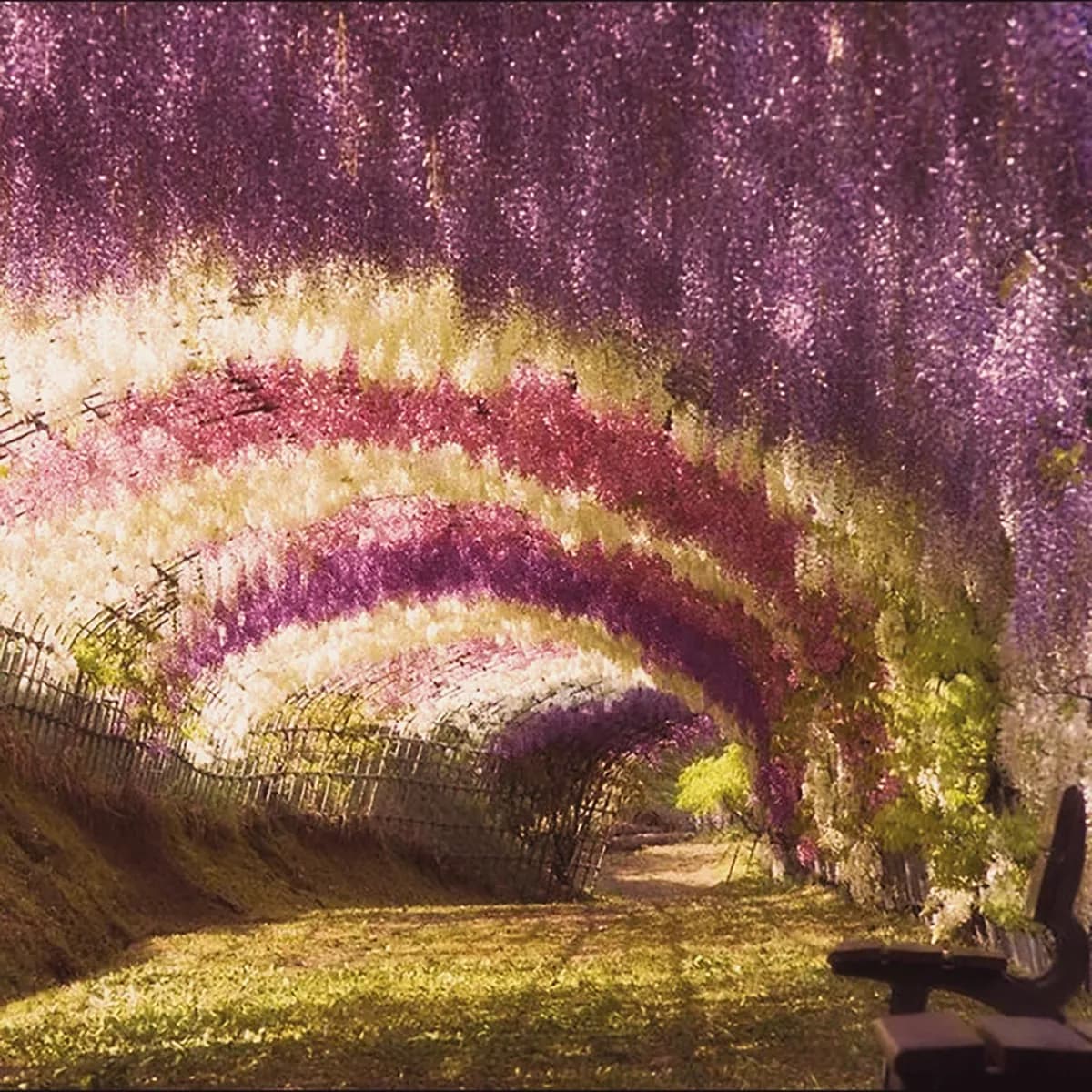
I will never forget the first time I walked under the Kawachi Fuji-en tunnels. The cascading purple, pink, and white blooms felt unreal. This guide helps first-timers plan a smooth day trip from Fukuoka in 2026. We focus on hitting peak bloom while dodging the worst Golden Week crowds. Other regional attractions like the Tokyo wisteria gardens also offer spring flowers, but Kagoshima's spring backdrop and Kawachi Fuji remain the showstopper.
I last refreshed this guide after a Spring 2026 visit to Kitakyushu. The garden now uses date-and-time-stamped tickets that sell out weeks ahead. You need a real plan, not a vague hope of "showing up early." This itinerary gives you the structure to make a long travel day worthwhile.
The piece pairs the wisteria tunnels with Kokura Castle and Mojiko Retro for a balanced day. It plugs neatly into a longer 5-day Fukuoka itinerary. Let's get you under the wisteria with as little wasted time as possible.
About Kawachi Fuji Wisteria Japan Garden
Kawachi Fuji-en is a privately owned garden tucked on a hillside in Yahata-Higashi ward, Kitakyushu City, Fukuoka Prefecture. It became globally famous after CNN listed it among Japan's most beautiful spots. The site centers on two long wisteria tunnels, several large domes, and a row of trellises with about 150 wisteria plants in around 22 varieties.
The Japanese word "fuji" (藤) means wisteria, and shares pronunciation with Mt. Fuji (富士) but uses a different kanji. The two have nothing to do with each other. Knowing this matters when you book trains, because Kawachi is on Kyushu, roughly 1,000 km southwest of Mt. Fuji.
The garden opens only for two short windows per year: the wisteria bloom (late April to mid-May) and the autumn maple season (mid-November). Outside those windows it is closed to the public. For 2026, expect peak wisteria roughly between 25 April and 5 May, with maple koyo around 18 to 30 November.
1-Day Kawachi Fuji Garden Itinerary At a Glance
This plan assumes a Hakata-area base, a peak-week ticket already in hand, and a willingness to start before sunrise. Total elapsed time is roughly 11 hours door to door. Cross-check timings against the best time to visit page before locking flights.
The structure pairs the early-morning wisteria slot with two contrasting afternoon stops. Kokura Castle gives you history and a clean view of the city; Mojiko Retro gives you Meiji-era brick streets and a sunset over the Kanmon Strait. You walk a lot, so wear shoes you trust on slopes and cobblestones.
- 06:30 – Depart Hakata Station on JR Sonic limited express toward Kokura.
- 07:30 – Transfer at Yahata Station to seasonal shuttle bus or taxi.
- 08:00 to 10:30 – Wisteria tunnel walk, dome lawn, photo loop.
- 11:30 to 13:00 – Lunch in Kokura (yaki-udon at Tanga Market).
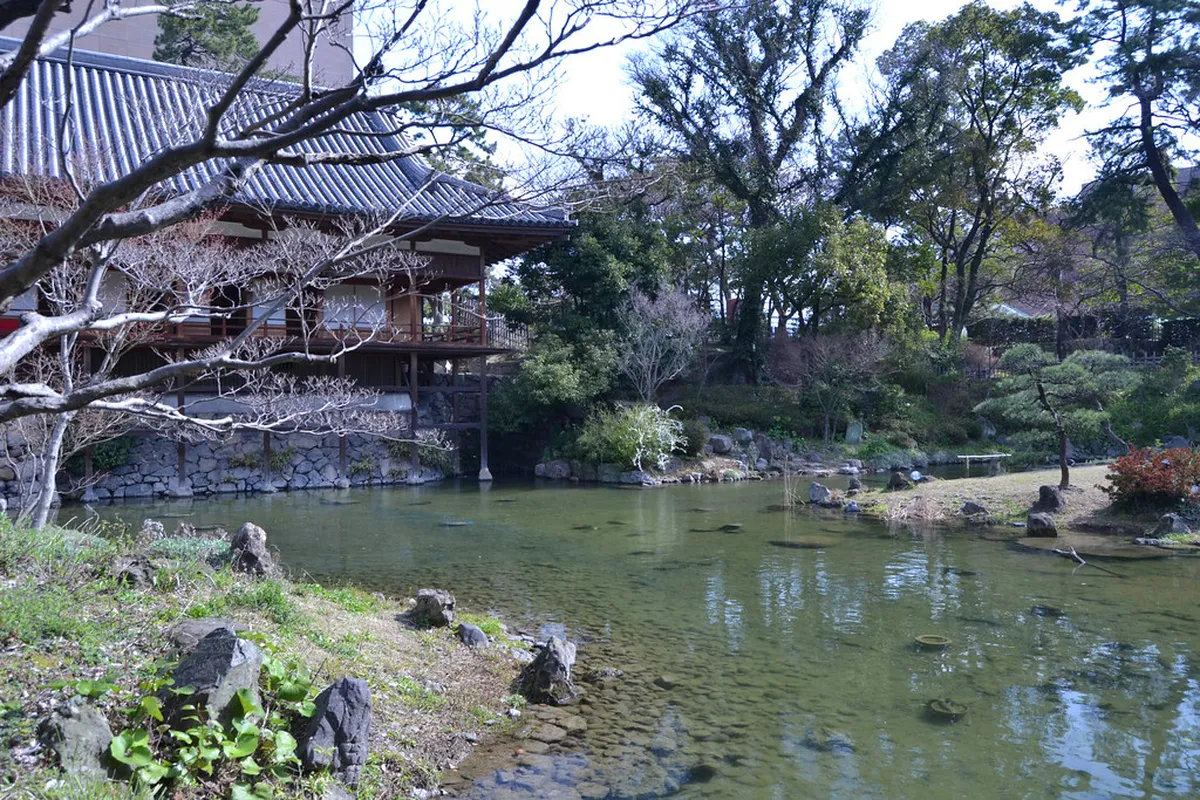
- 13:30 to 15:30 – Kokura Castle and adjacent Japanese garden.
- 16:00 to 18:30 – Mojiko Retro, harbor stroll, sunset at the Kanmon Bridge.
- 19:30 – Sonic or Shinkansen back to Hakata.
When Is the Best Time to See Wisteria in Japan?
Japanese wisteria blooms once per year, with the Kyushu south reaching peak earlier than Honshu gardens like Ashikaga. At Kawachi, the early-blooming pink and purple varieties open first, followed by the long white "shiro-noda-fuji" that forms the most photogenic tunnel. Full peak typically lasts only 7 to 10 days.
For 2026, watch the official garden site and Instagram in mid-April. They post a percentage-bloomed update every 2 to 3 days, which is the only reliable signal. A May 2 visit at 40 percent bloom is a real outcome that has happened in past years; a April 28 visit at 90 percent is also possible. Build a 2 to 3 day flexible window if you can.
Avoid the core Golden Week dates of 29 April to 5 May if crowd tolerance is low. The garden uses timed entry to cap volumes, but Kokura Station, the shuttle queue, and the on-site paths still get loud during the holiday block. Weekday mornings outside Golden Week are dramatically calmer.
Reserve Tickets Early: How to Book in Advance
The 08:00–09:00 timed-entry slot fills first and gives the best light for photography. The garden opens only twice a year — late April to mid-May for wisteria and mid-November for autumn maples — so outside those windows it is completely closed to the public.
During bloom season, Kawachi Fuji-en operates on date-and-time-stamped advance tickets only. There is no walk-up gate sale; turning up without a ticket means turning around. Ticketing opens around 25 March each year for the upcoming bloom window.
Tickets are sold through Lawson convenience stores via the Loppi machine (Japanese interface) and through select online resellers that ship vouchers internationally. Pricing in 2026 is tiered by bloom percentage, ranging roughly 1,000 JPY when partially open to 1,500 JPY at full peak. The 2,000 JPY figure occasionally cited online is outdated.
If the Loppi process intimidates you, a guided bus tour is the simpler path. Tours bundle round-trip transport, garden entry, and usually a second stop. Browse current options on Klook or read Japan Starts Here for booking workflows. Bus tours regularly sell out 2 to 3 weeks before Golden Week.
How to Get to Kawachi Fuji Garden
From Hakata Station, the fastest public route is the JR Sonic limited express to Kokura (about 45 minutes), then a transfer to a local JR Kagoshima Line train one stop to Yahata Station (10 minutes). The Sonic is covered by the JR Pass and the regional JR Kyushu Rail Pass; see how to use public transport for pass details.
From Yahata Station during peak weeks, Nishitetsu runs a paid seasonal shuttle bus directly to the garden gate. The ride is about 25 minutes through narrow mountain roads. Cross-check the latest schedule on Japan-Guide the week of your trip, because route timings shift year to year.
A taxi from Yahata Station runs roughly 2,500 to 3,500 JPY one way, depending on traffic. Splitting it three or four ways often beats waiting for the shuttle. Always agree on a return pickup time with the driver, because hailing a return taxi from the garden parking lot in Golden Week is genuinely difficult.
| Route | Cost (one way) | Time from Hakata | Notes |
|---|---|---|---|
| JR Sonic + Shuttle bus | ~5,000–7,000 JPY total | ~75 min | Requires advance garden ticket via Loppi |
| Guided bus tour | 12,000–16,000 JPY | ~90 min (departs Hakata/Tenjin) | Includes transport and entry; sells out 2–3 weeks ahead |
| Hire car (Toyota Rent-a-Car) | 8,000–12,000 JPY/day + fuel | ~70 min | Requires International Driving Permit |
Tripods, monopods, selfie sticks, and drones are banned inside Kawachi Fuji-en year-round. Staff actively enforce the rule near the white tunnel. Use a fast prime lens at f/2.8 or wider for handheld shots in the dim tunnel light.
DIY vs Tour: Which Is Right for You
The DIY route works best for travelers comfortable with Japanese trains, willing to handle Loppi ticket purchase, and traveling 2 or fewer people. Total cost runs roughly 5,000 to 7,000 JPY per person including transport, ticket, and shuttle. You gain flexibility on timing and can extend the day toward Mojiko or shorten it.
A guided bus tour costs roughly 12,000 to 16,000 JPY per person but removes every logistical friction point. It suits first-timers, families with small kids, and anyone visiting during Golden Week when DIY transfers get crowded. Tours usually depart Hakata or Tenjin around 08:00 and return by 19:00.
Hire-car options through Toyota Rent-a-Car at Hakata Station sit between the two. They cost 8,000 to 12,000 JPY for the day plus fuel and parking, and require an International Driving Permit. A car only makes sense if you plan to combine Kawachi with rural Kyushu stops the same trip; for a single-day round trip, train plus shuttle wins.
Park Hours, Food, and On-Site Info
The garden opens 08:00 to 18:00 during bloom season, with last admission around 17:00. Timed-entry slots are typically released in 30-minute blocks; the 08:00 to 09:00 block is the most photographed and books out first. Plan to spend 90 minutes to 2 hours on site to walk both tunnels, the dome, and the back trellises without rushing.
Food at the garden is limited to a small kiosk selling soft-serve, bottled tea, and seasonal snacks. There is no full restaurant. Bring water and a light snack, because the closest cafes are a 20-minute drive away. Restrooms exist near the entrance and at the upper viewpoint, but lines form during peak hours.
Photography rules are stricter than most travelers expect. Tripods, monopods, selfie sticks, and drones are banned year-round. Staff actively enforce the no-tripod rule near the white tunnel where the most iconic shots are taken. A fast prime lens at f/2.8 or wider gets you sharp handheld shots in the dim tunnel light.
Other Places to See Wisteria in Kyushu
If Kawachi tickets are sold out, Kyushu has solid backup wisteria spots that competitor guides rarely mention. Munakata Yurix in northern Fukuoka has a free 220-meter wisteria walkway that peaks roughly the same week. Access is by JR Kagoshima Line to Togo Station plus a 10-minute taxi.
Nakayama Daijingu Shrine in Saga Prefecture features a single 170-year-old wisteria tree with vines stretching across a 700-square-meter trellis. Entry is free, and the site is far less crowded than Kawachi even at peak. It is a 2-hour drive from Hakata; reachable by JR plus taxi from Tara Station.
For a Honshu alternative tied to the same trip, Ashikaga Flower Park near Tokyo runs an after-dark wisteria illumination that Kawachi does not offer. It opens until 21:00 during peak. The two parks rarely peak on the same date, so chasing both in one Japan trip is realistic if your dates are flexible.
Accessibility and Mobility Notes for the Tunnel
This is the detail most blogs skip: Kawachi Fuji-en is built into a hillside, and the tunnels are connected by a steep staircase, not a ramp. Wheelchair users and travelers with significant mobility limitations cannot complete the full circuit. The lower tunnel is reachable from the entrance, but the upper dome and the white tunnel are stair-only.
Strollers face the same issue. The garden allows them, but you will be carrying the stroller up roughly 60 stone steps in two sections. Many parents end up baby-wearing instead. The path surface is uneven gravel and tree-root, so wheels under 25 cm tend to catch.
Travelers using a cane should book the earliest 08:00 entry slot when foot traffic is lightest. Staff are helpful but cannot escort visitors. There are wooden benches roughly every 40 meters along the upper trellises, which is unusual for Japanese gardens and worth knowing if you pace yourself in short segments.
Where to Stay: Fukuoka or Kokura?
Hakata-area hotels make sense if you are combining Kawachi with broader Fukuoka sightseeing. The neighborhood is the main transit hub, and you can reach Dazaifu, Tenjin, and the airport easily. See 10 Best Neighborhoods Where to Stay in Fukuoka for a neighborhood breakdown.
Booking a single night in Kokura instead is the underrated move for wisteria-focused trips. Kokura is 45 minutes closer to the garden than Hakata, and business hotels around the station run 6,000 to 9,000 JPY in peak season. You sleep an extra hour and walk to the Sonic platform with no transfer.
Tenjin suits travelers who want shopping and nightlife after a full day out. It is 5 minutes by subway from Hakata Station. Compare nightly rates against your overall Fukuoka travel budget before deciding whether to split nights between cities.
Add an Extra Day: Beyond Kitakyushu
If you have a second day, a Dazaifu day trip pairs naturally with the wisteria visit. Tenmangu Shrine, the Kyushu National Museum, and the umegae-mochi street stalls fill a relaxed half-day. Trains run every 15 minutes from Tenjin.
Yanagawa adds a slower-paced afternoon of canal-boat punting and grilled eel (seiro-mushi). The combined Nishitetsu day pass covers the train and boat ride for around 5,200 JPY. It pairs well with morning wisteria when you sleep over in Hakata.
Nature-focused travelers should add Uminonakamichi Seaside Park or the Itoshima coast. Late April brings nemophila blooms at Uminonakamichi, which photograph beautifully alongside the wisteria. Cross-check dates against the 2026 Fukuoka festival calendar for overlapping events.
Frequently Asked Questions
When is the best time to see the wisteria?
The peak bloom usually occurs from late April to early May. I suggest checking the 2026 festival calendar for specific dates. The timing changes slightly every year based on local weather patterns.
Can I buy tickets at the garden entrance?
No, you must buy tickets in advance during the peak season. These are available at Lawson or 7-Eleven convenience stores in Japan. This rule prevents the garden from becoming dangerously overcrowded during holidays.
A day under the Kawachi wisteria tunnels is one of Spring's most rewarding experiences in Kyushu. The combination of fleeting blooms, Kokura history, and Mojiko sunset makes a long travel day feel earned. Book the timed ticket the moment sales open, then build the rest of the day around your entry slot.
If your dates fall inside Golden Week, lean toward a guided tour or a Kokura overnight to absorb the crowd pressure. If you are flexible, target a weekday in the last week of April for the best light and the smallest queues. Safe travels under the purple canopy.
Pair this with our broader Fukuoka attractions guide for the full city overview.
For related Fukuoka deep-dives, see our 10 Best Things to Do on a Kitakyushu Day Trip From Fukuoka and Kurume Day Trip From Fukuoka Guide: 1-Day Itinerary guides.
Combine this with our main Fukuoka travel guide to plan the rest of your trip.
Free: The Fukuoka Essentials guide
Top things to do, where to stay, a perfect day plan, getting around, and the best time to go — a Fukuoka mini-guide you can take offline.
You might also like
Continue reading
More guides you'll find useful