

Nikko Edo Wonderland Edomura: The Ultimate Visitor Guide
Plan your trip to Edo Wonderland Nikko Edomura with our guide to ninja shows, Oiran parades, costume rentals, and discounted ticket tips for a perfect day.
On this page
Step back to the 17th century at this immersive cultural park in the mountains north of Tokyo. The village recreates the Edo Period (1603–1867) in painstaking detail, with samurai patrolling the streets, ninjas vaulting between rooftops, and an oiran procession winding through the market district most afternoons. The park sits in the Kinugawa Onsen valley and pairs naturally with a hot-spring stay or a longer Nikko Day Trip From Tokyo: The Ultimate 1-Day Itinerary.
This is not a passive museum. You can rent a samurai or ninja outfit, throw shuriken, sit through three indoor theatre shows, and eat hand-pulled soba inside a recreated inn — all in one day. The catch is logistics: shows run on a fixed timetable, the park closes most Wednesdays, and ticket prices shift if you buy online. This guide covers what to see, what it costs in 2026, how to reach it from Tokyo and central Nikko, and the planning moves that separate a great day from a rushed one.
What is Edo Wonderland Nikko Edomura?
Nikko Edo Wonderland Edomura is a historical theme park dedicated to the Edo Period of Japan, located about 2.5 hours north of Tokyo in Tochigi Prefecture. The grounds replicate a 17th-century post town with merchant houses, samurai residences, a magistrate's office, a fire-brigade museum, and a hidden ninja village. Buildings use period construction techniques and English signage is solid enough to follow without a guide.
The defining feature is that the staff are full performers. Gate greeters speak in archaic Japanese, shopkeepers haggle in character, and roaming samurai stage impromptu duels for children with wooden swords. It is closer in spirit to Colonial Williamsburg than to a Disney-style park — the immersion comes from atmosphere, not rides. Families using our Nikko With Kids: The Ultimate Family Guide & Itinerary consistently rate this as the most memorable single stop on a multi-day Nikko trip.
The park opened in 1986 and spans roughly 495,000 square metres across five themed zones, with 11 restaurants, 10 craft and souvenir shops, three museums, and three amusement spots. Compared with the hush of Toshogu Shrine or the quiet of Lake Chuzenji, Edomura is the most populist Nikko attraction — and the easiest one to spend a full day inside without rushing.
Top Shows and Performances: Ninja Battles and Oiran Parades
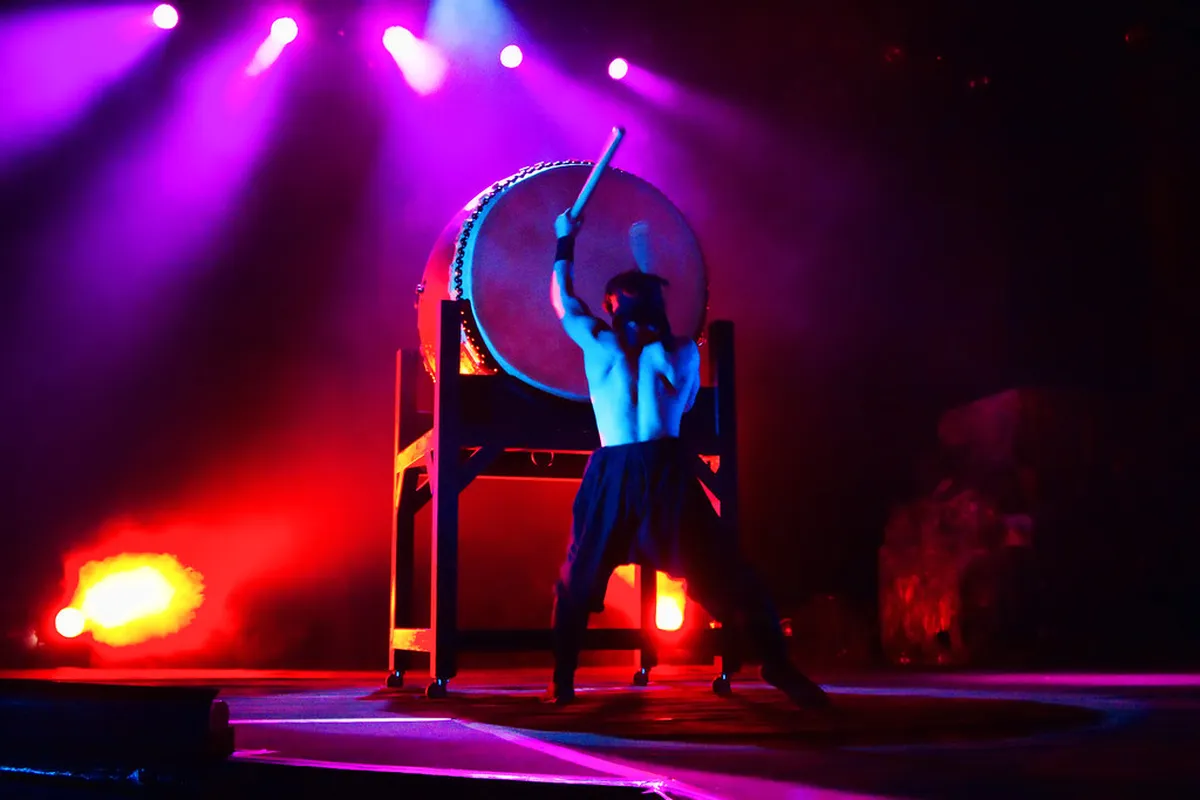
The Grand Ninja Theatre is the headline act. Trained stunt performers run a 25-minute story-driven combat piece with rope work, smoke, and choreographed sword fights in a dark indoor theatre, twice daily on most days. Arrive at least 20 minutes early — seating is unreserved, and the front three rows fill first because the action spills off the stage into the aisles.
The Oiran Dochu is the second can't-miss event. An oiran, the highest-ranked courtesan of the Edo pleasure quarters, walks the main street of the Market District in a stylised procession surrounded by apprentices and attendants. The costume alone weighs around 20 kilograms, which is why the walk takes nearly an hour. Stand on the south side of the street halfway along the route for the cleanest photo angle. In rain the parade is cancelled outright — no covered alternative.
Round out the show day with the Mizugei Water Magic performance (an indoor act of hidden-tube and fan tricks performed by women in kimono) and the Outdoor Hinomi Yagura stage, which hosts shorter sword-fight demonstrations. After any performance, you will be handed a small square of tissue paper. Wrap a few coins inside and toss it onto the stage when the actors take their final bow — this is the traditional way to tip Edo performers, and it is one of the few audience-participation rituals you will encounter in Japan.
Hands-On Cultural Activities and Costume Rentals
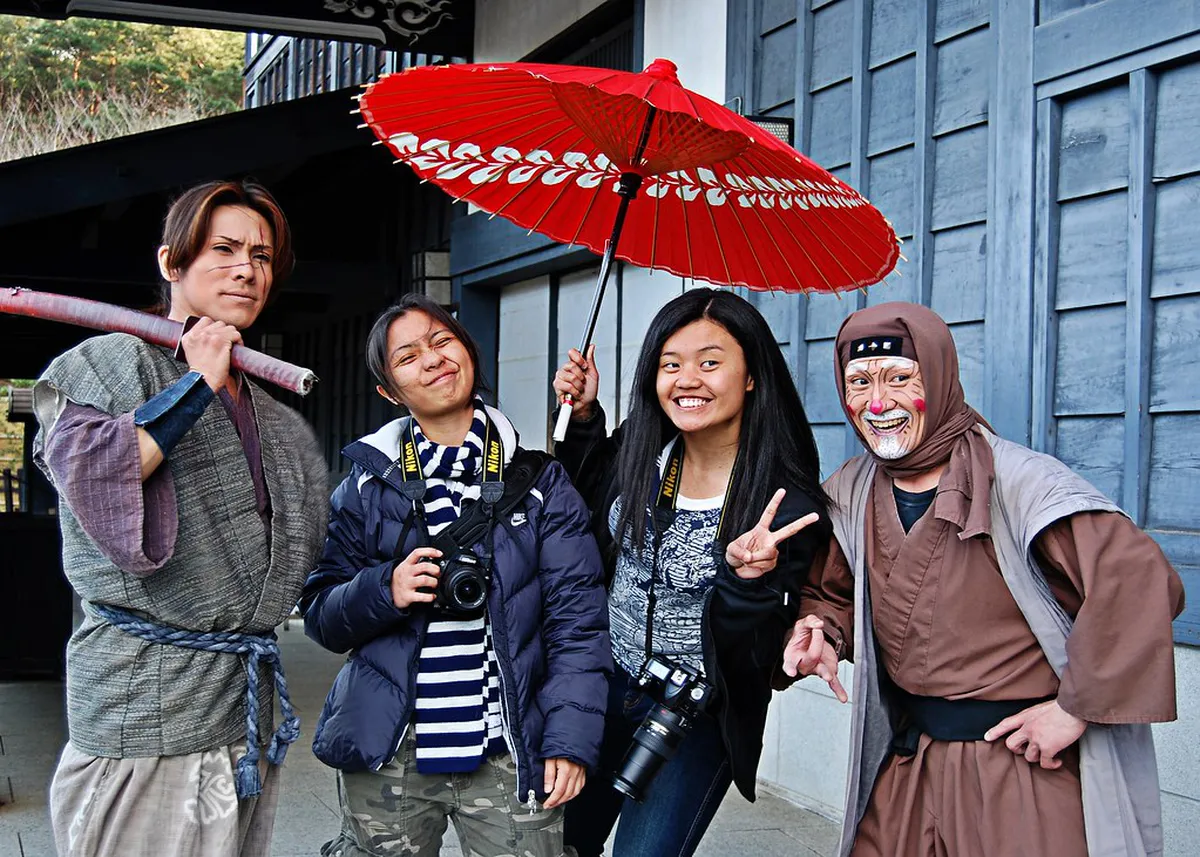
Dressing up is the single best decision you can make on arrival. The Henshin-jo costume rental hall sits just past the main gate. Once changed, staff treat you as part of the village — shopkeepers bow more formally, samurai pose with you, and other guests ask for photos. The rental fee covers the full day and includes a free locker for your normal clothes.
The samurai costume at roughly 3,900 yen is the photogenic pick but the heaviest to walk in; the merchant or townsperson kimono at the same price is far more comfortable for a full day on your feet. The child ninja outfit at around 3,000 yen is the best deal if you have kids — it includes a hood and bandana and lets them join the free Ninja Training Academy sessions. Princess and oiran-style outfits cost more (around 8,000–12,000 yen) and include hair and basic makeup, so allow an extra 45 minutes for fitting.
Beyond costumes, activities split into free and paid. Free demonstrations include shamisen music, Edo-period makeup, samurai etiquette, and calligraphy at the Terakoya school. Paid attractions include shuriken throwing at around 200 yen for five stars, archery at the Yaba range, a small boat cruise on the man-made waterway, and visits to the wax-museum jail at Kodenma-cho. Budget travellers can fill an entire day on the free activities alone if costumes are out of scope.
Exploring the Five Themed Zones of the Village
The park is laid out as a linear walk through five connected zones. The Road to Edo is the ceremonial entrance with a wooden checkpoint where you collect the timetable and map. Post Town follows with rest benches, lockers, and most of the restaurants and craft demos. The Market District is the heart of the village and the stage for the Oiran procession, plus woodblock-print shops and the outdoor Hinomi Yagura stage.
The Samurai Residence zone sits beyond a wooden gate and shifts the tone sharply: the magistrate's quarter, with the Kodenma-cho jail-house wax museum, a Choshu Domain samurai mansion, and the Modern Edo-Tech Museum. The justice-system exhibits — punishment tattoos, torture reconstructions, Edo prison routines — are surprisingly dark, barely mentioned in other guides, and offer the most substance of any indoor stop. The Ninja Village is tucked at the far end: the Kai Kai Tei trick house with slanted floors and forced-perspective rooms, the Ninja Trick Maze (harder than it looks — allow 20–30 minutes), and the Grand Ninja Theatre. The full zone-to-zone circuit at a relaxed pace fills six to seven hours.
Dining and Food Options in Edomura
Eleven restaurants and a scatter of street stalls keep food easy. The most thematic stop is Yabusoba in the Market District, where you sit on tatami and watch noodles cut behind a paper screen — 1,200–1,600 yen for a bowl with tempura. Open-air ayu stalls near the Inn Town stage serve grilled, salt-rubbed river fish on a skewer for about 700 yen.
Heartier picks include unagi (around 2,500 yen at the larger inns), oden in cooler months, and Yama-kujira — "mountain whale," a wild-boar stew nodding to Edo hunting traditions. Street snacks (mitarashi dango, sweet potato sticks, amazake) cluster in the Market District lanes. Vegetarians have workable options in kake soba, tempura rice, and inari sushi. Most stalls are cash-only, so carry small notes — ATMs sit near the entrance gate but not deeper in the park.
Plan Your Day: Show Priority and Rainy-Weather Strategy
Grab the printed show timetable at the entrance gate and plan your day around the Grand Ninja Theatre and the Oiran Dochu first — both run only two or three times daily at fixed slots and do not repeat. Afternoon arrivals will miss at least one.
This is where most visitors leave value on the table. Shows do not run continuously — each plays two or three times a day at fixed slots, and several overlap. The single most useful planning move is to grab the printed timetable at the entrance and sequence your day around the Grand Ninja Theatre and the Oiran Dochu first, because both are non-repeating, high-stakes events. As a rough 2026 priority order: morning Ninja Theatre, midday Oiran procession, Water Magic show in the early afternoon, then use the outdoor Hinomi Yagura performance as a flexible bonus rather than an anchor.
The park closes most Wednesdays year-round (exceptions apply for national holidays and peak windows). There is also a full maintenance closure around December 8–21. Always verify the official site before booking transport.
Rainy days deserve a separate plan. Nikko gets frequent mountain showers from June through September, and the park does not refund for rain. The Grand Ninja Theatre, the Water Magic show, the trick houses, the wax museum, and most exhibits are fully indoor — but the Oiran procession and outdoor sword-fight demonstrations are cancelled in rain, with no covered substitute. If the forecast looks steady, front-load the indoor shows, accept the parade will not run, and spend the saved time in the Samurai Residence exhibits that most dry-weather visitors rush past. Rent a traditional janome paper umbrella from the gate shop for around 500 yen — it doubles as a photo prop and keeps the period feel intact.
Practical Information: Tickets, Prices, and Opening Hours
| Ticket Type | Gate Price (2026) | Online Price | Notes |
|---|---|---|---|
| Adult (full day) | ¥5,800 | ~¥5,500 | Entry until last admission |
| Child age 6–12 | ¥3,000 | ~¥2,700 | Under 6 free |
| Afternoon pass (adult) | ¥5,000 | — | Entry after 14:00 (summer) / 13:00 (winter) |
| Senior 65+ / Disability | ~¥800 off adult rate | — | At gate only |
Standard 2026 gate prices are 5,800 yen for adults and 3,000 yen for children aged 6–12, with under-sixes free. Buying online via partners like Klook or the Official Edo Wonderland Website drops the adult price to roughly 5,500 yen and the child price to 2,700 yen — worth five minutes if you have a stable booking date. An afternoon pass (entry after 14:00 in summer or 13:00 in winter) costs 5,000 yen adults / 2,600 yen children, but you will miss shows — only use it if you arrive late by necessity.
Discounts most visitors miss: holders of a Certificate of Disability and seniors aged 65 and over get around 800 yen off the adult rate at the gate. Parking is 800 yen per day for cars and 400 yen for motorbikes. Bring cash for tipping and street snacks even if you pay the gate with a card.
Opening hours run 9:00–17:00 from March 20 to November 30, and 9:30–16:00 from December 1 to March 19, with last admission one hour before closing. The park is closed most Wednesdays year-round, with exceptions for national holidays and peak windows — roughly December 29–January 5, March 25–April 7, April 29–May 5, and July 21–August 31 — when it opens daily. There is also a full closure from around December 8 to December 21 for winter maintenance. Always cross-check the official site before booking flights.
How to Get to Edo Wonderland from Tokyo and Nikko
From Tokyo, the standard route is the Tobu Railway from Asakusa Station to Kinugawa Onsen Station. The Limited Express Spacia X or the older Revaty service runs every 60–90 minutes, takes about 2 hours, and costs 3,300–3,800 yen one-way. Direct limited-express runs also leave Shinjuku and Ikebukuro a few times per day. Get off at Kinugawa Onsen, not Tobu-Nikko. Our guide on How To Get To Nikko From Tokyo: 10 Essential Travel Tips compares pass options if you are combining this with Toshogu Shrine.
From Kinugawa Onsen Station the simplest connection is the Tobu local bus — every 30 minutes, around 410 yen one-way, 15 minutes to the park entrance. A free shuttle also runs between Edo Wonderland and the Fujiya Kanko Centre nearby, useful if you are staying in a Kinugawa onsen ryokan. From central Nikko, a separate free shuttle runs five round-trips per day between JR Nikko Station and the park — handy if you are basing near the shrines, but the schedule is sparse, so check times before leaving.
Drivers can use the Nikko-Utsunomiya Road, exit at Imaichi, then take Route 121 north. Driving from central Tokyo takes 2–3 hours depending on traffic, with Tohoku Expressway tolls of roughly 3,000 yen each way. Motorbike travellers are well looked after with covered bays and dedicated marshals. The park sits at 470-2 Karakura, Nikko — pin it on Google Maps: Edo Wonderland Nikko Edomura for routing. Many visitors stay overnight in a Kinugawa ryokan to bookend the trip with a hot-spring soak — see Where to Stay in Nikko: 6 Best Areas and Lodging Guide.
Is Edo Wonderland Worth Visiting? (Expert Tips)
For travellers with any interest in samurai, ninja, or Edo-period history, this is a clear yes. The production value of the Grand Ninja Theatre alone justifies the ticket, and costume rental turns the day from passive into participatory. Compared head-to-head in our Nikko vs Kamakura Day Trip: 8 Factors to Help You Choose, Edo Wonderland is a major reason families lean toward Nikko — Kamakura has no equivalent immersive park.
Skip it if your priority is religious or natural Nikko: the shrines and Lake Chuzenji need a separate full day, and trying to combine Edomura with Toshogu in one visit means rushing both. Slot it into a multi-day trip instead — our Nikko Itinerary: 1-Day, 2-Day & 3-Day Plans and our deeper 3-day Nikko itinerary both reserve a full day for the park.
The Best Time to Visit Nikko: Seasonal Guide & Weather Tips for Edomura is mid-spring (late April through May) or mid-autumn (October through early November) — heavy samurai costumes in August humidity are uncomfortable, and December–January closures complicate winter trips. Avoid Golden Week (April 29–May 5) and Obon (mid-August): both bring three-deep crowds at the Oiran route and add 30+ minutes to costume-rental queues. Weekday visits in shoulder season are the sweet spot.
Pair this with our broader Nikko Attractions guide for the full city overview, or our Nikko National Park Travel Guide: Shrines, Nature & Logistics if you want to explore beyond the town.
For related Nikko deep-dives, see our Nikko With Kids: The Ultimate Family Guide & Itinerary and Nikko Day Trip From Tokyo: The Ultimate 1-Day Itinerary.
Edo Wonderland fits naturally into a longer trip — see our 3-day Nikko itinerary for how to combine it with the shrines and Lake Chuzenji.
Frequently Asked Questions
What is the best time to visit Edo Wonderland?
The best time to visit is during the spring or autumn for comfortable weather. These seasons offer beautiful scenery that complements the traditional architecture. You should avoid mid-summer as the heat can make wearing costumes uncomfortable. Arriving on a weekday helps you avoid the largest crowds.
How much are tickets for Edo Wonderland Nikko Edomura?
Adult tickets cost 5,800 yen for a full day pass. Children can enter for 3,000 yen, and there are discounts for seniors. You can also purchase an afternoon pass for a slightly lower price if you arrive after 2:00 PM. Check the official site for any seasonal price changes.
Can you dress up as a ninja at Edo Wonderland?
Yes, you can rent a full ninja costume at the Jiku costume shop. This is a very popular activity for both children and adults. Once dressed, you can walk around the village and even participate in ninja training activities. It adds a great layer of fun to your visit.
How do I get from Tokyo to Edo Wonderland?
Take the Tobu Railway from Asakusa Station to Kinugawa Onsen Station. From there, use the free shuttle bus that travels directly to the park gates. The total journey takes about two to three hours depending on the train. Many travelers use a Nikko Pass to cover their transport costs.
Is Edo Wonderland good for kids and families?
It is an excellent destination for families because it combines education with entertainment. Kids love the ninja shows, the maze, and the costume rentals. The park is stroller-friendly in most areas, though some paths are gravel. It provides a safe and engaging environment for children of all ages.
Nikko Edo Wonderland Edomura is a spectacular tribute to Japan's rich cultural history. From the thrilling ninja battles to the graceful Oiran parades, there is something for everyone. The park succeeds in making the past feel accessible and exciting for modern travelers. It remains a must-visit location for anyone exploring the beautiful Nikko region.
Plan your visit carefully by checking show times and transportation schedules in advance. Whether you are a solo traveler or visiting with family, the experience is truly unique. You will leave with a deeper appreciation for the traditions of the Edo Period. Enjoy your journey back in time at one of Japan's most impressive theme parks.
Free: The Nikko Essentials guide
Top things to do, where to stay, a perfect day plan, getting around, and the best time to go — a Nikko mini-guide you can take offline.
You might also like


Continue reading
More guides you'll find useful


