

Nikko Fall Foliage When To See: 10 Essential Tips & Spots
Plan your Nikko fall foliage trip with our 2025-2026 forecast. Discover when to see peak colors in Oku-Nikko and the town, plus transport tips to avoid the crowds.
On this page
I visited Nikko in late October — mid-October to early November is the peak window, but the exact day depends on which elevation you target. Updated May 2026 from my autumn 2025 visit. Knowing exactly nikko fall foliage when to see means tracking the red leaf front as it moves down the mountain.
Foliage begins above 1,400 m in early October, sweeps through Lake Chuzenji and Kegon Falls in mid to late October, then reaches the town and Shinkyo Bridge in early November. That three-to-four-week window means you can always find peak color somewhere if you pick the right elevation. October averages 8–16°C / 46–61°F in town and roughly 5°C colder in Oku-Nikko.
Nikko Autumn Foliage Forecast 2026
For Nikko 2026, the working koyo (紅葉, autumn-leaf) forecast aligns with the long-term average: first color in Oku-Nikko around 5–10 October, peak at Lake Chuzenji and Kegon Falls 18 October to 1 November, peak in the town around Shinkyo Bridge 5–12 November. Confirm against Japan Guide's English field reports (weekly from mid-October), Weathernews.jp's koyo tracker, and Tenki.jp — Tenki updates first after a cold snap shifts dates.
| Zone | Elevation | 2026 Peak Window | Best Spots |
|---|---|---|---|
| Oku-Nikko (high) | 1,400–1,700 m | 5–18 October | Senjogahara, Ryuzu Falls, Yudaki Falls |
| Lake Chuzenji (mid) | 1,200–1,400 m | 18 October – 1 November | Akechidaira Plateau, Kegon Falls, Iroha-zaka |
| Nikko Town (low) | 500–700 m | 5–12 November | Shinkyo Bridge, Toshogu Shrine, Tamozawa Villa |
The biggest variable is the first sub-5°C night above 1,200 m — once that arrives, the upper park turns within ten days.
Best Time to Visit Nikko for Autumn Colors
The mid-window (20 October–5 November) gives the most flexibility — if the upper park has already turned brown, stay below the switchbacks; if town leaves are still green, ride the bus up to Chuzenji. Weekday visits cut Iroha-zaka bus waits by 30–60 minutes.
The mid-window — 20 October to 5 November — gives the most flexibility. If the town leaves are still green, ride the bus up to Chuzenji; if the upper park has already turned brown, stay below the switchbacks and walk the Toshogu shrine paths. This vertical hedge is why mid-window weekdays consistently outperform single peak dates. Weekends are punishing — Iroha-zaka queues from 09:30 onward and Chuzenji accommodation books out three months ahead. Weekday visits cut bus waits by 30–60 minutes and shave around 20% off hotel rates.
| Month-Half | Weather | Crowds | Prices | Events | Best for |
|---|---|---|---|---|---|
| Early October | 5–12°C / 41–54°F | Moderate | High | Hiking season | High peaks, marshlands |
| Late October | 8–15°C / 46–59°F | Very High | Peak | Autumn festivals | Lake Chuzenji, Kegon Falls |
| Early November | 10–18°C / 50–64°F | High | Moderate | Shrine illuminations | World Heritage core |
| Late November | 2–10°C / 35–50°F | Low | Lower | Winter prep | Budget, photography |
Top Spots for Fall Foliage in Oku-Nikko
Oku-Nikko is the upper plateau of the Nikko National Park, sitting above Lake Chuzenji at 1,400 m and higher. Ryuzu Falls is the earliest spot to turn — usually peak between 8 and 18 October. The waterfall splits in two like a dragon head, framed by deep-red maples; morning light hits the right channel between 08:30 and 10:00.
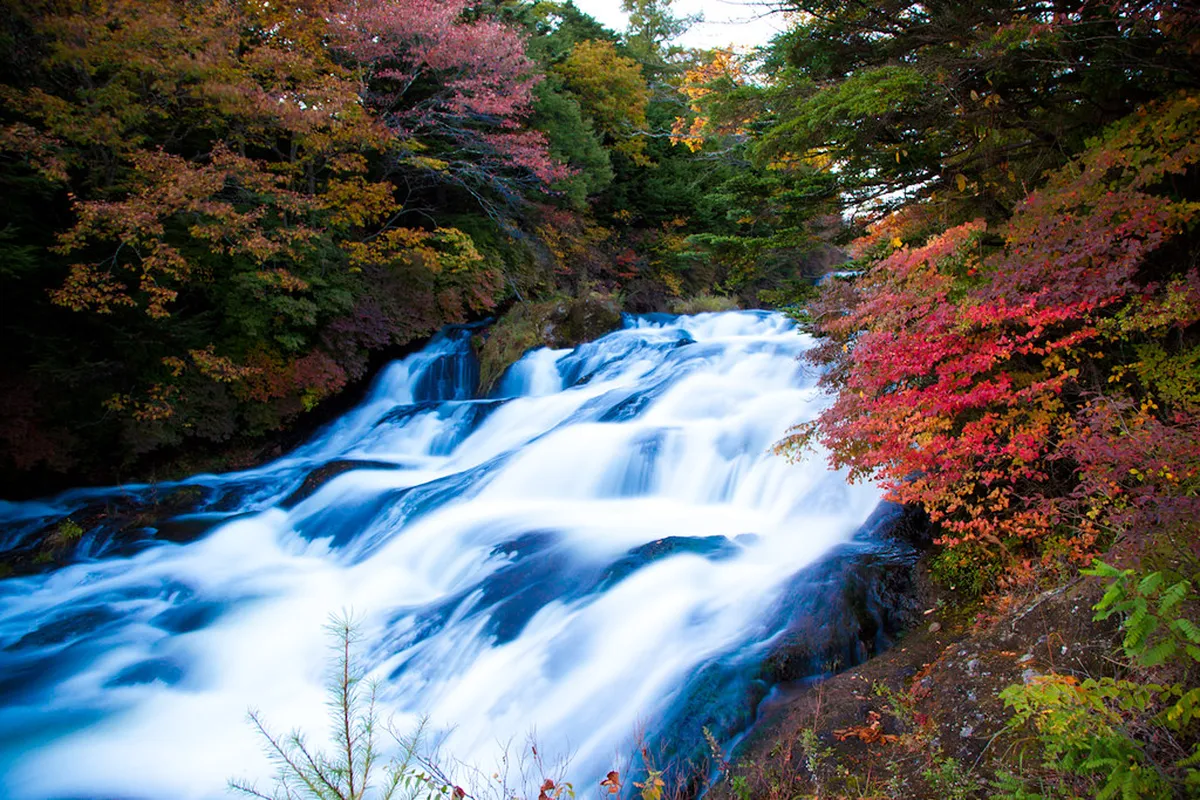
Senjogahara Marshland sits at roughly 1,400 m and turns golden rather than red. The 6 km boardwalk loop from Akanuma to Yudaki Falls is flat, takes about two hours, and is one of the only places in Nikko where you can shoot autumn color without people in frame after 11:00. Trail info for Senjogahara recommends starting from Akanuma.
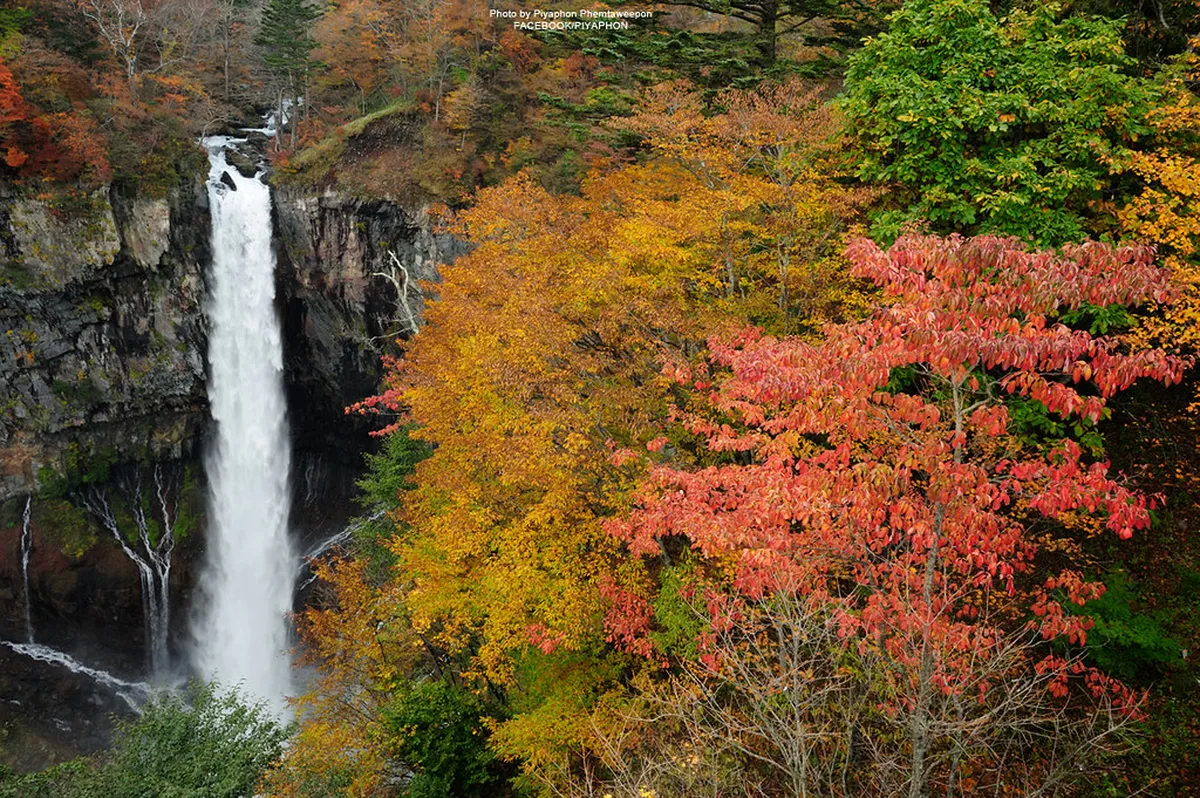
Kegon Falls is the headline spot. The 97 m drop sits inside a bowl of maples peaking between 22 October and 1 November. See our Kegon Falls guide for elevator timing and the best free-platform angle. Morning sun between 09:00 and 10:30 catches rainbows in the mist at Kegon Fall; by 13:00 the bowl falls into shade.
Best Autumn Color Viewing in Central Nikko & Kinugawa
Central Nikko peaks two to three weeks after Oku-Nikko. Shinkyo Bridge — the vermillion arch across the Daiya River at the shrine-district entrance — is the postcard shot, usually photogenic from 5 to 12 November. Stand on the modern road bridge 80 m upstream for the cleanest angle, free of charge (crossing the historic bridge costs ¥300). The shrine path from Shinkyo up to Toshogu Shrine is lined with cryptomeria cedars and pockets of maple — arrive before 08:30 to share it only with the morning shrine custodians.
Kinugawa, 25 minutes north by Tobu train, peaks alongside central Nikko in early to mid-November. The Ryuokyo Gorge walk from Ryuokyo Station to Kawaji-Yumoto follows the river through a corridor of red and yellow leaves and is far less visited than the Chuzenji circuit — a quieter alternative for peak-week stays.
How to Get to Nikko from Tokyo
Ferries on Lake Chuzenji stop running from early December to late March. Bus schedules shift to a winter timetable from the last week of November. Check the Tobu Bus winter schedule before visiting after 20 November.
Most autumn visitors take the Tobu-Nikko Line from Asakusa. The Limited Express Spacia X covers Asakusa to Tobu-Nikko in 1 hour 50 minutes, running roughly hourly from 06:30 to 10:00; reservations are mandatory and the 06:30 and 07:30 departures sell out three to seven days ahead during peak weeks. JR Pass holders can ride a Tohoku Shinkansen to Utsunomiya then transfer to the JR Nikko Line (about two hours, no direct seat from central Tokyo). If you drive, expect Iroha-zaka to add 90–150 minutes on weekends — park at the Tobu-Nikko Station lot and take the bus up the 48 hairpin turns.
Essential Passes: Is the Nikko All Area Pass Worth It?
The Tobu Nikko All Area Pass costs ¥8,150 for adults in autumn 2026, runs four days, and covers round-trip local train from Asakusa, all Tobu buses including the Yumoto Onsen route, and the Lake Chuzenji cruise. For a 2-day trip splitting Oku-Nikko and central Nikko it pays for itself versus paying piecemeal. Day-trippers seeing only Toshogu and Shinkyo Bridge usually save by skipping passes and walking the 20 minutes from Tobu-Nikko Station.
- Tobu Nikko All Area Pass — ¥8,150, 4 days, round-trip train + all park buses + Chuzenji cruise. Best for 2-day trips.
- 2-Day Tobu Bus Pass — ¥3,600, park buses only. Best with separate train tickets.
- Limited Express Spacia X surcharge — ¥1,650 each way; reserved seat plus 30 minutes saved.
- No pass — best for half-day visitors staying in central Nikko on foot.
Iroha-zaka Traffic Survival and Walk-vs-Bus Trade-offs
The biggest mistake autumn visitors make is arriving at Tobu-Nikko between 09:30 and 11:00. By 10:00 the Iroha-zaka bus queue stretches across the terminal and the road starts gridlocking. The fix is mechanical: take the 06:30 or 07:30 Spacia X from Asakusa, walk to Bus Stop 2A, and board the first Yumoto Onsen bus around 08:50 — you will be at Akechidaira before the queue forms.
Inside central Nikko, walking often beats the bus. The 1.6 km route from Tobu-Nikko Station to Shinkyo Bridge takes 20 minutes on foot — faster than waiting for a Toshogu-bound bus on peak weekends when frequencies drop to one every 20 minutes. Coming back down, board the 16:00–17:00 buses from Chuzenji rather than the 14:30–15:30 wave; downhill traffic clears as day-trippers leave.
Nikko Tamozawa Imperial Villa Memorial Park
The Tamozawa Imperial Villa is the quietest premier spot in central Nikko for autumn color. It blends Edo, Meiji, and Taisho elements across a 106-room complex, with gardens framed around three large maples that peak between 5 and 15 November. Entry is ¥600 and the site is rarely more than a quarter full even on peak weekends.
The villa's wide engawa verandas open onto a moss garden where deep green moss contrasts with fallen red leaves. Check the official Tamozawa website for opening hours — closed Tuesdays and the day after national holidays. The entrance is a 5-minute walk west of Shinkyo Bridge, so it pairs naturally with the shrine district rather than a separate day.
Mount Nantai and Lake Chuzenji Views
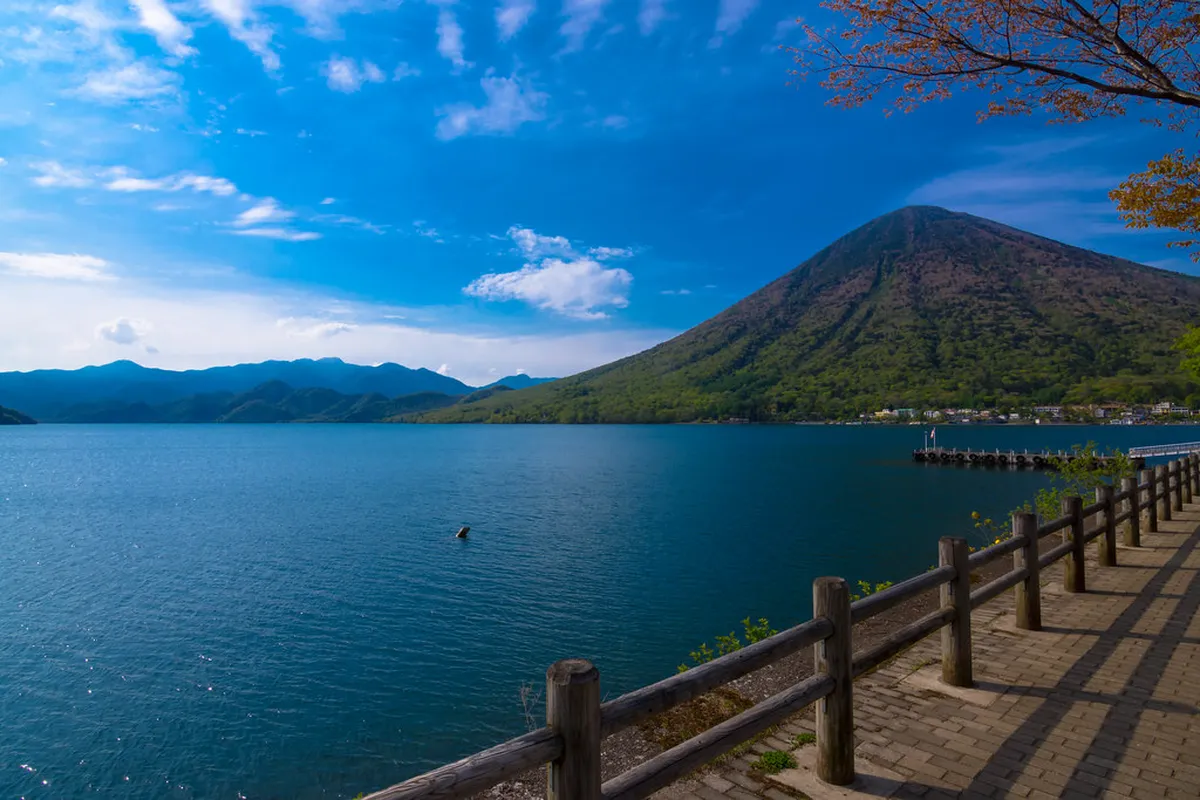
Lake Chuzenji sits at 1,269 m — the highest natural lake in Japan and the photographic core of the autumn season. From the lakeshore promenade Mount Nantai (2,486 m) rises across the water, with peak color sweeping down its lower flanks between 20 October and 5 November. Pair the walk with the boat cruise (covered by the All Area Pass) for the mid-lake reflection shot. The Mt. Hangetsu observation deck offers a panoramic view back over Chuzenji and Hacchodejima; the road up is narrow and seasonal. For boat schedules and Mount Nantai trailheads, see our Lake Chuzenji guide.
Where to Stay in Nikko for Autumn Views
Where you sleep dictates how much of the koyo window you see. Chuzenji lakeside ryokan put you above the Iroha-zaka bottleneck — you wake at peak elevation and skip the morning bus queue (¥30,000–60,000 per person with two meals; book three months ahead). Central Nikko hotels near Tobu-Nikko Station are cheaper at ¥12,000–25,000 per night and put you on the first bus up. Kinugawa Onsen, 25 minutes north by train, is the quietest and best-value option at ¥18,000–35,000 with two meals. For full breakdowns by neighborhood, see our Nikko accommodation guide; Chuzenji ryokan sell out first.
What to Pack
Weather shifts fast with elevation. Oku-Nikko runs about 5°C / 9°F colder than the town, and lake breeze on Chuzenji adds two to three degrees of wind-chill. Layering — base layer, light fleece, windproof shell — handles every condition from dawn to mid-afternoon. Sturdy walking shoes with grip handle the wet stone steps in the shrine district and the Senjogahara boardwalks, which become slippery after morning frost. Pack a portable power bank and a small umbrella for the typical afternoon mountain showers from late October onward.
- Lightweight down jacket — essential for chilly mountain mornings below 5°C.
- Walking or light hiking shoes — best for the marshland boardwalks and shrine steps.
- Compact umbrella or rain shell — useful for sudden mountain showers.
- Power bank, gloves, and a hat — high-altitude sun plus cold wind drain phones fast.
What's Closed Late November and Beyond
Ferries on Lake Chuzen-ji stop running from early December to late March. Senjogahara tea houses close once the leaves fall, bus schedules shift to a winter timetable from the last week of November, and trails above 1,500 m may have early snow. Check the Tobu Bus winter timetable in the week before your trip if visiting after 20 November.
For related deep-dives, see our Nikko National Park Travel Guide and 2-day Nikko itinerary. Pair this with our broader Nikko Attractions guide for the full city overview, and our Lake Chuzenji guide for the famous Oku-Nikko boat views.
Explore More of Nikko's Fall Season
Plan the drive up to the lake and pin down exactly when to go with these companion guides to Nikko's autumn color.
Frequently Asked Questions
When is the best time to see fall colors in Nikko?
The best time is from mid-October to early November. Colors peak early in Oku-Nikko and later in the town. Visit in late October to see the lake area at its best.
Is Nikko a day trip from Tokyo?
Yes, Nikko is a very popular day trip from Tokyo. The train takes about two hours each way. However, an overnight stay allows you to beat the morning crowds.
How do I avoid crowds in Nikko during fall?
Arrive at Nikko Station before 7:30 AM to catch the first buses. Visit on a weekday if possible. Explore less famous spots like the Tamozawa Imperial Villa to find peace.
Nikko's vertical koyo season is one of the longest in Japan — pick your elevation by date, follow a well-planned Nikko itinerary, and arrive at Tobu-Nikko Station before 7:30 AM. Whether you target the wild upper park or the shrines and Tamozawa Villa in town, dress in layers and lock in transport plus Nikko accommodation two to three months ahead for late-October weekends.
Free: The Nikko Essentials guide
Top things to do, where to stay, a perfect day plan, getting around, and the best time to go — a Nikko mini-guide you can take offline.
You might also like


Continue reading
More guides you'll find useful


