Nara Autumn Foliage Guide: Best Spots, Timing, and Tips
Plan your trip with our Nara autumn foliage guide. Find peak dates, top spots like Nara Park, and local tips to avoid the crowds during koyo season.
On this page
Koyo season in Nara runs from mid-November through early December, and it is one of the most photographed autumn displays in Japan. The ancient temples, roaming deer, and vivid maple canopies create a combination found nowhere else in the Kansai region. This nara autumn foliage guide covers the best city-center spots and the remote prefecture spots that most visitors skip entirely.
Nara Prefecture is larger than most travelers expect. The city center around Nara Park is just the start. Remote gorges, mountain shrines, and ruined castle peaks offer far fewer crowds and equally spectacular color. Planning your route around the staggered peak dates across different elevations lets you extend your koyo trip by three to four weeks if you are flexible.
Most travelers find that a Nara Itinerary for First-Timers is best enjoyed during these cooler months. Start early at the temples, pick a mix of city and prefecture spots, and you will have a genuinely complete autumn experience.
Peak Timing for Nara Autumn Colors
In an average year the foliage season runs from mid-October to mid-December, with the city-center peak typically landing around November 15–30. Ginkgo trees turn gold before the maples, so you often see brilliant yellow canopies in early-to-mid November and the deepest reds arriving in the final week of the month. Temperatures during peak season range from 8–16°C during the day, dropping sharply after sunset.
| Location | Peak foliage window | Elevation | Access from Nara |
|---|---|---|---|
| Odaigahara | Mid-October | 1,695 m | Bus from Kintetsu Yamato-Kamiichi (~¥2,050) |
| Mitarai Gorge | Late Oct–early Nov | ~400 m | Bus from Kintetsu Shimoichiguchi |
| Muro-ji Temple | Early–mid November | ~400 m | Bus from Kintetsu Muroguchi-ono (~¥490) |
| Hase-dera Temple | Mid Nov–early Dec | ~200 m | Kintetsu to Hase-dera Station, walk |
| Tanzan-jinja Shrine | Mid–late November | ~500 m | Bus from Sakurai Station (~¥500) |
| Mt. Yoshino (lower) | Mid–late November | ~350 m | Kintetsu Yoshino Line (~¥870) |
| Nara Park (city center) | Nov 15–30 | ~100 m | Walk from Kintetsu Nara Station |
Elevation makes a significant difference across the prefecture. High-altitude spots like Odaigahara (1,695 m) reach peak color in mid-October — a full six weeks before Nara Park. Mt. Yoshino peaks in mid-to-late November at its lower elevations, while Mitarai Gorge color arrives around late October to early November. This staggered timing means serious koyo chasers can plan multiple weekend trips rather than a single visit.
Night illumination events at Kinpusen-ji Temple on Mt. Yoshino run during peak weekends, usually mid-to-late November. Check the temple's schedule before booking, as dates shift slightly each year. The illuminated maples against the ancient wooden halls make for dramatically different photography from daytime visits.
Yoshikien Garden offers free entry to foreign tourists with a passport, making it one of the best free autumn foliage spots in Nara. It sits immediately beside Isuien Garden and is far less crowded. In late November, fallen maple leaves settle on the deep-green moss — a color combination that photographers seek out specifically.
Nara Park: Deer and Golden Ginkgo Leaves
At 660 hectares, Nara Park is large enough that even on peak autumn weekends you can find quieter pockets. The ginkgo trees near the Nara National Museum are the most photographed: they drop a continuous carpet of yellow leaves from mid-November onward. Wild deer wander underneath and pose naturally for photographs, though they will pester you for shika senbei (deer crackers) if they spot any in your bag.
The route from the museum south toward Sarusawa Pond passes the floating Ukimido Gazebo on Sagi-ike Pond, a classic autumn composition. Continue north toward the Todai-ji precinct for the red maples, which hit peak color about a week after the ginkgos. The park's sheer size means that the eastern trails near Kasuga-taisha stay noticeably quieter than the main deer-feeding zones near the bus terminal.
Arrive by 08:00 on weekdays to walk the park before the Kyoto-overflow tour groups arrive. Most large groups leave by mid-afternoon, so a second quieter window opens after 15:00. The deer are most active at dawn and dusk, and the low-angle autumn light at those hours makes for the best photography.
Isuien and Yoshikien: Nara's Premier Gardens
Isuien Garden sits directly west of Todai-ji and borrows the forested hillside as its backdrop — a technique called shakkei. The central pond reflects the red maple canopy above it, creating the classic image associated with Nara in autumn. Entry costs ¥1,200 for adults. Arrive at opening (09:30) for the calmest light and fewest visitors.
Yoshikien Garden is immediately adjacent and offers free entry to foreign tourists with a passport. It contains three distinct garden styles — a pond garden, a moss garden, and a tea garden — within a compact area. Fallen maple leaves settle on the deep-green moss in late November, producing a color contrast that photographers specifically seek out. Plan 45–60 minutes for both gardens combined.
The thatched tea houses inside both gardens make good sheltered spots if light rain arrives during your visit. Autumn showers tend to intensify the leaf colors and clean the moss, so a cloudy day is not a wasted day here.
Todai-ji and Kasuga-taisha: Heritage in Color
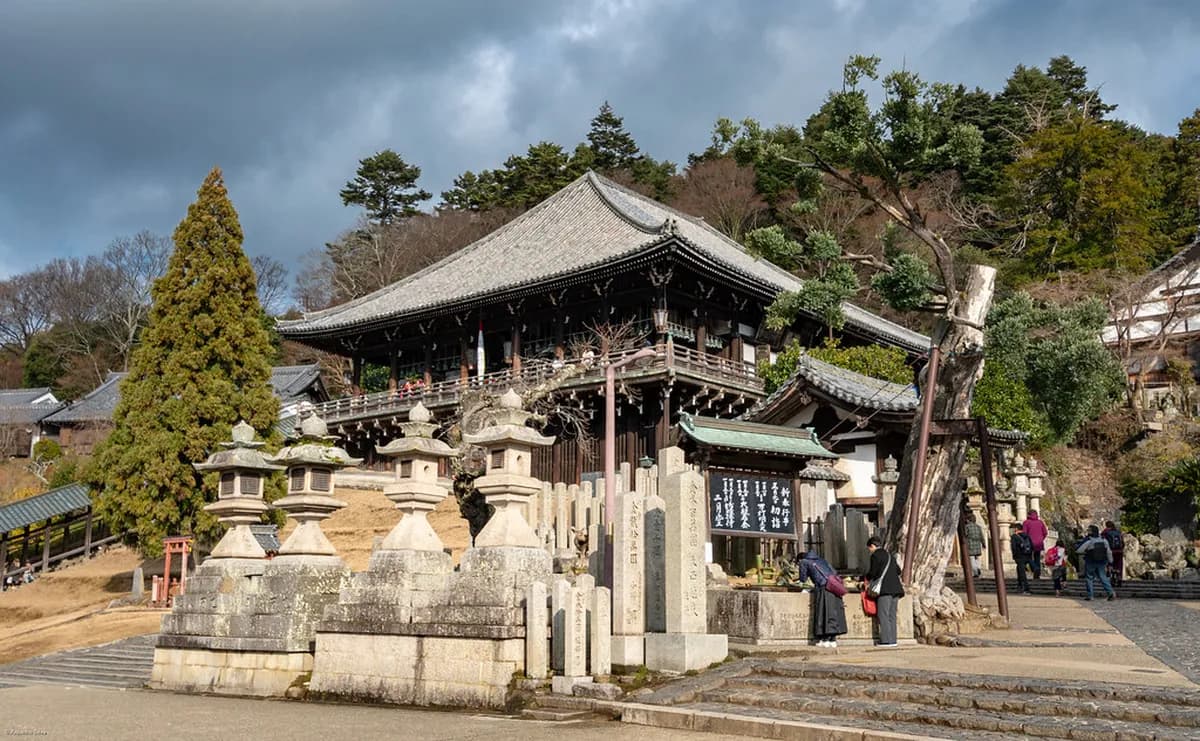
Todai-ji Temple is famous for the Daibutsuden (Great Buddha Hall), but the best autumn foliage here is on the approach and the back paths. The walk from the Nandaimon gate up toward Nigatsu-do and Sangatsu-do passes through dense broadleaf forest. By late November these secondary halls are surrounded by fiery maples with far fewer visitors than the main hall.
The elevated balcony of Nigatsu-do provides a view over the entire park canopy toward the city. On clear late-November days the red and gold patchwork stretches to the horizon. Entry to Nigatsu-do is free. The main Daibutsuden costs ¥800 for adults and is worth visiting for the scale alone, but budget photographers often skip the interior and focus on the exterior approach instead.
Kasuga-taisha Shrine lies a 20-minute walk east of Todai-ji. The shrine road is lined with over 3,000 stone and bronze lanterns and passes through broadleaf forest that colors beautifully in November. The trails between Nigatsu-do and Kasuga-taisha connect the two sites along a wooded ridge — a quieter alternative to the main park paths that most visitors miss entirely.
The Nara Prefectural Office Rooftop: A Free Panoramic View
Few visitors know that the Nara Prefectural Government Office building (奈良県庁) has a publicly accessible rooftop observation deck with no entry fee. From here you can see the five-story pagoda of Kofuku-ji emerging from the autumn canopy below — a composition that most photographers spend hours trying to replicate at ground level. The rooftop is open during regular office hours, roughly 09:00–17:00 on weekdays, and occasionally on weekends during peak foliage season.
The building is a five-minute walk west of Kintetsu Nara Station, making it a natural first stop before heading into the park. The elevated angle also reveals how deep the park's tree cover is — something you cannot appreciate from street level. Bring a telephoto lens or zoom-capable phone to isolate the pagoda against the leaf canopy. This is the most underused free viewpoint in the city center.
Hase-dera and Muro-ji: The Temple Stairway
Hase-dera Temple, roughly 40 minutes south of Nara by Kintetsu Osaka Line train to Hase-dera Station, is famous for its covered cloister stairway of approximately 400 steps. In November the stairway is flanked by maples, and stone lanterns line each side of the climb. The main hall projects out over the valley on a wooden stage — similar in construction to Kyoto's Kiyomizudera — giving a sweeping view of the surrounding mountains at peak color. Entry costs ¥600; peak viewing runs mid-November through early December.
Muro-ji Temple pairs naturally with Hase-dera as a half-day circuit. Take the Kintetsu Osaka Line to Muroguchi-ono Station, then a bus (¥490 one way) to the temple. The five-story pagoda at Muro-ji is Japan's smallest outdoor pagoda, and maple leaves scatter its stone steps in late autumn. The combination of the pagoda, lantern-lit moss steps, and red maples creates one of the prefecture's most iconic seasonal photographs. Peak viewing at Muro-ji runs from early to mid-November, slightly earlier than Hase-dera.
Tanzan-jinja: The 13-Story Pagoda View
Tanzan-jinja Shrine in the hills above Sakurai City contains Japan's only 13-story pagoda, reconstructed in 1532. The shrine was built to honor Fujiwara no Kamatari, a 7th-century statesman credited with reshaping early Japanese government. The combination of red-lacquered shrine buildings and hundreds of surrounding maple trees makes the peak-color window here — roughly mid-to-late November — one of the most photographed shrines in the Kansai region.
Access by bus from Sakurai Station's south exit (JR or Kintetsu Lines, bus stop 1) costs approximately ¥500 each way with 8–10 round trips daily. Alternatively, cyclists with an International Drivers Permit can rent a 50cc scooter from Asuka Station (roughly ¥2,000 for the day) and reach the shrine via a scenic 8 km mountain road. The stroll along the main veranda, hung with gilded bronze lanterns, gives elevated views over the maple-filled valley below.
Mt. Yoshino: UNESCO Mountain Vistas
Mt. Yoshino is famous for its 30,000 cherry trees in spring, but the same trees and a dense understory of Japanese maples produce an equally spectacular autumn display. The peak timing varies by elevation — trees near the summit start turning in mid-October while lower slopes reach full color by mid-to-late November. This elevation-staggered bloom means Yoshino offers a longer viewing window than most single-site alternatives.
The Kintetsu Yoshino Line runs directly from Kintetsu Nara Station (approximately ¥870 one way, under two hours). The main temple area, Kinpusen-ji, holds special night illumination events during peak weekends when the ancient wooden facade is lit against the blazing maple canopy. Yoshino is a full day trip; combine the upper mountain temple circuit with the lower village streets and cable car for maximum color variety.
Mitarai Gorge and Odaigahara: Nature Escapes
Mitarai Gorge in Tenkawa Village is the Kansai region's most dramatic autumn gorge. Steep canyon walls, suspension bridges, and waterfalls frame an 11 km hiking trail connecting Dorogawa Onsen at the top with Tenkawa-Kawaai at the bottom. Leaf color typically peaks around mid-November. Buses from Kintetsu Shimoichiguchi Station reach both ends of the trail (¥1,130 to Tenkawa-Kawaai, ¥1,300 to Dorogawa Onsen one way). Hike one direction and take the bus back; ending at Dorogawa Onsen lets you soak in a hot spring after the descent.
Odaigahara, on the Nara-Mie Prefecture border, is the earliest autumn destination in the region. At 1,695 m elevation it peaks in mid-October, well ahead of city-center spots. The Dajagura Cliff juts into a 1,000 m deep valley with only a chain separating visitors from the view. Access is difficult without a car, but a single daily bus runs from Kintetsu Yamato-Kamiichi Station (¥2,050 one way). If you are planning an October visit to Japan, Odaigahara should be near the top of your list.
Chogosonshi-ji and Chogaku-ji: Unique Temple Experiences
Chogosonshi-ji Temple sits high on Mt. Shigi and is known for its 1,840 stone lanterns, papier-mâché tiger statues, and an enormous main hall with a balcony overlooking the Yamato Basin. The temple also offers shukubo (temple-stay) accommodation, letting guests experience Buddhist morning rituals during koyo season. Leaf color here runs from early November through to the end of December — one of the longest windows in the prefecture. Take a bus from Oji Station (the Wan Day Pass costs around ¥500 and covers the round trip).
Chogaku-ji Temple, four stops south of Nara on the JR Manyo-mahoroba Line near Tenri City, is smaller and far less visited. It was founded in 824 and holds the distinction of housing Japan's first gem-eyed Buddha statue. Dozens of Japanese maples scattered through the temple grounds ignite in mid-November, lasting until month's end. Take bus 60 or 62 from Tenri Station to the Kaminagaoka Chogakuji-mae stop, or walk 20 minutes east from JR Yanagimoto Station. The temple restaurant serves traditional Nara somen noodles — a worthwhile stop for lunch.
Essential Travel Tips: Transport and Overtourism
Some seasonal buses to remote foliage sites (Odaigahara, Mitarai Gorge) run only 6–8 times daily, with the last departure often in early afternoon. Miss the last bus and you face a very long taxi ride. Always confirm the final outbound and return times before setting off for outlying temple or gorge destinations.
Getting to Nara is straightforward from Osaka or Kyoto. The Kintetsu line gives the fastest access to Nara Park from both cities. For remote prefecture spots, check bus timetables carefully — some seasonal services run only 6–8 times daily and the last departure can be early in the afternoon. Use a Nara Transportation Guide: 8 Essential Ways to Get Around before heading to outlying temples.
The Nara/Ikaruga 1-Day Ticket Osaka Metro Version costs ¥1,950 and covers all Osaka Metro lines, Osaka city buses, most of the Kintetsu Line, and Nara Kotsu Bus Lines for the Nara, Nishinokyo, and Ikaruga areas. It is excellent value if you are day-tripping from Osaka and want flexibility for multiple stops. Travelers staying in Nara itself rarely need it.
Nara Park attracts large numbers of Kyoto-overflow visitors on peak autumn weekends. Arrive at temples by 08:00 for the quietest experience. The park is 660 hectares — move east toward Kasuga-taisha or south toward Naramachi and crowds thin out quickly. A Nara Day Trip from Kyoto: The Ultimate 1-Day Itinerary works best on a weekday; weekend visitors from Kyoto fill the Kintetsu trains from 09:00 onward. If you are photographing the deer under the maples, a 70–200 mm equivalent focal length lets you fill the frame without disturbing the animals — closer than about 3 m and they become aware of you.
Explore autumn foliage guide in other cities
Frequently Asked Questions
When is the best time to see autumn leaves in Nara?
The peak season usually runs from mid-November to early December. I recommend visiting during the last week of November for the most vibrant red maples. Always check the current forecast as timing can vary by a few days each year.
Where are the best ginkgo trees in Nara Park?
You will find the most impressive ginkgo trees near the Nara National Museum. These trees turn a brilliant gold in mid-November. The fallen leaves create a beautiful yellow carpet that is perfect for seasonal photography.
Is the Nara/Ikaruga 1-Day Ticket worth it for autumn?
Yes, this ticket is excellent if you plan to use the local buses. It covers your round-trip train from Osaka and unlimited bus rides in Nara. This makes reaching remote foliage spots like Toshodai-ji much easier and more affordable.
For the wider city context, see our complete Nara attractions guide.
Nara's autumn foliage season rewards travelers who look beyond the obvious. The city center around Nara Park is unmissable, but the remote shrines, gorges, and mountain temples of the wider prefecture offer color that is just as vivid with a fraction of the crowds. Whether you have one day or a full week, the staggered peak dates across the prefecture mean there is always somewhere at its best.
Remember to dress in warm layers, check seasonal bus schedules before you go, and build in time for the free rooftop viewpoint at the Prefectural Office before diving into the park. The combination of ancient World Heritage sites, friendly deer, and some of Japan's finest koyo makes Nara one of the most rewarding autumn destinations in the country.
Free: The Nara Essentials guide
Top things to do, where to stay, a perfect day plan, getting around, and the best time to go — a Nara mini-guide you can take offline.
You might also like


Continue reading
More guides you'll find useful