Shoso-in Autumn Exhibition 2026: Visiting Guide & Timing
The Shoso-in storehouse stays closed. Its treasures appear only briefly at Nara National Museum each autumn. Here's how to time and plan your visit.
On this page
A useful shoso-in autumn exhibition visiting guide has to start with one constraint: this is not a permanent museum display. The Annual Exhibition of Shoso-in Treasures brings a small selection of imperial repository objects into the Nara National Museum for a short autumn window, while the original Shoso-in storehouse remains closed to public entry. That makes it one of the most time-sensitive 20 Best Nara Attractions for travelers planning around late October and early November.
For 2026, confirm the exact dates, ticket release schedule, and featured works on the official museum page before fixing your Nara day. Recent editions have used timed-entry tickets, extended evening hours on busy days, and no on-site parking, so the smoothest visit is built around public transport and a specific museum slot. The reward is rare: eighth-century textiles, instruments, documents, ritual objects, and luxury goods that show Nara as a Silk Road capital rather than only a temple town.
Must-See Shoso-In Attractions
The main attraction is the Annual Exhibition of Shoso-in Treasures at the Nara National Museum, not the storehouse itself. The Shoso-in repository stands near Todai-ji, but the treasures are shown in the museum's East and West New Wings during the annual exhibition. The official 77th exhibition page listed sixty-seven treasures in 2025, including six first-time displays, so 2026 visitors should expect the exact lineup to change again.
The objects are compelling because they are not limited to Buddhist statuary or court luxury. Past displays have included a red sandalwood sugoroku board connected with Emperor Shomu, the Blue Glass Cup with Gilt Metal Base, documents, writing brushes, textiles, instruments, and aloeswood incense known as Ranjatai. These pieces make the Nara period feel international, with materials and design ideas moving between Japan, Tang China, Korea, Central Asia, India, and Persia.
After the museum, walk toward Todai-ji to connect the exhibition to its original religious setting. Empress Komyo dedicated many objects after Emperor Shomu's death, and the Great Buddha at Todai-ji explains why these offerings mattered politically and spiritually. Jurisdiction of the repository sits with the Imperial Household Agency, which manages conservation and the annual seal-opening that releases works for display. If you only have one museum day in Nara, pair the exhibition with Todai-ji Temple rather than adding distant sights across the city.
- Prioritize the annual exhibition first, because timed-entry tickets control your day.
- Use Todai-ji and the outside view of the Shoso-in storehouse for context after the galleries.
- Save detailed photography plans for Nara Park, because the exhibition galleries are designed for viewing rather than casual snapshots.
Museums, Art, and Culture in Shoso-In
The Nara National Museum is the right cultural anchor for this visit because your exhibition ticket has historically included access to more than the Shoso-in galleries. The 2025 official information allowed ticket holders to enter the Nara Buddhist Sculpture Hall and the Chinese Ritual Bronzes Gallery on the same ticket. Check whether that benefit continues in 2026, then leave time for it instead of treating the museum as a one-room stop.
The special exhibition galleries are usually dim and controlled to protect fragile materials. That changes how you should move through them: read the introductory panels, choose a few cases to study carefully, and avoid trying to inspect every object at the same pace. A focused visitor will get more from the textiles, lacquer, metal fittings, and documents than someone rushing case by case. The Shoso-in's international materials connect to the grand imperial collections you can also find in Kyoto and Osaka.
Use a Nara National Museum Guide before arrival so you know the building layout and the distance from Kintetsu Nara Station. The museum sits inside the Nara Park sightseeing zone, but exhibition crowds can make the entrance feel different from a normal museum day. If you want quieter art time, schedule the permanent galleries before noon or after your timed Shoso-in slot rather than during the heaviest 12:00 to 15:00 window.
Parks, Gardens, and Outdoor Spots in Shoso-In
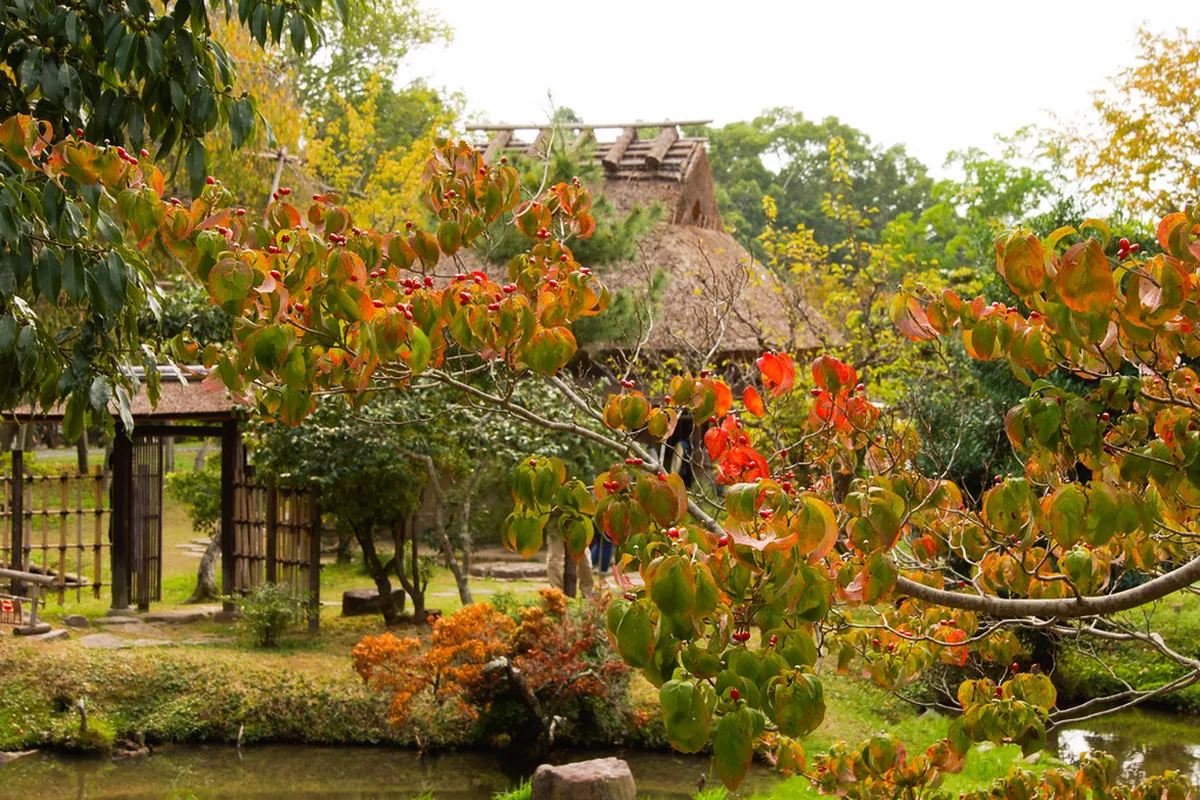
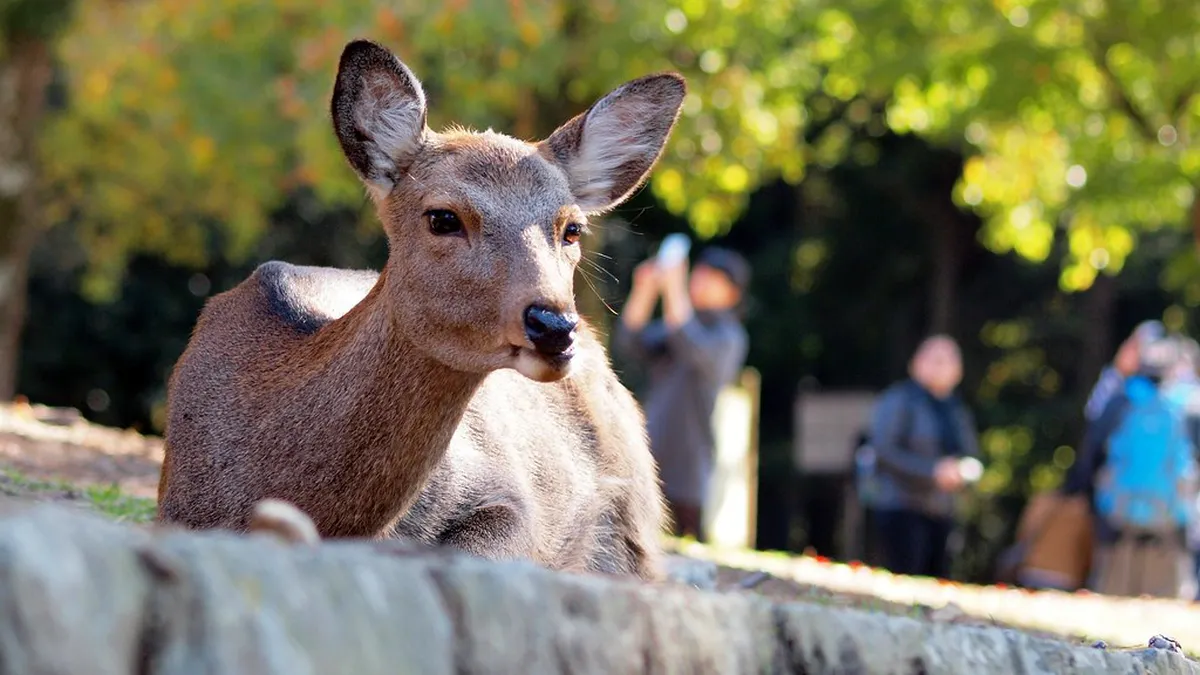
The best outdoor add-ons are close enough that they will not threaten your timed-entry slot. Nara Park, Todai-ji, Kagami-ike pond, and the Kasuga Taisha approach all sit within a practical walking loop from the museum. In late autumn, these spots carry the same seasonal mood that competitor pages emphasize: deer, temple roofs, stone lanterns, and red or gold leaves within a compact sightseeing area.
For a quieter break, Isuien Garden and Yoshikien Garden are better choices than trying to cross town between ticket windows. They give you controlled scenery, tea-house views, and a slower pace after the dense museum galleries. If autumn color matters to your plan, use a Nara Autumn Foliage Guide: Best Spots, Timing, and Tips to decide whether to prioritize Todai-ji, Kasuga Taisha, or the gardens on your exact travel week. Similar imperial collections appear in Tokyo's museums as well.
The Shoso-in storehouse exterior is worth seeing only if you understand its limits. You cannot enter it, and the annual exhibition does not happen inside it. Still, the azekura-zukuri log construction helps visitors connect the museum cases to the building that preserved the collection for centuries.
Family-Friendly and Budget-Friendly Options in Shoso-In
The exhibition can work for families, but it is better for children who can handle a quiet, crowded gallery than for very young kids who need constant movement. Preschoolers were free in the 2025 official rules, and junior high and elementary school students had a much lower ticket price than adults. Students should carry ID, because discounts are usually tied to proof of status.
Budget travelers should watch for late-entry pricing when the 2026 ticket rules are published. In 2025, late entry was cheaper after 16:00 from Monday to Thursday and after 17:00 on Fridays, weekends, and holidays. The trade-off is simple: lower cost and often a calmer visit, but less daylight afterward for Nara Park and Todai-ji.
Nara Park itself keeps the day affordable because walking the open areas costs nothing. Deer crackers, garden admissions, temple halls, and lunch are the main extras. Families who want a low-stress day should avoid stacking the museum, Todai-ji, Kasuga Taisha, and a kimono rental unless the children are already comfortable with long walking days.
How to Plan a Smooth Shoso-In Attractions Day
Kintetsu Nara Station is closer to the museum than JR Nara Station and is the more convenient arrival point for travelers coming from Kyoto or Osaka. The Shoso-in exhibition ticket has historically included access to the Nara Buddhist Sculpture Hall and Chinese Ritual Bronzes Gallery — confirm whether that benefit continues for the 2026 edition before planning your museum time.
Build the day around the museum slot first, then add nearby sights. Kintetsu Nara Station is the most convenient rail arrival point for most travelers because it is closer to Nara Park than JR Nara Station. Use a Nara Transportation Guide: 8 Essential Ways to Get Around if you are arriving from Kyoto, Osaka, or a hotel near JR lines, because the easiest route changes by starting point.
A practical order is Kintetsu Nara Station, museum entry, Buddhist Sculpture Hall if included, lunch near Noborioji or Naramachi, Todai-ji, the Shoso-in exterior, and then Nara Park or Kasuga Taisha. If your ticket is in the late afternoon, reverse the sightseeing: visit Todai-ji and the park first, eat early, then enter the museum with lighter bags and fewer time pressures. Avoid relying on a car, because the official exhibition guidance has explicitly asked visitors not to drive to the museum.
Do not arrive exactly at the start of the busiest slot unless you need every minute inside. The official 2025 page warned that galleries are often most crowded at the start of each timed-entry window and that visitors might be admitted slightly before or after the printed time depending on gallery conditions. A small buffer is useful, but standing in the first rush can make the first cases harder to read.
How to Purchase Timed-Entry Tickets
Timed-entry tickets are the part of this visit most likely to trip up first-time visitors. The 2025 official page listed advance sales through Lawson Ticket, CN Play Guide, E-Ticket with English support, and ART EXHIBITION JAPAN, with ticket sales ending once each entry window sold out. For 2026, use those channels only after the museum publishes the new exhibition page, codes, and ticket release date.
If you do not read Japanese, start with the English E-Ticket option when it appears. Lawson and convenience-store ticketing can be useful in Japan, but machine flows, codes, and payment rules are harder for travelers arriving from overseas. Do not assume that a third-party "verified listing" has inventory unless it clearly points back to an authorized sales route.
The most important rule is that timed-entry tickets are normally fixed. The official 2025 guidance said tickets could not be changed, canceled, reissued, or refunded. Choose a slot after checking train times, hotel check-in plans, and whether you want daylight for Todai-ji or Nara Park afterward.
Museum Entry and Viewing the Exhibition
Once you have a ticket, treat the entry time as a controlled museum appointment. The official rules for the previous edition did not allow visitors to enter on a different day or in a different window. They also noted that actual admission can shift slightly if galleries are crowded, so keep the next hour flexible rather than booking lunch or a tour immediately after entry.
Most visitors should budget ninety minutes for the Shoso-in galleries and two hours if they want to read labels carefully. The 2025 guidance said there was no rotation of works during the exhibition period, which means you do not need to chase a specific week for one object unless the 2026 page says otherwise. The better decision is choosing a time that matches your crowd tolerance.
Carry less than you think you need. Museum crowds, narrow case viewing, umbrellas, and large daypacks are a poor mix, especially during the expected midday peak. If you are doing a Nara Day Trip from Kyoto: The Ultimate 1-Day Itinerary, keep luggage at the station or hotel before going into the park zone.
About This Year's Treasures
The annual selection is part of the reason repeat visitors come back. The Shoso-in collection includes roughly 9,000 objects, and each exhibition selects a limited group that can show the collection's range while protecting fragile materials. In 2025, the official page grouped works from the North Section, Middle Section, South Section, and Shogozou, with several first-time displays.
For 2026, read the featured works list before you go so you know what kind of exhibition you are entering. A year focused on documents and ritual implements feels different from one led by glass, textiles, instruments, or incense. The objects are small enough that context matters: knowing why Empress Komyo, Emperor Shomu, Todai-ji, and the Imperial Household Agency matter will make the cases much easier to understand.
The best viewing strategy is to choose three themes before entering. One might be Silk Road materials, one might be imperial daily life, and one might be Buddhist ceremony. That prevents museum fatigue and gives you a clearer memory than trying to rank every treasure equally.
Same-Day Tickets, Late Entry, and Crowd Trade-Offs
Timed-entry tickets are normally non-changeable and non-refundable. Do not book nonrefundable transport or accommodation around the exhibition until the 2026 museum announcement confirms the exact dates — the 77th edition ran 25 October to 10 November 2025, but 2026 dates require independent verification.
Same-day admission is a backup, not a plan. The 2025 official page said same-day timed-entry tickets could be sold at the special ticket counter only if slots remained, and same-day prices were higher than advance prices. For a short Kansai trip, advance purchase is the safer move because a sold-out window can break the entire Nara itinerary.
Late entry can be the smartest budget choice for adults who are staying overnight in Nara or returning easily to Kyoto or Osaka. In 2025, late-entry pricing reduced general admission from 2,000 JPY to 1,500 JPY in advance, while same-day general admission was 2,200 JPY with a 1,700 JPY late-entry rate. Treat those figures as a planning benchmark until the 2026 admission table is published.
| Ticket type | 2025 advance price | 2025 same-day price |
|---|---|---|
| General admission (adult) | 2,000 JPY | 2,200 JPY |
| Late-entry adult (Mon–Thu after 16:00; Fri–Sun after 17:00) | 1,500 JPY | 1,700 JPY |
| Junior high / elementary student | Much lower (confirm for 2026) | — |
| Preschool | Free | Free |
The hidden trade-off is daylight. A late slot can mean fewer crowds and a cheaper ticket, but it leaves less time for the deer park, gardens, and temple approaches. If this is your first Nara visit, morning museum entry is usually better; if you already know Nara and care most about the treasures, late entry is a strong option.
2026 Planning Mistakes to Avoid
The biggest mistake is using the previous year's dates as if they are confirmed. The 77th exhibition ran from October 25 to November 10, 2025, but 2026 travelers should wait for the museum's 78th exhibition announcement before locking nonrefundable plans around the Shoso-in show. Autumn in Nara is still worth visiting either way, but the exhibition itself depends on the official calendar.
The second mistake is confusing the Nara National Museum exhibition with Shosoin THE SHOW or other Shoso-in-themed events in Tokyo. Those immersive shows can be interesting, but they use projections, replicas, scent experiences, or ticket-facilitation pages rather than displaying the annual selection of original Shoso-in treasures in Nara. If your priority is the real annual exhibition, keep your planning centered on Nara National Museum.
The third mistake is treating the exhibition as a quick add-on between Kyoto stops. A realistic Nara Itinerary for First-Timers gives the museum a fixed slot, leaves room for lines, and keeps nearby sights flexible. That is the difference between seeing the treasures calmly and spending the whole day chasing a schedule that never had enough buffer.
Frequently Asked Questions
What is the Annual Exhibition of Shōsō-in Treasures?
It is a special event at the Nara National Museum showcasing rare eighth-century artifacts from the imperial repository. These items are only displayed for a few weeks each autumn to ensure their long-term preservation. You should visit the nearby Todai-ji Temple to see where the treasures were originally stored.
How do I purchase timed-entry tickets for the exhibition?
Tickets must be reserved in advance through the Nara National Museum's official online booking system. They usually go on sale several weeks before the exhibition begins and sell out very quickly. Make sure to choose a specific time slot that fits your travel schedule to ensure entry.
Is the Shoso-in exhibition worth visiting for first-time visitors?
Yes, it offers a rare opportunity to see world-class artifacts that are fundamental to Japanese history and culture. The exhibition is particularly special because the items are not available for public viewing at any other time of the year. It provides a unique cultural experience that most tourists never get to see.
How much time should I plan for the Shoso-in exhibition?
Most visitors spend between ninety minutes and two hours exploring the various galleries and special displays. You should also allow extra time to walk through Nara Park and visit the museum shop after your viewing. Arriving early for your timed slot will help you make the most of your visit.
The Shoso-in autumn exhibition is a once-in-a-lifetime opportunity to witness the incredible artistry of ancient Japan. By following this guide, you can successfully navigate the ticket process and enjoy the treasures without any logistical stress. Nara remains one of the most culturally significant cities in the world, especially during the vibrant autumn season. We hope your visit to the Nara National Museum leaves you with a profound appreciation for Japan's enduring historical legacy.
Free: The Nara Essentials guide
Top things to do, where to stay, a perfect day plan, getting around, and the best time to go — a Nara mini-guide you can take offline.
You might also like


Continue reading
More guides you'll find useful