Himeji Castle Cherry Blossom Guide: 6 Best Spots and Events
Plan your visit to Himeji Castle during cherry blossom season. Discover peak bloom dates, festival highlights, nighttime light-up tips, and how to avoid crowds.
On this page
Himeji Castle grounds, keep access, and garden overview — consistently ranked among Japan's top five cherry blossom destinations, and for good reason. Over 1,000 sakura trees surround the UNESCO World Heritage site, turning the grounds into a sea of pink against brilliant white walls each spring. This guide covers the 2026 bloom window, the two official events, the best spots inside and outside the paid zone, and how to manage the crowds.
For the most accurate real-time bloom reports, bookmark the Japan-Guide cherry blossom forecast and the Visit Himeji Official Travel Guide. Both update regularly as the season progresses. Everything else you need is below.
Peak Bloom Timing for Himeji Castle Sakura
In 2026, the Yoshino cherry trees at Himeji Castle are expected to reach full bloom (mankai) between late March and early April. The sweet spot for most years falls between 30 March and 5 April, when roughly 70–80% of the trees are open simultaneously. Full bloom typically lasts five to seven days in calm weather; a rainstorm or strong wind can strip the petals in under 48 hours, so keep an eye on the forecast for the days surrounding your visit.
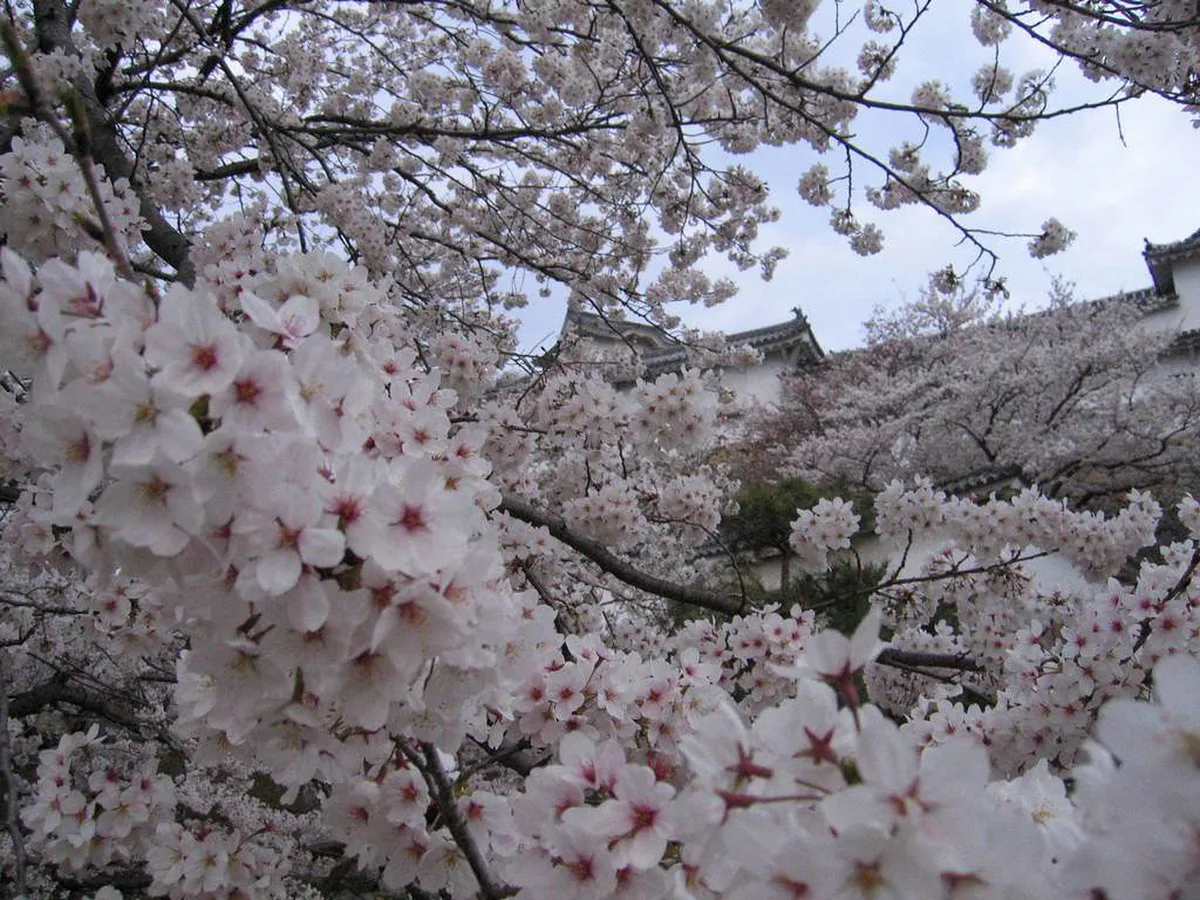
Peak bloom (mankai) at Himeji typically falls between 30 March and 5 April. Full bloom lasts only five to seven days in calm weather — a single rainstorm can strip petals in under 48 hours. Check the Japan-Guide forecast daily in the week leading up to your visit and stay flexible by one to two days if possible.
First blossoms (kaika) usually appear around 22–25 March. The weeping cherry trees in Nishinomaru Garden bloom three to five days after the Yoshino variety, which means staggered viewing is possible over about two weeks. If you miss the peak, arriving in mid-April gives you the sakura fubuki effect — petals drifting across the moat and carpeting the paths in pink.
Temperature in Hyogo Prefecture during this period runs 8–18°C (46–64°F). Bring layers: mornings before 9:00 can be cold enough for a light jacket, while afternoons in direct sun feel warm. Cold snaps in late March have historically delayed the bloom by four to six days, so building flexibility into your itinerary is worth it.
Himeji Castle Cherry Blossom Viewing Festival (Sannomaru Square)
The Himeji Castle Cherry Blossom Viewing Festival runs annually during the peak bloom window, centred on Sannomaru Square — the wide esplanade directly in front of the castle's main gate. Entry to Sannomaru is free, so this is the first place most visitors head. The square fills with food stalls selling Himeji oden (a local variation served with ginger soy sauce), yakitori, local sake, and seasonal sweets. Traditional music performances and tea ceremony demonstrations take place on a central stage.
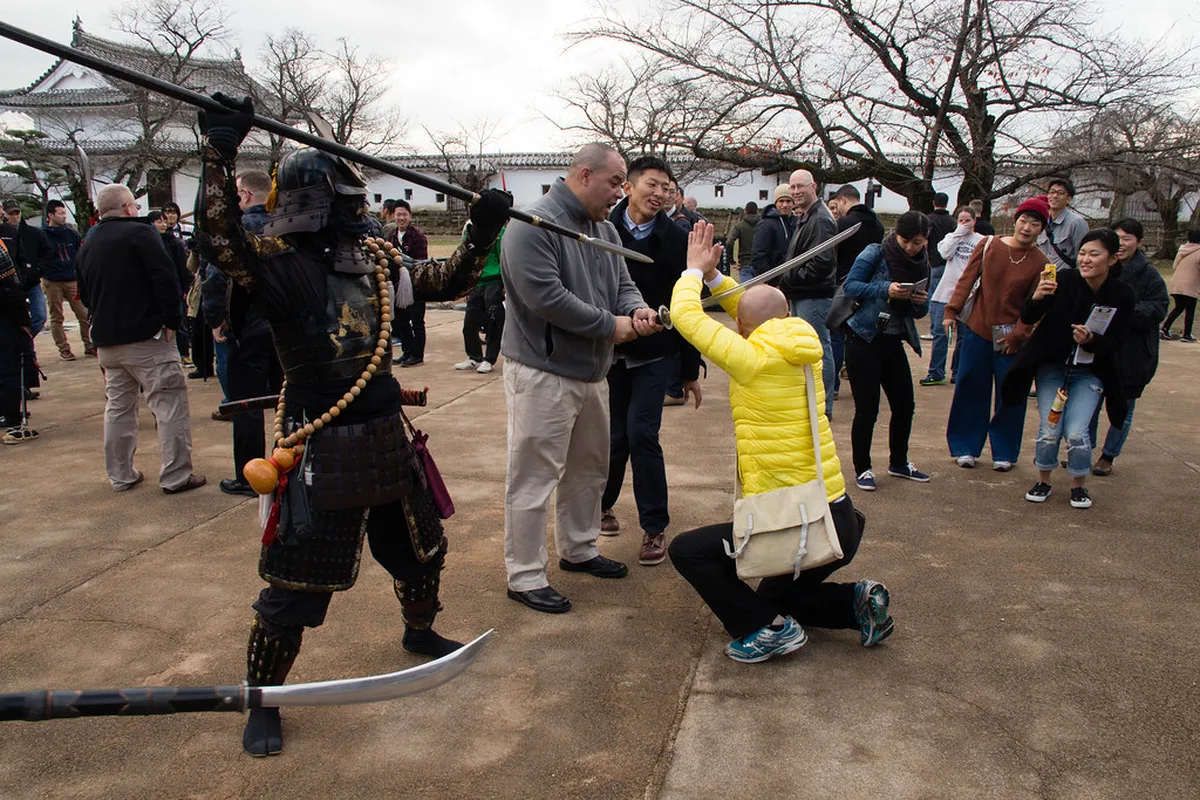
By late morning on weekends, blue tarps stretch across every patch of grass. This is classic hanami culture: groups arrive hours early to claim a spot, then spread out food, drinks, and sometimes full KFC buckets. The atmosphere is festive and genuinely warm — strangers frequently offer food or drinks to visitors sitting nearby. It is louder and more social than many first-timers expect from Japan, but that energy is part of what makes Himeji different from quieter garden viewings elsewhere.
Check the Himeji Castle Event Committee website for the confirmed dates and stall schedule each year, as the exact programme varies with the bloom timing. The daytime festival usually closes around 21:00 during the peak period.
Nighttime Cherry Blossom Light Up at Nishinomaru Garden
The Himeji Castle Nighttime Cherry Blossom Light Up transforms Nishinomaru Garden (the West Bailey) into a separate event from the daytime festival. During the illumination period — typically the same two weeks as the festival — the garden opens in the evenings and charges a separate admission fee (around ¥300–400, confirm on the official site for 2026). It is not normally open to the public after dark, which makes this a rare access opportunity.
The illuminated weeping cherry trees glow against the dark silhouette of the main keep above. Concerts are held nightly in the garden, adding live music to the scene. Spots under the trees are claimed two to three hours before sunset on busy nights, so arrive by 16:30 if you want a prime position. Crowds are noticeably thinner here than in Sannomaru Square, and the atmosphere is quieter and more intimate.
For photography, the light-up runs from roughly 18:00 to 21:00. Bring a tripod for long-exposure shots — the contrast between the warm pink blossoms and the cool illuminated white walls rewards slow shutter speeds. The garden paths can be uneven in low light, so watch your step. Evening temperatures drop quickly after 19:00; a warm layer is essential. See the the Himeji Castle ticket guide guide for current admission prices and entry logistics.
Best Viewing and Photography Spots in the Castle Grounds
Knowing where to stand makes a significant difference at a complex this large. There are four distinct zones, two inside the paid area and two outside it, each offering a different angle on the castle and the blossoms.
Sannomaru Square (free): The widest, most open view of the main keep framed by rows of Yoshino cherries. The classic postcard shot — castle dead-centre, pink canopy in the foreground — is taken from the central path between the outer gate and the inner moat bridge. Shoot from ground level with a wide lens early in the morning before the crowds fill the frame.
Senhimebotanen Garden (free): This is the spot that most visitors walk straight past on their way to the ticket gate. Senhimebotanen is a small formal garden dedicated to Princess Sen (Senhime), who lived in the castle in the early Edo period. It sits just south of Sannomaru and contains several mature weeping cherry trees that bloom a few days after the Yoshino variety. Because it is tucked slightly off the main path, it is consistently less crowded than any other zone — even at midday on weekends. The south-facing position means morning light backlights the hanging branches beautifully against the white walls rising behind. If you only have time for one free-area spot before queuing for the ticket gate, make it this one.
Senhimebotanen Garden is the best free viewing spot that most visitors miss entirely. It sits just south of Sannomaru Square, contains weeping cherries that bloom a few days after the Yoshino trees, and stays noticeably quieter than every other area — even at peak hour on weekends. Visit it first before joining the ticket queue.
Nishinomaru Garden (paid, ¥1,050 combined ticket): Inside the paid zone, Nishinomaru has the densest cluster of weeping cherries on the castle grounds. The wide earthen terrace gives an elevated view down onto the cherry canopy with the main keep soaring above. This is where the nighttime illumination is staged. During the day, it is less crowded than the square below and the combination of the keep and the garden creates a layered composition.
Castle moat walk (free): The outer moat path, particularly along the north and west sides, is lined with Yoshino trees whose branches lean over the water. Reflections on calm mornings are exceptional. This is also the best vantage for petal-fall later in the season, when the moat surface turns pink.
Essential Logistics: Tickets, Crowds, and Getting In Early
Managing crowds is the central challenge at Himeji during sakura season. The main keep queue regularly exceeds 90 minutes on peak weekends between 10:00 and 14:00. The single most effective tactic is to arrive before 8:30 AM when the gates open. At opening time, the inner keep queue is typically under 20 minutes. Use that window to ascend the keep first, then move to Sannomaru and the gardens as the crowds build.
The main keep queue exceeds 90 minutes between 10:00 and 14:00 on peak weekends. Arrive before 8:30 AM to get through in under 20 minutes. On busy weekends a numbered ticket system is sometimes used — if you arrive after 10:00, you may be given a return time rather than joining a live queue.
Admission to the castle keep and Nishinomaru Garden together costs ¥1,050 for adults (2026 rate — confirm at the Himeji Castle Official Website before visiting). Sannomaru Square, Senhimebotanen Garden, and the moat paths are free. During peak weekends, a numbered ticket system is sometimes implemented for keep entry; if you arrive after 10:00, be prepared to take a queue number and return at a specified time.
From Osaka, the JR Special Rapid takes about 60 minutes to Himeji Station; the Shinkansen cuts this to around 30 minutes but costs significantly more. From Kyoto, plan approximately 75 minutes on the Special Rapid. The castle entrance is a straight 15-minute walk north from the station exit along a pedestrianised boulevard. Check the a full Himeji day plan for a full-day plan that combines the castle with the Koko-en Garden nine enclosures and tea house and the city centre. See also the things to do in Himeji guide for what else to add to your visit.
Himeji vs. Hikone: Choosing Between Two National Treasure Castles
Both Himeji and Hikone Castle are designated National Treasures of Japan — only five castles in the country hold this status — and both are strong sakura destinations. The choice between them usually comes down to crowd tolerance and travel logistics.
Himeji has roughly 1,000 cherry trees and a dramatically larger, taller main keep. The grounds are extensive and the festival infrastructure — food stalls, concerts, illuminations — is polished. Hikone in Shiga Prefecture has several hundred trees and a compact, intimate keep only three stories tall. The row of Yoshino cherries lining Hikone's outer moat is particularly well-regarded, and the setting near Lake Biwa gives it a different visual character. Bloom timing at Hikone typically runs five to seven days later than Himeji due to its slightly more northern latitude.
| Feature | Himeji Castle | Hikone Castle |
|---|---|---|
| Cherry trees | ~1,000 | Several hundred |
| Keep height | 6 storeys (31.5 m) | 3 storeys |
| Typical full bloom | Late March–early April | ~1 week after Himeji |
| Crowd level (peak) | Very high | Moderate |
| Nighttime illumination | Yes (Nishinomaru, ticketed) | Yes (inner moat, 18:00–21:00) |
| Travel from Osaka | ~60 min JR Special Rapid | ~80 min JR + Ohmi Railway |
If you can only visit one and are coming primarily for the sakura party atmosphere, Himeji wins on scale. If you want a quieter, more contemplative experience — or if you are visiting in mid-April when Himeji's bloom is fading — Hikone is a genuine alternative rather than a consolation prize.
Frequently Asked Questions
When is the best time to see cherry blossoms at Himeji Castle?
The peak bloom usually occurs between late March and early April. For the best views, plan your visit between March 30 and April 5. Always check the latest forecasts as weather can shift these dates.
Is the Himeji Castle cherry blossom festival free?
Entry to Sannomaru Square for the daytime festival is free for all visitors. However, you must pay an admission fee to enter the main castle keep and the Koko-en Garden. Nighttime events also usually require a ticket.
How do I get to Himeji Castle from Osaka or Kyoto?
The fastest way is via the JR Shinkansen, which takes about 30 to 45 minutes. Local JR Special Rapid trains are a cheaper alternative and take around 60 to 90 minutes. The castle is a short walk from the station.
Himeji Castle during cherry blossom season rewards visitors who plan ahead. Get through the keep early, save Senhimebotanen Garden and the moat walk for mid-morning, and return for the nighttime light-up if your schedule allows. Book trains and accommodation at least two months in advance for any date between 25 March and 10 April. The combination of the White Heron castle and a thousand sakura trees is one of the genuinely unmissable spring experiences in Japan.
Free guide: Japan's Hidden Gems
12 under-the-radar places beyond Tokyo & Kyoto — with the best season to visit each and a local tip you won't find in the guidebooks.
You might also like
Continue reading
More guides you'll find useful