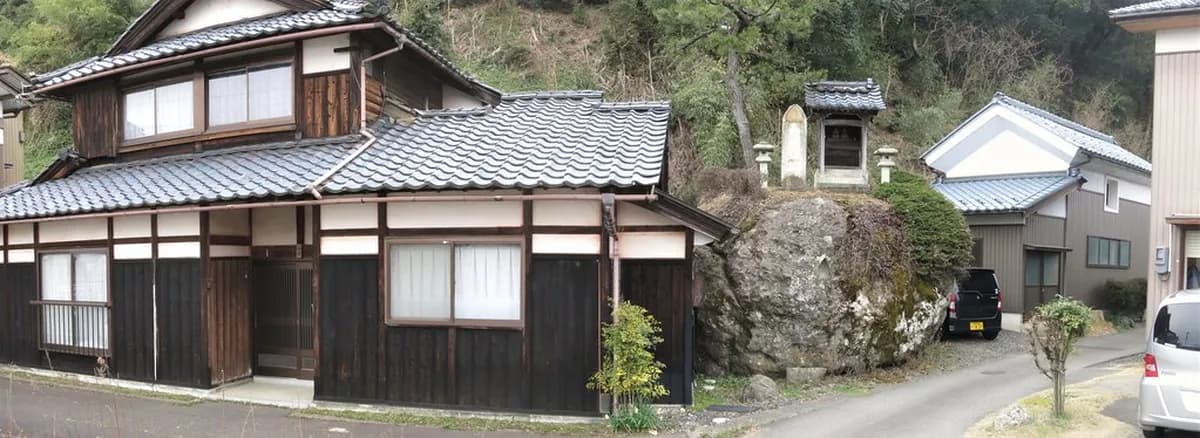
Gokayama Travel Guide: Visiting Japan's Hidden Gassho Villages
Discover Gokayama, Japan's quiet UNESCO gem. Compare Ainokura vs. Suganuma, learn about gassho-zukuri architecture, and plan your trip from Kanazawa.
On this page
Nestled deep within the rugged mountains of Toyama Prefecture, Gokayama offers a serene journey back to old Japan. This UNESCO World Heritage site remains significantly quieter than its famous neighbor, Shirakawa-go, providing a more intimate look at rural life. Travelers often find that the smaller hamlets of Ainokura and Suganuma feel like living museums where history is still very much alive.
The region is celebrated for its iconic gassho-zukuri farmhouses, which feature steep thatched roofs designed to withstand heavy winter snow. These structures represent a remarkable feat of traditional engineering, built entirely without the use of metal nails. Visitors can explore these architectural marvels while enjoying the lush greenery or pristine snowscapes of the Shō River valley.
Planning a trip here requires a bit more effort than visiting standard tourist hubs, but the rewards are well worth the travel. You will discover a world of hidden history, from secret gunpowder production to ancient papermaking techniques. This guide covers the logistics, seasonal highlights, and cultural details you need to make the most of your time in these secluded villages in 2026.
Why Visit Gokayama: The Quiet Alternative to Shirakawa-go
Shirakawa-go's Ogimachi village draws over 2 million visitors a year to its roughly 180 gassho-zukuri houses — more tourists per capita than Venice. Gokayama offers the same UNESCO-listed architecture with a fraction of that traffic. On a weekday in January you might share Ainokura with just one or two other visitors, and Suganuma with a handful.
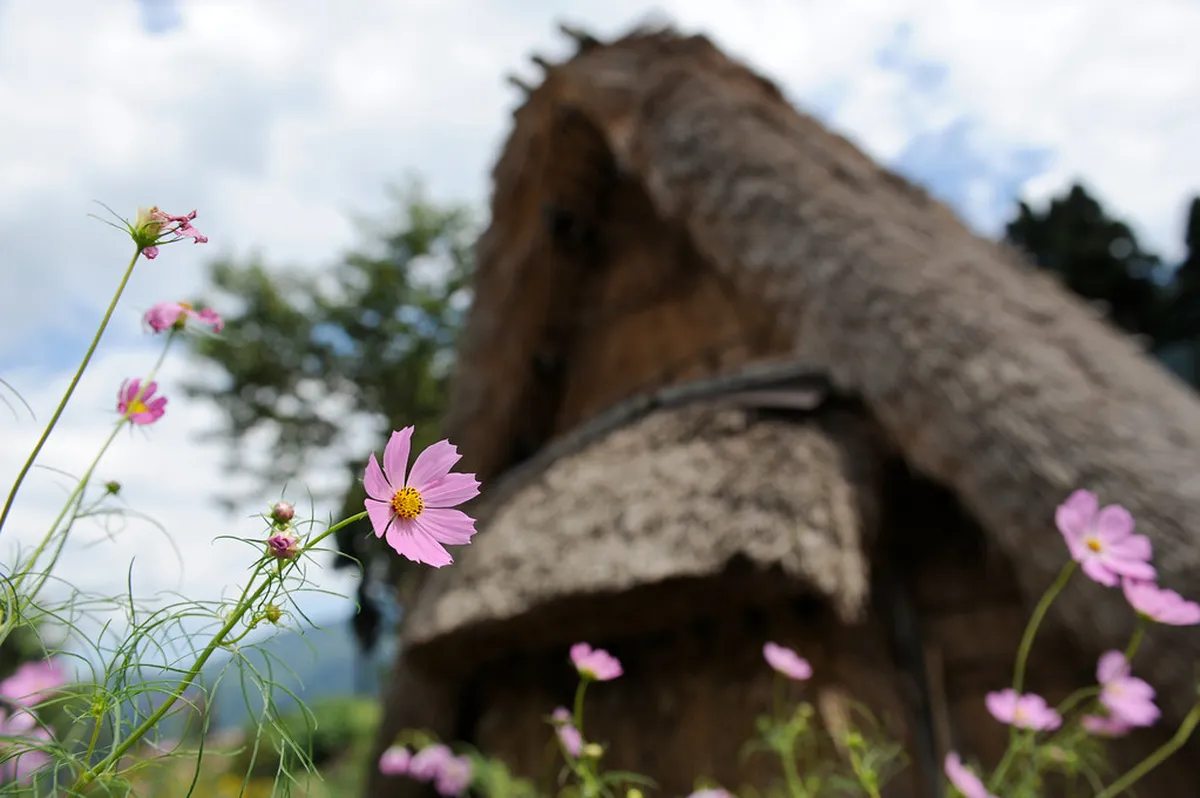
The practical differences are significant. Shirakawa-go has large parking lots, tour-bus facilities, and restaurants designed for mass tourism. Ainokura and Suganuma retain only a few small guesthouses, two modest museums each, and a handful of local craft shops. That simplicity is the point. You can walk the paths at your own pace, stop to photograph the farmhouses without crowds in the frame, and hear the river rather than public-address announcements.
Choosing between the two UNESCO zones is less an either/or and more a question of time. Exploring the Shirakawa-go attractions is a worthwhile half-day; add Gokayama and you have a full, rewarding itinerary. Many travelers combine a Kanazawa to Shirakawa-go day trip with an overnight in Ainokura to experience the contrast in a single sweep.
The History and Secluded Origins of Gokayama
The history of this region is defined by its extreme geographic isolation and the resilience of its people. Legend holds that the first settlers arrived in 1182 as war refugees — remnants of the Taira clan seeking refuge after their defeat in the Genpei War. They adapted to the harsh mountain environment by developing unique survival strategies and industries that would sustain the valleys for centuries.
During the Edo period, the area's remoteness made it an ideal location for a penal colony. High-ranking individuals who committed lesser political crimes were exiled to these mountains, where the deep snow acted as a natural prison wall. The local rulers deliberately forbade the construction of bridges in and out of Gokayama, reinforcing the isolation. Before modern bridges were built, the only way to cross the Shō River was the kagowatashi — precarious ropeway baskets suspended above the gorge. You can still hear about this transport system in local folklore and traditional songs.
The isolation created a paradox: it also gave the villages the secrecy they needed to run restricted industries without outside interference. Because the shogunate could not easily monitor the hamlets, Gokayama became one of Japan's rare sources of nitre for gunpowder and a hub of clandestine washi paper production. This hidden economic activity generated enough wealth to build the elaborate, multi-story farmhouses that survive today.
Exploring the Hamlets: Ainokura vs. Suganuma
Ainokura is the larger of the two UNESCO hamlets, with around 20 gassho-zukuri farmhouses and roughly 40 permanent residents. Active agricultural fields sit between the historic buildings, giving the village a genuinely lived-in feel. A short hillside trail behind the parking office leads to a viewpoint overlooking the entire settlement — five minutes of climbing for the most photographed view in Gokayama.
Suganuma sits in a more compact riverside setting with just 9 gassho-style houses. Its layout makes a complete exploration possible in under an hour, which suits travelers on a tight schedule. Despite the smaller footprint, Suganuma holds two excellent museums: the Gokayama Folklore Museum (set inside an actual gassho farmhouse) and the Saltpeter House Museum, which documents the village's gunpowder-ingredient production. A combined ticket for both Suganuma museums costs ¥400 for adults and ¥200 for students. Just next to Suganuma is Gassho no Sato, a cluster of relocated farmhouses used today for school cultural programs rather than residents — worth a brief detour for the ghost-town atmosphere.
The table below captures the key differences to help you plan your time between the two villages.
| Feature | Ainokura | Suganuma |
|---|---|---|
| Gassho houses | ~20 | 9 |
| Permanent residents | ~40 | A few families |
| Viewpoint hike | 5 min trail behind parking | Observation deck near parking |
| Museums | Traditional Industry Museum (¥500), Yusuke Exhibition Hall (¥500) | Folklore Museum + Saltpeter House (combined ¥400) |
| Overnight stays | Yes — 6 minshuku options | No minshuku; Gassho no Sato groups only |
| Parking fee (2026) | ¥1,000 / day (8:30–17:00) | ¥1,000 / day (8:00–17:00 Apr–Nov) |
| Best for | Overnight stays, long walks | Quick photography, industrial history |
The Unique Architecture of Gassho-zukuri Houses
The term gassho-zukuri translates to "constructed like hands in prayer," referring to the steep 60-degree pitch of the roofs. This design is not merely aesthetic; it is a functional necessity for shedding several meters of snow that accumulate each winter. The roofs are thatched with pampas grass and must be entirely replaced every 15 to 20 years — a task the community completes in a single coordinated workday through the traditional practice of yui, or mutual labor exchange.
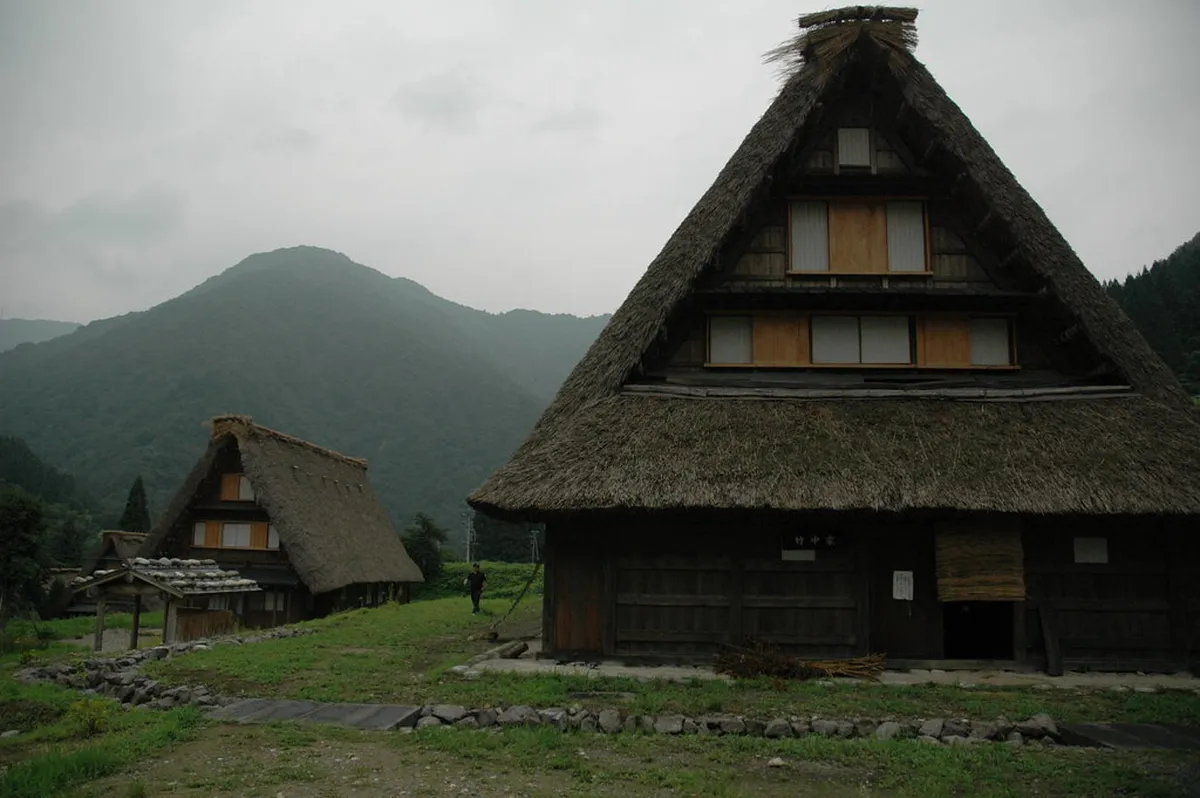
A defining characteristic of these houses is the complete absence of metal nails in the structural frame. Builders use complex joinery and rope-lashing techniques to bind the massive wooden beams together. This flexibility allows the frames to sway slightly during earthquakes or strong winds, preventing catastrophic collapse. All houses were deliberately oriented along the north-south axis of the valley, minimizing wind load against the broad gable faces.
The upper floors were traditionally used for cultivating silkworms, the region's main source of income before gunpowder and washi took over. Heat rising from the irori sunken hearth on the ground floor kept the worms at the right temperature through the wooden slats above. The irori also serves a structural function: smoke from the hearth, kept burning 24 hours a day, drives moisture out of the thatch and reduces the risk of rot and pest infestation.
Visitors can enter several of these homes to see the massive timber frames up close. The Ainokura Folklore Museum provides a detailed look at household tools and daily items, while the Yusuke Exhibition Hall lets you view the thatched roof structure from inside on the third floor. Walking through these spaces offers a tangible connection to the ingenuity of Japan's mountain ancestors.
Gassho-zukuri roofs are entirely rebuilt every 15 to 20 years in a coordinated village event called yui, or mutual labor exchange. The 60-degree roof pitch is not decorative—it sheds several meters of winter snow that would otherwise collapse the structure. Complex joinery (no metal nails) allows the frames to flex during earthquakes.
Fire Suppression and Community Resilience
The greatest existential threat to Gokayama's farmhouses has never been snow — it is fire. Thatched roofs dry out between rainy seasons and a single spark can travel quickly from house to house. Ainokura has addressed this with a gravity-fed reservoir above the village that supplies a network of fire hydrants and water cannons throughout the settlement. When triggered, these cannons can spray the rooftops before a fire spreads.
The human side of the system is equally serious. Villagers organize daily fire patrols to identify risky behaviors: unauthorized smoking near the buildings, open flames, and improperly stored fuel. Periodic village-wide fire drills ensure the hydrant system is tested and that residents know their roles. During drought periods, the cannons are activated preemptively to keep the dry thatch damp enough to resist ignition.
This is a detail worth knowing before your visit. Smoking is strictly prohibited anywhere near the farmhouses, and there are designated smoking areas at a safe distance from all structures. The community's vigilance is part of what earned UNESCO recognition — these are not merely preserved buildings but actively managed heritage sites where the residents themselves are the custodians.
Fire is the greatest threat to the thatched farmhouses. Smoking is strictly prohibited anywhere near the buildings—violating this rule endangers centuries-old structures. During winter, paths can be icy and visibility limited by snow. Wear appropriate winter footwear and move carefully through the village.
Traditional Industries: Washi Paper and Nitre Production
Gokayama's survival depended on its ability to produce high-value goods that could be transported out of the mountains through the kagowatashi ropeway baskets. Handmade washi paper became a cornerstone industry, utilizing the exceptionally clear mountain water and locally harvested mulberry bark. The Traditional Industry Museum in Ainokura explains the full papermaking process, and washi workshops are available at Gokayama Washi no Sato at Roadside Station Taira, 7.5 km from Ainokura, for a hands-on souvenir experience.
The production of nitre — saltpeter, the oxidizing agent in gunpowder — was Gokayama's most secretive and lucrative trade. The process involved fermenting organic waste beneath the floors of the farmhouses over many months. Because the shogunate tightly controlled gunpowder supplies, production in an inaccessible mountain village was both strategically useful and deliberately hidden. Suganuma's Saltpeter House Museum documents this dangerous industry with original tools and explanatory displays.
These industries explain an apparent paradox: why such large, elaborate houses were built in a terrain with almost no arable farmland. The wealth generated from nitre and washi funded construction that ordinary subsistence farming never could have supported. Even today, local artisans continue washi production, ensuring that the spirit of Gokayama's industrial heritage remains part of its living culture rather than purely a museum exhibit.
Imperial Patronage and Cultural Identity
Ainokura carries a quiet distinction that most visitors walk past without knowing. In 1978, Emperor Naruhito — then Crown Prince and a student at Gakushuin University — spent several nights in the village as part of a rural immersion program. Sixteen years later he composed a poem commemorating the visit and praising Gokayama's beauty. That poem is now inscribed at the Jinushi Shrine (相倉地主神社) in the center of Ainokura. In 2019, a stone pillar was added to celebrate his ascension to the Chrysanthemum Throne. The Yusuke Exhibition Hall displays a photograph of a young, visibly delighted Naruhito standing in front of a gassho house — an image that offers an unexpectedly personal connection to the village's history.
Gokayama also has notable international heritage ties. The region has formal cultural exchange relationships with overseas communities that share UNESCO World Heritage status for vernacular architecture. These connections, while less visible to the day-tripper, have helped fund preservation programs and bring international conservation expertise to the maintenance of the thatched roofs.
The traditional performing arts of Gokayama have survived alongside the farmhouses. Kokiriko, considered one of Japan's oldest folk dances, originates from this region and is performed with bamboo clappers at local festivals. Hearing it performed in an Ainokura courtyard, surrounded by working farmhouses and no tour-bus commentary, is the kind of experience that explains why people return to Gokayama rather than simply ticking it off a list.
Best Time to Visit Gokayama: Seasonal Highlights
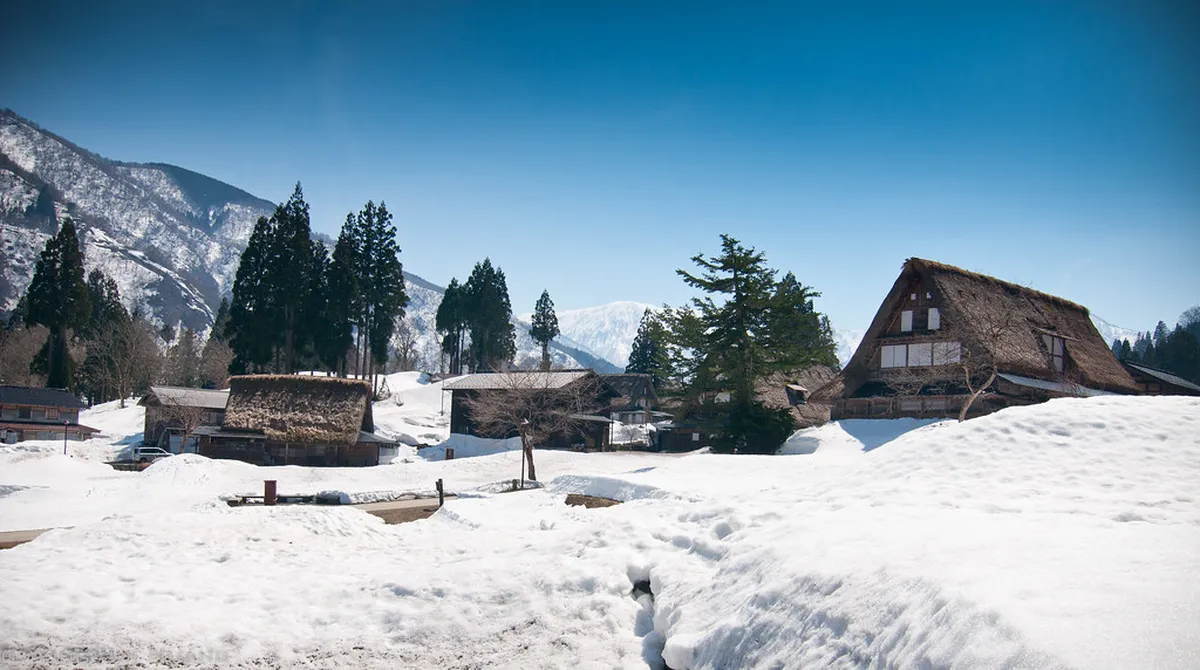
Winter is the iconic season, but timing matters more than simply booking a January trip. Early December is often underwhelming — snow begins but melts before it accumulates. The magic begins in mid-January, when heavy snowfall buries the farmhouses to their first-floor windows and the landscape takes on the appearance travelers see in photographs. February is the most reliable month for deep snow cover and the coldest temperatures. Both villages hold illumination events in February: Suganuma lights up in early February, and Ainokura on 21–22 February 2026. These events are far more accessible than the famous Shirakawa-go winter light-up, which requires advance timed reservations. If you plan to attend, check the Shirakawa-go winter light-up dates at the same time and coordinate the two visits.
Spring arrives late in these mountains. Snow patches persist into March, and cherry blossoms typically reach the valley in mid to late April. By May, the rice paddies fill with water that mirrors the farmhouse silhouettes — one of the quieter but more beautiful photographic opportunities of the year. Autumn, from late October to early November, brings peak foliage in brilliant reds and golds from the surrounding maple forests, making it the best time to visit for those who prioritize color and comfortable walking temperatures.
| Season | Highlights | Drawbacks |
|---|---|---|
| Jan–Feb (Winter) | Deep snow, illumination events, iconic scenery | Coldest temps; icy paths; some buses reduced |
| Apr–May (Spring) | Cherry blossoms, rice paddy reflections | Muddy paths after snowmelt in early April |
| Jun–Aug (Summer) | Lush green valleys, cool escape from city heat | Rainy season Jun–Jul; mist can obscure views |
| Oct–Nov (Autumn) | Peak foliage, comfortable weather, harvest events | Busiest non-winter crowds |
How to Get to Gokayama Villages
There are no direct train lines to the villages. The Kaetsunou "World Heritage Bus" is the primary public-transport option and runs along Route 156 connecting Shin-Takaoka Station (on the Hokuriku Shinkansen) with Shirakawa-go, Suganuma, and Ainokura. There are only 5 buses per day in each direction, so planning your schedule in advance is essential.
- From Shin-Takaoka Station: take the World Heritage Bus from the south exit. Journey time to Suganuma is about 1 hour 20 minutes (¥1,200 one-way); to Ainokura about 1 hour (¥1,000 one-way). The JR Pass covers the Shinkansen leg to Shin-Takaoka but not the bus.
- From Kanazawa: a highway bus runs directly to Shirakawa-go in about 75 minutes, from where you transfer to the World Heritage Bus (30 min to Suganuma, 45 min to Ainokura). One-way bus fares from Shirakawa-go: ¥1,300 to Suganuma, ¥1,000 to Ainokura.
- By car: renting in Kanazawa or Toyama gives you the most flexibility. Driving time from Kanazawa is roughly 90 minutes on Route 156. In winter, winter tyres are mandatory and confidence on snowy mountain roads is essential. Both villages have pay parking at ¥1,000 per day; private cars are not permitted inside the villages themselves.
- Bus passes: if you plan to visit both Shirakawa-go and Gokayama, the World Heritage Bus multi-day passes save money. Check the Kaetsunou Bus Routes & Schedules for current pass options and the winter timetable, which reduces frequency on some days.
- From other hubs: the Shirakawa-go from Nagoya highway bus connects to Shirakawa-go, from where the World Heritage Bus continues to Gokayama. Always confirm the last return departure — missing it means a taxi back to Takaoka.
Practical Travel Tips: Where to Stay and Nearby Kanazawa
Staying overnight in Ainokura is the single most rewarding upgrade to a Gokayama trip. Six minshuku (family-run guesthouses) operate within the village, all inside working gassho-zukuri farmhouses. Rates typically run ¥11,000–14,000 per person including dinner and breakfast; most add a ¥500 heating surcharge from November through May. One high-end option, Shoshichi, runs ¥33,000 per person. Bookings go through the Gokayama Tourist Information Center (mail@gokayama-info.jp) or directly with individual inns — most accept only one-night stays, so plan accordingly. Suganuma has no minshuku within the village; Gassho no Sato next door offers group accommodation for 10–16 people.
An overnight stay means you eat dinner at the irori hearth — typically grilled rockfish, wild mountain vegetables, and the region's famously firm Gokayama tofu. It also means you have the village to yourself after the day-trippers leave on the last bus. Morning light on snow-covered rooftops, with no other visitors present, is the image travelers remember longest.
If you prefer more modern comforts, Kanazawa serves as an excellent base. You can enjoy the city's famous gardens and samurai districts before taking an early bus into the mountains. For those traveling by campervan, Roadside Station Kamitaira (14 km from Ainokura, 4 km from Suganuma) is a quieter overnight option with views of the Sho River.
A few practical notes: entry to both villages is free. No rubbish bins are provided — carry a bag for your waste. Dining options are limited to two small restaurants in each village (open 09:00–17:00 approximately), so eat a proper meal before arriving or rely on your inn. Check the Shirakawa-go Tourist Association for regional event updates and closures. Tourists are not permitted to drive inside either village; use the designated car parks.
Frequently Asked Questions
Is Gokayama better than Shirakawa-go for avoiding crowds?
Yes, Gokayama is significantly quieter and receives far fewer tour groups than Shirakawa-go. This makes it the ideal choice for travelers seeking a peaceful, authentic atmosphere. You can enjoy the Shirakawa-go itinerary highlights without the overwhelming foot traffic found in the larger Ogimachi village.
How do you get from Kanazawa to Gokayama?
The most convenient way is by taking a highway bus from Kanazawa Station, which takes about an hour. Alternatively, you can take the Shinkansen to Shin-Takaoka and transfer to the World Heritage Bus. Renting a car provides the most flexibility for visiting both Ainokura and Suganuma hamlets.
Can you stay overnight in a gassho-zukuri house in Ainokura?
Several farmhouses in Ainokura operate as minshuku, or traditional family-run inns. These stays offer a unique opportunity to eat local mountain vegetables and sleep in a historic UNESCO building. It is essential to book these accommodations months in advance due to very limited capacity.
What is the best month to see snow in Gokayama?
January and February are the best months for deep, consistent snow cover in the villages. During this time, the farmhouses are often buried up to their first-floor windows, creating a stunning winter wonderland. Be prepared for freezing temperatures and ensure you have appropriate winter footwear for walking on icy paths.
Are there entrance fees for the Gokayama villages?
There is no fee to enter the villages themselves, but parking fees apply for those arriving by private car. Most individual museums and historic houses open to the public charge a small admission fee, usually between 300 and 600 yen. These fees help support the ongoing preservation of the thatched roofs and historic structures.
Gokayama remains one of Japan's most rewarding hidden gems for those willing to venture off the beaten path. Its combination of unique architecture, deep-seated history, and peaceful atmosphere creates a travel experience that is both educational and soul-stirring. Whether you are exploring the museums of Suganuma or staying overnight in Ainokura, the memories will last a lifetime.
By choosing to visit these smaller hamlets, you are also supporting the preservation of a fragile and beautiful way of life. The dedication of the local residents to maintaining their traditions in the face of modernity is truly inspiring. Plan your journey today to witness the timeless beauty of the gassho-zukuri villages for yourself.
As you leave the Shō River valley, you will carry with you a deeper understanding of Japan's rural heritage. The quiet strength of the mountain people and the ingenuity of their homes offer a powerful contrast to the neon lights of the cities. Gokayama is not just a destination; it is a window into a resilient and fascinating past.
Free guide: Japan's Hidden Gems
12 under-the-radar places beyond Tokyo & Kyoto — with the best season to visit each and a local tip you won't find in the guidebooks.
You might also like


Continue reading
More guides you'll find useful