

Fukuoka Yatai Food Guide: Best Stalls, Districts, and Etiquette Tips
Navigate Fukuoka's yatai stalls in Nakasu, Tenjin, and Nagahama with etiquette tips, must-try dishes, and 2026 pricing advice.
On this page
Fukuoka Yatai Food Guide: Districts, Dishes, and Etiquette
Last updated July 2026. This Fukuoka yatai food guide breaks down the city's open-air stalls by district, price, and etiquette for first-time visitors. Fukuoka's yatai are compact, canvas-covered stands that seat only 8 to 10 people, clustered along the Naka River in Nakasu, around Tenjin, and near Nagahama. Each district delivers a different night out, from riverside photo stops in Nakasu to quieter, ramen-focused counters in Nagahama.
Free: The Fukuoka Essentials guide
Top things to do, where to stay, a perfect day plan, getting around, and the best time to go — a Fukuoka mini-guide you can take offline.
What Are Yatai? Fukuoka's Open-Air Food Stalls Explained
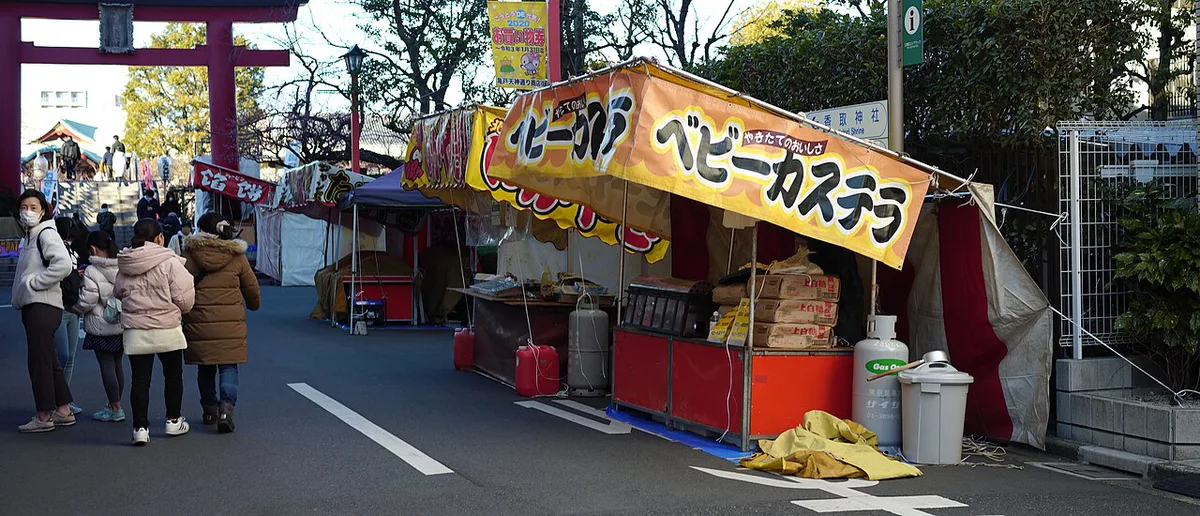
Yatai are small, canvas-sided food carts that set up on Fukuoka's sidewalks and riverbanks after dark. Each stall seats roughly 8 to 10 people on stools pulled up to a narrow counter. Its cook, known as the taisho, works just an arm's length away. Fukuoka's official tourist guide counts over 100 stalls operating across the city, most concentrated in three districts covered below. The format dates back to the postwar years, when open-air stalls offered an affordable way to serve hot food. It has stayed a nightlife fixture ever since. Sitting down at a yatai means sharing a counter with strangers and trading small talk with the taisho. Ordering enough to justify the seat is part of the unwritten deal. For a wider view of the city's food beyond the stalls, the Fukuoka food guide covers restaurants and markets too.
Your Fukuoka Yatai Food Guide to the Three Districts
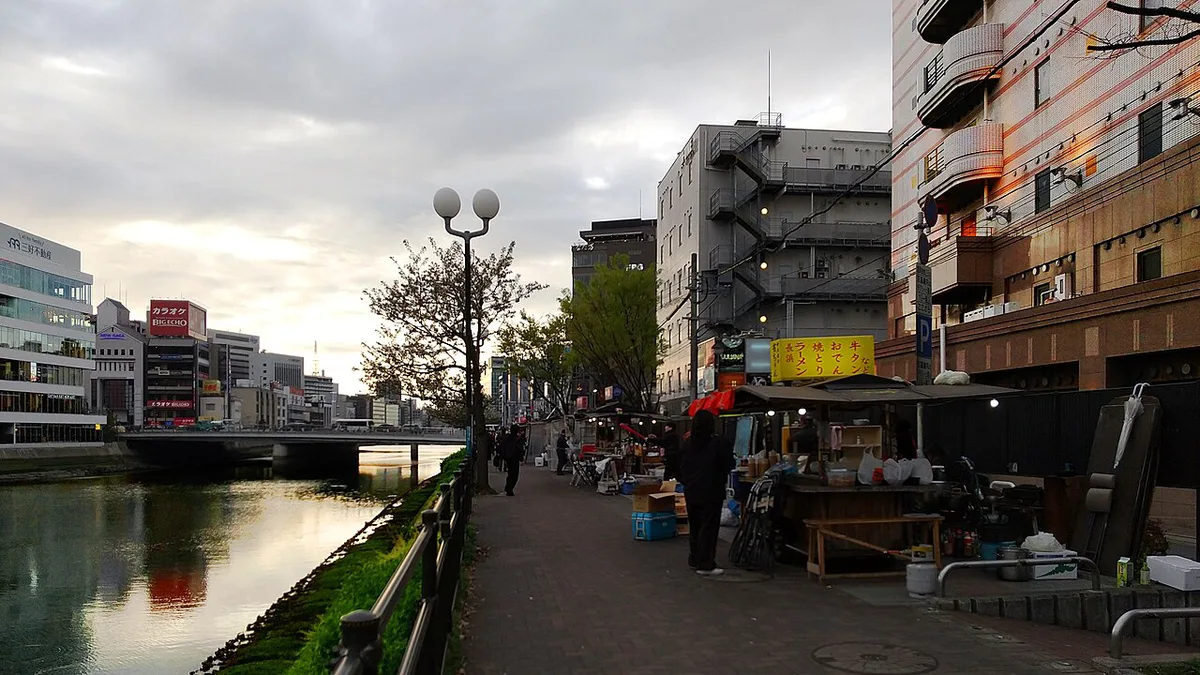
Three areas hold most of Fukuoka's yatai, and each delivers a different night. Nakasu sits along the Naka River and draws the heaviest foot traffic, with around 20 stalls lined up on the riverside strip. Tenjin's stalls cluster near the department stores and pull a more local, after-work crowd. Nagahama's cluster sits near where Hakata-style ramen itself started, drawing purists who want ramen over spectacle. The Fukuoka Neighborhoods Guide Where To Go Travel Guide maps where each district sits relative to Hakata Station and central Tenjin. Summer travelers should also check the riverside nightlife and seasonal yatai guide for warm-weather seating notes along the Naka River. Nakasu rewards travelers who want the classic riverside scene: stools facing the water, reflections off the neon signs, and the heaviest tourist presence of the three districts. You should expect to wait for a seat on weekend nights, and expect seafood-heavy stalls to run pricier than a Tenjin counter serving the same beer. Tenjin trades some of that scenery for practicality, since its stalls sit closer to shopping and office towers. That means more regular local customers and a wider spread of menus beyond ramen and yakitori. For travelers weighing value over atmosphere, this is the district most local write-ups point to first. Nagahama keeps things closest to the source, since this is where Hakata-style tonkotsu ramen first took hold. Stalls here lean into that history with a shorter, ramen-forward menu. It is also the quietest of the three, with a more industrial backdrop than Nakasu's riverside strip. Near Nagahama, one travel account paid ¥4,800 for skewers, whole squid, octopus, and two draft beers at a single seafood-focused stall. A bowl of Hakata ramen at a nearby Nagahama restaurant cost about ¥500 the same night, a useful reminder that yatai pricing can run well above sit-down restaurants close by.
| District | Crowd & Access | Typical Price Level | Vibe |
|---|---|---|---|
| Nakasu | Busiest of the three; riverside stalls in central Nakasu | Higher — seafood plates and drinks add up fast | Riverside, most photographed, longest queues |
| Tenjin | Moderate; near department stores and office towers | Better value, wider menu variety | Local, after-work crowd |
| Nagahama | Quietest; industrial backdrop, ramen-focused | Budget-friendly, especially ramen bowls | Purist, birthplace-of-ramen atmosphere |
Nine Must-Try Dishes at Fukuoka's Yatai Stalls
Most yatai menus repeat a familiar lineup, though individual stalls specialize. You'll find these nine dishes most often across Nakasu, Tenjin, and Nagahama stalls.
- Hakata Ramen — thin, straight noodles in a milky tonkotsu pork-bone broth, the dish most yatai are built around.
- Mentaiko — spicy, marinated cod roe, often grilled or folded into a rolled omelet at the counter. The mentaiko tasting and shopping guide covers where to buy it to take home.
- Hitokuchi Gyoza — bite-sized pan-fried dumplings, crisp on the bottom, served with a soy-vinegar dip. The Hakata Udon and Gyoza Guide: Fukuoka's Original Noodle Culture goes deeper on the city's dumpling and noodle shops.
- Yakitori — grilled skewers, including chicken thigh and kawa, or crisped chicken skin, cooked over an open flame.
- Oden — a simmered dashi hot pot with fish cakes, daikon, and eggs, a cold-weather order at many stalls.
- Motsunabe (small portion) — a stall-sized version of the offal hot pot, simmered with cabbage, garlic chives, and chili in a soy or miso broth. The motsunabe and mizutaki hot pot guide breaks down the full-size versions served at dedicated restaurants.
- Tetsunabe Gyoza — dumplings finished in a cast-iron skillet for a heavier, more browned crust than the standard hitokuchi style.
- Mizutaki — a lighter chicken hot pot, simmered in water and dipped in ponzu, sometimes offered as a stall-sized portion.
- Yatai-style Tempura — seafood and vegetables fried to order, best eaten hot off the stall's burner. Much of that seafood traces back to the Yanagibashi Rengo market, Fukuoka's wholesale fish market.
Yatai Etiquette: Five Rules to Avoid Tourist Mistakes
Yatai run on unwritten rules that regulars know by habit. None are complicated, but skipping them is the fastest way to feel like an outsider at the counter.
With 8 to 10 stools per stall and hours running from 6:00 PM to roughly 2:00 AM, fast turnover isn't just polite—it's a practical necessity of the setup.
- Order at least one drink — every seat is expected to carry at least one drink order, even if you're mainly there for food.
- Expect to move over — seating is 8 to 10 stools tight against the counter, so budge up when new guests arrive.
- Don't linger for hours — eat, drink, and clear your seat within a reasonable stretch so the next guest can sit down.
- Carry cash — most stalls are cash-only, and a few post no prices at all, so check for a displayed menu before you order.
- Watch the weather — stalls can close on short notice in heavy rain or high wind, so keep a backup plan for stormy nights.
Yatai Hours, Budget, and Avoiding Overcharging
Most stalls open around 6:00 PM and stay open until roughly 2:00 AM, though hours vary stall to stall. Many close one day a week, often Sunday, so treat any single stall's schedule as unconfirmed until you arrive. Budget somewhere between ¥2,000 and ¥4,000 per person for a full round of food and drinks at one or two stalls. Travel accounts that have tracked yatai pricing report bills running roughly 1.5 to 2 times higher than a comparable restaurant meal. Look for a stall with a menu that lists prices before you sit down, and tally your order as you go so the bill isn't a surprise. If you'd rather have fixed-menu pricing, the 12 Best Restaurants and Food Experiences in Fukuoka (2026) guide lists sit-down alternatives.
The Fukuoka Yatai Concierge and Planning Your Visit
Fukuoka runs a dedicated help desk for stall information. The Fukuoka Yatai Concierge desk operates from 08:00 to 21:30 inside the International Passenger Terminal Building, first floor. Staff there can point you toward stalls open that night and answer basic questions before you head out. Booking isn't part of yatai culture, since you can't reserve a stool. Plan to arrive early on weekends if a specific stall or district is your priority.
Daytime Stops Near the Yatai Districts
Stalls don't open until evening, which leaves the daytime free for sightseeing near the same districts. Ohori Park sits within reach of central Fukuoka, with a walking path of about 1.9 kilometers (1.2 miles) circling a central pond. Fukuoka Tower rises 234 meters (768 feet) near Momochi Beach and offers an observation deck over Hakata Bay. Canal City Hakata combines shopping and dining under one roof, an easy stop between a hotel check-in and the first stall of the night. For a fuller list of sights across the city, see the Fukuoka attractions guide. The Fukuoka travel guide covers broader trip planning beyond food.
How to Order and Join the Yatai Conversation
The counter conversation is part of the yatai experience, especially at smaller Tenjin and Nagahama stalls. Begin by checking the displayed menu and prices before taking a stool. If no English menu appears, point to a dish or ask, “Osusume wa nan desu ka?” This means, “What do you recommend?”
Order a drink and one or two dishes first. You can add food later if the stall is not crowded. The taisho prepares everything within view, so questions about ramen, skewers, or local ingredients can start an easy conversation. Simple phrases such as “sumimasen” for attention and “gochisousama deshita” after eating are appreciated.
Conversation often includes neighboring diners because everyone shares one narrow counter. Keep exchanges friendly and brief when a queue forms outside. In busy Nakasu, have cash ready and confirm the total before leaving. If the stall is quiet, the taisho may have more time to explain specialties. This social contact distinguishes yatai from an ordinary restaurant meal.
For trip-planning details, see Yatai - Wikipedia.
Frequently Asked Questions
How many yatai are in Fukuoka?
Fukuoka's official tourist guide puts the citywide count at over 100 stalls, concentrated mainly in Nakasu, Tenjin, and Nagahama. Some travel accounts cite figures closer to 150 when smaller, seasonal stalls are included, so treat any single number as an estimate rather than a fixed count.
Is it safe to eat at Fukuoka yatai?
Yatai are a normal, long-running part of Fukuoka's food scene, not a niche or risky choice. Stick to stalls with visible turnover and hot cooking in front of you, the same baseline check worth applying anywhere you eat street food. The main risks are practical rather than safety-related: cash-only payment, tight seating, and the chance a specific stall is closed for the night.
Are there vegetarian options at Fukuoka yatai?
Most yatai menus center on pork broth, offal, and grilled meat, so options are limited if you avoid animal products. A few stalls offer vegetable tempura or oden items like daikon that work for a pescatarian diet, but ask before ordering. For dedicated vegetarian and vegan choices elsewhere in the city, the vegetarian and vegan Fukuoka guide covers restaurants built around that need.
Why are yatai more expensive than some restaurants?
Each stall sets up and breaks down its counter, cooking equipment, and seating every single night, which adds labor cost a fixed restaurant doesn't carry. Limited seating also means slower turnover per stall. Travel accounts that have tracked pricing report yatai bills running roughly 1.5 to 2 times higher than a comparable sit-down meal, so budget accordingly.
Which district should first-time visitors choose?
In our editorial assessment, Tenjin offers the easiest first visit: more local customers, a wider menu spread, and generally better value than the riverside stalls in Nakasu. Nakasu still suits travelers who prioritize atmosphere over price. Nagahama suits anyone whose main goal is ramen.
Free: The Fukuoka Essentials guide
Top things to do, where to stay, a perfect day plan, getting around, and the best time to go — a Fukuoka mini-guide you can take offline.
You might also like



Continue reading
More guides you'll find useful


