

Mount Takao Budget and Vegetarian Food Guide
Find affordable and vegetarian-friendly Mount Takao food with realistic prices, hidden-dashi cautions, trail locations, temple meals, and packing tips.
On this page
Last updated August 2026. Budget and vegetarian food on Mount Takao is realistic once you know where fish stock hides and which vending machines to skip. Yakuo-in Temple's shojin-ryori is the reliable meat-free splurge, while soba shops and convenience stores near Takaosanguchi Station cover the low-cost end.
Budget and Vegetarian Food on Mount Takao: What to Expect
Mount Takao draws day-trippers who want scenery without a long drive. Its food scene splits into three price tiers: convenience-store snacks, trailside soba, and temple dining. Vegetarians face one recurring problem: dashi, a fish-based stock used in most soba broth and noodle sauces. For a wider look at the mountain's dining scene, see the Mount Takao food overview. This guide narrows in on what is actually meat-free and what it costs. Trail 1, the paved Omotesando route, carries almost every food stall and the temple itself, so most budget vegetarian planning starts there.
Typical Costs and Budgeting on Mount Takao
Keio Line fare from Shinjuku to Takaosanguchi Station runs about ¥430 each way; confirm the live route planner before travel. Food costs vary more than transport, from convenience-store snacks to a formal temple meal. The table prioritizes prices published by the operator or temple and treats other food spending as a planning range.
| Item | Typical Price | Notes |
|---|---|---|
| Keio Line, Shinjuku to Takaosanguchi (one-way) | ¥430 | Direct or via Kitano transfer, same fare |
| Cable car or chairlift | ¥490 one-way; ¥980 round-trip | Current adult fare; no round-trip discount |
| Convenience-store snack or rice ball | A few hundred yen | Buy at the station or in Shinjuku, not on the mountain |
| Tororo soba at Sumika | ¥1,100 regular; ¥1,400 large | Confirm dashi before treating it as vegetarian |
| Yakuo-in shojin-ryori | ¥3,300 or ¥4,400 | Book 2 days ahead; minimum 2 people |
| Mountain drinks and snacks | Varies by counter | Buy water before hiking and carry cash as backup |
- Buy bottled water and onigiri at Takaosanguchi Station or a Shinjuku convenience store before boarding the train.
- Carry snacks in rather than relying on summit vending machines.
- Treat the temple set meal as a planned splurge; regular courses require a reservation and a party of at least two.
- Check Keio's current discount-ticket page before travel instead of budgeting from an older bundle price.
Shojin-ryori at Yakuo-in Temple: The Vegetarian Splurge
Yakuo-in Temple sits just off Trail 1 below the summit and serves seasonal shojin-ryori cuisine by reservation. The current tax-inclusive courses are Tengu-zen at ¥3,300 and Takao-zen at ¥4,400. Call 042-661-1115 between 9:00 a.m. and 4:00 p.m. at least two days ahead; reservations start at two people and meal times run from 11:00 a.m. to 2:00 p.m. Discuss strict vegan needs or allergies during the call. A detailed Yakuo-in temple food guide explains the booking logistics.
Budget Vegetarian Picks and Snacks on the Trail
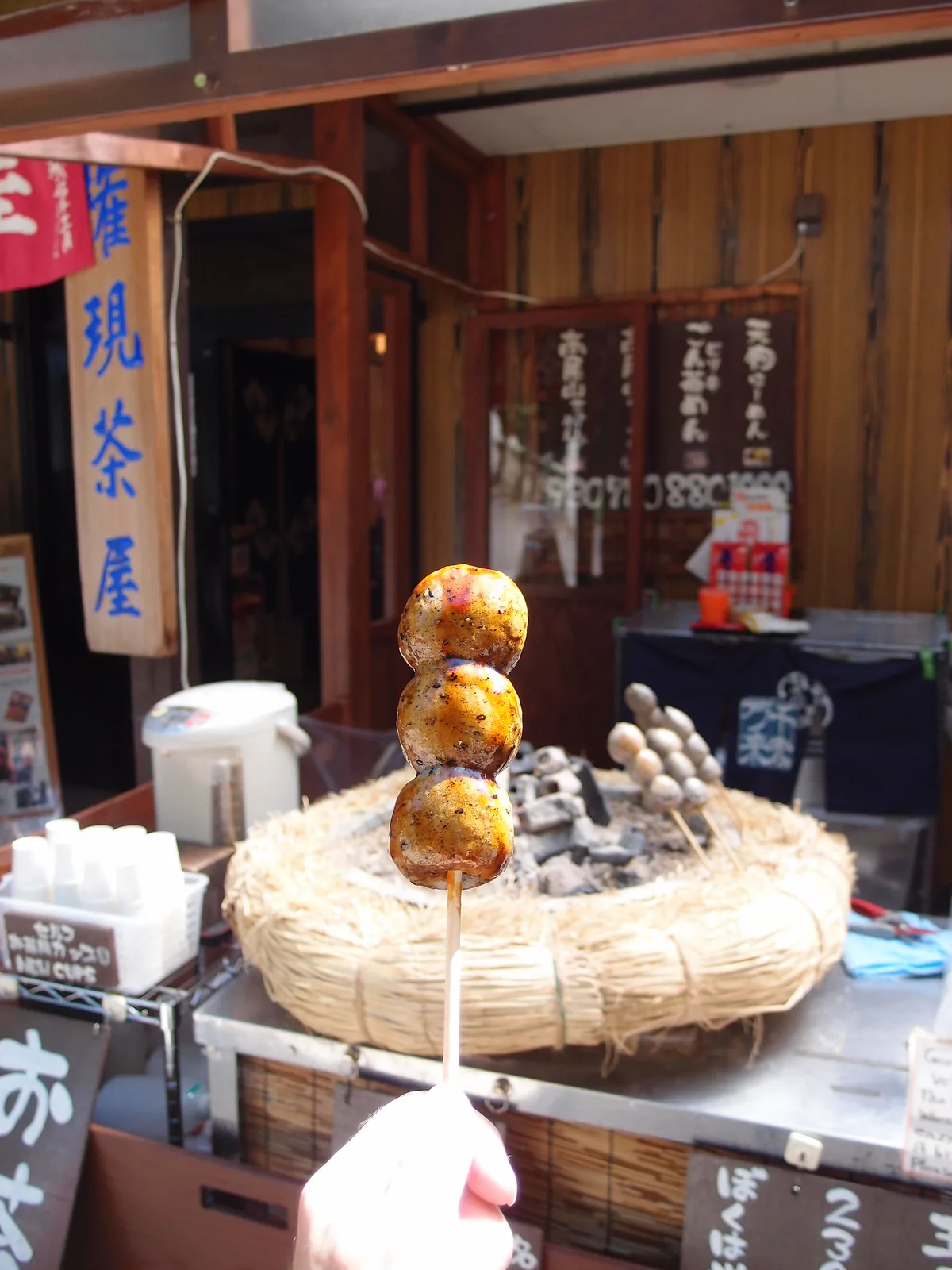
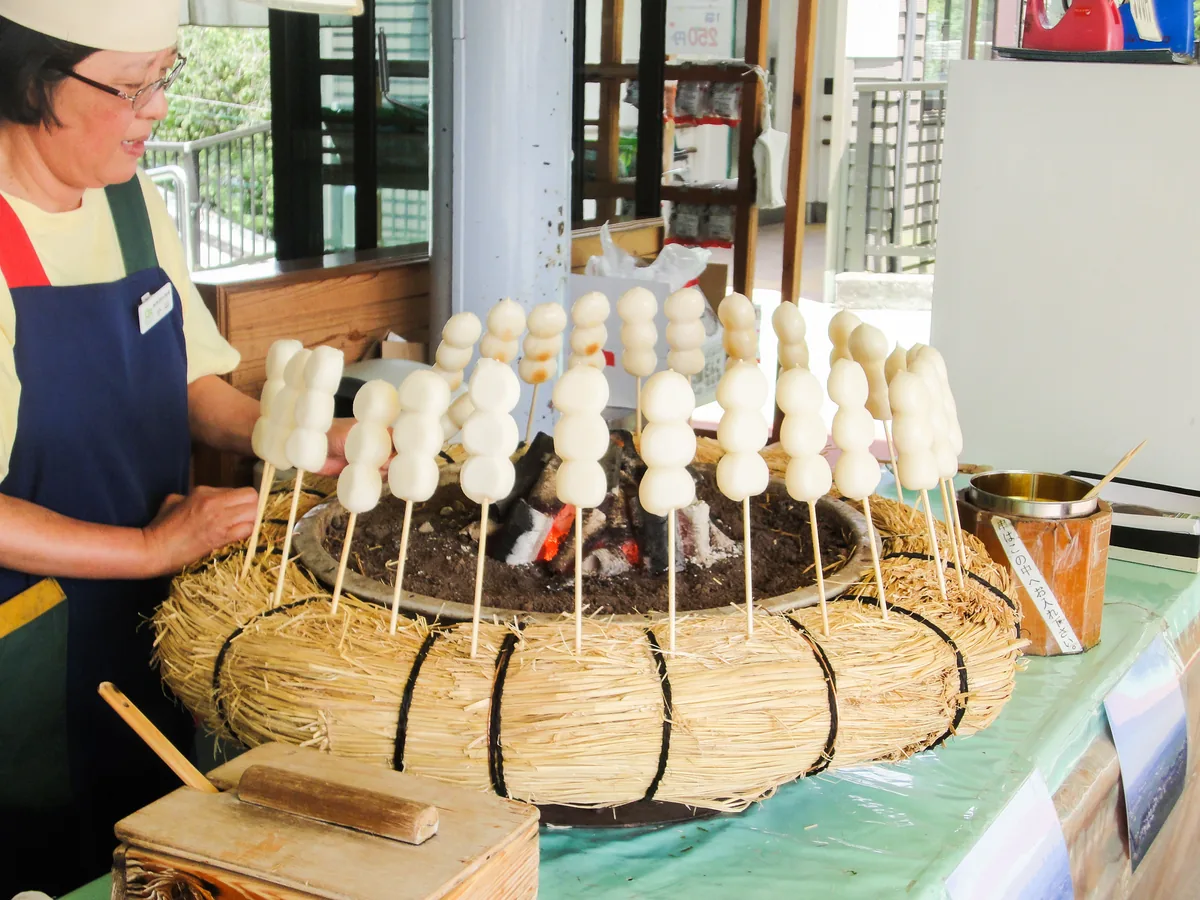
Tororo soba is the mountain's signature dish, but the noodles and yam do not make the full bowl vegetarian: the sauce commonly uses fish dashi. Ask whether the current broth is fish-free before ordering. Sumika ended its dedicated vegan menu in October 2025, so older vegan-soba recommendations there are stale. Tengu-yaki uses black-bean paste and Mitsufuku dango uses walnut miso, but strict dietary needs should still be checked at the counter. A dedicated tororo soba guide covers the dashi question, and the Tengu-yaki and sweets guide has current operator-published snack prices.
The Convenience Store Picnic Strategy
For the cheapest meal on the mountain, skip the restaurants and pack a convenience-store picnic instead. Chains such as FamilyMart and 7-Eleven, common around Takaosanguchi Station and throughout Shinjuku, sell onigiri, salads, and packaged snacks for a few hundred yen each. Check labels for bonito or fish extract, since it turns up in unexpected places like flavored rice balls and dressings. Two spots make good picnic stops. The Kasumidai Observation Deck, roughly midway up Trail 1, sits near the upper cable car and chairlift stations, and the summit itself has benches too. Both get crowded on weekends, so arrive early for a seat with a Tokyo view. One firm rule applies everywhere on the mountain: there are no trash cans on Mount Takao, so pack out every wrapper and bottle you bring in.
Temple Dining vs Summit Soba vs Convenience Store Picnic
Three approaches cover most budgets and dietary comfort levels. Temple dining is the most authentic and the most structured, since it needs a reservation and runs only at midday. Summit soba is the fastest hot meal, but it requires a direct question about the sauce. A convenience-store picnic gives the most control over ingredients, at the lowest cost of the three. Cost, authenticity, and dietary strictness line up side by side in the table below.
Temple meals require advance booking. Walk-up tororo soba is cheaper, but do not label it vegetarian until the shop confirms that day's broth is fish-free.
| Option | Typical Cost | Authenticity | Dietary Strictness |
|---|---|---|---|
| Yakuo-in shojin-ryori (temple dining) | ¥3,300 or ¥4,400 per person | Traditional Buddhist vegetarian cuisine with seasonal ingredients | Confirm strict vegan and allergy needs while booking |
| Trailside tororo soba | Sumika: ¥1,100 regular | The mountain's signature dish | Confirm fish-free broth before ordering |
| Convenience-store picnic | A few hundred yen per item | Not distinctly local, but consistent | Easiest to verify from printed ingredient labels |
Matching Food to Your Trail Choice
Trail choice determines how much food access you will have along the way. Trail 1 is the mountain's main food corridor, while Trail 6 runs through forest without the same line of stalls, so pack before starting quieter routes. Cable car and chairlift tickets cost ¥490 one-way or ¥980 round-trip for adults. Taking either up puts you near Kasumidai and Sumika, with Yakuoin further along Trail 1. Beer Mount's official 2026 season runs May 30 through November 29; the Beer Mount guide covers the date-specific hours and buffet caveats.
Late-Day Backups If You Miss the Temple Kitchen
Shojin-ryori service ends around 2:00 PM, so an afternoon arrival at Yakuo-in usually means no hot temple meal that day. Trailside soba shops stay open later than the temple kitchen, making them the most reliable backup if you show up after lunch. Confirm the sauce is dashi-free before ordering, the same as any other visit. A packed convenience-store snack works as a second backup, since it needs no kitchen hours at all. Lift timing matters for getting down safely. The chairlift's last ride runs around 4:00 to 4:30 PM depending on season, while the cable car continues later, generally until 5:00 or 6:00 PM. During the beer garden season, the cable car runs until 9:15 PM to match the evening crowd. Check same-day hours before you commit to a late ascent, since they shift with the season.
The cable car runs until 5:00 or 6:00 PM, or until 9:15 PM during beer-garden season, leaving ample time to descend and finish with an onsen soak at nearby Takaosan Onsen Gokurakuyu (¥1,100 weekdays, ¥1,300 weekends).
A Sample Budget Vegetarian Day on Mount Takao
This route strings together the cheapest reliable options in one loop, using the prices covered above.
- Take the Keio Line from Shinjuku to Takaosanguchi Station for ¥430 each way.
- Buy water and a rice ball at a station convenience store before you start walking.
- Walk Trail 1 toward the temple, stopping at a trailside stall for tororo soba.
- Ask if the dipping sauce is dashi-free, or request soy sauce only.
- Visit Yakuo-in Temple for a booked shojin-ryori set, or free grounds access if you did not reserve.
- Ride the cable car or chairlift to the Kasumidai Observation Deck for ¥490 one-way.
- Eat a packed picnic at the observation deck or the summit, since there are no trash cans to rely on.
- Finish at Takaosan Onsen Gokurakuyu near the station, where weekday entry costs ¥1,100, rising to ¥1,300 on weekends and during peak season.
How This Guide Was Verified
Prices, hours, and booking rules were checked on August 22, 2026 against official Takao Tozan Railway, Beer Mount, and Yakuoin information. Same-day schedules and food stock can change with weather.
Frequently Asked Questions
Can you eat vegetarian on Mount Takao without spending a lot?
Yes. A label-checked convenience-store picnic is the lowest-risk budget option. Tororo soba can work only if the shop confirms fish-free broth; Sumika ended its dedicated vegan menu in October 2025. The reserved temple courses cost ¥3,300 or ¥4,400 per person.
Is tororo soba on Mount Takao vegetarian?
Not automatically. Noodles and yam topping are plant-based, but the dipping sauce usually contains dashi, a fish-based stock. Ask staff whether the sauce is fish-free, or request soy sauce only, before you order.
Do you need a reservation for shojin-ryori at Yakuo-in Temple?
Yes. Call 042-661-1115 at least two days ahead. Regular bookings start at two people, calls are accepted from 9:00 a.m. to 4:00 p.m., and meals are served between 11:00 a.m. and 2:00 p.m.
How much does it cost to get to Mount Takao from Shinjuku?
Keio Line fare from Shinjuku to Takaosanguchi Station runs ¥430 each way. That fare applies whether you take the direct Semi-Special Express or the route that changes at Kitano.
Should you buy water before climbing Mount Takao?
Yes. Buying water before the trail gives you a known supply and avoids depending on a particular vending machine being available or stocked. Carry the empty bottle back because mountain waste facilities are limited.
What if you arrive at Mount Takao after 2:00 PM?
Shojin-ryori service at Yakuo-in Temple ends around 2:00 PM, so a hot temple meal is unlikely that late. Fall back to a trailside soba shop with a confirmed dashi-free sauce, or eat the convenience-store snacks you packed. Check the chairlift and cable car schedules too, since the chairlift's last ride is around 4:00 to 4:30 PM.
Free guide: Japan's Hidden Gems
12 under-the-radar places beyond Tokyo & Kyoto — with the best season to visit each and a local tip you won't find in the guidebooks.
You might also like


Continue reading
More guides you'll find useful


