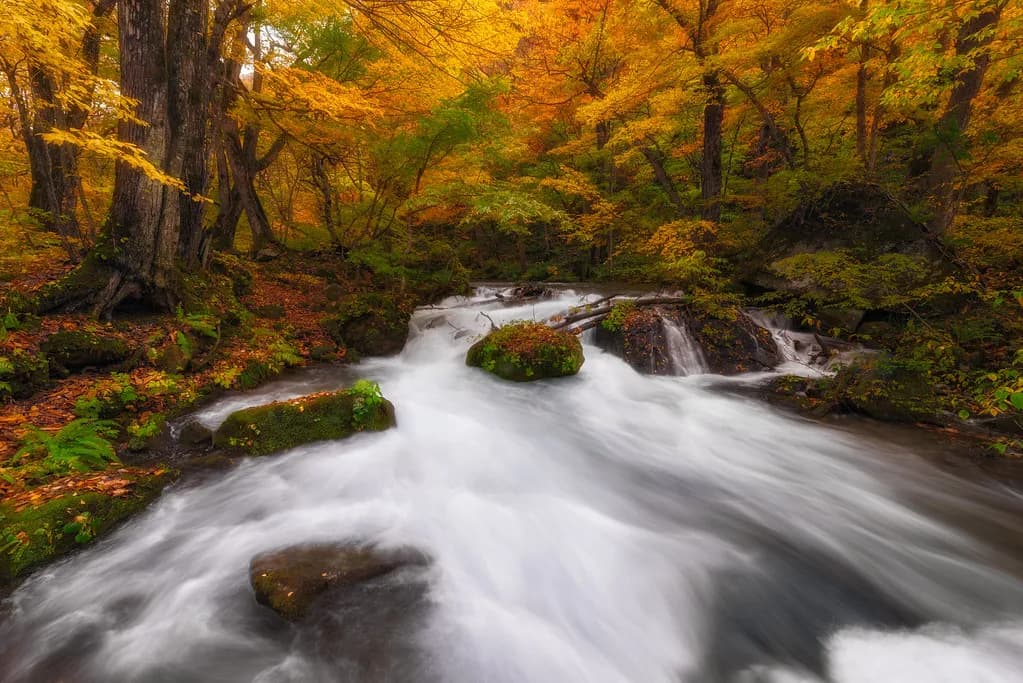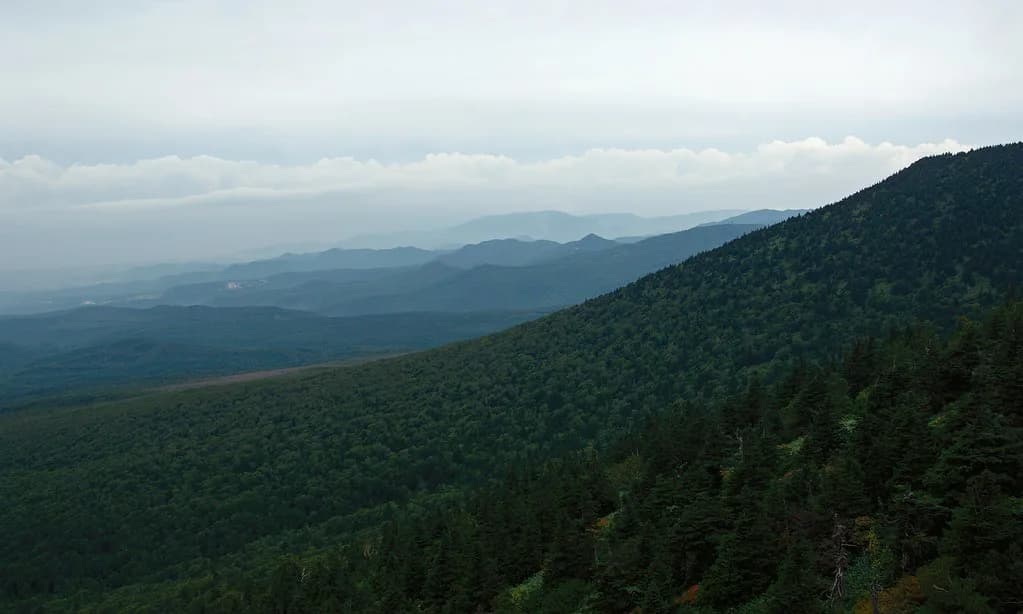
Hakkoda Mountains Travel Guide
Plan hakkoda mountains with top picks, neighborhood context, timing tips, and practical booking advice for a smoother trip.
On this page
The the Hakkoda mountains stand as a majestic volcanic range in the heart of Aomori Prefecture. Travelers flock to this region to experience some of the most dramatic seasonal shifts in Japan. Whether you seek frozen winter landscapes or lush summer hiking trails, these peaks offer endless adventure.
Planning a trip to this northern destination requires a solid understanding of the local geography and transit options. This guide provides everything you need to know about visiting the famous peaks, surrounding marshes, and historic hot springs. You will find practical tips for navigating the terrain and making the most of your time in 2026.
From the iconic ropeway to the remote Tashirotai wetlands, the area caters to hikers, photographers, and onsen enthusiasts alike. Exploring the Things To Do In Aomori near the mountains adds depth to any northern Japan itinerary. Get ready to discover the wild beauty of the Hakkoda range.
Useful resources: Japan Guide's Aomori page and Wikipedia's Aomori overview have up-to-date access and background details.
So, What Are the Hakkoda Mountains?
Hakkoda is not one single mountain. It is the collective name for 16 volcanic peaks, divided into a North Hakkoda group of 10 mountains and a South Hakkoda group of 6. The range is considered one of the 100 Famous Japanese Mountains, a prestigious designation that recognizes its beauty and cultural significance in Japan.
Mount Odake (大岳) is the highest peak in the range, reaching an altitude of 1,585 meters above sea level. The entire area sits within the Towada-Hachimantai National Park, which protects its diverse alpine ecosystem. Current volcanic activity is mild, similar to the nearby Mt. Iwaki, making the mountains safe for year-round recreation.
The Northern Hakkoda Mountains receive most of the tourist development: the ropeway, onsen ryokans, and hiking trailheads are all in this zone. When people say they are visiting the Hakkoda Mountains, they almost always mean the Northern group. The Southern Hakkoda Mountains remain largely undeveloped and difficult to access without specialist equipment.
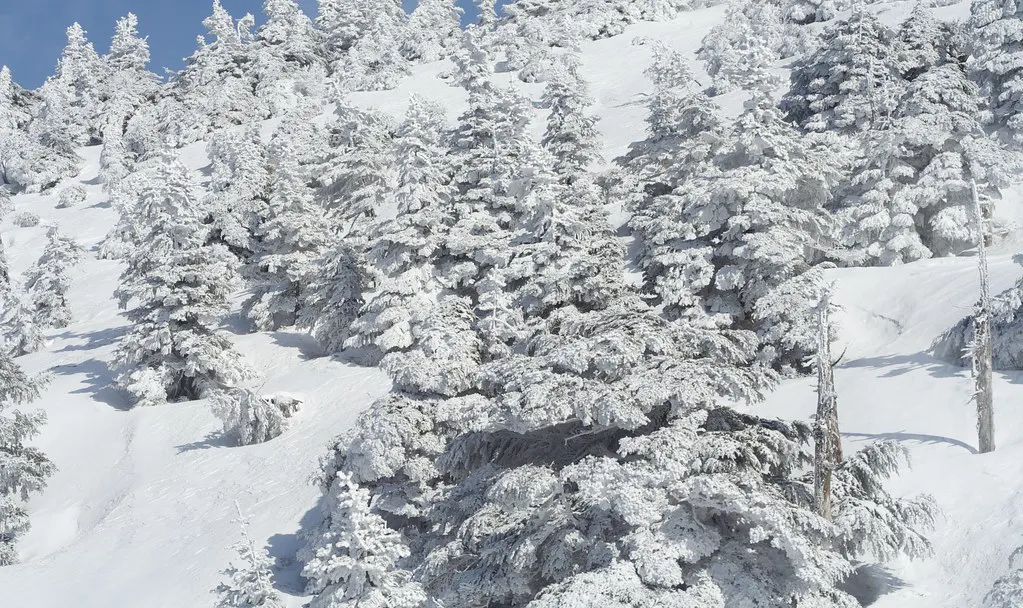
In winter, the range receives some of the heaviest snowfall in Japan. From January through February, the Abies mariesii fir trees surrounding the ropeway summit become encased in rime ice, forming the famous "snow monsters" (樹氷) that draw visitors from across the country. Detailed information about the national park's trails can be found HERE on the official site. Japan has just one other equally famous rime-ice spot — Mount Zao in Yamagata — where the "snow monsters" grow even larger.
Hakkoda Ropeway and the Summit
The Hakkoda Ropeway (八甲田ロープウェー) is the primary gateway for most visitors to the mountain range. This aerial gondola transports you to the Summit Park Station of Mt. Tamoyachi in roughly ten minutes. From the top, you get panoramic views of the surrounding peaks, Aomori City below, and on clear days the distant mountains of Hokkaido.
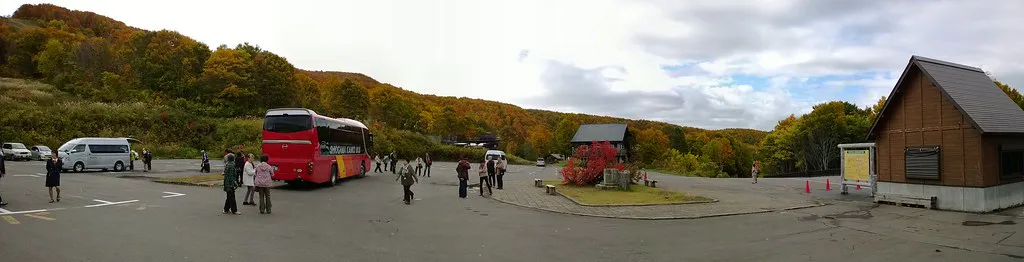
During winter, the summit becomes a surreal gallery of frozen sculptures. The snow monsters are formed when heavy snowfall and rime ice encase the local fir trees, creating towering white forms that crowd the ridgeline. Walking among these giants — accessible directly from the summit station — is a highlight for anyone visiting the Aomori Bay Bridge And A-factory area and combining it with a mountain day trip.
In mid-August, the ropeway extends its operating hours by two hours for nine consecutive days for the Sunset Ropeway Event (夕焼けロープウェイ). Watching the sun descend behind the volcanic peaks from the summit platform is an experience no photograph fully captures. Check the official operator schedule for the exact 2026 dates before you go, as this event is popular and the gondola fills up quickly in the evening.
The standard roundtrip ropeway fare is approximately 2,000 yen for adults. The first gondola typically departs at 09:00, making an early start the best strategy for both beating crowds and getting the sharpest morning light on the snow monsters or foliage.
Hiking the Hakkoda Trails
Once you step off the gondola at the Summit Park Station, three main hiking courses fan out across the mountain. Each one suits a different fitness level and available time. All start from the ropeway station, making it straightforward to combine a gondola ride with a walk before catching the bus back.
The Hakkoda Gourd Line (八甲田ゴードライン) is the easiest option. It loops around the Tamoyachi Marsh at the summit of Mt. Tamoyachi. Taking the full loop requires about 60 minutes, but if time is short, walking only the upper section takes approximately 30 minutes. In winter this is where you find the densest concentration of snow monsters along the boardwalk.
The Kenashi Paradise Line (毛無パラダイスライン) pushes further into the range, crossing the Kenashitai (毛無岱) wetlands before descending to either Jogakura Onsen (城ヶ倉温泉) or Sukayu Onsen (酸ケ湯温泉). The full route takes around 2.5 hours. This course is particularly popular during autumn foliage season, from late September to early October, when the color contrast between the upper and lower Kenashitai marshes is exceptional. Wear boots: the trail has muddy sections, especially after rain.
The Otake Hiking Course (大岳登山コース) is the most demanding option and leads to the summit of Mt. Odake itself. Hiking from the ropeway station to Sukayu Onsen takes approximately 4 hours one-way. Alternatively, starting the full loop from Sukayu Onsen — passing Sennintai Cabin, Mt. Odake, and the Kenashitai zone before returning — takes around 4.5 to 5 hours. From mid-October onward, the summit may be snow-covered even outside winter; come prepared with appropriate clothing and footwear. More trail tips appear in our guide to Oirase Gorge and Lake Towada.
Tashirotai Marsh and Gudari-numa Pond
Tashirotai Marsh (田代平湿原) is the largest marsh in the Hakkoda Mountains and one of the most rewarding destinations in the entire range for those with a car. Located east of the main ropeway zone, it sits on a plateau formed by volcanic activity roughly two million years ago when a caldera lake gradually transformed into the wetland you see today. The boardwalk loop takes about 60 minutes and is suitable for all ages.
The marsh rewards visitors across several seasons. Cotton grass and Japanese azalea bloom in June and July. A golden carpet of Narthecium asiaticum flowers covers the wetland in summer. Lotus flowers appear from July to August, and the area turns to vivid autumn color from late September. The best hiking window runs from late May to late October, though snow can linger at the start and end of that period.
Tashirotai is also the access point for Gudari-numa Pond (グダリ沼), which sits a short drive further along Prefectural Route 40 toward Towada. Despite its name, Gudari-numa is actually a clear, cold stream — its water temperature holds around 7 degrees Celsius year-round and the output reaches around 200,000 tons per day. The site is one of only a handful of places in Japan where five species of planarian flatworm coexist. A short beech forest walk near the pond (Buna-rin Sansakumichi, ブナ林散策道) and the Small Trail of Azalea (Tsutsuji no Komichi, つつじの小径) each stretch about 1.5 kilometers and make for an easy stroll.
Getting to Tashirotai without a car is difficult. The closest bus stop is Kayano Chaya (萱野茶屋), which is approximately 9 km from the marsh. One practical workaround: stay overnight at Hakkoda Onsen, which provides free pick-up and drop-off from either Kayano Chaya or the Hakkoda Ropeway Station — but you must notify the ryokan in advance to arrange your transfer.
Hakkoda Onsen and Where to Recover
After a day on the trails, the onsen options around Hakkoda are among the best in Tohoku. Sukayu Onsen (酸ケ湷温泉) is the most famous, a historic ryokan near the southern end of the Otake Hiking Course. Its senninburo — the "thousand-person bath" — is a vast communal bathhouse fed by milky, sulfurous hot spring water. It is a mixed bathing facility by tradition, though separate sections are available for those who prefer privacy.
Hakkoda Onsen (八甲田温泉) is a smaller, quieter option that opened in 1964 and is now operated by Sukayu Onsen. It has four pools with varying spring characteristics and is a natural base for anyone exploring Tashirotai Marsh. The indoor pool for women is actually larger than the men's pool, a reflection of the ryokan's demographics. Note that Hakkoda Onsen closes from mid-November to April, and there is no air conditioning in the guestrooms.
Jogakura Onsen (城ヶ倉温泉) is the third main option in the area, positioned closer to the famous Jogakura Bridge and popular during autumn foliage season. It works well as an end point if you have hiked the Kenashi Paradise Line down from the ropeway. Check our 9 Best Areas and Tips for Where to Stay in Aomori (2026) guide for a broader view of accommodation options across the prefecture.
Best Time to Visit Hakkoda Mountains
Each season at Hakkoda offers a completely different experience, and the right time to visit depends on what you want to see. Winter runs from early December through early May in terms of snow coverage, with the heaviest accumulation from January to March — this is snow monster season and the peak period for backcountry skiing across Mt. Maedake, Mt. Akakura, and other slopes in the range.
The fresh green season begins in mid-May and runs through June, when the alpine meadows emerge from the snowpack. Flowering season peaks from mid-June to early August, with wildflowers appearing across the marshlands. This is the best window for visiting Tashirotai Marsh and for completing longer hiking routes before summer heat sets in.
Autumn foliage follows a cascading pattern moving down the mountain from early October through early November. The summit and Jogakura zone typically peak in early to mid-October; mid-mountain areas including Sukayu Onsen and Tashirotai turn color in mid to late October; and the lower reaches around Tsuta Onsen reach peak color in late October to early November. Planning your visit around this gradient lets you catch color at multiple elevations in a single day.
The Hakkoda-Towada Gold Line and Snow Galleria
One event that almost no travel guide covers in detail is the Snow Galleria Walk held each March along the Hakkoda-Towada Gold Line. For two days — usually the 30th and 31st of March — the road that connects Hakkoda to Lake Towada is opened to walkers for 8 kilometers before vehicle traffic resumes. On both sides of this stretch, snow walls tower over the road, creating a corridor of white that can reach several meters in height.
The event essentially marks the seasonal reopening of the Gold Line, which closes for winter. Walking the 8 km route through this snow canyon is one of the most unusual and undervisited experiences in the entire Aomori region. It is free to join, requires no special equipment beyond warm waterproof layers, and operates regardless of whether the sky is overcast or clear. Dates shift slightly year to year, so confirm the exact 2026 schedule via the Aomori Prefectural Tourism Federation before planning your trip around it.
If you continue south after the Gold Line reopens, the route leads directly to the Oirase Gorge and Lake Towada — meaning a single spring trip can combine the Snow Galleria walk, a Hakkoda ropeway ride, and a descent through the gorge's mossy stream valley in a logical two-day itinerary.
Kayano Chaya and the Longevity Tea
Kayano Chaya (萱野茶屋) is a popular rest stop along the main road between Aomori and the mountains. The JR Bus Mizuumi-go makes a 10 to 20-minute break here on its way toward Oirase Gorge and Lake Towada. Most travelers use it as a toilet stop, but the teahouse has a tradition worth pausing for.
The teahouse offers Tsurukame-cha (鶴亀茶) — Crane and Turtle tea — free of charge to all visitors. Local legend says drinking one cup adds three years to your life, two cups add six years, and three cups confer a very long life indeed. The tea is a simple blend of barley, genmai, Job's tears, bamboo grass, persimmon leaves, and fish mint — nothing alarming. One pack of tea bags costs 180 yen to take home.
The teahouse operates only from mid-April to mid-November, as the road closes in winter. Adjacent to it is Kayano Plateau (萱野高原), a broad grassy flat where you can take a short stroll or have a picnic. During peak season, avoid lingering too long if you are relying on the JR bus onward — the next departure can fill up quickly. You can find more practical timing tips in our Best Time To Visit Aomori: 10-Point Seasonal & Travel Guide.
Getting to the Attractions in Mt Hakkoda by JR Bus
The JR Bus Tohoku operates regular Mizuumi-go (みずうみ号) services from Aomori Station (青森駅) to the Hakkoda Ropeway. This journey takes approximately one hour and follows a scenic route through the foothills toward the summit area. A one-way adult fare to the ropeway station costs about 1,100 yen.
The same bus continues south through Kayano Chaya, past Sukayu Onsen, and eventually to the the Oirase Gorge trail and Lake Towada. This routing makes it practical to visit multiple mountain attractions in a single day trip without a car. Always confirm the current schedule before departure — buses run less frequently during the off-season, and the last departure back to Aomori can be earlier than you expect.
If you want to visit Tashirotai Marsh or Gudari-numa Pond, you will need a car. Renting a vehicle in Aomori City provides the most flexibility for exploring the various trailheads and remote marshlands. More transit tips appear in our How To Get To Aomori: 10 Essential Routes and Travel Tips guide, including notes on regional rail passes that cover JR Bus fares.
Traveling South to Oirase Gorge
A visit to the Hakkoda Mountains pairs naturally with a trip south to Oirase Gorge, Aomori Prefecture's most celebrated natural landscape. The gorge follows the Oirase Stream for roughly 14 kilometers through a moss-covered valley filled with waterfalls and ancient beech trees. It is accessible by bus from the ropeway stop on the same Mizuumi-go route.
The scenic Lake Towada sits at the southern end of the gorge and is itself a dramatic caldera lake offering boat tours and shoreline hiking. Combining Hakkoda and Oirase-Towada into a two-day itinerary is the standard approach for independent travelers: spend the first morning on the ropeway and trails, then continue south by bus in the afternoon to reach the gorge before dark.
Drivers have more flexibility, including stops at Tsuta Onsen — one of the most atmospheric old-style ryokans in the Tohoku region — and at the Sukayu Onsen rest area before crossing into the gorge. However you travel, allow a full day for Oirase itself; rushing the gorge walk is one of the most common first-timer mistakes in this part of Aomori.
The 1902 Hakkoda Mountains Disaster
The Hakkoda Mountains carry a profound historical weight from an event in January 1902. The 5th Infantry Regiment of the Imperial Japanese Army sent 210 soldiers into the mountains for a winter training exercise without adequate cold-weather preparation. A sudden blizzard engulfed the group, and over the following days soldiers succumbed to hypothermia and exhaustion. Only 11 men survived the ordeal.
It remains one of the deadliest non-combat military incidents in Japanese history. A memorial hall near the base of the mountains — the Hakkoda Yuki-chukan Memorial — chronicles the disaster through detailed exhibits and historical artifacts. Many travelers visit the memorial alongside the Aomori Nebuta Matsuri cultural sites in the city, pairing the mountain history with Aomori's summer festival heritage.
The story gained wider international awareness through a 1977 Japanese film adaptation. Related searches for "Hakkoda Mountains disaster" and "Hakkoda Mountains disaster survivors" are consistently among the top Google queries for this destination, suggesting many visitors come specifically to understand this history. The memorial is accessible by car and adds about 30 to 45 minutes to a day trip itinerary.
How to Plan a Smooth Hakkoda Day
Success in the mountains depends heavily on checking the weather forecast before you depart. Conditions can change rapidly at high altitudes, even during the calm summer months. Always carry a light jacket and waterproof layers regardless of the current temperature in Aomori City.
Arriving early helps you avoid the largest crowds at the ropeway station. The first gondola typically departs at 09:00, providing the best morning light for photography and the most comfortable temperatures for hiking. Planning your return route in advance ensures you have enough time to catch the last bus back to the city.
If you plan to stay overnight near the mountains rather than returning to the city, the onsen ryokans around Sukayu and Hakkoda Onsen are the most convenient options. For a broader look at accommodation across the prefecture, see our 9 Best Areas and Tips for Where to Stay in Aomori (2026) guide. Booking well in advance is essential during the peak autumn foliage and winter snow monster seasons.
Frequently Asked Questions
How do I get to Hakkoda Mountains?
You can reach the mountains by taking a JR Bus from Aomori Station. The ride takes about 60 minutes and costs roughly 1,100 yen. Alternatively, renting a car offers more flexibility for visiting remote marshes and trailheads. Check our How To Get To Aomori: 10 Essential Routes and Travel Tips guide for more details.
What is the best time of year to visit Hakkoda?
The best time depends on your interests. Winter is ideal for seeing the famous snow monsters between January and March. Autumn offers stunning foliage in October, while summer is perfect for hiking the marshlands. Each season provides a completely different visual experience for visitors.
What caused the Hakkoda Mountains disaster?
The 1902 disaster was caused by a severe blizzard during a military training exercise. A group of 210 soldiers became lost in extreme cold and deep snow. Only 11 men survived the ordeal, making it one of the deadliest mountain incidents in history. A memorial hall now honors those lost.
What is the Hakkoda mountain range known for?
The range is most famous for its heavy snowfall and unique snow monsters in winter. It is also a premier destination for backcountry skiing and alpine hiking. The area features volcanic peaks, high-altitude marshes, and historic hot springs like Sukayu Onsen. Nature lovers value its pristine wilderness and seasonal beauty.
The Hakkoda Mountains offer a powerful blend of natural beauty and historical depth. From the heights of the ropeway to the quiet boardwalks of Tashirotai Marsh, there is something for every traveler. This volcanic range remains one of the most iconic landscapes in northern Japan.
Careful planning ensures you can navigate the seasonal changes and transit options with ease. Whether you visit for the snow monsters, the autumn foliage, or the long-distance hiking courses, the experience will be unforgettable. The mountains provide a perfect escape into the wild heart of Aomori.
As you prepare for your journey, remember to respect the delicate alpine environment. Following the marked trails and local rules helps preserve this national park for future generations. Enjoy your adventure in the stunning Hakkoda range.
Free guide: Japan's Hidden Gems
12 under-the-radar places beyond Tokyo & Kyoto — with the best season to visit each and a local tip you won't find in the guidebooks.
You might also like


Continue reading
More guides you'll find useful