

The Perfect One Day in Ise Itinerary (2026)
Plan your ise itinerary one day with a timed schedule: Geku, Naiku, Oharaimachi lunch, and Meoto Iwa at Futami — plus a 2-day Toba extension.
On this page
Ise holds Japan's most sacred Shinto shrine, a destination where pilgrims have arrived on foot for over a thousand years. Our editors built this Ise travel guide around the question visitors keep asking: can you do Ise justice in a single day? The answer is yes, if you follow the right order. Outer shrine first, inner shrine second, lunch along the stone-paved approach, and the iconic wedded rocks at Futami in the late afternoon — that four-part shape is the classic one-day Ise itinerary, and it works every time.
This guide gives you a timed hour-by-hour plan from Ise-shi Station through Geku and Naiku, Oharaimachi, and out to the coast at Futami, with bus routes, fares, and realistic timings for each leg. We have also built in the question travelers ask once they are on the ground: should I add a second day? Below you will find a two-day extension built around Toba that turns a good trip into a genuinely memorable one. For getting here from Nagoya, Osaka, or Kyoto, see our Ise transport guide before you book.
Last updated June 2026 with current Kintetsu fares, shrine hours, and Oharaimachi shop timings.
Key Takeaways
- Always visit Geku (outer shrine, ~45 min) before Naiku (inner shrine, ~60–75 min) — this is the traditional pilgrimage order.
- The CAN bus (route 51 or 55) connects Ise-shi Station to Naiku in 15–20 minutes for ¥170; a one-day CAN pass (¥800) is worth buying if you plan to ride more than twice.
- Oharaimachi and Okage Yokocho are the best places to eat in Ise: Ise udon, Akafuku mochi, and tekone-zushi are the standout local dishes.
- Meoto Iwa (Wedded Rocks) at Futami Okitama Shrine is a 15-minute JR ride from Ise-shi and costs nothing to visit.
- One day covers the shrine precincts and Futami comfortably; a second day is the right call if you want to add Toba (Mikimoto Pearl Island and Toba Aquarium each need two to three hours).
- The next Shikinen Sengu reconstruction of Ise Jingu is scheduled for 2033 — visiting 2026 means seeing the current buildings near the midpoint of their 20-year cycle.
One Day in Ise: Hour-by-Hour Itinerary
The schedule below assumes a morning departure from Nagoya on the Kintetsu Limited Express, arriving at Ise-shi Station around 9:15–9:30 AM. Adjust by roughly 30 minutes in either direction if you are starting from Osaka-Namba (~105 min on Kintetsu) or Kyoto (~2 hours with a change). Both Ise-shi Station (served by JR and Kintetsu) and Ujiyamada Station (Kintetsu only, one stop north) are convenient starting points; most visitors use Ise-shi.
The Kintetsu Ise-Shima Unlimited Pass (¥3,700 for two days) covers all Kintetsu trains in the region including the Limited Express supplement. It pays for itself quickly if you continue from Ise to Toba and want to avoid buying individual tickets. JR Pass holders should take the JR Rapid Mie from Nagoya instead (also ~90 min) and use Ise-shi Station as their base.
9:15 AM — Arrive at Ise-shi Station. Coin lockers (¥300–600 depending on size) are available near the main exit — useful if you are carrying overnight bags before heading into the shrine precincts. A small tourist information counter near the exit stocks English maps of both shrine compounds and the surrounding area.
9:30 AM — Geku (Toyouke Daijingu, outer shrine). Walk five minutes north of Ise-shi Station to reach Geku's main torii gate. The outer shrine honours Toyouke Omikami, the deity of food, clothing, and shelter. Allow 40–50 minutes to follow the gravel path to the main sanctuary, which is enclosed behind wooden fencing — you view it from the first torii rather than entering the inner compound. The surrounding cedar forest muffles the city entirely. Entry is free. Exit by 10:30 AM and return to Ise-shi Station for the bus.
10:30 AM — CAN bus from Ise-shi to Naiku. Board the CAN bus (route 51 or 55) from the stop directly in front of Ise-shi Station. The fare is ¥170 and the ride takes 15–20 minutes depending on traffic. Buses run approximately every 10–20 minutes throughout the day. On peak autumn and spring weekends, a taxi from Geku to Naiku (¥1,400–1,600) avoids queues at the bus stop.
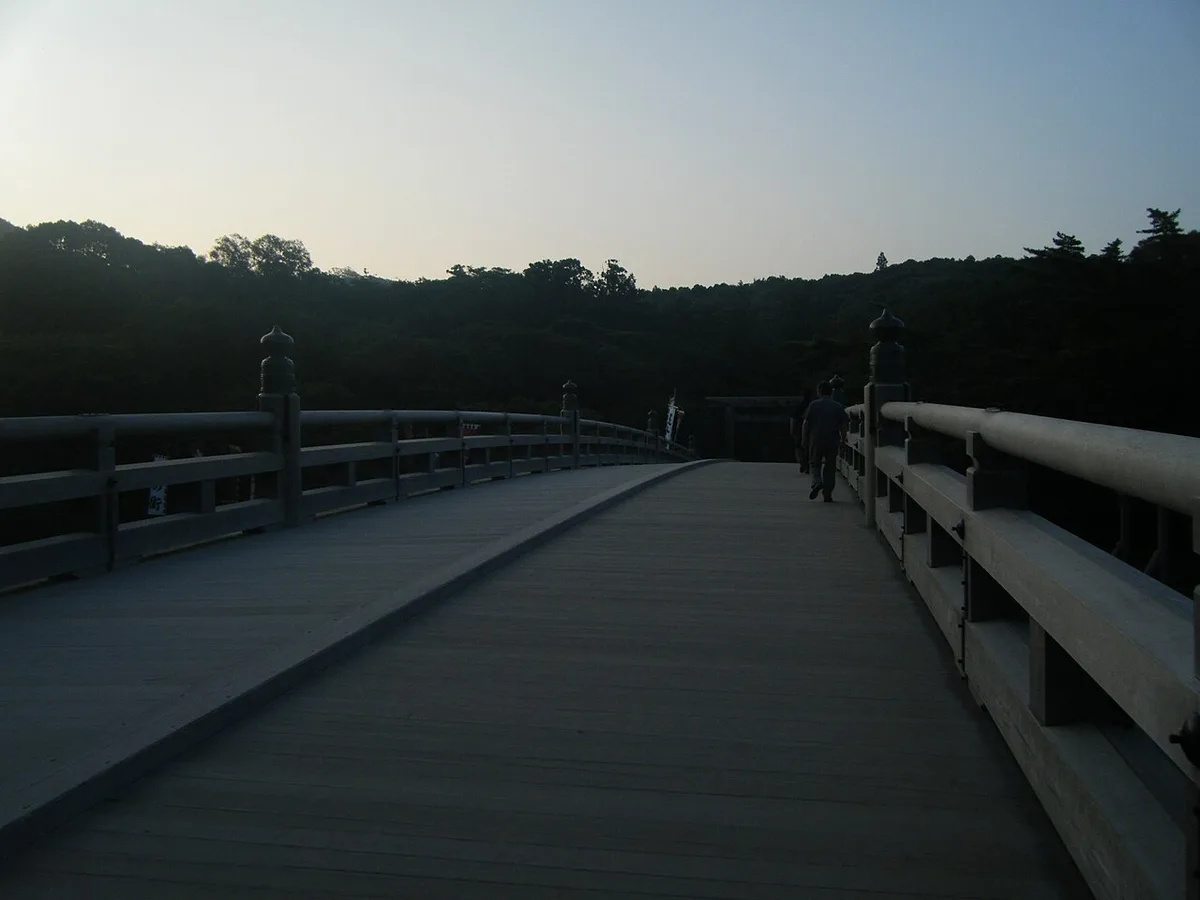
11:00 AM — Naiku (Kotai Jingu, inner shrine). Naiku enshrines Amaterasu Omikami, the sun goddess and divine ancestor of the imperial family, making this the most sacred site in Japan. Cross the Uji Bridge over the Isuzu River — this crossing marks the ritual transition into sacred space — then follow the wide gravel path through ancient cedar to the main sanctuary. Exactly as at Geku, you photograph freely along the approach but photography stops at the inner torii before the main hall. The Ise Grand Shrine guide covers the sub-shrines worth pausing at, including Kazahinominomiya just inside the main entrance. Allow 60–75 minutes. Exit through the Uji Bridge onto Oharaimachi street by 12:15 PM.
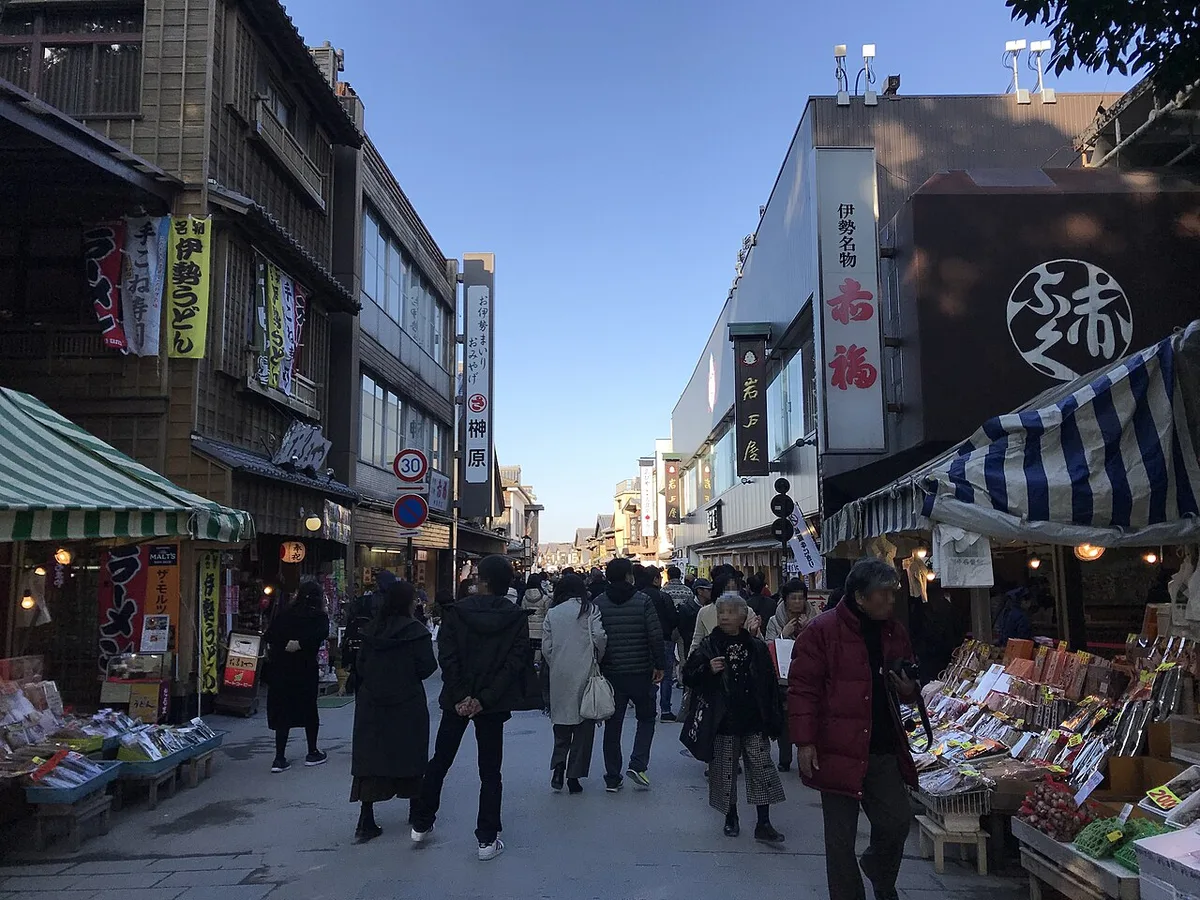
12:15 PM — Oharaimachi and Okage Yokocho (lunch). Naiku's exit deposits you directly onto Oharaimachi, the roughly 800-metre Edo-style approach paved with flat stone and lined with wooden shop facades. The lively central block known as Okage Yokocho is where most food stalls concentrate. Priorities: a bowl of Ise udon (fat, unusually soft noodles served in a sweet, dark tare sauce unlike any udon you will find elsewhere in Japan, ~¥500–700), and at least one piece of Akafuku mochi from Akafuku Honten (est. 1707), the red-bean rice cake that has been sold from this spot for over three centuries (~¥210 for two pieces). If you are hungry for a proper meal, tekone-zushi — marinated bonito over vinegar rice — is available at several sit-down restaurants along the street. Shops generally open 9:30 AM to 5:00 PM. Budget 60–75 minutes for lunch and a slow wander. Exit by 1:30 PM and board the return CAN bus to Ise-shi Station.
2:00 PM — JR to Futaminoura Station. From Ise-shi Station, board the JR Sangu Line toward Toba. Futaminoura Station is two stops and about 15 minutes away; the fare is roughly ¥240. From the station, walk south for 15 minutes following the blue sign posts to Futami Okitama Shrine.
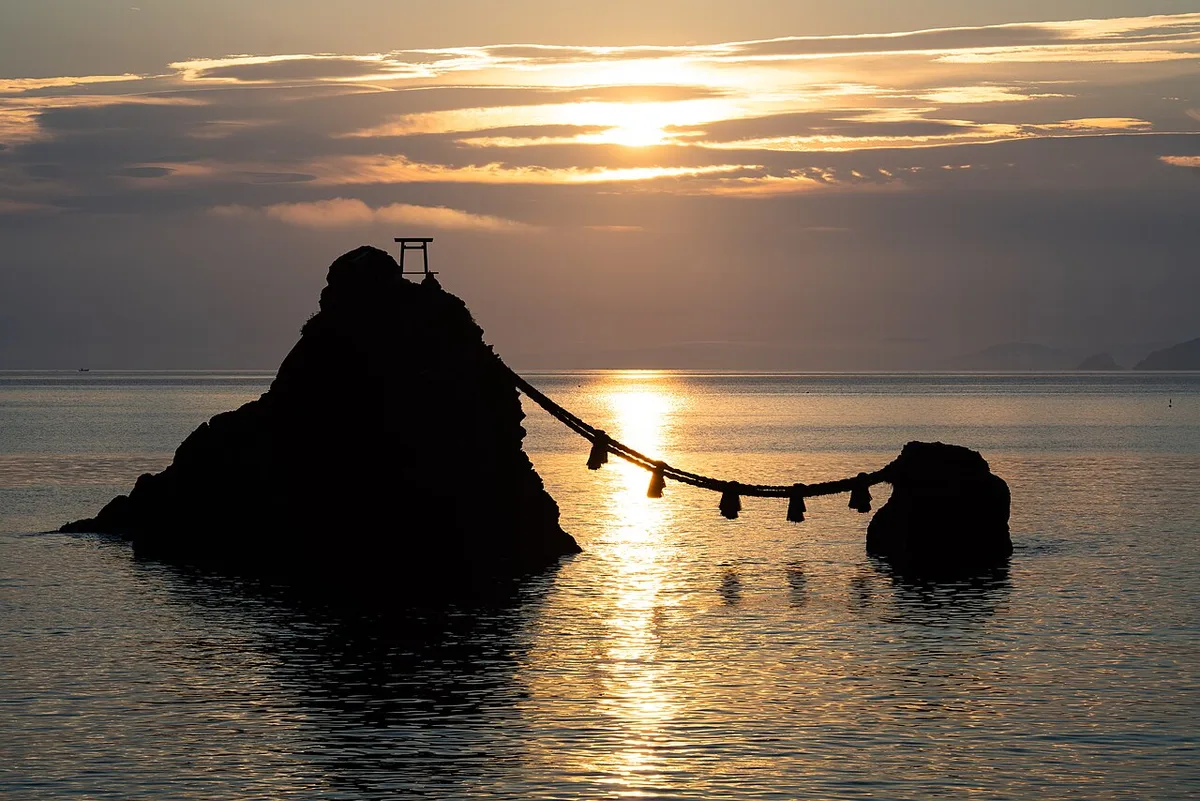
2:30 PM — Meoto Iwa (Wedded Rocks) at Futami Okitama Shrine. Two granite outcrops in Ise Bay — the larger standing 9 metres, the smaller 4 metres — are joined by a heavy braided shimenawa rope and enshrined as a divine married pair. The rope, which weighs over 40 kilograms, is replaced three times a year in a ceremony involving more than 40 men. The site is free to enter and the rocky shoreline walk takes 20–30 minutes. Frog ornaments appear throughout the shrine grounds, as the frog is considered a messenger of the enshrined deity. During May through July, the sun rises between the two rocks at dawn — a spectacle worth an early alarm if you are sleeping locally.
3:30 PM — Return to Nagoya. Walk back to Futaminoura Station (15 min), take the JR two stops to Ise-shi (~15 min), then board the Kintetsu Limited Express for Nagoya (~80–90 min). You will be back in Nagoya by 5:30–6:00 PM — a complete and unhurried day trip.
How Many Days Do You Need in Ise?
One day is the right answer for most visitors whose main goal is the shrine. The itinerary above covers Geku, Naiku, Oharaimachi, and Meoto Iwa without any rushing, and it works cleanly as a day trip from Nagoya, Osaka, or Kyoto. If the shrine is why you came, one day leaves you satisfied.
The reason to stay overnight is Toba. The coastal city is only 15–20 minutes east of Ise by Kintetsu or JR, but its highlights — Mikimoto Pearl Island and Toba Aquarium — each deserve two to three hours of their own. Trying to fold Toba into the same day as Naiku and Futami means skimming surfaces at every stop. A night in Ise or Toba resets the clock and makes both days feel unhurried. Our Ise accommodation guide covers guesthouses and ryokan near Ujiyamada Station, several with private onsen, in the ¥8,000–18,000 per person per night range.
Beyond two days, Shima Peninsula and Kashikojima (the pearl-cultivation bay of Ago, 30–40 minutes beyond Toba on the Kintetsu Shima Line) offer a slower, scenic extension — but that starts to feel like a three-day trip for most visitors. A focused two-day plan — Ise shrines on day one, Toba on day two — is the sweet spot for the region.
Day Two: Adding Toba to Your Ise Trip
If you are staying overnight, use day two to explore Toba's seafront. The Kintetsu Toba Line connects Ujiyamada Station (one stop from Ise-shi) to Toba Station in about 15 minutes. Both main attractions sit within easy walking distance of Toba Station.
9:00 AM — Mikimoto Pearl Island. Cross the footbridge from Toba Station to the island where Kokichi Mikimoto produced the world's first cultured pearl in 1893. The Pearl Museum traces the science and history of pearl cultivation, and live ama diver demonstrations take place several times daily in the surrounding bay waters (timing varies by season). Entry is ¥1,650 per adult; the island opens around 9:00 AM and closes at 5:00 PM. Allow 90 minutes.
11:00 AM — Toba Aquarium. A five-minute walk from Mikimoto Pearl Island brings you to one of Japan's largest aquariums, home to approximately 1,200 species — the highest count of any aquarium in the country. The star resident is a dugong, one of very few in captivity in Japan. Entry is ¥2,800 per adult; the aquarium opens at 9:00 AM and closes at 5:00 PM. Allow two to three hours if you want to catch the sea lion and seal shows.
Ise-ebi (Japanese spiny lobster) season runs roughly October through April. Visiting in summer? Focus on fresh oysters from Ago Bay (best November–March but available grilled year-round at many Toba restaurants) or the ever-present tekone-zushi, which is served throughout the year.
1:30 PM — Lunch on the Toba waterfront. Several restaurants near Toba Station serve the local specialties: Ise-ebi in autumn and winter, fresh kaki oysters from Ago Bay in the colder months, and tekone-zushi year-round. A set lunch costs roughly ¥1,500–3,000 depending on what you order. For a full day-by-day breakdown of this two-city trip, the Ise and Toba two-day itinerary covers pacing, transport passes, and an optional Shima Peninsula extension.
Practical Tips for Visiting Ise in 2026
Both Geku and Naiku open before dawn — roughly 5:00 AM in summer, 6:00 AM in winter — and close at dusk, around 5:00–6:00 PM depending on the season. The forested Naiku approach is at its most serene between 7:00 and 9:00 AM on a weekday, before tour groups arrive. If your schedule allows an early start, arriving at Geku by 8:00 AM is the single best move for a quieter experience.
Photography rules are consistent across both precincts: photograph the approaches, torii gates, and auxiliary shrines freely, but stop when signs or attendant priests indicate you are approaching the inner sanctuary. Keeping voices low and removing hats inside the forested paths is expected. Neither Geku nor Naiku charge any admission fee — the entire visit to Ise Jingu costs nothing beyond transport.
The CAN bus one-day pass (¥800) covers unlimited rides on routes between the stations and Naiku and is worth buying if you plan to travel between stops more than twice. A Suica or ICOCA card works on local JR fares (Ise-shi to Futaminoura) so you can tap through without handling coins. Restaurants along Oharaimachi are busiest 11:30 AM to 1:30 PM; arriving just before noon or after 1:30 PM typically means shorter waits at the popular Ise udon counters.
Frequently Asked Questions
How long does a one day Ise itinerary take from Nagoya?
Expect around 8–9 hours door to door from Nagoya. The Kintetsu Limited Express takes 80–90 minutes each way, leaving roughly 5–6 hours on the ground to cover Geku, Naiku, Oharaimachi, and Meoto Iwa at Futami. Leaving Nagoya at 7:30–8:00 AM and returning by 6:00 PM is a comfortable shape for the day.
Should I visit Geku or Naiku first?
Always visit Geku (the outer shrine) first, then Naiku (the inner shrine). This is the correct and traditional order of pilgrimage — paying respects to Toyouke Omikami at Geku before approaching Amaterasu at Naiku. The convention has been observed for centuries by Japanese pilgrims and is expected of all visitors.
Is one day enough in Ise, or do I need two?
One day is enough to visit Geku, Naiku, Oharaimachi, and Meoto Iwa at Futami without feeling rushed. Two days makes sense specifically if you want to add Toba — Mikimoto Pearl Island and Toba Aquarium each need two to three hours and feel cramped if squeezed into the same day as the shrines. For the Ise Grand Shrine alone, one day is the right call.
How do I get from Naiku to Meoto Iwa at Futami?
Take the CAN bus from Naiku back to Ise-shi Station (¥170, about 20 minutes), then board the JR Sangu Line toward Toba. Futaminoura Station is two stops from Ise-shi, roughly 15 minutes and ¥240. From Futaminoura Station, walk south for 15 minutes following the signs to Futami Okitama Shrine and the Wedded Rocks. Total journey time from Naiku is around 50 minutes.
What are the best foods to try in Ise?
The three standout dishes are Ise udon (thick, exceptionally soft noodles in a sweet dark tare sauce — a style unique to this region), Akafuku mochi (red-bean rice cake sold by Akafuku Honten on Okage Yokocho since 1707), and tekone-zushi (marinated bonito pressed sushi). All three are available within a few minutes' walk of Naiku's Uji Bridge along Oharaimachi street.
A single day in Ise rewards careful sequencing more than any other destination in central Japan. Start at Geku, walk the ancient cedar path at Naiku, linger over Ise udon in Oharaimachi, and catch the late afternoon stillness at Meoto Iwa — that four-part arc gives you the full emotional range of what makes Ise unlike anywhere else in the country. Both shrines cost nothing and the town feeds you memorably. The Kintetsu from Nagoya is fast enough to make this one of Japan's great day trips.
For a complete overview of every attraction in the region, our Ise attractions guide maps out all the major draws across the city and the Mie coast. Those adding a second day can follow the logistics in our Ise and Toba two-day itinerary — Mikimoto Pearl Island and Toba Aquarium make a naturally satisfying contrast to the sacred calm of day one.
Free: The Nagoya Essentials guide
Top things to do, where to stay, a perfect day plan, getting around, and the best time to go — a Nagoya mini-guide you can take offline.
You might also like


Continue reading
More guides you'll find useful


