Oharaimachi & Okage Yokocho: Ise's Edo Food Street (2026)
Walk Oharaimachi's 800m Edo stone street to Ise Grand Shrine's Naiku gate and taste Akafuku mochi, Ise udon, and sake in Okage Yokocho, open 9:30am–5pm.
On this page
No visit to Ise is complete without walking the dark flagstone lanes of Oharaimachi, the roughly 800-metre Edo-style approach street leading straight to the Uji Bridge entrance of Ise Grand Shrine's Naiku. The path is flanked by low-eaved merchant houses rebuilt to Edo and Meiji proportions, and strolling it is free. Our editors have walked it on a quiet Tuesday morning and on a packed Sunday; both times it delivered.
The lively centrepiece is Okage Yokocho, a compact block of reconstructed townhouses packing in Ise udon shops, sake tasting counters, croquette stalls, and the world-famous Akafuku Honten (est. 1707) — all within five minutes' walk. Most shops open around 9:30am and close by 5pm, though popular stalls sometimes sell out earlier. We last refreshed this guide in June 2026 to confirm current hours and seasonal crowd patterns. For the deeper history of the pilgrimage route, see the Oharaimachi area overview.
Key Takeaways
- Oharaimachi is a free, ~800m Edo-style flagstone street — the only pedestrian approach most visitors take to Naiku's Uji Bridge.
- Okage Yokocho is the lively central block: reconstructed Meiji townhouses packed with food stalls, sake shops, and craft stores.
- Akafuku Honten (est. 1707) is the non-negotiable stop — red-bean mochi with matcha costs ~¥700 and must be eaten fresh on site.
- Arrive before 10am on weekdays to have the Honten riverside terrace nearly to yourself before tour groups descend.
What Is Oharaimachi?
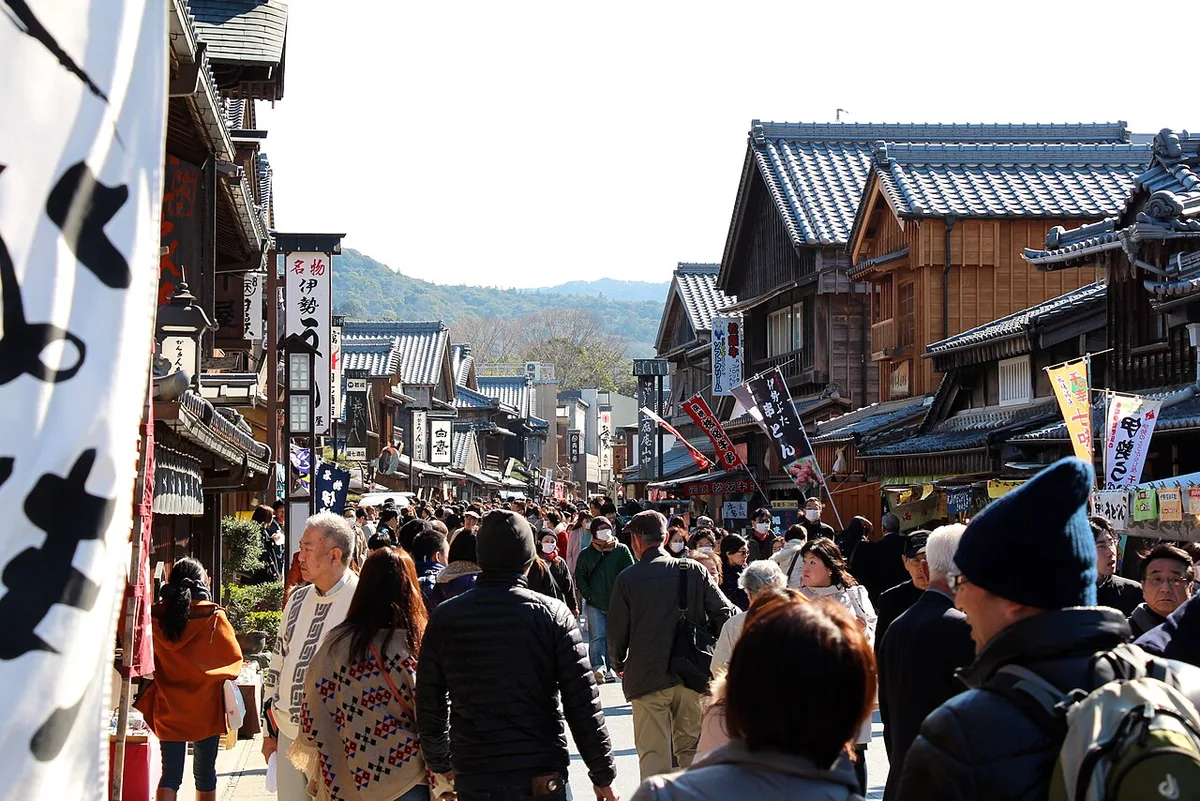
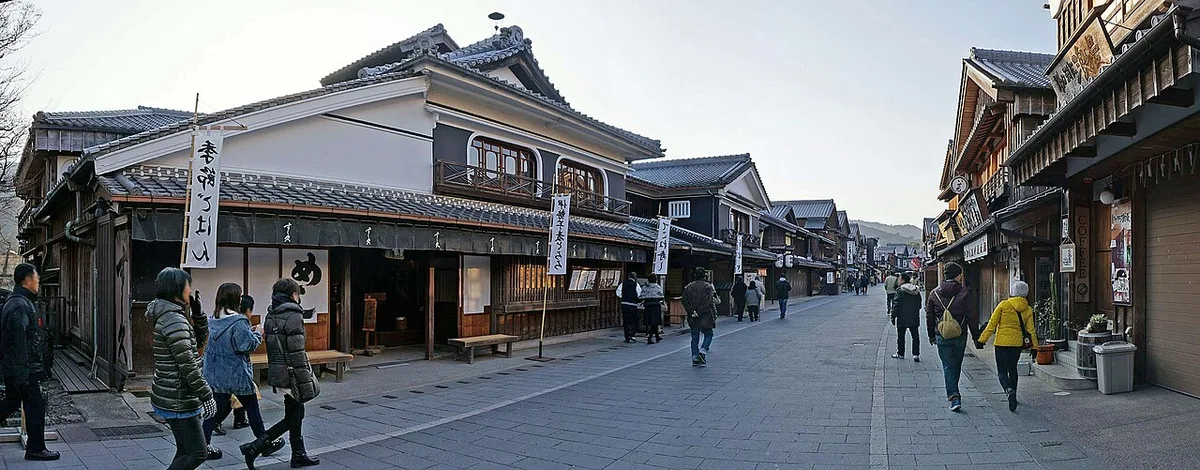
Oharaimachi literally means "the town that greets pilgrims" — a name earned over centuries of welcoming worshippers arriving to pray at Ise Jingu. The street stretches roughly 800 metres from the Uji Bridge end (where Naiku's forest begins) back toward the bus terminal, the entire length paved in dark stone and lined by buildings recalling the merchant quarter that once served Edo-period pilgrims. Think steeply pitched roofs, latticed wooden facades, and low eaves that invite a slower pace.
What separates Oharaimachi from most sacred approach streets is its cheerful noise: sizzling pans, staff calling out free samples, and the pervasive scent of mochi grilling over charcoal. The street is entirely pedestrian — just a long, pleasant forward drift toward the river, with the most interesting stalls tucked into the side lanes branching off the main route.
Okage Yokocho: The Lively Central Block
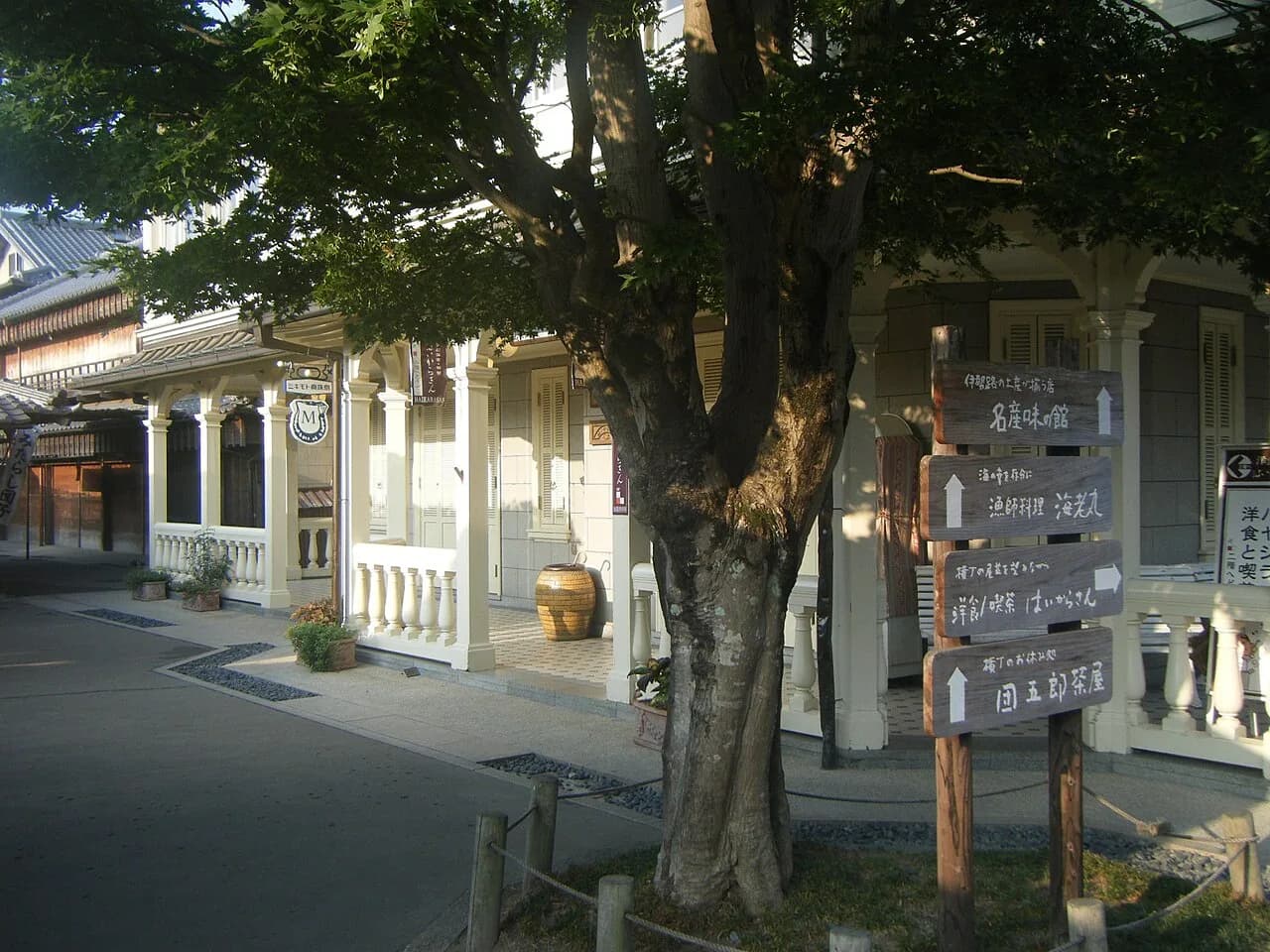
Okage Yokocho occupies a compact cluster of reconstructed Meiji and Taisho-era townhouses set slightly back from Oharaimachi's main lane. The name means "thanks-to-the-blessing alley" — a nod to the mass okage-mairi pilgrimages that swept Edo-period Japan when millions walked to Ise in gratitude. The complex was rebuilt in 1993 to recreate that atmosphere, and the narrow interior lanes feel older than their 30-year construction date.
Inside, the mix tilts toward food and regional craft: restaurants serving Ise udon and tekone-zushi, sake breweries with open tasting counters, and vendors offering bite-sized free samples of mochi and rice crackers. Akafuku Honten anchors the eastern edge. Entry is free; most shops open around 9:30am and close by 5pm.
Okage Yokocho can feel cramped between 11am and 2pm on weekends and holidays when tour buses arrive from Nagoya and Osaka simultaneously. Aim for a weekday morning before 10am or a slot from 3pm onward when guided groups have largely departed.
What to Eat Along Oharaimachi
Plan for three or four stops rather than a single sit-down meal — the grazing format suits the pace of the street.
Akafuku mochi is the essential first stop. Akafuku Honten (est. 1707) produces a soft white rice cake wrapped in smooth red-bean paste (koshi-an), shaped to evoke the ripples of the Isuzu River alongside the shop. A set of three mochi with matcha costs roughly ¥700, served freshly made at the riverside terrace. Eat it on the spot — the mochi hardens within hours. Boxed mochi are available to take home but last only one to two days; confirm current hours on the official site, as the shop sometimes opens as early as 5am on peak pilgrim days.
Ise udon is the second essential: thick, pillow-soft white noodles in a dark tamari-soy tare — less broth than ramen, more sauce than standard udon. Available at multiple sit-down shops along the street for ¥700–1,000 a bowl; Fukusuke near the Okage Yokocho entrance is one of the most consistent. Beyond those two, look for beef croquettes (¥150–200, often Matsusaka beef), craft beer from Ise Kadoya Beer (from ¥600), and Mie sake at the tasting counters through Okage Yokocho. For the wider food picture — tekone-zushi, Ise-ebi lobster, and the best restaurants near both shrine precincts — our Ise food guide covers it all.
What to Buy: Souvenirs and Local Craft
For edible gifts, Akafuku's boxed mochi and Ise-branded senbei (rice crackers) are the most portable; sake and craft beer bottles travel well cushioned. Several Okage Yokocho craft shops carry handmade ceramics from small Mie kilns at a higher quality level than the standard souvenir shelf. Note that omamori (protective charms) and ema (wishing plaques) in Ise Jingu styles are sold at the shrine precincts, not the commercial street. Budget ¥500–1,500 for most items; most shops accept IC cards or credit, though a few stalls are cash-only.
Opening Hours, Crowds, and Best Timing
Shops open from approximately 9:30am and close by 5pm; some stalls sell out before closing time in peak season. The heaviest crowds arrive between 10am and 1pm, when coach groups from Nagoya, Osaka, and Kyoto converge at the Uji Bridge terminal. Golden Week (late April–early May), New Year's, and Obon (mid-August) push the lanes to near-impassable density. A weekday arrival before 10am, or a return from 3pm onward after a midday shrine visit, is markedly calmer. The street never closes, so an early-morning walk to Uji Bridge before shops open suits anyone staying overnight in Ise.
How to Combine Oharaimachi With a Naiku Visit
Shrine first, food street after — that is the natural sequence. Walking through Naiku on an empty stomach keeps you focused, and emerging from the inner sanctum onto a street full of mochi and udon is a satisfying transition. The forested inner approach takes around 45–60 minutes at a respectful pace. If you arrive by direct bus from Ise-shi or Ujiyamada Station, the Naiku bus terminal drops you at the Uji Bridge end of Oharaimachi — the food street faces you the moment you step off. Tradition says walk away from the bridge into town after your shrine visit, so the layout naturally sequences shrine first, snacks after.
For a full-day plan sequencing Geku in the morning, Naiku at midday, and Oharaimachi for a late lunch, our Ise one-day itinerary covers timings and transit. The Kintetsu Limited Express makes the journey from Nagoya to Ujiyamada in roughly 80–90 minutes for around ¥2,810.
Frequently Asked Questions
What is Akafuku mochi and where do I buy it in Oharaimachi?
Akafuku mochi is a soft white rice cake wrapped in smooth red-bean paste, made by Akafuku Honten since 1707. The Oharaimachi shop is the original; a set of three mochi with matcha costs roughly ¥700, served on the riverside terrace. It lasts only one to two days — eat it the same day.
What are the opening hours of shops in Oharaimachi and Okage Yokocho?
Most shops open around 9:30am and close by 5pm, with some stalls selling out before closing time in busy seasons. Akafuku Honten can open as early as 5am on peak pilgrim days. Hours vary by shop and season, so check official sites before visiting to avoid disappointment.
Is Oharaimachi free to visit?
Yes, strolling both Oharaimachi and Okage Yokocho is free. You pay only for what you eat or buy — budget ¥500–1,500 per person for snacks and a souvenir. Ise Grand Shrine itself is also free to enter.
When is the best time to visit Oharaimachi to avoid crowds?
Weekday mornings before 10am or afternoons from 3pm onward are the calmest windows. Avoid weekends between 10am and 1pm when tour groups from Nagoya and Osaka converge simultaneously. Golden Week, New Year's, and Obon push the lanes to near-impassable density.
Oharaimachi and Okage Yokocho give every Ise visit its most flavour-forward memory: fresh Akafuku mochi, the deep umami tare of Ise udon, and a souvenir sake chosen at a counter where tasting before buying is expected. The street charges nothing for its atmosphere. Build in at least an hour after your Naiku visit, let the grazing pace take over, and see all Ise attractions for the full picture of what this sacred city offers in 2026.
Free guide: Japan's Hidden Gems
12 under-the-radar places beyond Tokyo & Kyoto — with the best season to visit each and a local tip you won't find in the guidebooks.
You might also like


Continue reading
More guides you'll find useful