

Ise Grand Shrine Guide: Visiting Naiku & Geku (2026)
Everything you need to visit Ise Grand Shrine in 2026 — the correct Geku-first order, free entry, opening hours, bus connections, etiquette, and the Shikinen Sengu cycle.
On this page
Ise Grand Shrine — Ise Jingu in Japanese — is the most sacred Shinto sanctuary in Japan, drawing more than eight million visitors each year. The complex is not one shrine but a network of over 125 individual shrines across Ise City, anchored by two great precincts: Geku, the Outer Shrine, and Naiku, the Inner Shrine. Both precincts are free to enter and open from dawn to dusk every day of the year. Our full Ise attractions guide covers the wider region, but Naiku and Geku are the undisputed centrepiece of any visit.
The two precincts sit roughly five kilometres apart, connected by a frequent bus service. Tradition dictates a firm visiting order: Geku first, Naiku second. Walking this sequence in reverse is considered disrespectful, and most Japanese visitors follow the convention without question. Whether you have three hours or a full day, this guide covers everything you need — hours, etiquette, photo rules, the bus connection, and the extraordinary 20-year rebuilding ritual that makes Ise unlike any other sacred site in the world.
For a structured plan that weaves both precincts into a day trip from Nagoya, see our Ise itinerary guide. Last updated June 2026.
Key Takeaways
- Always visit Geku first, then Naiku — this is the correct and respectful order.
- Both precincts are free to enter and open from dawn to dusk year-round.
- A bus runs between Geku and Naiku roughly every 15 minutes; the ride takes about 15–20 minutes.
- Photography is permitted in most areas but is strictly forbidden beyond the first torii gate of each inner sanctuary.
- The entire complex is rebuilt every 20 years in the Shikinen Sengu ceremony; the current buildings date from 2013 and the next rebuild is set for 2033.
- Allow at least three to four hours for both precincts; add another hour if you plan to walk Oharaimachi.
What Is Ise Jingu?
Ise Jingu is the collective name for 125 shrines concentrated around Ise City in Mie Prefecture. The complex has stood in some form for over 2,000 years, though the current buildings are always new by design — more on that below. At its heart, Ise Jingu enshrines Amaterasu-Omikami, the sun goddess and highest deity of the Shinto pantheon. According to Shinto cosmology, the Imperial family of Japan descends directly from Amaterasu, which is why Ise carries a spiritual and political weight that no other shrine in the country matches.
For most of Japanese history, Ise was so sacred that common people were not permitted to visit at all. The pilgrimage routes only opened to ordinary citizens in the Edo period (1603–1868), triggering mass pilgrimages — okage mairi — that saw millions of people walking to Ise from across Japan within a single generation. The stone-paved Oharaimachi merchant street leading to Naiku's Uji Bridge survives from that era, lined today with restored wooden facades and food stalls.
Visitors today enter both precincts freely, but the innermost sanctuaries remain off-limits to everyone except designated priests and the Imperial family. What you see from the wooden bridges at each inner hall — ancient cypress construction, thatched rooflines, gleaming gold ornaments — is therefore as close as any outsider gets to the heart of Japanese Shinto belief.
Geku: The Outer Shrine
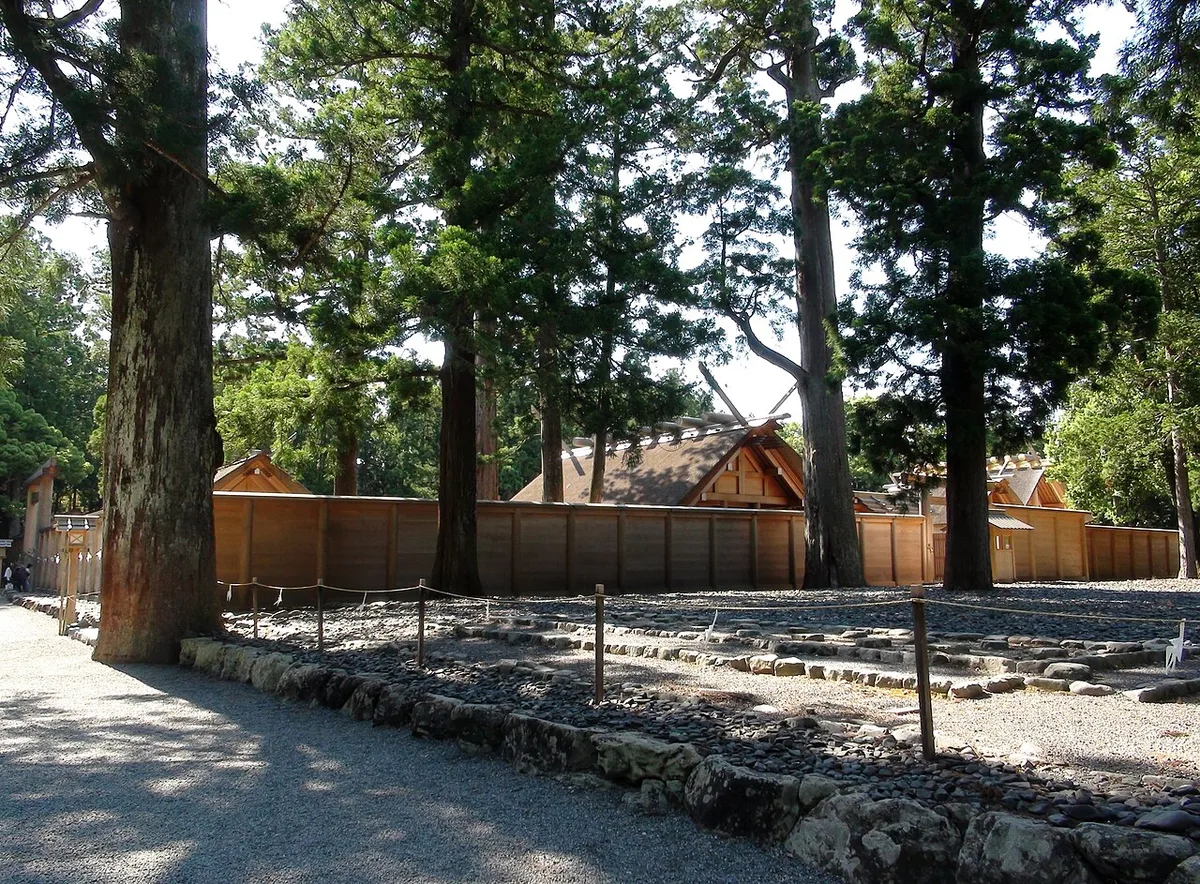
Geku, formally called Toyouke Daijingu, enshrines Toyouke-Omikami, the deity of food, clothing, and housing. Geku's principal role is to prepare sacred food offerings for Amaterasu twice daily — a ritual that has continued without interruption for over 1,500 years. The precinct is a five-minute walk from both Ise-shi Station (JR and Kintetsu) and Ujiyamada Station (Kintetsu), making it the natural first stop on arrival by train.
The main path from the torii gate to the inner sanctuary takes roughly 20 to 30 minutes at a relaxed pace. Along the route you pass several sub-shrines including Tsuchinomiya, Kaze-no-miya (Wind Shrine), and Taki-no-miya (Waterfall Shrine), each small but atmospherically set among ancient cedar trees. The forest canopy is so dense in places that even on bright mornings the path stays cool and slightly dim.
Geku receives far fewer visitors than Naiku and rewards an early start. Arriving at opening (around 5:00 AM in summer, 6:00 AM in winter) means you may have the cedar-lined approach almost entirely to yourself before the day-trip crowds arrive from Nagoya from mid-morning onward.
The wooden bridge crossing into the inner zone is where photography rules kick in firmly (see the etiquette section below). Take time to observe the architecture here: the sleek cypress beams, the golden ridge finials called katsuogi, and the thatched roof are all hallmarks of the ancient Yuitsu Shinmei-zukuri style found nowhere else in Japan. Near the Geku exit, Sarutahiko Shrine is a short five-minute walk and worth adding to your Geku loop.
Naiku: The Inner Shrine and Uji Bridge
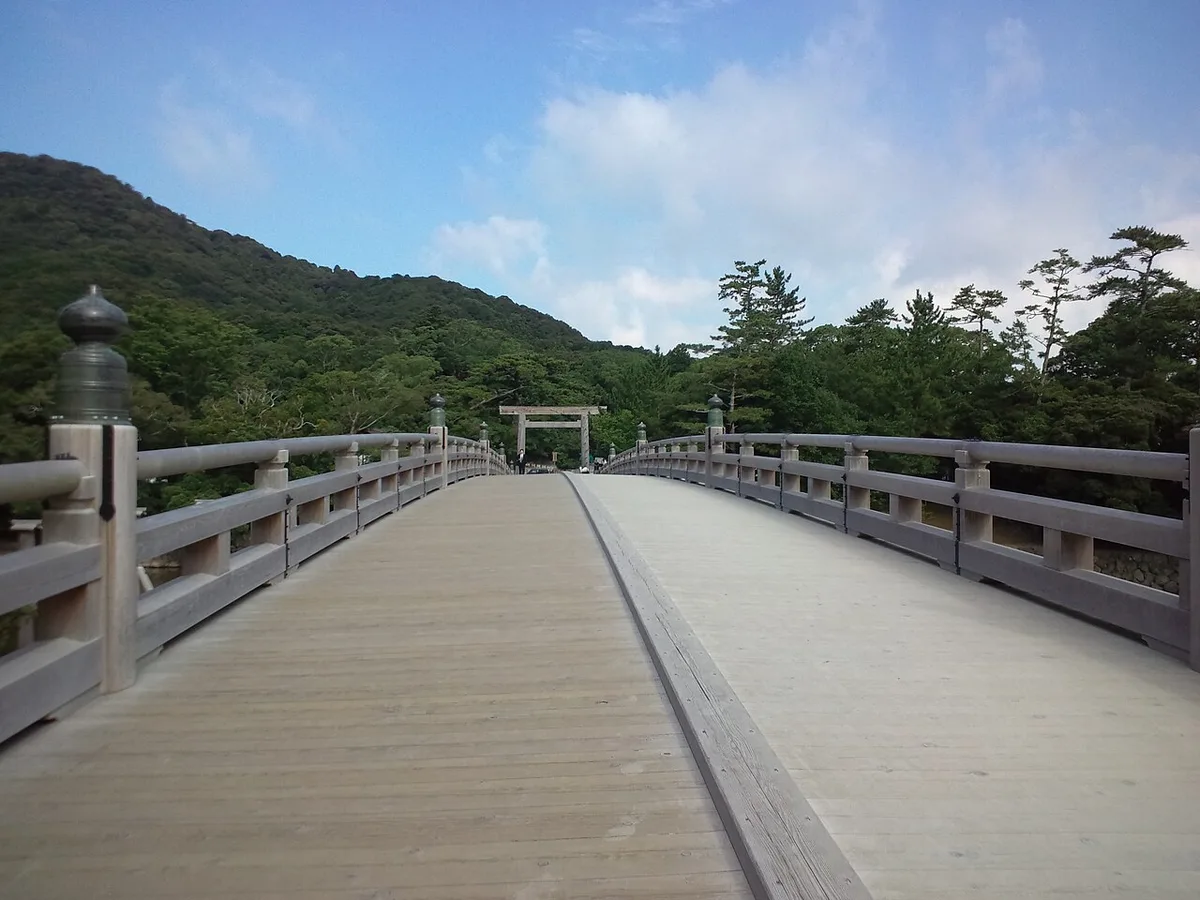
Naiku, formally called Kotai Jingu, is the sacred dwelling of Amaterasu-Omikami. It sits roughly five kilometres from Geku, at the end of Oharaimachi, Ise's Edo-period pilgrimage street. The approach to Naiku begins at the Uji Bridge — a 101.8-metre wooden bridge over the Isuzu River that marks the threshold between the everyday world and sacred ground. Crossing it, you are expected to bow briefly at the centre, acknowledging the transition.
Beyond the bridge, the tamagaki path winds through towering ancient cedars for about 15 minutes before reaching the inner sanctuary. Two stone steps lead up to a wooden bridge over a stream, and beyond that the main hall comes into view — though again, the innermost structure is screened from public sight by white silk curtains. The atmosphere is profound: the scale of the trees, the silence, and the sheer number of people walking in collective reverence create something that guidebook descriptions struggle to capture.
On the way to or from Naiku, the Oharaimachi and Okage Yokocho street is worth at least an hour of your time. The 800-metre stone-paved lane is lined with sake breweries, craft shops, and food stalls selling Ise udon, tekone-zushi, and the famous Akafuku mochi (red-bean rice cakes made since 1707). Okage Yokocho, the lively central block, concentrates the best snack and souvenir options.
Naiku draws enormous crowds on New Year's Eve and the first three days of January, when millions of Japanese make their hatsumode first shrine visit. Weekend mornings from 9:00 AM onward are also busy year-round. Visiting at dawn on a weekday gives the most peaceful experience by a large margin.
Getting Between Geku and Naiku
The most practical way to travel between the two precincts is by CAN bus (Community Access Network bus), which departs from a stop directly outside Geku and terminates near Naiku's Uji Bridge. Buses run approximately every 10–15 minutes throughout the day and the journey takes about 15–20 minutes depending on traffic. The one-way fare is ¥210 for adults and ¥110 for children. A one-day pass costs ¥800 and also covers Oharaimachi stops and some outlying sights.
Taxis are available at both precincts and take around 10 minutes for approximately ¥1,500–¥2,000 one way. The route is not practical on foot — the five-kilometre stretch along a busy national road has no scenic value and would take over an hour. For arrivals by train, full access and transport logistics are covered in our how to get to Ise guide, including the Kintetsu route from Nagoya and the JR Rapid Mie option for rail-pass holders.
Opening Hours, Entry, and Etiquette
Both Geku and Naiku open at dawn and close at dusk. In practice this means opening at approximately 5:00 AM in summer and 6:00 AM in winter, with closing between 5:00 PM and 6:00 PM depending on the season. The boundaries shift monthly, so check the official Jingu website before your visit if you plan to arrive at the very start of the day. Entry to both precincts is free.
Photography is permitted freely on the approach paths and in the forested outer zones. However, it is strictly prohibited beyond the first wooden torii gate at each inner sanctuary — both at Geku's main hall and at Naiku's main hall. This rule is firmly enforced by shrine staff. You will see signs and attendants positioned at the gate; simply put your camera away before passing through.
Standard Shinto etiquette applies throughout. Bow once at each torii gate when entering and again when exiting. At the water purification basins (temizuya), rinse your left hand, then your right hand, then rinse your mouth (using your cupped left hand, not drinking directly from the ladle). Walk along the sides of the gravel paths rather than the centre, which is traditionally reserved for the deities. Loud conversation near the inner halls is discouraged. For the best seasonal timing across the year, our best time to visit Ise guide covers spring blossom, summer heat, autumn foliage, and the quietest winter window.
Shikinen Sengu: The 20-Year Rebuilding Cycle
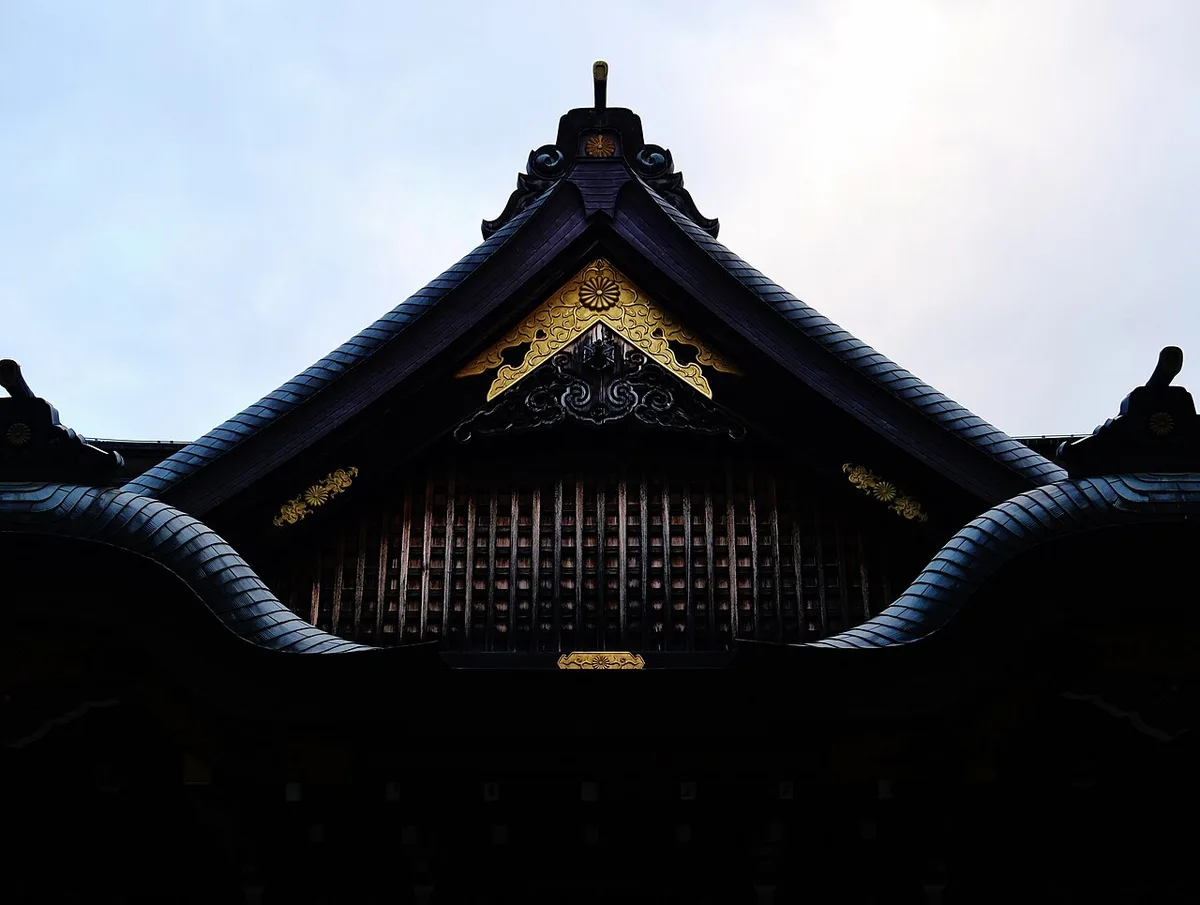
Ise Jingu's most astonishing feature is invisible to most visitors: every 20 years, the entire complex — all major shrine buildings across both Geku and Naiku — is dismantled and rebuilt from scratch on an adjacent plot of land. This ritual, called Shikinen Sengu, has been performed 62 times since it was instituted in 690 CE, making it one of the world's longest-running architectural and spiritual traditions.
The rebuilding serves multiple purposes. It passes down centuries-old construction techniques from master carpenters to apprentices, ensuring the craft survives. It embodies the Shinto concept of renewal and cyclical time rather than permanence. And it means the buildings you visit today, though they appear ancient in style, are structurally only a decade or so old. The last Shikinen Sengu took place in 2013; the next is scheduled for 2033. The old building plot sits empty beside the new one, marked only by a small sacred stone, awaiting the next cycle.
Adjacent to each main sanctuary, you can see the blank adjacent lot — a rectangle of white gravel behind a simple fence — where the previous building stood and where the next one will rise. It is easy to miss if you do not know what you are looking at, but it is one of the most conceptually striking things at Ise.
Frequently Asked Questions
Why do you visit Geku before Naiku at Ise Grand Shrine?
The convention of visiting Geku first and Naiku second is an ancient custom rooted in the relationship between the two deities. Toyouke-Omikami at Geku serves as the provider of sacred food offerings to Amaterasu at Naiku, so protocol dictates you pay respects to the serving deity before the principal one. Visiting in reverse order is considered disrespectful, and Japanese visitors follow this sequence without exception.
Is entry to Ise Grand Shrine free?
Yes, entry to both Geku and Naiku is completely free. The only cost you are likely to incur is the CAN bus fare of ¥210 each way between the two precincts, or a ¥800 day pass that covers additional stops including Oharaimachi. Parking is also available near both precincts at low cost if you are arriving by car.
What are Ise Grand Shrine's opening hours?
Both Geku and Naiku open at dawn and close at dusk, with no fixed time that applies year-round. In summer months the opening is around 5:00 AM and closing around 6:00 PM; in winter opening is around 6:00 AM and closing around 5:00 PM. The exact hours shift monthly, so check the official Jingu website before your visit, particularly if you plan to arrive at first light.
Can I take photos inside Ise Grand Shrine?
Photography is freely permitted on the approach paths and in the outer forested areas of both Geku and Naiku. However, it is strictly prohibited beyond the first wooden torii gate at each inner sanctuary — both at the main Geku hall and the main Naiku hall. Shrine staff are stationed at these gates and the rule is firmly enforced. Simply put your camera away before passing through the gate.
How much time do I need to visit both Geku and Naiku?
Allow at least three to four hours for a comfortable visit to both precincts including the bus transfer between them. Add another hour if you plan to walk the Oharaimachi stone-paved street near Naiku and stop for food at Okage Yokocho. Arriving at Geku by 8:30 AM from Nagoya via Kintetsu gives you the whole morning before peak crowds build at Naiku.
Ise Grand Shrine is unlike any other sight in Japan — not because of its visual spectacle, but because of the weight of what it represents and the quiet discipline of how it is maintained. The free entry, the dawn opening, the ancient cedar paths, and the invisible renewal happening beneath the surface every two decades make Naiku and Geku worth a dedicated trip from anywhere in Japan. Follow the Geku-first sequence, respect the photography boundaries, and give yourself unhurried time in both precincts rather than rushing between them. The bus connection is straightforward, the logistics are simple, and the experience rewards patience above almost everything else.
Free: The Nagoya Essentials guide
Top things to do, where to stay, a perfect day plan, getting around, and the best time to go — a Nagoya mini-guide you can take offline.
You might also like


Continue reading
More guides you'll find useful


