

Meoto Iwa: Ise's Wedded Rocks at Futami (2026)
Visit Meoto Iwa, Ise's sacred wedded rocks at Futami Okitama Shrine — sunrise tips, rope ceremonies, frog motifs, and how to reach Futaminoura by JR in 2026.
On this page
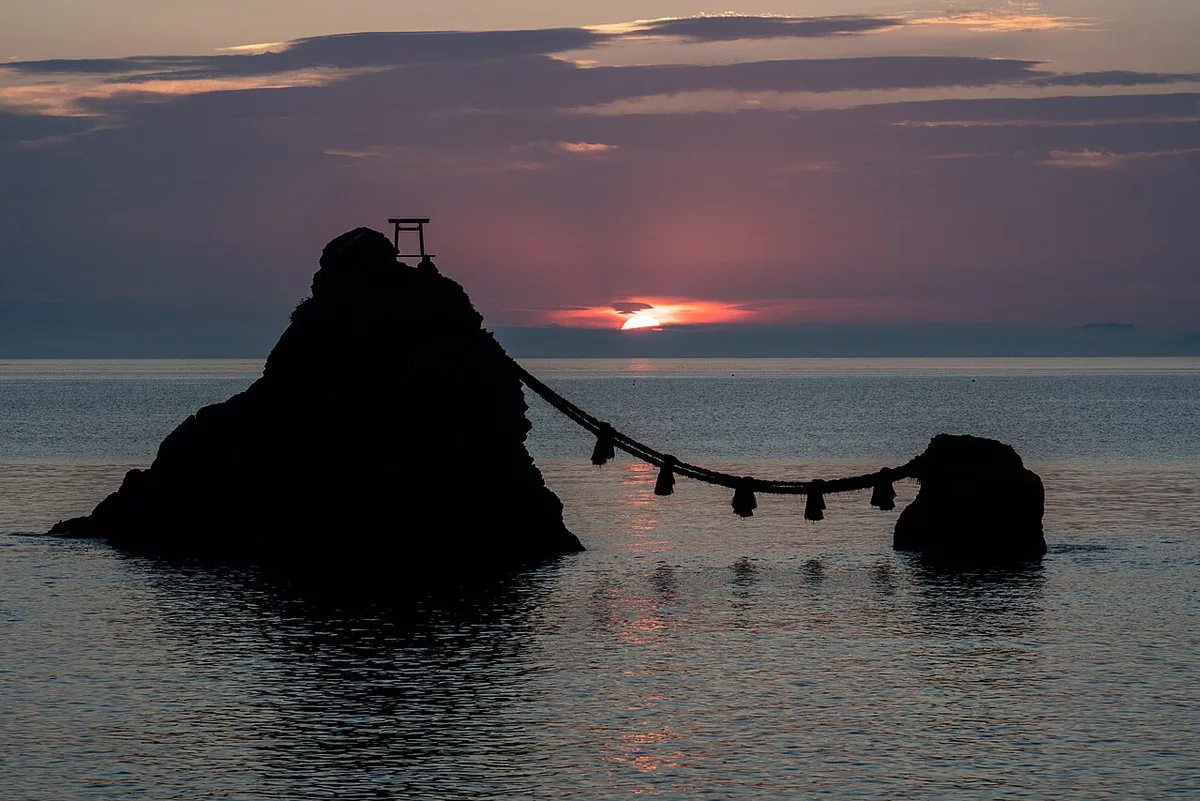
Meoto Iwa, the "Wedded Rocks" of Futami, are among the most photographed Shinto landmarks in Japan. Two craggy islets stand in the shallows of Ise Bay east of the city, their tops joined by a massive braided rope called a shimenawa. The larger rock reaches 9 metres and holds a small torii gate on its crown; the smaller companion stands at 4 metres beside it. Together they represent the creator deities Izanagi and Izanami in Japan's Shinto cosmology.
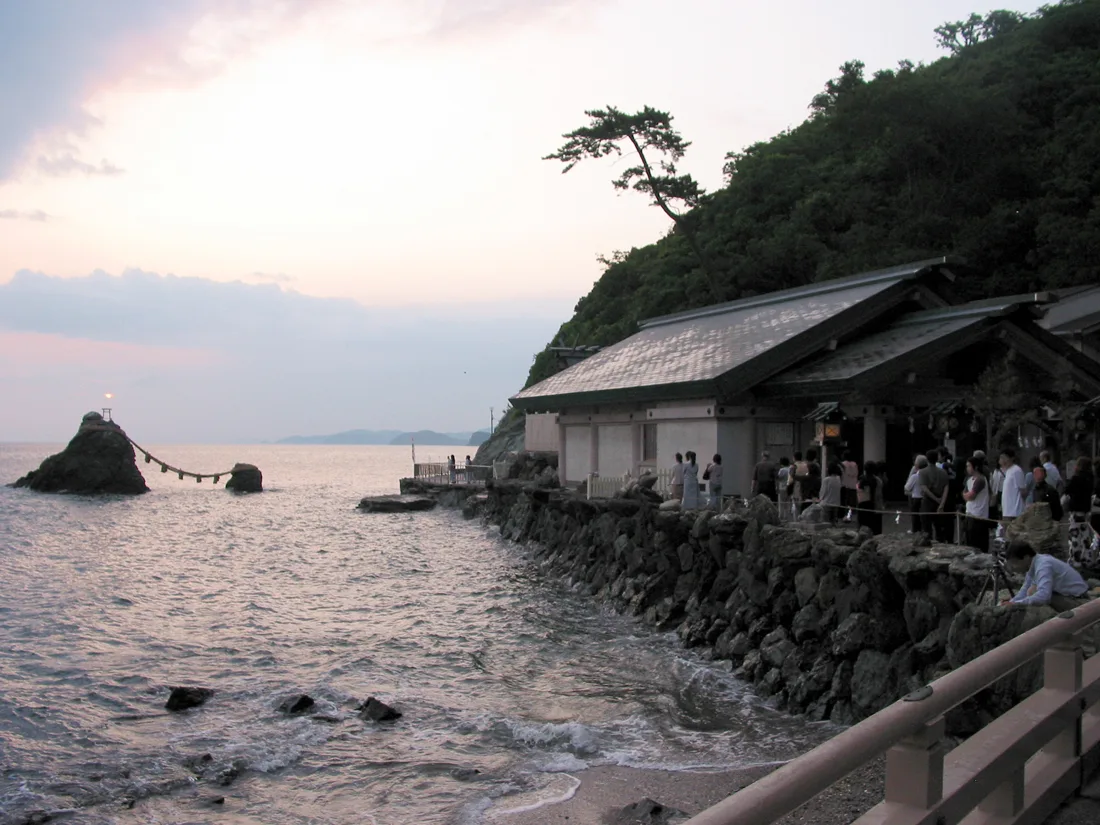
The rocks belong to the precinct of Futami Okitama Shrine, a short walk from Futaminoura Station along the Ise coast. If you are already visiting Ise Grand Shrine, Meoto Iwa adds roughly 90 minutes to your day and is free to view. Our editors last reviewed this guide in June 2026.
This article is part of our complete Ise attractions guide, which covers the Grand Shrine, Oharaimachi, local food, and how to build a full Ise day from Nagoya or Osaka.
Key Takeaways
- Meoto Iwa are two sacred rocks at Futami Okitama Shrine, bound by a shimenawa rope that is ceremonially replaced three times a year.
- The best view is at sunrise from May to July, when the sun appears to rise directly from between the two rocks.
- Entry to the shrine grounds is free; from Ise-shi, JR to Futaminoura takes about 15 minutes.
- Over 200 frog (kaeru) statues are placed around the grounds as offerings to the enshrined deity Sarutahiko no Mikoto.
- The site pairs naturally with an Ise Jingu day; allow half a day for both.
What Are Meoto Iwa?
The name Meoto Iwa translates literally as "husband and wife rocks." Japanese Shinto tradition identifies the larger rock with the male deity Izanagi and the smaller with Izanami, the two creator gods who are said to have given birth to the Japanese islands. Because of this association, couples visit to pray for a happy marriage, and the rocks are one of Japan's most widely recognised symbols of marital harmony.
The shimenawa rope connecting them weighs approximately one tonne and measures around 35 metres in length. It is hand-braided by skilled craftsmen and replaced ceremonially three times a year — in May, September, and December. The ceremony is called the Oshimenawa Chosei and draws large crowds each time it is performed.
Sunrise and the Best Time to Visit
From late April through mid-July, the sun rises in near-perfect alignment with the gap between the two rocks when viewed from the shore. The effect is strongest around the summer solstice in late June, when the sun climbs through the opening as the sky turns pink and the silhouette of the torii gate catches the first light. It is one of the more genuinely striking natural spectacles in the Ise-Shima region.
Even outside the summer window, sunrise at Meoto Iwa is atmospheric. Crowd levels are lowest before 7 AM on weekday mornings, when you can approach the viewing terrace with few other visitors around. By 9 AM on weekends the path from the station starts to fill, particularly in May and June.
A full moon (Jugoya) seen rising between the rocks is also celebrated each autumn. Check the Futami Okitama Shrine website for confirmed 2026 event dates.
For weather windows, crowd patterns, and seasonal events across the Ise area, our best time to visit Ise guide covers every month with practical data.
The Shimenawa Rope-Changing Ceremonies
The Oshimenawa Chosei takes place three times annually — typically the first week of May, the first week of September, and the first week of December. Volunteers and shrine priests haul the massive rope into position through the shallow water in a process lasting several hours, accompanied by Shinto prayer and traditional music. The May ceremony draws the largest attendance because it coincides with the Golden Week holiday period.
If you plan to attend, arrive at least an hour before it starts — the viewing area is narrow and fills quickly. The December ceremony is the quietest of the three and the most intimate.
Ceremony dates shift slightly each year depending on tide conditions and the shrine calendar. Check the Futami Okitama Shrine's official notice boards or social channels for exact 2026 dates before travelling, especially for the May ceremony.
Frog Motifs and Sarutahiko no Mikoto
Futami Okitama Shrine is home to over 200 carved stone frog statues placed throughout the grounds. The connection is linguistic: the Japanese word for frog, kaeru, is a homophone for "to return." Pilgrims historically offered frog figures to Sarutahiko no Mikoto — the enshrined deity — before visiting Ise Grand Shrine, praying for a safe return home. The frogs also appear on amulets sold at the shrine shop.
Sarutahiko no Mikoto is also enshrined at Sarutahiko Shrine in central Ise, on the route between Ise-shi Station and Oharaimachi. Many visitors stop there in the morning before Naiku, then continue to Futami in the afternoon — a natural sequence for a single Ise day.
How to Get to Futami from Ise
From Ise-shi Station (served by both JR and Kintetsu), take the JR Sangu Line two stops toward Toba to reach Futaminoura Station. The journey takes approximately 15 minutes and costs around ¥200. JR Pass holders can use their pass on this short leg. From Futaminoura Station, the rocks are a flat 15-minute walk along the coast road, passing a handful of seafood restaurants and souvenir shops before you reach the shrine approach.
There is no direct train from Nagoya to Futaminoura — you always change at Ise-shi. For the complete door-to-door breakdown from Nagoya, Osaka, and Kyoto with ticket costs and rail-pass guidance, our Ise transport guide has step-by-step instructions. A Mie Kotsu bus also runs along the coast from the Naiku bus terminal to Futami in about 20 minutes for roughly ¥450, useful if you finish at Naiku and want to head to the rocks without backtracking to Ise-shi.
How to Combine Meoto Iwa with an Ise Jingu Day
The cleanest single-day sequence starts at Ise-shi Station around 8 AM: Geku (Outer Shrine) on foot for 45 minutes, then a bus to Naiku (Inner Shrine) for 1.5 to 2 hours, followed by lunch along Oharaimachi. After lunch, take the Mie Kotsu coastal bus from near the Naiku entrance to Futami in about 20 minutes — the early afternoon is quieter than sunrise but the light is still good. Allow 45 to 60 minutes at the rocks before returning to Ise-shi by JR.
For ideas on how to extend your visit — including Toba, Shima, or overnight options — see our day trips from Ise guide.
Frequently Asked Questions
Is there an entrance fee at Meoto Iwa?
The Futami Okitama Shrine grounds and the coastal viewing area for Meoto Iwa are free to enter. No ticket is required. The shrine accepts voluntary offerings at the main hall.
When are the shimenawa rope-changing ceremonies at Meoto Iwa?
The Oshimenawa Chosei ceremonies take place three times a year — typically the first week of May, the first week of September, and the first week of December. Exact dates shift depending on tide conditions. Check the Futami Okitama Shrine's official notices for confirmed 2026 dates before travelling.
Why are there so many frog statues at Futami Okitama Shrine?
The shrine is dedicated to Sarutahiko no Mikoto, a deity associated with guidance and safe return. In Japanese, the word for frog (kaeru) is a homophone for "to return," so pilgrims offer frog figures as a prayer to come back home safely from their Ise Jingu pilgrimage. Over 200 frog statues are placed around the grounds.
Can I combine Meoto Iwa with Ise Grand Shrine in one day?
Yes. A practical sequence is Geku in the morning, Naiku and Oharaimachi at midday, then the coastal bus to Futami for Meoto Iwa in the early afternoon before returning to Ise-shi. Our Ise attractions guide covers a full one-day and two-day itinerary for the area.
Meoto Iwa reward early risers more than almost any other site in the Ise region. The sunrise window in May to July, when the sun climbs through the gap between the two rocks, is genuinely worth setting an alarm for. Outside that window, the shrine grounds, the frog statues, and the shimenawa rope remain a compelling stop that fits neatly into any Ise day without much time or money.
If you have not yet sorted your transport or are deciding how many days to spend in the area, start with our Ise attractions guide for the full picture of what the region offers.
Free guide: Japan's Hidden Gems
12 under-the-radar places beyond Tokyo & Kyoto — with the best season to visit each and a local tip you won't find in the guidebooks.
You might also like


Continue reading
More guides you'll find useful


