Takachiho River Fish and Local Dishes Guide
See where to eat Takachiho river fish and local dishes, from charcoal-grilled yamame to bamboo kappo-dori and Takachiho beef, without missing your boat slot.
On this page
Last updated August 2026, this guide covers Takachiho river fish and local dishes and where to find each one. Charcoal-grilled yamame trout, bamboo-steamed kappo-dori, and Takachiho beef each show up in a different part of town. Timing decides more than appetite does, so the sections below split gorge-side specialties from town-center meals.
Takachiho River Fish and Local Dishes: The Quick Answer
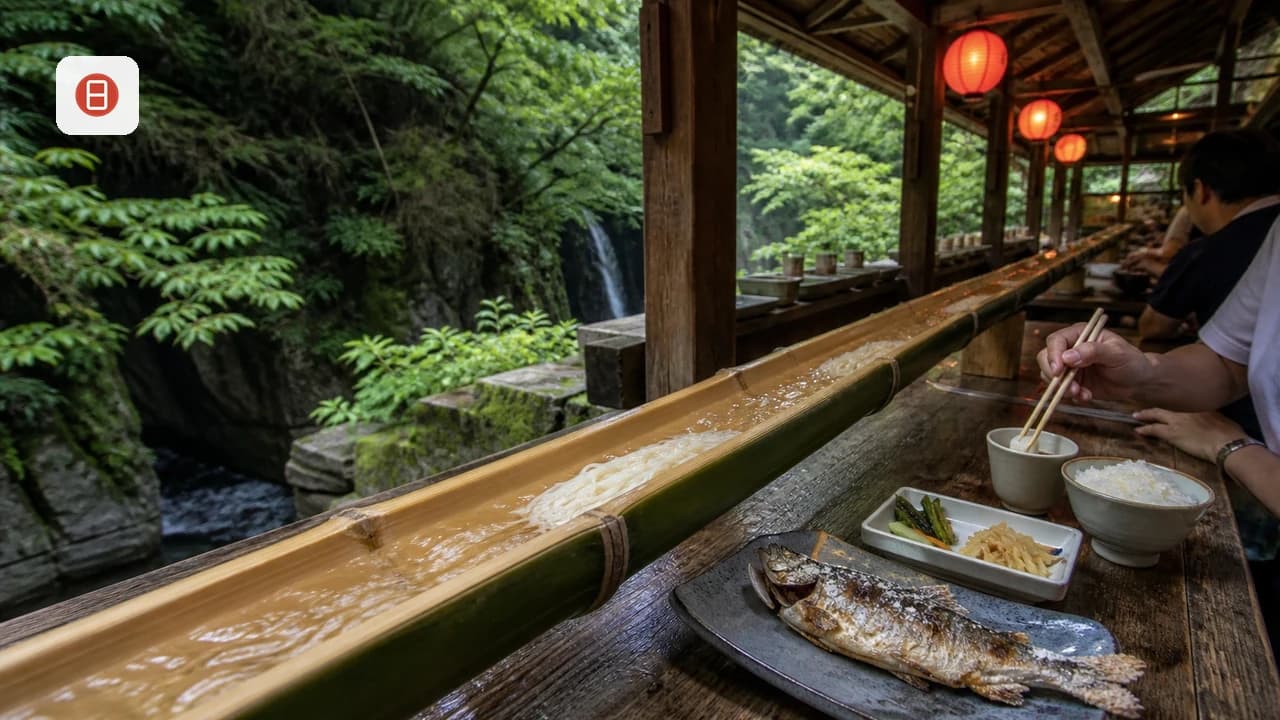
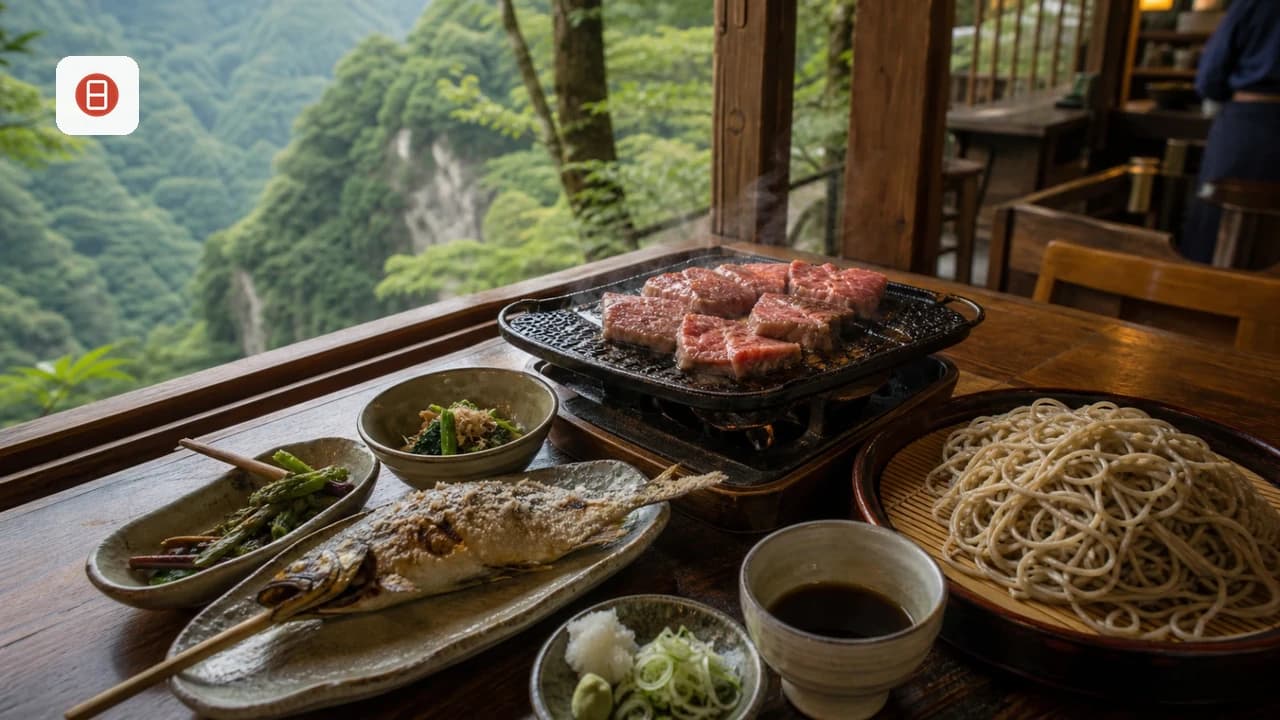
Four dishes anchor a Takachiho meal, and each solves a different problem. Nagashi somen delivers the signature experience of catching cold noodles as they slide down a bamboo flume. Charcoal-grilled yamame trout represents the valley's traditional way of preparing river catch, cooked on skewers over an open fire. Takachiho beef answers the craving for a proper sit-down splurge. Kappo-dori, chicken and vegetables steamed inside a bamboo tube, delivers a flavor unlike the other three, shaped by the bamboo itself. Start with the pillar guide to Takachiho food options for the full picture before picking a plan.
- Nagashi Somen: the flowing-noodle experience, best tackled near the gorge parking area
- Takachiho Beef: the wagyu splurge, easiest to arrange in town
- Charcoal-Grilled Yamame: the traditional river fish, served whole with skin and bones
- Kappo-dori: bamboo-steamed chicken, flavored by the bamboo tube itself
Nagashi Somen and Charcoal-Grilled Yamame: The Gorge-Side Experience
Chiho-no-ie opened in 1955 as the first nagashi somen restaurant in Japan, and it still sits near the gorge parking area. Cold spring water carries thin somen noodles down a bamboo half-pipe. Diners pluck them out with chopsticks, then dip them into a fish-based tsuyu sauce. Noodles nobody catches don't go to waste. A basket at the end of the trough collects them, and staff ladle the leftovers into your bowl anyway. Set contents and prices can change, so check the current menu rather than relying on an older traveler quote. The grilled fish is yamame trout, served whole on a skewer. Chiho-no-ie currently lists hours of 11:00am-4:00pm, no fixed holiday, no dedicated parking, and cards as unavailable. Weigh a possible wait against your boat reservation before joining the line. If the boat ride matters more that day, book it first and treat the noodles as a flexible add-on. Read the dedicated nagashi somen guide for seating logistics and current hours.
Arriving before 11:00 AM beats gorge-side weekend queues, but this strategy only works for noodles—Takachiho beef dining in town doesn't face the same rush, giving beef seekers more afternoon flexibility.
Kappo Cooking: Bamboo Chicken, Bamboo Sake, and Mountain Traditions
Kappo is Miyazaki dialect for bamboo, and the word describes an entire cooking style unique to this valley. Local guides describe Takachiho as remote and hard to reach, sitting near the Kumamoto-Oita border, which pushed farmers to rely on whatever material was close at hand. Farmers in the surrounding hills used freshly cut bamboo tubes to heat spring water and cook meals without walking back home. That practical habit became a dish. Kappo-dori packs chicken, shiitake mushrooms, and green onion into a bamboo tube with soy sauce, mirin, salt, and pepper. The tube then steams over a charcoal fire. Kappo-zake plays a supporting role. Sake gets warmed inside a bamboo tube over an open flame, which gives it a mild, woody sweetness. Some vendors substitute tea leaves for kappo-cha instead. Both dishes show up most often at community facilities and around Kagura performances, rather than on everyday restaurant menus. Audiences at the nightly Kagura performances at Takachiho Shrine are traditionally served kappo-dori and kappo-zake as a welcome. One local guide connects the custom to kagura directly, since dancers use bamboo as a decoration, a prop, and a tool for purification during the performance. Contact the Takachiho Tourist Association ahead of time for a hands-on kappo-dori session. Experts handle the tricky step of cutting the bamboo tube and guide visitors through packing and cooking it over the fire. That makes kappo cooking a slower, more deliberate alternative to grabbing noodles between sightseeing stops.
Takachiho Beef: Choosing Wagyu Over the Gorge Crowds
Takachiho beef is a separate designation from generic Miyazaki wagyu, restricted to high-grade Japanese Black cattle raised specifically in the Takachiho area. Restaurants around the prefecture serve Miyazaki beef broadly, but only a smaller set of local restaurants can put the Takachiho name on the menu. Takachiho Beef Restaurant Nagomi is the town's headline pick, operated by the local agricultural cooperative rather than an independent chain. Expect the price to shift with cut, course, and portion, so treat any number you see online as a starting point rather than a fixed rate. Expect to pay more than a roadside beef bowl for a sit-down Nagomi course, since the roadside version trades cut and presentation for speed and a lower price point. Eating beef in town is usually the easier plan logistically. The gorge-side food court gets crowded around midday. Nagomi and other town restaurants sit away from that queue, with more parking and steadier seating. Course dinners can need advance booking, so confirm the current business days and reservation policy before building an evening around it. Card and QR payment are more likely here than at smaller rural stops, but carrying cash is still sensible. For a longer restaurant-by-restaurant breakdown, see the dedicated Takachiho Beef Restaurants: Where to Eat Wagyu Near the Gorge.
Chicken Nanban, Dangojiru, and Other Practical Sides
Not every Takachiho meal needs to revolve around noodles or wagyu. Chicken nanban is Miyazaki's best-known regional dish. It's fried chicken in a sweet-and-sour glaze, topped with tartar sauce, and it shows up on menus across town and at the roadside station alike. Dangojiru fills the same role in colder months. It is a miso- or soy-based soup thickened with flat wheat dumplings and vegetables. Neither dish carries the novelty of nagashi somen, but both are filling, inexpensive, and easy to order even with limited Japanese. Near the gorge path, look for mitarashi dango, grilled rice dumplings on a stick. Vendors cook them over small charcoal fires set in trays of sand, then glaze them with a sweet walnut-miso sauce. Expect a short wait even for a snack, since vendors skewer each order fresh rather than holding a stack ready. These stalls carry one practical risk. Some are seasonal, and choice narrows on quiet weekdays or in poor weather. Convenience stores in town remain a dependable fallback for drinks, rice balls, and sandwiches if timing slips or a stall is closed. If a sit-down noodle option feels safer than a stall, the Takachiho Soba Restaurants: Tenan, Otani-ya, and Ginbashi Compared (2026) covers the town's soba shops in more detail.
Where to Eat vs What to See: Gorge, Town, and Roadside Station
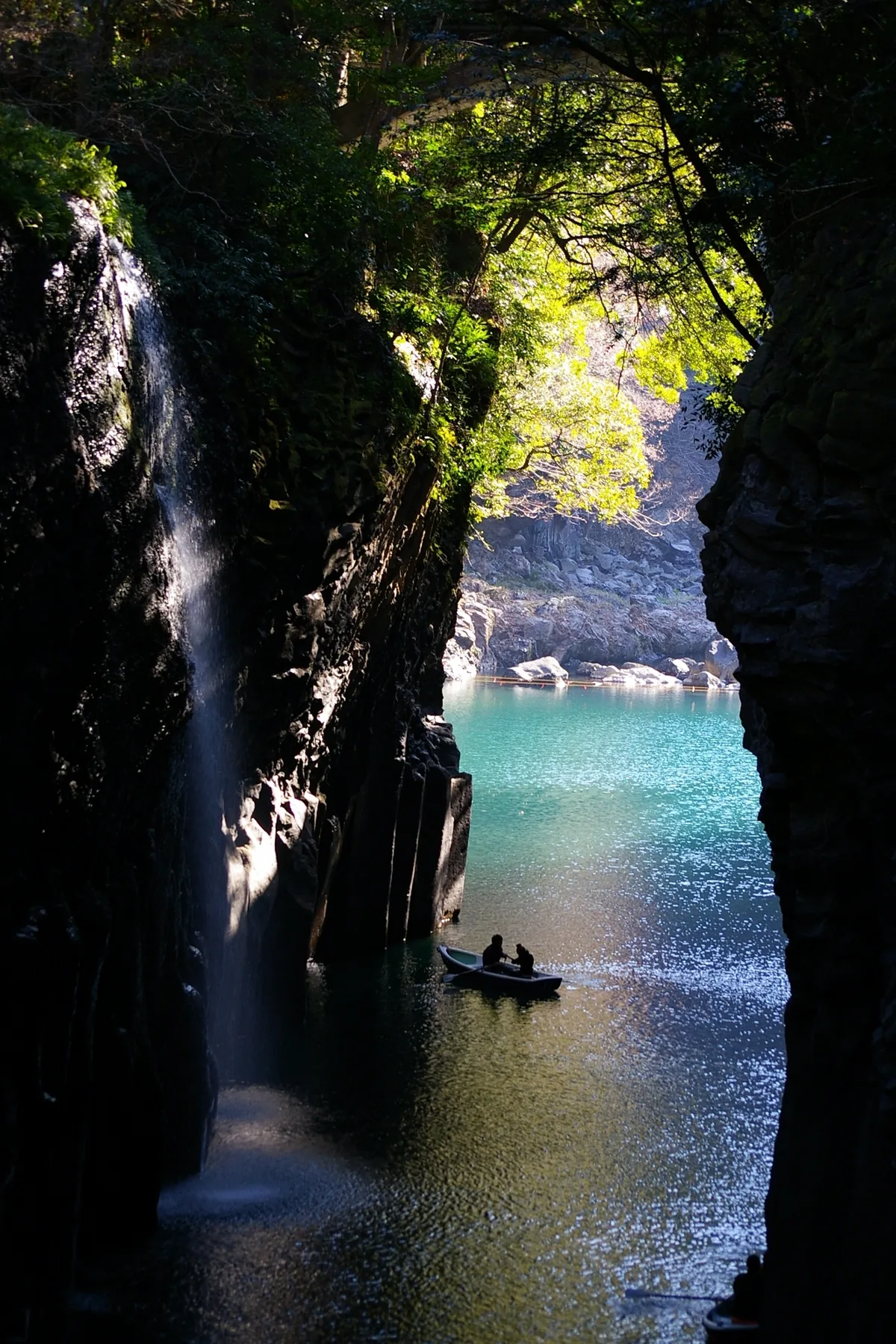
Takachiho splits into three practical eating zones, and each trades convenience for something else. The main parking area connects to the gorge floor food stalls and Chiho-no-ie by a stone path. That path runs about 1 kilometer along the gorge rim, according to Japan's official tourism site. That walk is worth budgeting time for separately from the meal itself. Manai Falls, the 17-meter waterfall the boats pass beneath, sits along the same stretch. Many visitors combine the walk, the falls, and lunch into one loop. Some boat rides are reported to include a shuttle back to the parking area, so confirm that option locally since it can change by season. For the fuller list of stops along that walk, see the gorge-area attractions guide. Town-center restaurants sit apart from that walk entirely, with easier parking and no queue tied to the boat rental. Roadside Station Takachiho splits the difference. It suits a fast stop rather than a leisurely one. The menu covers beef bowls, steak, chicken nanban, and dangojiru, aimed at drivers on a schedule. Self-driving gives the most control over timing, since you can shift around a queue without a fixed departure. Guided day trips from Fukuoka simplify the logistics, but they usually treat lunch as secondary to the sightseeing schedule. If dinner in town is part of the plan, check the lunch and dinner guide first. Evening options are limited without advance notice. Rural restaurant hours also shift with the season, and several close by 2:00-3:00 PM, so confirm today's hours locally rather than assuming a city-style dinner schedule.
| Zone | Best For | Trade-Off |
|---|---|---|
| Gorge-side (Chiho-no-ie area) | Nagashi somen, charcoal-grilled yamame, gorge-path atmosphere | 30-60 minute weekend queues; mostly cash |
| Town center | Takachiho beef at Nagomi, soba, sit-down meals | Easier parking; some restaurants need advance booking |
| Roadside Station Takachiho | Beef bowls, chicken nanban, dangojiru, souvenirs | Less atmosphere, but the fastest option on a tight schedule |
Which Takachiho Food Plan Fits Your Schedule
Match the plan to the time actually available rather than trying to fit everything in. Three approaches cover most visits. Whichever plan fits, decide the boat-versus-noodle trade-off before arriving. If the boat ride is the priority, secure that first and treat lunch as flexible. If the meal is the priority, arrive early enough that a queue doesn't cost you the rest of the day's plans. Either way, carry cash. Gorge-side stalls and smaller restaurants in town skew toward cash-only or ticket-machine ordering, even where card payment exists elsewhere. Packing a small backup snack, a rice ball or a protein bar, adds insurance if a queue or closure changes the plan.
A weekend visit faces competing time pressures: gorge-side noodle stands have queues of 30 to 60 minutes, while Takachiho beef in town requires advance booking, forcing you to choose between queue waits and reservation slots.
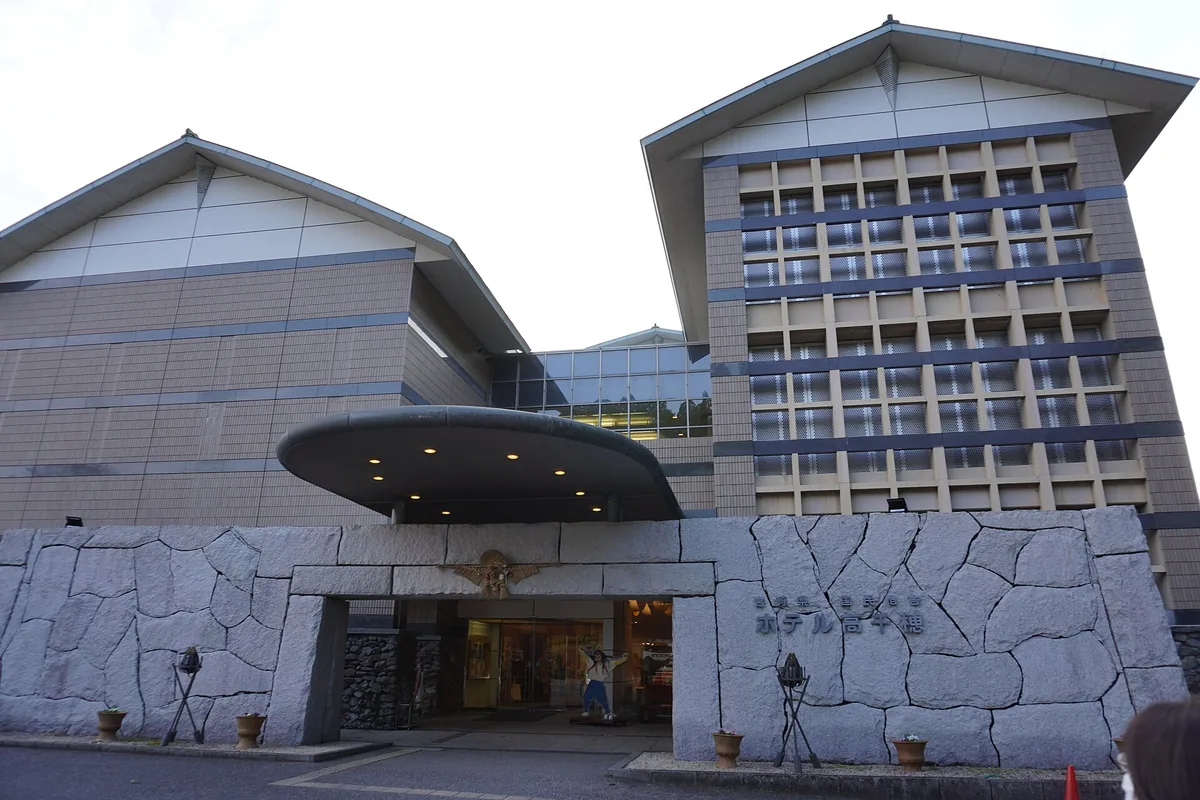
- Short on time: skip the noodle queue. Snack on grilled river fish or mitarashi dango near the gorge path, then pick up a Takachiho beef bowl or chicken nanban at Roadside Station Takachiho on the way out.
- The experience plan: arrive at Chiho-no-ie before 11:00 AM, ahead of the weekend rush, to keep the nagashi somen wait manageable before or after the gorge walk.
- The foodie plan: book a dedicated midday or evening slot at Nagomi for Takachiho beef, and treat the gorge as the earlier half of the day rather than the meal stop.
How This Guide Was Verified
Food availability, access details, seasonal rules, and the time-sensitive claims in this guide were checked on August 22, 2026 against the official sources below. Independent restaurant menus, prices, opening days, and sell-outs can change, so confirm the operator's same-day notice before making a special trip.
Frequently Asked Questions
What is the most famous food to try in Takachiho?
Nagashi somen is the food experience most associated with Takachiho Gorge, and Chiho-no-ie has served it since 1955. If a bigger sit-down meal matters more than novelty, Takachiho beef at a restaurant like Nagomi is the stronger pick.
Should you eat near the gorge or in Takachiho town?
Eat near the gorge for atmosphere and the classic nagashi somen experience, but expect a queue on weekends. Eat in town for a calmer sit-down meal, easier parking, and better odds of a table at Takachiho Beef Restaurant Nagomi.
Does nagashi somen work for vegetarians or travelers avoiding fish?
Do not assume the noodles alone are suitable: the standard dipping sauce uses fish-based tsuyu, and shared preparation may matter for allergies. Ask the operator about the entire set and preparation before ordering; diners with a serious fish allergy should not rely on visual inspection alone.
Do Chiho-no-ie and Nagomi take reservations?
Chiho-no-ie generally runs first-come, first-served during the day, so plan around a possible wait rather than expecting to book ahead. Nagomi can differ by season and day of the week, so confirm current business days and any course-reservation policy before building a meal around it.
How much should you budget for a Takachiho meal?
Check the current menu for nagashi somen and grilled-fish sets rather than relying on older traveler-reported prices. Takachiho beef also varies by cut, portion, and course.
What happens if the noodle queue and a boat reservation conflict?
Prioritize whichever one is fixed in time. A boat reservation has a set slot, so protect that first and treat the noodle queue as flexible. If timing allows both, try the noodles after the boat ride. Queues there tend to ease once the ride is done.
Free guide: Japan's Hidden Gems
12 under-the-radar places beyond Tokyo & Kyoto — with the best season to visit each and a local tip you won't find in the guidebooks.
You might also like


Continue reading
More guides you'll find useful