
Takachiho Nagashi Somen: Chiho-no-ie's Flowing Noodles
Plan a Takachiho nagashi somen lunch at Chiho-no-ie: 2026 hours, ¥1,500 set prices, how the flowing-noodle catch works, and gorge-queue timing tips.
On this page
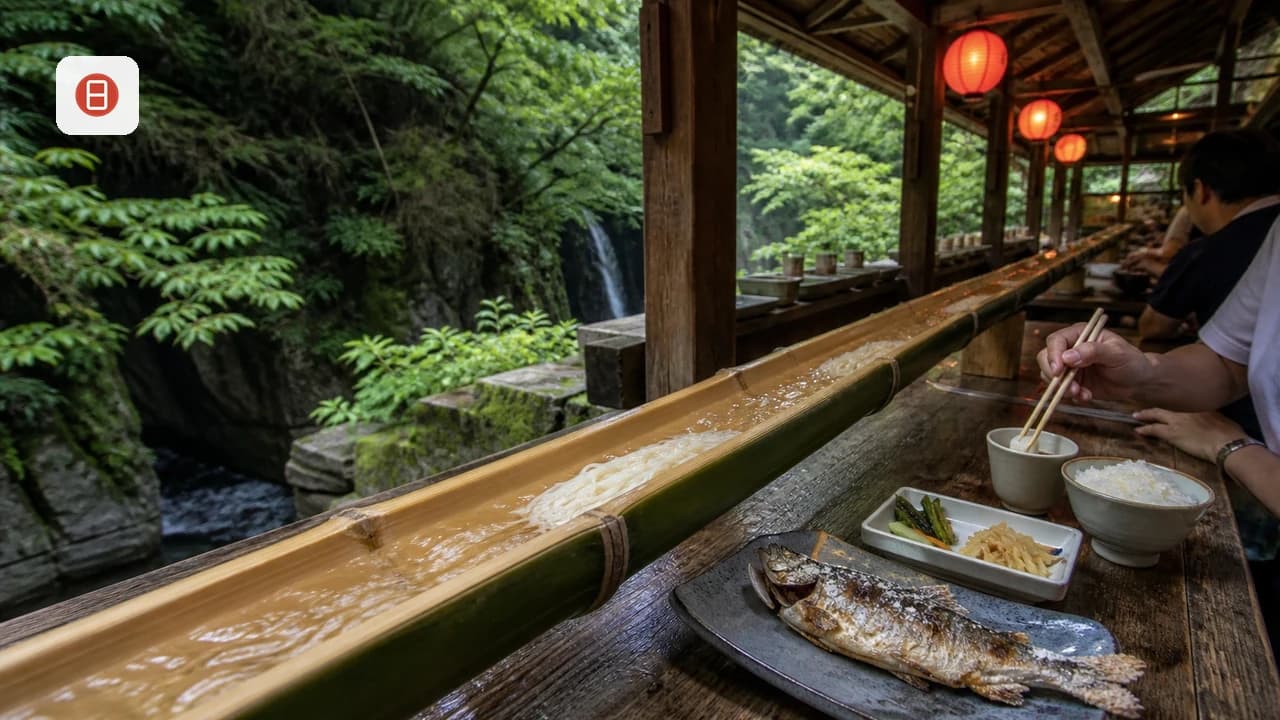
Last updated August 2026: Takachiho nagashi somen means catching thin wheat noodles as they shoot down a bamboo flume in cold spring water. You dip each catch into chilled tsuyu sauce before it disappears down the line. The style began at a restaurant beside Takachiho Gorge that has served the noodles since the 1950s, now a signature stop in the wider Takachiho food scene.
Takachiho Nagashi Somen at Chiho-no-ie: Where the Style Began
Nagashi Somen Chiho-no-ie sits at 62-1 Mukoyama, Takachiho-cho, Nishiusuki-gun, Miyazaki Prefecture 882-1103, directly beside Takachiho Gorge. According to the Japan National Tourism Organization, the restaurant has served nagashi somen since the 1950s and is widely credited as the place the style originated. Long tables run the length of the dining hall, each fitted with a bamboo half-pipe carrying cold spring water down from the valley. Several tables run parallel, so groups without a reservation typically get seated at the next open flume. Just outside sits a shallow pond, stocked with koi and a sturgeon-like fish that draws a steady stream of onlookers between courses. Most diners time a visit around a walk through the gorge or a turn on the rowing boats. This meal doubles as a logistics stop as much as a food stop, since it sits directly on the route between the parking area and the boat dock.
How Flowing Noodles Work: Catching, Missing, and the Bucket System
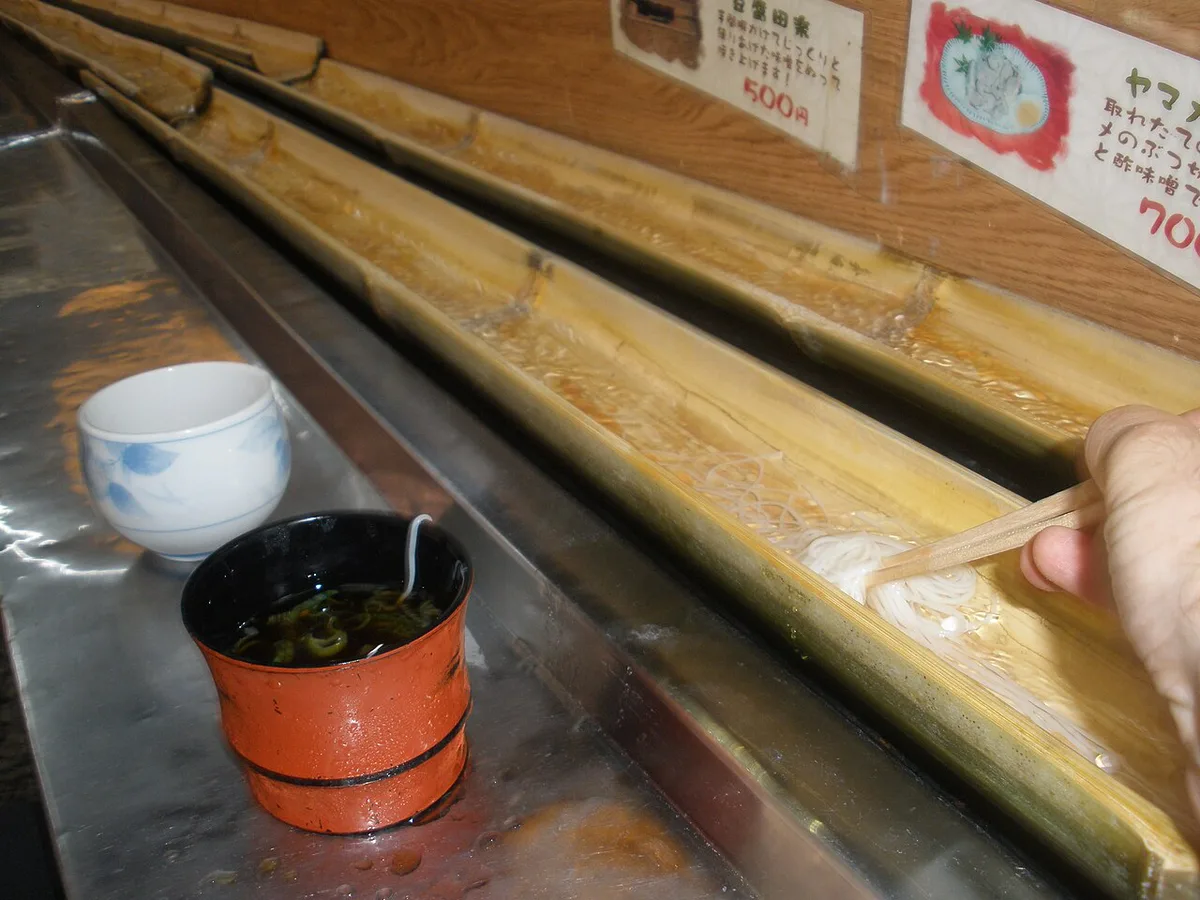
Staff drop small bunches of somen into the top of each bamboo pipe, and the current carries them down the table within seconds. Diners hold chopsticks ready and pluck noodles out mid-flow, dipping the catch into a chilled tsuyu sauce flavored with bonito, ginger, or scallion. A table of four or more usually reaches for the same bunch at once, given the pace. Missing a bunch is not a problem. Any noodles that slip past collect in a bucket at the end of the line, and a server ladles them back into your bowl. That built-in safety net makes the meal manageable for kids still working on their chopstick grip. It also keeps the table loud with laughter whenever a fresh bunch drops. Staff usually give brief instructions on where to sit and how the flow starts before the first bunch drops.
Set Meals, Prices, and What to Drink
Chiho-no-ie serves flowing somen and regional dishes such as grilled yamame, but the current official tourism listing does not publish the older ¥1,500 set, ¥600 beer, or ¥100 fish-food prices. Check the menu at the restaurant. For grilling technique and river-fish dishes, see the river fish and country cooking guide; for beef, see the local beef guide.
Missed noodles collect at the end of the flume, but prices and set contents need to be checked on the current menu.
- Somen and set meals: check the current menu
- Drinks: check current availability and price
- Pond rules and fish food: ask staff on site
Planning Your Visit: Hours, Queues, and Timing With the Gorge
Chiho-no-ie keeps different hours on weekdays and weekends, and both differ from the rowing-boat schedule at the gorge. Confirm current opening times directly before a visit, since seasonal adjustments happen. Eating first clears the somen tables before the lunch rush arrives with tour buses. Eating after the boats means a relaxed meal once the rowing slot is done, with no clock running. Weekday visits shorten both queues, since bus groups mostly arrive on weekends. Boats seat a small group at a time, and staff issue horseshoe-style neck life jackets before boarding. One workable half-day plan starts at the top of the gorge and moves through the rowing boats. From there, walk the gorge floor path past Manai Falls. Finish with the somen set once the group regroups at the pond. For more places to eat around town beyond this one stop, browse the lunch and dinner guide.
- Chiho-no-ie hours: 11:00–16:00; no fixed holiday listed
- Payment and parking: cards unavailable and no dedicated parking
- Rowing boat rental: date-variable; the August 2026 calendar lists ¥5,100 per boat for 30 minutes
- Boat queue on a busy weekend: can run past two hours
Takachiho Gorge Parking and the Stair Climb
Chiho-no-ie has no dedicated parking. Under the current official gorge plan, lots 1 and 2 cost ¥1,000, lot 3 costs ¥800, lot 4 costs ¥500, and lot 5 is free when available. Availability and traffic controls can change, so check the official boat and parking page. The walk between upper lots and the gorge includes slopes and steps, which matters for strollers and limited mobility.
Nearby Bites: Dango, Ice Cream, and Maeda Confectionary
Noodle shops around the pond grill mitarashi dango over charcoal and finish them with a sweet walnut-miso glaze, a quick snack before or after the meal. Staff typically stake the skewers in sand around a small charcoal fire, which gives the mochi a light smoky edge alongside the sweet glaze. An ice cream stand across from Chiho-no-ie advertises 25 percent full cream milk and 12.5 percent fat, noticeably richer than a standard scoop. In town, Maeda Confectionary sells cakes, madeleines, and creme caramel pudding. Expect about ¥1,420 for a small selection. Souvenir stalls and a small shrine line the pond too, useful for filling time while waiting for a table. Pair any of these stops with the soba noodle alternative if you want a second noodle option beyond the somen tables.
Season, Crowds, and the Takachiho Spring Festival
Nagashi somen suits Takachiho's hot, humid summer best, when cold spring water and chilled noodles make an effective lunch break from the gorge trail. Spring can bring its own crowd driver. Local festival activity has been known to route a mikoshi procession past the pond beside Chiho-no-ie, with portable shrines carried through the shallow water near Onokoro Island. That procession draws a crowd around the restaurant and can extend both the boat queue and the noodle-table wait beyond a typical day. Autumn and winter visits trade the noodle-flume experience for quieter gorge walks. Confirm dates with local tourism information before planning a spring trip around the festival. Confirm current hours with Chiho-no-ie directly if a visit falls outside the warmer months.
| Season | Experience Highlights | Crowds |
|---|---|---|
| Summer | Cold spring water and chilled noodles make an effective break from the gorge trail | High (peak season) |
| Spring | Festivals may route mikoshi processions through the pond area | High (festival crowds extend queues beyond typical day) |
| Autumn/Winter | Quieter gorge walks; noodle-flume experience less appealing | Low |
How Takachiho Compares to Kyoto's Nagashi Somen
Kyoto also runs a well-known nagashi somen scene, though the format differs. According to the Japan National Tourism Organization, Kyoto diners eat the noodles on a kawadoko, a platform built out over a river during the summer months, rather than at a fixed bamboo flume. Takachiho's version keeps the bamboo-pipe mechanics that trace back to the 1950s original at Chiho-no-ie. It also keeps the gorge setting, which lets you pair the meal with a walk or a row on the same visit. If a Kyushu itinerary allows for only one nagashi somen stop, Chiho-no-ie's claim to the origin story makes it the more complete stop over a generic flume elsewhere in the region.
Mistakes to Avoid at Nagashi Somen Chiho-no-ie
The stone steps on the gorge path are uneven in places, so factor in extra time and sturdy footwear rather than sandals if mobility is a concern. Arriving with a tour bus group headed for the boat queue is the biggest predictor of a long wait at both the dock and the noodle tables. Build slack into a same-day plan that also includes the gorge path and Manai Falls nearby. On a packed weekend, tables turn over quickly, so save extended photos for after the meal rather than mid-bite. Skipping the weekday option is the most common planning mistake, since weekend bus groups stack both the boat queue and the noodle line at once.
Boat prices are set by date. The August 2026 calendar lists ¥5,100 for 30 minutes, so check the current calendar before combining a boat slot with lunch.
How This Guide Was Verified
Food availability, access details, seasonal rules, and the time-sensitive claims in this guide were checked on August 22, 2026 against the official sources below. Independent restaurant menus, prices, opening days, and sell-outs can change, so confirm the operator's same-day notice before making a special trip.
Frequently Asked Questions
What is nagashi somen?
Nagashi somen is a communal meal where thin wheat noodles flow down a bamboo half-pipe in cold water. Diners catch a portion with chopsticks and dip it in tsuyu sauce before eating. Missed noodles collect in a bucket at the end of the line rather than going to waste.
Where did nagashi somen originate?
Nagashi Somen Chiho-no-ie, beside Takachiho Gorge, has served the noodles since the 1950s. The Japan National Tourism Organization credits it as the birthplace of the dining style.
How much does a nagashi somen set cost in Takachiho?
Check Chiho-no-ie's current menu. The official tourism listing does not publish the older ¥1,500 set or ¥600 beer prices, so those figures should not be treated as current.
What are Chiho-no-ie's opening hours?
The current official listing gives 11:00-16:00 with no fixed holiday. It also lists no dedicated parking and no card payment. Confirm any temporary closure before visiting.
Should you eat before or after the rowing boats?
Either order works. Eating first clears the somen tables before the lunch rush arrives. Eating after gives a relaxed meal once the rowing queue, which can run past two hours on busy weekends, is behind you.
What happens to the noodles you miss?
Missed noodles collect in a bucket at the end of the bamboo line. Staff ladle them back into your bowl, so a slow chopstick grip never means an empty plate.
Is nagashi somen only available in summer?
Cold noodles in cold flowing water suit Takachiho's hot summers best, and that is when the meal draws the biggest crowds. Chiho-no-ie has been known to serve outside peak summer as well, so confirm current seasonal hours directly before a visit.
How does Takachiho's nagashi somen differ from Kyoto's?
Kyoto's version is typically served on a kawadoko, a platform built over a river in summer. Takachiho keeps the bamboo-flume format that traces back to the 1950s original at Chiho-no-ie, plus a direct link to the gorge and rowing boats.
Free guide: Japan's Hidden Gems
12 under-the-radar places beyond Tokyo & Kyoto — with the best season to visit each and a local tip you won't find in the guidebooks.
You might also like


Continue reading
More guides you'll find useful


