Ariake Seafood and Saga Nori: Japan's Tidal-Flat Coast
A practical guide to Ariake seafood and Saga nori: premium grading, mudskipper, warasubo, and where to buy along the coast.
On this page
Last updated August 2026. Ariake seafood and Saga nori both trace back to the same six-meter tidal swing that defines the Ariake Sea, Japan's largest tidal-range bay. That swing exposes nori nets to direct sun at low tide, then floods the tidal flats with mineral-rich river water at high tide. This guide explains how that cycle shapes premium nori grading, which unusual tidal-flat seafood turns up on Saga's coast, and where to taste or buy both.
Ariake Seafood and Saga Nori: Inside Japan's Most Distinct Tidal Ecosystem
Ariake Sea stretches across four Kyushu prefectures: Saga, Nagasaki, Fukuoka, and Kumamoto. It ranks as Kyushu's largest bay. More than 100 rivers feed it, including the Chikugo River, Kyushu's longest, which flows down from Mount Aso. That river water mixes with seawater along the coast and lowers salinity near shore. Tidal range in the bay reaches six meters, among the widest swings anywhere in Japan. Twice daily, the tide exposes broad mudflats, then floods them again a few hours later. Those mudflats support the shellfish and unusual tidal-flat fish covered later in this guide. The same tidal rhythm also drives the nori harvest described next.
The Pole System: How Six Meters of Tide Shape Saga Nori's Flavor
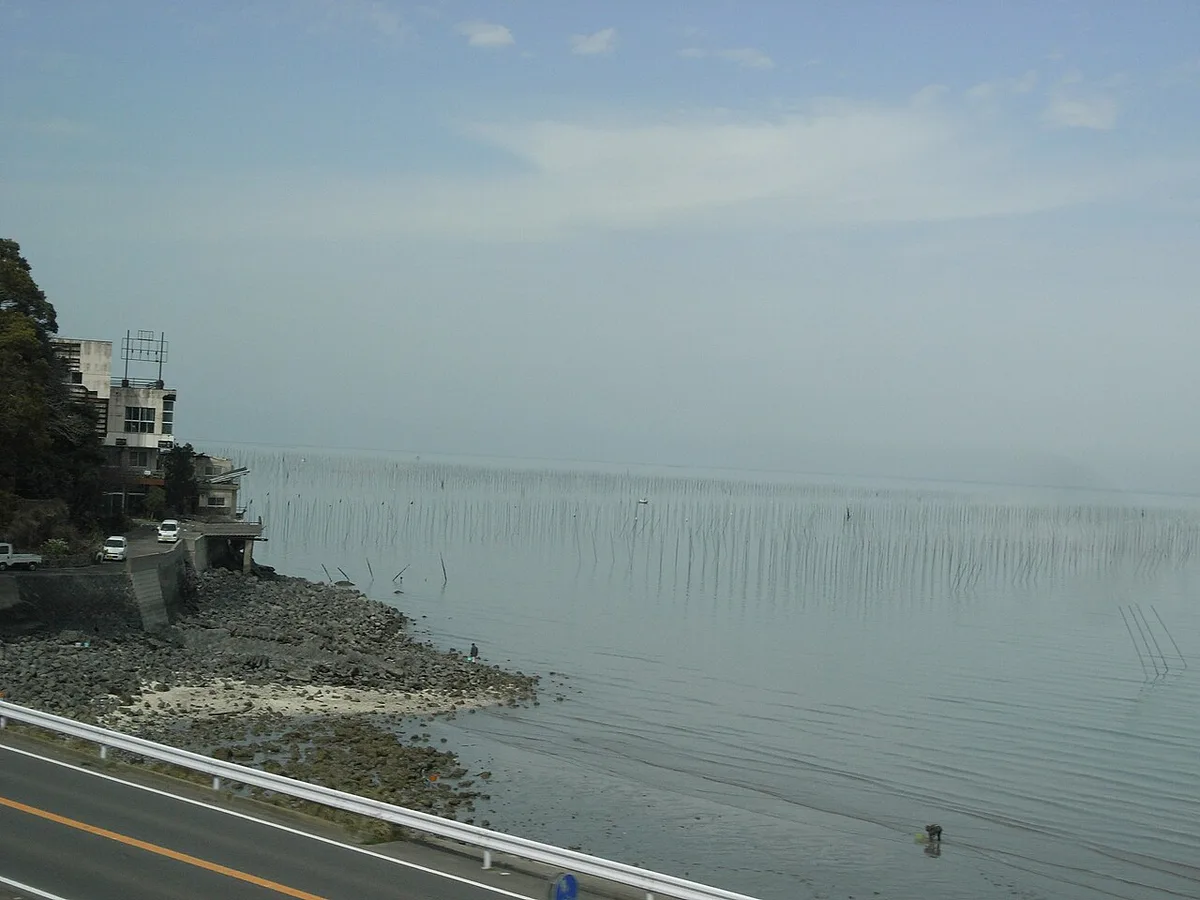
Saga nori grows on a "pole system," locally called shichiku-shiki: rows of poles planted in the shallows with nets strung between them. That contrasts with floating-net systems used in some other Japanese growing regions, where nori stays submerged without the same twice-daily air exposure. High tide submerges those nets, letting the nori absorb nutrients and minerals from the water. Low tide lifts the nets above the surface, and direct sun concentrates the nori's flavor through photosynthesis. Farmers repeat this immersion-and-exposure cycle for months, and it gives Saga nori a softer bite than nori grown in calmer, less tidal water. Maintaining that cycle is demanding work: poles need constant adjustment for temperature, weather, and the day's specific tidal swing.
- Mid-October: seawater cools to around 23°C or below, and spores planted earlier on oyster shells begin to sprout.
- Following weeks: nets carrying those spores go out to the poles so the nori can take root and grow.
- October through March: the main growing and harvesting season, sometimes extending into April in some areas.
- Early January: the season's first major nori auctions draw buyers from across Japan to Saga and neighboring Ariake-coast prefectures.
- Nightly during harvest weeks: fishermen pick the nori by boat after dark, when its cells are dormant, which better preserves flavor and color.
Ichiban Tsumi: Why the First Pick Commands Premium Status
Ichiban tsumi means "first pick," the earliest crop cut from a season's freshly strung nets. That first harvest is prized for a softer texture and a more concentrated flavor than later cuts from the same nets. At auction, inspectors first sort nori by color and luster, a fast visual check on shape and blackness. Buyers who know the trade go further: they smell each sample, taste it, and judge how quickly it dissolves on the tongue before bidding. Saga's fishery cooperatives also reserve a top designation, Saga Nori Ariake Kaiichiban, for the very best of the harvest. In some years, inspectors do not certify a single sheet at that top tier. The standard is set by taste and texture, not by how much nori is available that season.
| Grade or Label | What It Signals |
|---|---|
| Standard auction classification | Base sorting by color and luster; sets the entry tier before any tasting happens. |
| Ichiban Tsumi (First Pick) | The season's earliest harvest, prized for a softer texture and stronger flavor. |
| Saga Nori Ariake Kaiichiban | Saga's top designation, awarded by inspectors only in years the crop meets that standard. |
| AAA (used on some Ariake nori at retail) | A label some sellers use to flag texture, melt, and umami over blackness and shine. |
Beyond the Leaf: Mudskipper, Warasubo, and Other Ariake Seafood
Ariake seafood extends well past nori. The same mudflats that host the pole fields also support mutsugoro, a type of mudskipper, and warasubo, an eel-like fish. Both are regional specialties rather than everyday menu items, typically grilled or simmered in home-style Saga cooking. Their flavor is distinctive, and it is an acquired taste for many visitors. Approach them as a curiosity to sample, not a dish to build a whole meal around. Mudflat shellfish, including clams gathered at low tide, offer a gentler entry point into the same ecosystem. For a contrasting coastal specialty, see the Yobuko Squid Guide: Ika Sashimi, Morning Market Hours, and Bus Times From Karatsu. Availability of these tidal-flat specialties shifts with season and local conditions, so check what is currently being served before planning a meal around any one species. Healthy mudflats keep both the nori beds and this seafood viable, which is why fishery cooperatives treat conservation as routine work. Between harvest seasons, cooperative members cultivate the seabed and clean the coastline to keep contamination away from the nets. Fewer large typhoons have reached the Ariake Sea in recent years, so cooperatives now do extra work to keep the water oxygenated. That conservation effort protects the same tidal flats that mutsugoro, warasubo, and shellfish depend on, not only the nori.
How to Identify Premium Saga Nori
Grading starts with a visual check, but flavor is what separates genuinely premium Saga nori from the rest. Trade classifications typically begin with color and luster: darker, glossier sheets look better at a glance and set the base sorting tier. Experienced buyers push past that first look. Sanpuku Nori, a processor founded in 1971 and based in Kawazoe-cho, Saga City, built its reputation on tasting and smelling samples before bidding, not on appearance alone. Yamamoto-Noriten, a Tokyo company with more than 160 years in the nori trade, opened a processing plant in Saga in September 2014 to work more closely with local farmers. Its products carry the "Maruume" mark, a red circle around the character for ume, or Japanese apricot. The mark reflects timing: both the fruit's blooming season and the best nori harvest fall in midwinter. Supermarket shelves outside Saga rarely make these fine-grained distinctions, which is one reason factory stores and specialist retailers along the coast remain a reliable way to buy top-tier nori knowingly. At home, run the same sensory test producers use before you buy.
Yamamoto-Noriten, established with more than 160 years in the nori trade, opened a processing plant in Saga to work directly with local farmers. The facility sits about 30 minutes inland from the coast, so visitors should confirm opening hours beforehand.
- Aroma: a fresh, oceanic scent when you first open the pack, not a stale or flat smell.
- Texture: a crisp initial bite that gives way to a melting finish, rather than a texture that stays tough throughout.
- Aftertaste: a rounded umami finish rather than a flat, one-note marine taste.
Planning a Visit to Saga's Nori Coast
Late autumn through winter is the best window to see the nori harvest in action, roughly October to March based on current cooperative timelines. Confirm the current harvest calendar locally before you go, since water temperatures and planting dates can shift year to year. Low tide is when the pole-and-net fields are most visible along the coast. Harvesting itself happens at night, so a daytime visit shows the growing fields rather than fishermen actively at work. A rental car covers the coast most flexibly, since the stops below spread across Kawazoe-cho and the Ashikari shoreline. Local trains reach central Saga City, but coverage thins out toward the tidal flats, so pair a train arrival with a taxi or rental car for the coastal stretch. Coastal towns along this stretch stay quiet outside the harvest season, so pair a winter nori-coast trip with other Saga stops to fill out a full day. Round out the trip with the wider Saga attractions guide for sightseeing beyond the coast.
Water temperature is the trigger for nori season: around 23°C or below prompts sprouting in mid-October. Because water temperatures and planting dates shift yearly, travelers should confirm the current harvest calendar before planning their visit.
- Kawazoe-cho coast: pole-and-net fields plus the Ashikari branch of the Saga Prefecture Fishery Cooperative Federation, one of the working grounds behind the harvest.
- Sanpuku Nori factory store, Kawazoe-cho, Saga City: direct-from-processor nori, including the signature roasted Kamiboshi line.
- Yamamoto-Noriten's Saga plant, about 30 minutes inland from the coast, opened in September 2014. Check current opening hours and public access before visiting, since processing plants do not always keep retail hours.
Serving and Storing Saga Nori at Home
Steamed Saga rice is the simplest pairing for premium nori, letting the sheet's aroma and umami stand on their own. A chilled, dry local sake also works well, cutting through the nori's richness. See the Saga Sake Breweries and Tasting Guide: Tours, Costs, and Routes for 2026 for specific bottles to try. Some Saga producers also market their nori as a match for cheese and miso soup, pairings that lean on the same umami that makes nori work with rice. Moisture becomes premium nori's biggest enemy once you open a pack. Sealed, unopened packs from some Saga producers carry shelf-life ratings around two years from the manufacture date, but that window shortens fast after opening. Vacuum-sealed retail packs travel well for this reason, and many visitors buy extra sheets specifically to bring home. Ariake seafood and Saga nori are one part of a wider regional food story. The Saga food guide maps out the rest of that story, including inland and coastal specialties beyond this coast. Travelers adding a red-meat stop can pair this trip with the Saga Beef Restaurants: Where to Eat A5 Wagyu in Saga City. Those continuing toward Ureshino can fold in the Ureshino Tea and Onsen Tofu: A Complete Saga Guide (2026) for tea fields and onsen-simmered tofu.
- Leaving a pack unsealed or loosely folded: air exposure turns crisp nori limp within hours.
- Storing nori near a stove, window, or anywhere warm and humid: heat and moisture both degrade texture fast.
- Buying more premium nori than you can use within a few weeks of opening: freshness drops quickly once the seal is broken.
How This Guide Was Verified
Food availability, access details, seasonal rules, and the time-sensitive claims in this guide were checked on August 22, 2026 against the official sources below. Independent restaurant menus, prices, opening days, and sell-outs can change, so confirm the operator's same-day notice before making a special trip.
Frequently Asked Questions
What is the difference between Ariake nori and regular seaweed?
Ariake nori grows on nets strung between poles, not on rafts floating in open water. A six-meter tidal swing submerges those nets at high tide and exposes them to direct sun at low tide. That stress cycle, combined with mineral-rich freshwater from rivers like the Chikugo, gives you a softer, more melt-in-the-mouth texture than nori grown in calmer, less tidal water.
Is Saga nori worth the premium price?
Premium-tier Saga nori reflects labor-intensive, largely nighttime harvesting during a short October-to-March window. The most prized batches, known as ichiban tsumi or first pick, come from the very start of that season. They're graded on aroma, melt, and umami, not just color. If you taste both side by side, you will likely find the flavor and texture gap justifies the cost. For casual snacking, standard-grade nori remains a reasonable, cheaper choice.
Where can I see the nori poles in Saga?
Your clearest views are along the Ariake coast near Kawazoe-cho and the Ashikari district, both active nori-growing grounds in Saga Prefecture. Low tide exposes the pole-and-net fields directly, so time your visit around the tide table rather than just the calendar date. Fishermen harvest the nori itself at night, so a daytime visit shows you the growing fields, not the harvest in progress. Confirm current public access before heading to any working fishing ground, since these are commercial operations, not tourist attractions.
How do I store premium nori so it stays crisp?
Moisture is the main threat to premium nori, so reseal the pack tightly after every use and press out excess air. Saga producers commonly package nori with a resealable zipper for exactly this reason. Keep the sealed pack in a cool, dark spot away from direct sunlight and humidity. A pantry shelf works better than a spot near a stove or window. Sealed, unopened packs from some Saga producers carry shelf-life ratings around two years from the manufacture date, but that window shortens fast once you open it.
What are warasubo and mutsugoro, and are they worth trying?
Warasubo and mutsugoro are tidal-flat fish unique to the Ariake Sea's mudflats, the same environment that feeds the nori beds. Mutsugoro, a type of mudskipper, and warasubo, an eel-like fish, both turn up grilled or simmered in local Saga cooking. Both have a strong, distinctive flavor that some travelers love and others find challenging. Treat them as a taste-first curiosity rather than a must-eat checklist item. Availability shifts with the tidal-flat season, so check current menus locally before planning a trip around them.
When is peak season for Ariake nori and seafood?
Peak nori season runs roughly October through March, with the earliest ichiban tsumi harvest concentrated in the season's first weeks. Early January brings the year's first major auctions, when buyers from across Japan compete for that first-pick nori. Tidal-flat seafood like mutsugoro, warasubo, and mudflat shellfish follow their own separate seasonal patterns tied to water temperature and the tidal cycle. Check current local sources for exact timing before planning a trip around any single specialty.
Free guide: Japan's Hidden Gems
12 under-the-radar places beyond Tokyo & Kyoto — with the best season to visit each and a local tip you won't find in the guidebooks.
You might also like


Continue reading
More guides you'll find useful