Tottori Matsuba Crab Season and Dining Guide
Plan a Matsuba crab experience in Tottori with guidance on winter availability, menu grades, full courses, markets, costs, reservations, and transport.
On this page
Last updated August 2026. This Tottori Matsuba crab guide explains how to compare winter dining, tasting portions, market purchases, reservations, and the Tottori–Sakaiminato journey. Confirm the season, menu, total price, and return transport before traveling, then use the Tottori food guide to plan your other meals.
What Is Matsuba Crab?
Matsuba crab is a specific menu and market label that requires more scrutiny than a generic crab description. The supplied evidence does not define its exact species, sex, landing origin, branding rules, or grading standards. Confirm those details through a current Tottori fisheries source before treating any narrow definition as authoritative. At a restaurant, ask what the displayed name means for that particular course. A label such as snow crab should not automatically be treated as equivalent. Origin, sex, size, grade, and landing port may affect how a seller describes the product. Each point should be confirmed rather than inferred from a translated menu. This distinction matters when one offer costs more than another. A higher amount may reflect size, grade, preparation, or the number of included dishes. It does not reveal those details by itself. Request an itemized explanation before ordering.
- Confirm the product name in Japanese and in your preferred language.
- Ask where the crab was landed and whether that origin is documented.
- Check whether the quoted amount covers one diner, one crab, or a weight-based purchase.
- Request an explanation of any displayed grade instead of assuming that every seller uses identical terms.

When Is Matsuba Crab Available in Tottori?
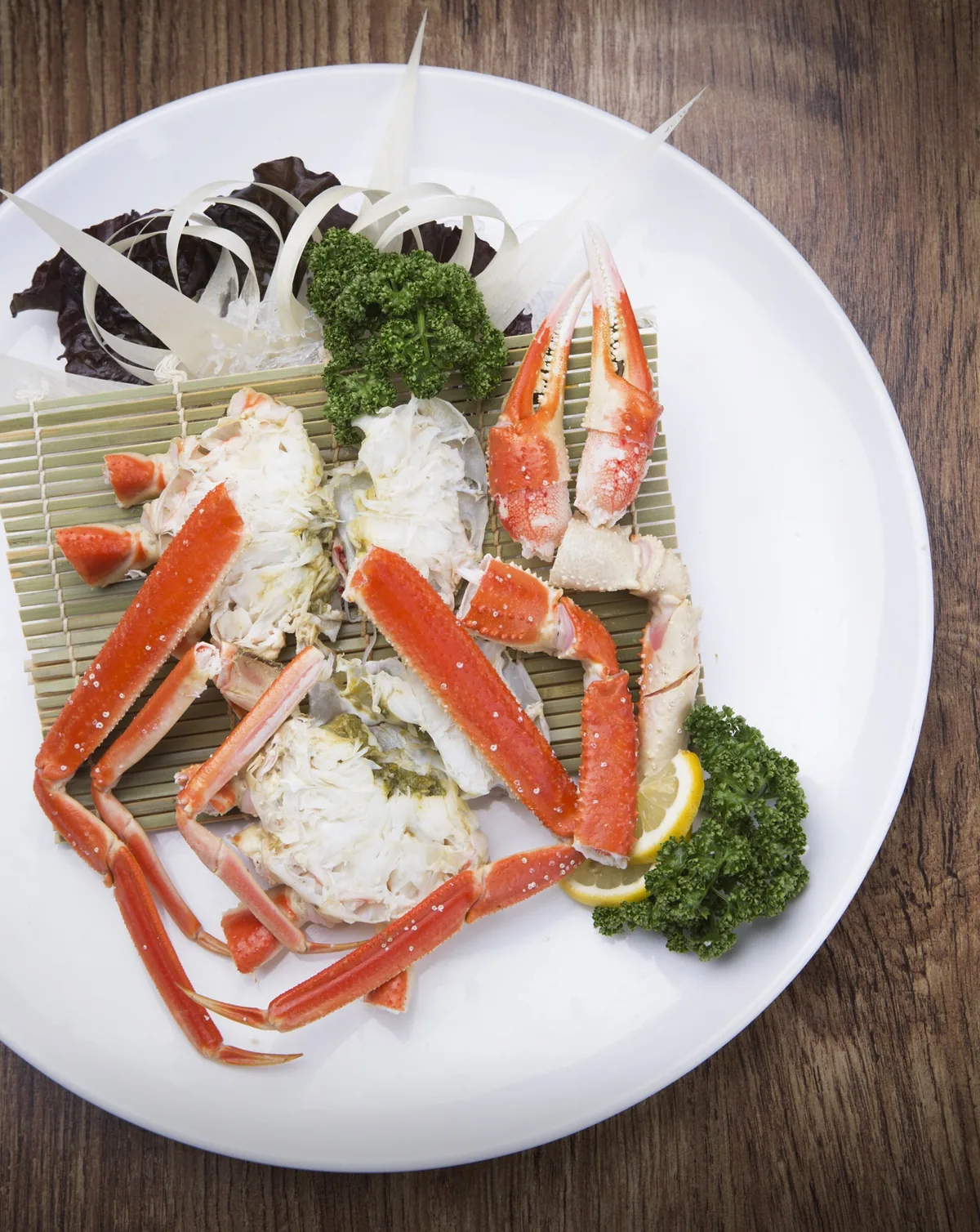
Male Matsuba crab may be fished from November 6 through March 20 under Tottori Prefecture's current season. Restaurant availability is a separate question: weather, landings, stock, advance orders, and demand can affect what appears on a particular day. A venue may also use frozen or previously stored crab outside the fishing period, which does not establish year-round fresh Matsuba crab service. Ask whether the menu is available on your date and whether the product is fresh, frozen, or stored. Reconfirm shortly before a crab-focused journey, especially when the meal requires extra transport or a nonrefundable booking.
- Check the official fishing dates for the relevant winter.
- Confirm restaurant or lodging availability for the exact dining date.
- Ask whether substitutions occur when the planned crab cannot be supplied.
- Learn what happens to a reservation if weather or landings affect the menu.
- Keep a non-crab meal nearby as a fallback.
Choosing an Experience with This Tottori Matsuba Crab Guide
Choose the format before choosing a venue. A full course suits diners who want several preparations and can protect a longer meal period. A tasting portion reduces the commitment when budget or time matters more. Markets can support comparison shopping, although buying, preparation, storage, and transport require separate checks. Lodging plans combine dinner with an overnight stay, but room and meal conditions can be difficult to separate. The table uses planning estimates rather than unsupported operating claims. Every actual duration, price, and booking rule still needs confirmation.
For a 2026 crab-focused detour, a current menu is only one check: confirm official fishing dates, the product and total price, and the last practical return connection. Written venue confirmation is useful when the meal requires extra transport or a nonrefundable booking.
| Experience | Best for | Planning time | Booking approach | Cost variables | Main trade-off |
|---|---|---|---|---|---|
| Full restaurant course | A meal-centered occasion | Protect one long meal slot and confirm its duration | Reserve after checking the exact crab course | Crab size, grade, preparation, and course count | Broadest comparison of preparations, with the largest likely commitment |
| À la carte or tasting portion | Short visits or controlled spending | Confirm preparation time before ordering | Ask whether walk-ins can order the seasonal item | Portion, preparation, and minimum-order rules | Lower commitment, but fewer preparations |
| Market or port-area visit | Travelers who want to compare products | Allow time for transport, selection, and handling | Restaurant-style reservations may not apply | Weight, displayed grade, cooking, packing, and shipping | More purchasing choices, with added logistics |
| Lodging meal plan | Travelers prioritizing an integrated evening | One overnight stay | Book the named meal plan, not only the room | Room category, meal inclusion, drinks, and supplements | Convenient schedule, with less flexibility |
How Matsuba Crab May Be Served
Current preparation lists must come from the venue’s own menu. Common-looking terms in translations should never be used to promise a specific dish. Instead, compare the techniques explicitly included in the course you are considering. Raw, boiled, grilled, steamed, hot-pot, and rice preparations may differ in texture, effort, and serving pace when listed. Treat that sentence as a comparison framework, not confirmation that one venue serves all six. First-time diners may prefer a course containing several clearly described methods. That format makes comparison easier without requiring separate orders. A shorter tasting works better when you have limited time or want to manage cost. Solo travelers should check minimum party sizes before assuming that a full course can be ordered. Groups should ask whether the quoted crab is shared or assigned per diner.
- Compare the number of preparations actually named on the current menu.
- Check whether shell cracking or table-side assistance is provided.
- Ask whether the meal has a fixed seating time.
- Confirm which dishes contain crab rather than relying on the course title.
- Verify whether rice, soup, vegetables, dessert, or drinks are included.
- Choose fewer preparations when sightseeing time matters more than a long meal.
Where to Eat or Buy Matsuba Crab
No current venue, market, or lodging source was supplied, so naming a business would risk outdated availability. Search by experience and location once your travel dates are fixed. Within Tottori City, prioritize options with a current official menu and a practical route from your accommodation. For a port-area visit, verify the exact port, seller, operating status, and onward transport. Sakaiminato should be treated as a separate destination decision rather than a substitute label for Tottori City. A venue qualifies for a special journey only after confirming its official name, address, crab offering, and reservation method. Published hours alone are not enough. Ask about seasonal exclusions, irregular closures, sold-out courses, and last-order times. Market buyers need additional answers about cooking, packing, storage, shipping, and same-day consumption. Never assume that a raw purchase can be prepared on site.
- Open the business’s current official website or booking page.
- Match the address with the map pin before calculating travel time.
- Find an explicit Matsuba crab menu for your intended date.
- Check opening days, serving hours, and the final order time.
- Confirm whether reservations are accepted in a language you can use.
- Ask whether the venue cooks purchases or only sells them.
- Review cancellation terms before authorizing payment.
- Save the venue’s written reply for check-in or arrival.
Matsuba Crab Cost, Grades, and Ordering Trade-Offs
A dependable 2026 price cannot be quoted from the supplied evidence. Check the venue’s current official menu, booking page, or lodging reservation screen. At a market, use the displayed price card and ask staff to explain its unit. Record every quoted amount in ¥ and determine what it covers. Some offers may be priced per person, per crab, by weight, or at a changing market amount. Do not assume which method applies. Grades also need a seller-specific explanation because no verified grading system was provided. For a lower commitment, look for a clearly identified tasting portion or single preparation. A full course is the more complete format when several preparations are included, but completeness should be verified from the menu. Market buying can offer more control over the selected crab. Packing, cooking, storage, and transport may add separate costs.

| Budget approach | What to seek | What to confirm |
|---|---|---|
| Good | One named tasting portion or preparation | Crab identity, portion size, and total price |
| Better | A set with several explicitly listed crab dishes | Course contents, supplements, and dining duration |
| Splurge | A full course, selected crab, or lodging package | Grade, allocation, room inclusion, drinks, tax, service, and cancellation terms |
- Ask whether the amount is per diner, per group, per crab, or by weight.
- Confirm the crab’s stated origin and grade before comparing offers.
- Check whether tax and any service charge are included.
- Request the number and names of included courses.
- Add drink, cooking, packing, refrigeration, and shipping charges where applicable.
- Compare cancellation costs before paying for a seasonal menu.
Reservations and Practical Dining Tips
Advance booking is worth considering when the crab meal is a trip priority. No universal reservation window appears in the evidence, so ask each venue how early it accepts bookings. Secure the named crab menu rather than making a table-only reservation. Written communication reduces confusion about the product, amount, and cancellation conditions. Language support must also be checked directly. An English booking page does not prove that every service period has English-speaking staff. Dietary restrictions require the same caution. Disclose shellfish allergies and other restrictions before booking, then ask whether the venue can safely accommodate them. Do not rely on removing visible crab from a shared course. Mobility questions should cover the entrance, stairs, seating, toilets, and route from the nearest practical arrival point.
- Provide the dining date, preferred time, and number of guests.
- Name the exact crab course or item you want.
- Ask how the quoted amount is calculated.
- Check advance-payment and cancellation requirements.
- Disclose allergies and dietary restrictions before arrival.
- Confirm seating time and expected meal duration.
- Ask what language assistance is available.
- Recheck the return journey before accepting the dining time.
Tottori–Sakaiminato Transport and Itinerary Planning
Build the route door to door, not station to station. The supplied evidence contains no verified Tottori–Sakaiminato distance, rail duration, bus frequency, fare, or final departure. Check each figure through current official transport planners for your travel date. Compare the complete journey from your accommodation to the dining table. Rail or bus may reduce driving responsibilities, but fixed departure times can limit a long dinner. A taxi can simplify a local transfer, although availability and price need confirmation. A rental car offers schedule control while adding parking and safe-driving considerations. Walking is useful only after a map confirms that the route suits your time and mobility. Pair a meal with the Tottori attractions guide when staying in Tottori City. Continuing travelers can use the San’in food guide to compare regional meal priorities.
- Calculate accommodation-to-venue travel in both directions.
- Check the final practical return connection before reserving dinner.
- Add transfer, waiting, parking, and walking time.
- Save a backup route for missed or disrupted connections.
- Avoid making a nonrefundable booking until the transport plan works.
- Separate Tottori City dining from any Sakaiminato visit in the daily schedule.
Is a Tottori Matsuba Crab Experience Worth Planning Around?
A dedicated crab meal makes sense when seasonal seafood is a major trip priority. Planning ahead also suits diners who want to compare multiple preparations in one sitting. The experience is less practical when your budget is rigid, meal time is short, or dietary needs cannot be accommodated. Flexible travelers can choose a tasting portion instead of reorganizing an entire day. Market visits suit people interested in selection and purchase details, provided handling and transport are manageable. Lodging packages favor convenience when the named meal plan is clearly documented. Before making a special journey, obtain four confirmations: product, date, total cost, and route. Missing any one of them increases the chance of a disappointing detour. A backup meal keeps the wider itinerary useful if availability changes.
Other Tottori Foods to Try
Crab does not need to carry the entire food itinerary. Seasonal fruit planning is covered in the Tottori Pear Guide: Seasons, Picking and Where to Buy. A shorter casual meal can follow the beef bone ramen guide. Travelers comparing premium regional meat can consult the Tottori Wagyu Restaurants: A Practical Dining Guide. Keeping these options separate makes budget and reservation decisions easier.
- Use a crab course for the meal-centered evening.
- Choose ramen when time and ordering simplicity matter.
- Check pear season and product availability before building a fruit stop into the day.
- Compare wagyu and crab menus separately because their portions and pricing formats may differ.
How to Read Seasonal and Year-Round Crab Menus
Do not treat a menu’s crab wording as proof that Matsuba crab is available on your date. In Tottori City and Sakaiminato, a restaurant may list crab dishes throughout the year. That listing may refer to a different product, or to frozen or stored crab. A winter-only notice may also apply to one course, rather than every crab dish.
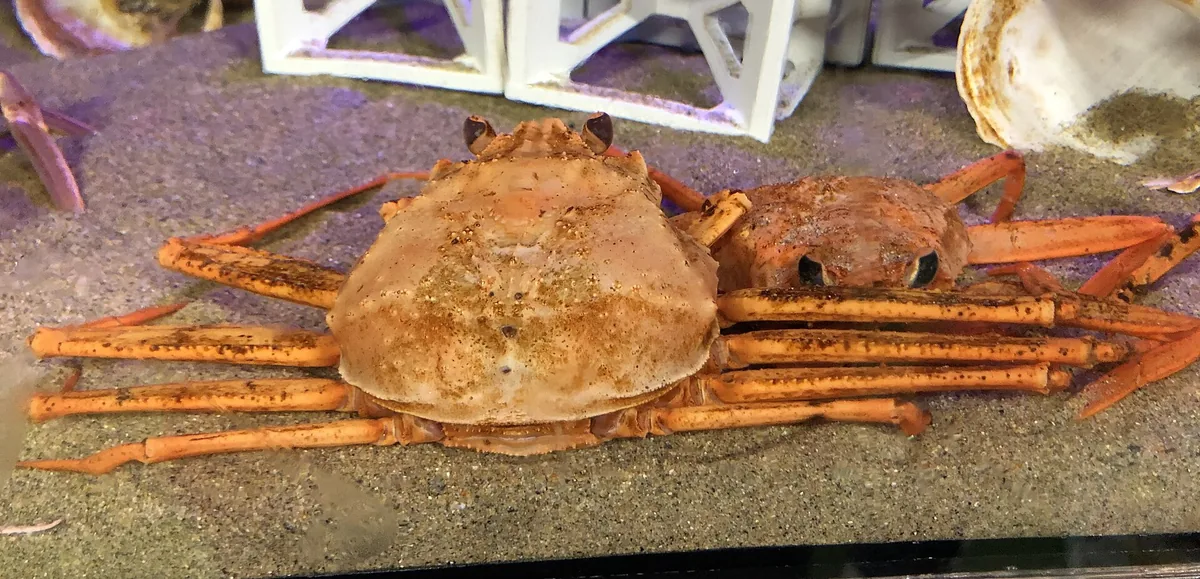
Ask the venue to identify the exact item being served. Request confirmation in writing if the meal is the reason for a longer journey. This matters most when a translated menu uses broad terms such as snow crab or seasonal crab.
- Is this specific course made with Matsuba crab on my dining date?
- Is the crab fresh, frozen, or stored?
- Does the listed price and course description apply to the current season?
- Will another crab be substituted if landings are limited?
A clear answer lets you compare a Tottori City dinner with a separate Sakaiminato visit without assuming that similar menu language means the same experience.
How This Guide Was Verified
Food availability, access details, seasonal rules, and the time-sensitive claims in this guide were checked on August 22, 2026 against the official sources below. Independent restaurant menus, prices, opening days, and sell-outs can change, so confirm the operator's same-day notice before making a special trip.
Frequently Asked Questions
When is Matsuba crab season in Tottori?
Tottori Prefecture currently sets the male Matsuba crab fishing season from November 6 through March 20. Restaurant menus and inventory may cover a shorter period, so confirm the exact course for the dining date.
Can visitors eat Matsuba crab outside the official season?
Do not assume year-round availability. Ask whether the venue offers Matsuba crab on your date and whether it is fresh, frozen, or stored. Get written confirmation before making a special journey.
How much does a Matsuba crab meal cost?
No verified 2026 price was supplied. Check the current venue menu or booking page, then confirm whether the amount is per person, per crab, or weight-based. Include tax, service, drinks, and supplements in the comparison.
Do restaurants require reservations?
Policies vary by venue and course. Reserve the named crab menu when the meal is a trip priority. A table reservation alone may not secure the seasonal item.
Where is the easiest place to try Matsuba crab without a car?
Choose a verified venue with a workable door-to-door public transport route from your accommodation. Check the return connection before reserving. No specific venue or route can be confirmed from the supplied evidence.
Can solo travelers order a crab course?
Some menus may apply minimum party or order rules. Ask whether one diner can reserve the exact course and how the price is calculated. A tasting portion may be a more flexible alternative.
What should travelers confirm before buying crab at a market?
Confirm identity, origin, grade, weight, unit price, and total amount. Also ask about cooking, packing, refrigeration, shipping, and same-day handling. Never assume those services are included.
Is Matsuba crab suitable for travelers with shellfish allergies?
Do not treat a crab-focused venue as allergy-safe without direct confirmation. Disclose the allergy before booking and ask about preparation practices. Choose another meal if the venue cannot provide adequate assurance.
Free guide: Japan's Hidden Gems
12 under-the-radar places beyond Tokyo & Kyoto — with the best season to visit each and a local tip you won't find in the guidebooks.
You might also like


Continue reading
More guides you'll find useful