

Kadomatsu Meaning and Where to See It in Japan
Learn what kadomatsu means, how to recognize Japan’s pine and bamboo New Year decorations, and when and where to look for them.
On this page
Last updated November 2026
Kadomatsu (門松) is a Japanese New Year decoration of pine and often bamboo, set beside the entrance to a home or building. Traditionally, it marks the doorway as a place to welcome Toshigami, the New Year deity.
What is kadomatsu?
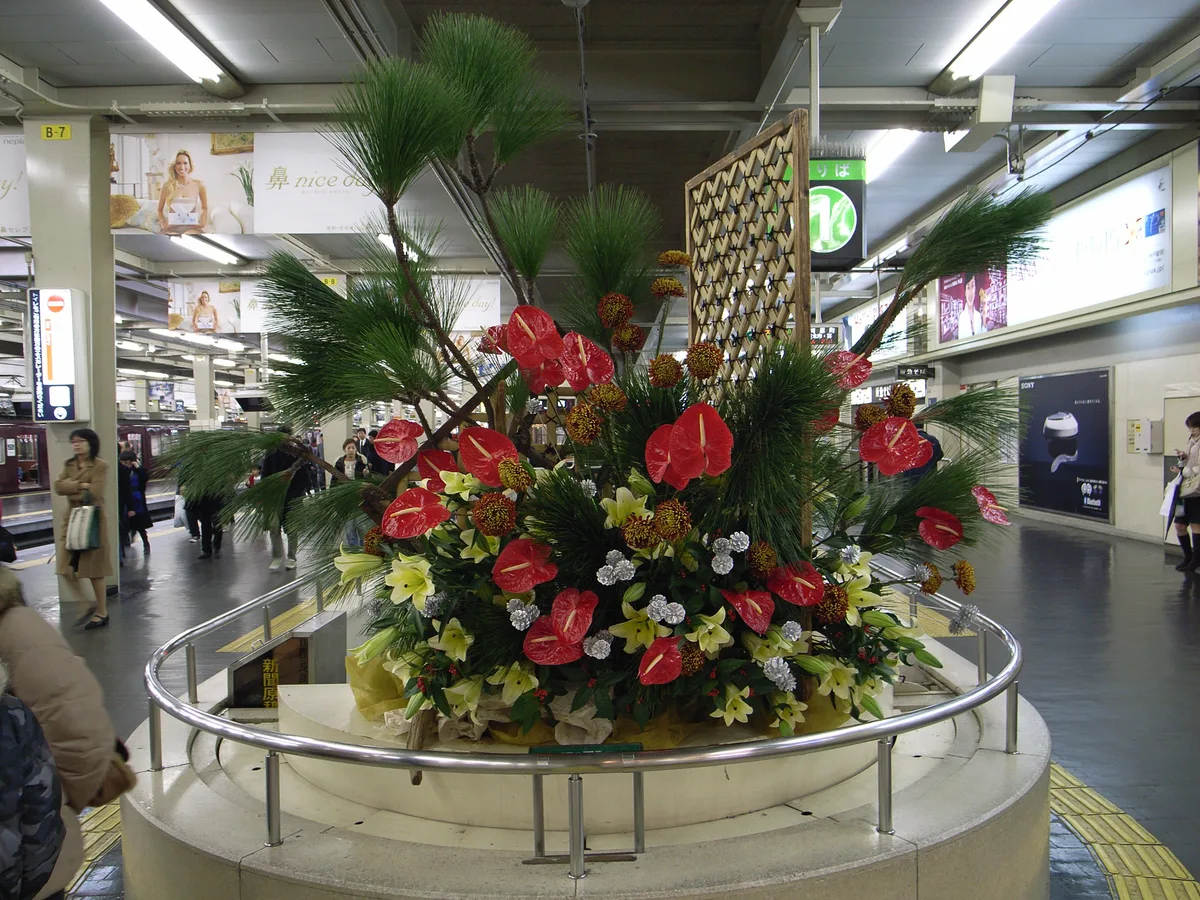
Kadomatsu literally means “gate pine.” In the Shinto tradition behind the custom, the pine serves as a marker for Toshigami. Setting it at the threshold makes the welcome visible from outside. At a hotel or shop, the same arrangement can simply mark the season for guests and customers. You don’t need to enter a place of worship to see one, and an arrangement outside a business tells you little about what its staff believe.
Placement also helps you tell New Year decorations apart. Pine at the threshold is the clue here, while a straw ornament may hang above the door. Inside, stacked kagami mochi is a rice cake offering rather than an arrangement of greenery. Both belong to the wider set of customs for welcoming the year.
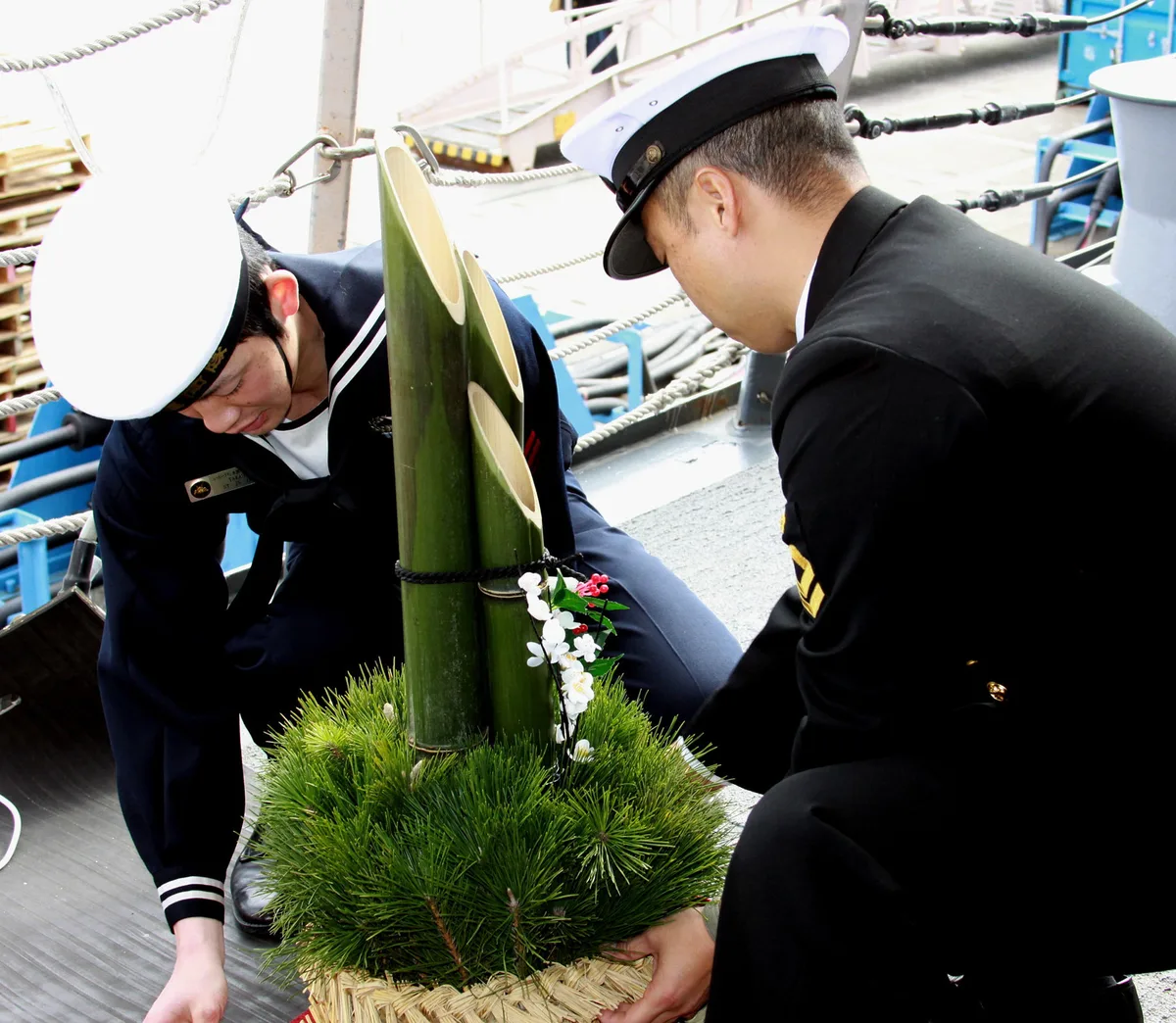
How to recognize kadomatsu at an entrance
Look low as you approach a doorway. Upright bamboo often catches your eye first, but the darker pine branches below it explain the name. Some entrances have a matching arrangement on each side, framing the way in. Near the doorframe, you may spot a smaller arrangement that isn’t obvious from across the street. Rather than counting stalks or looking for a particular silhouette, use the materials and the placement together. Even a familiar design can look different from one storefront to the next.

- Pine near the base
- Find the needles around the upright stems, or look for pine as the main feature in a simpler arrangement.
- Bamboo tips
- Slanted cuts expose the hollow stalks in some displays. Other arrangements have flat cuts, so an angled tip isn’t a requirement.
- Optional accents
- Plum branches sometimes appear alongside pine and bamboo. Straw may wrap the base without being the main feature of the display.
- Framing a photo
- If photography is allowed, include the doorway so the placement makes sense in the picture.
- For a close-up, photograph where the pine and bamboo meet without touching the arrangement.
When to look for kadomatsu
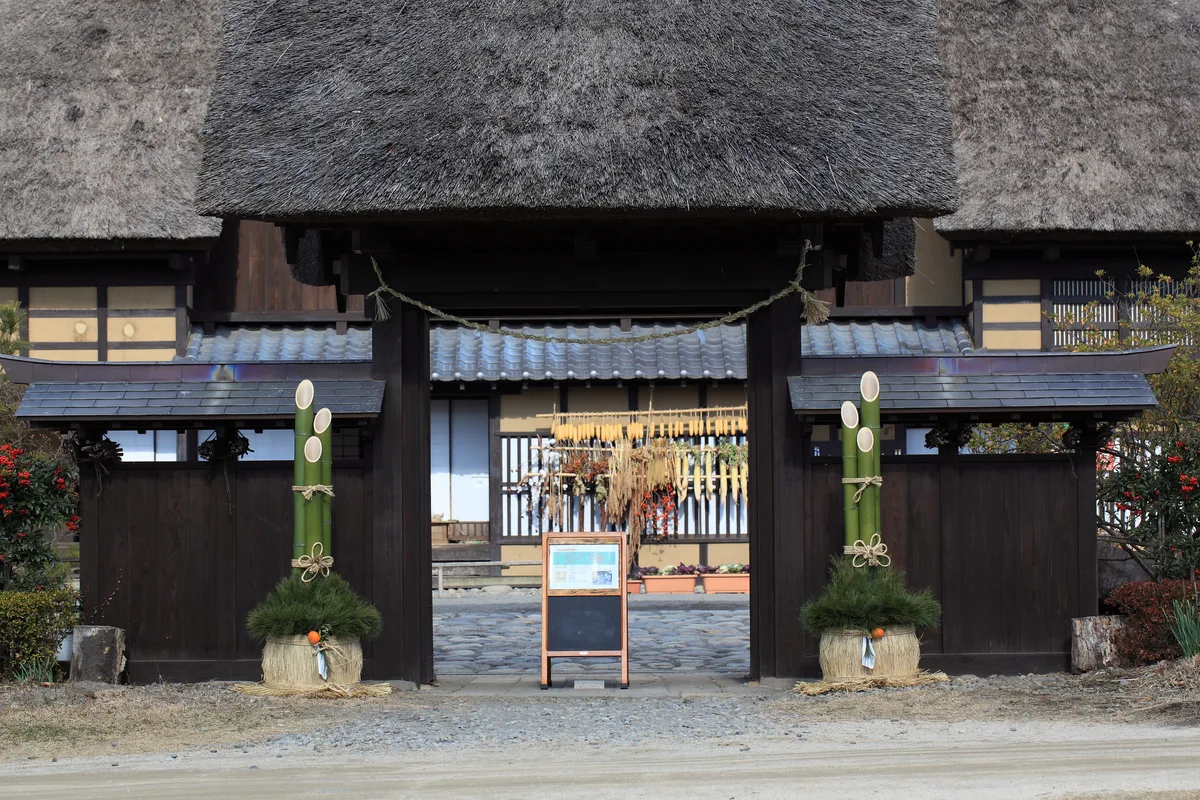
Late December through early January is the window to plan around. Start looking between December 26 and 28, as some entrances switch from Christmas decorations to New Year displays. January 7 is a customary endpoint in some places, not a promise that your hotel or a particular store will still have its arrangement up that day. Installation and removal depend on the venue as well as local custom.
Use the Japan holiday planning guide to organize the rest of your route around the New Year break. For a wider winter trip, Travel Japan’s monthly guides separate December and January travel advice.
- Already out during the display window?
- Look at the entrances you’ll pass anyway, starting with your accommodation. If you’re changing trains or heading out to shop, make that your next chance to look.
- Arriving later or making a special trip?
- Ask the venue for its display dates and where the arrangement stands. Without that information, keep it as a possible sight along your route.
Where to see kadomatsu without a detour
Display dates and public access are specific to each property. Read the venue’s official New Year notice or ask staff before going out of your way.
| Where to look | Who it suits | Detour and cost | Access and photos |
|---|---|---|---|
| Hotel or department store | You’re checking in or already heading out to shop. | No extra stop if it’s on your route. Looking from the public sidewalk requires no purchase. | For an indoor display, use the property’s holiday hours and ask about lobby access or photography. |
| Station or shopping street | You want to look during a transfer or on a walk. | Stay on the public side of the station gates. Budget for a fare only if your route requires one. | Use the station or shopping street’s holiday notice if your route depends on a passage being open. Leave room for other people to pass. |
| Shrine or temple | You already plan to visit for New Year. | Look along the public approach first. Admission can apply if you need to enter a separately ticketed area. | Follow the venue’s holiday entry route and posted photography rules. |
What happens after the display comes down?
Taking down kadomatsu ends the display, but it doesn’t tell you when a local ceremony will take place. Some communities keep to a New Year calendar that runs through January 15. In places that burn the old decorations, the ceremony may be called dondoyaki or Sagichō. Burning the decorations can mark a farewell to Toshigami. Not every doorway display will be part of a public event.
Treat the bonfire as a separate outing. For Tokyo, start with GO TOKYO’s events calendar. Rely on the organizer’s current notice for the date, public access and visitor rules. If you plan to bring a decoration, follow the organizer’s instructions on what it accepts.
Free guide: Japan's Hidden Gems
12 under-the-radar places beyond Tokyo & Kyoto — with the best season to visit each and a local tip you won't find in the guidebooks.
You might also like


Continue reading
More guides you'll find useful


