

Kagami Mochi in Japan: Meaning, Timing and Kagami Biraki
Learn what kagami mochi symbolizes, when it’s displayed and eaten, and how to spot the offering or find a public kagami biraki in Japan.
On this page
Last updated November 2026
Kagami mochi (鏡餅) is a Japanese New Year offering made of 2 stacked round rice cakes, traditionally topped with a bitter orange called daidai. Kagami biraki is the later custom of opening the offering and eating the rice cakes.
What is kagami mochi, and what does it symbolize?
Look for a smaller white round resting on a wider one. Both are mochi, traditionally made by pounding steamed glutinous rice. Their flat, round shape recalls old bronze mirrors, as Japan’s agriculture ministry explains. That’s why you’ll see the name translated as “mirror rice cake.”
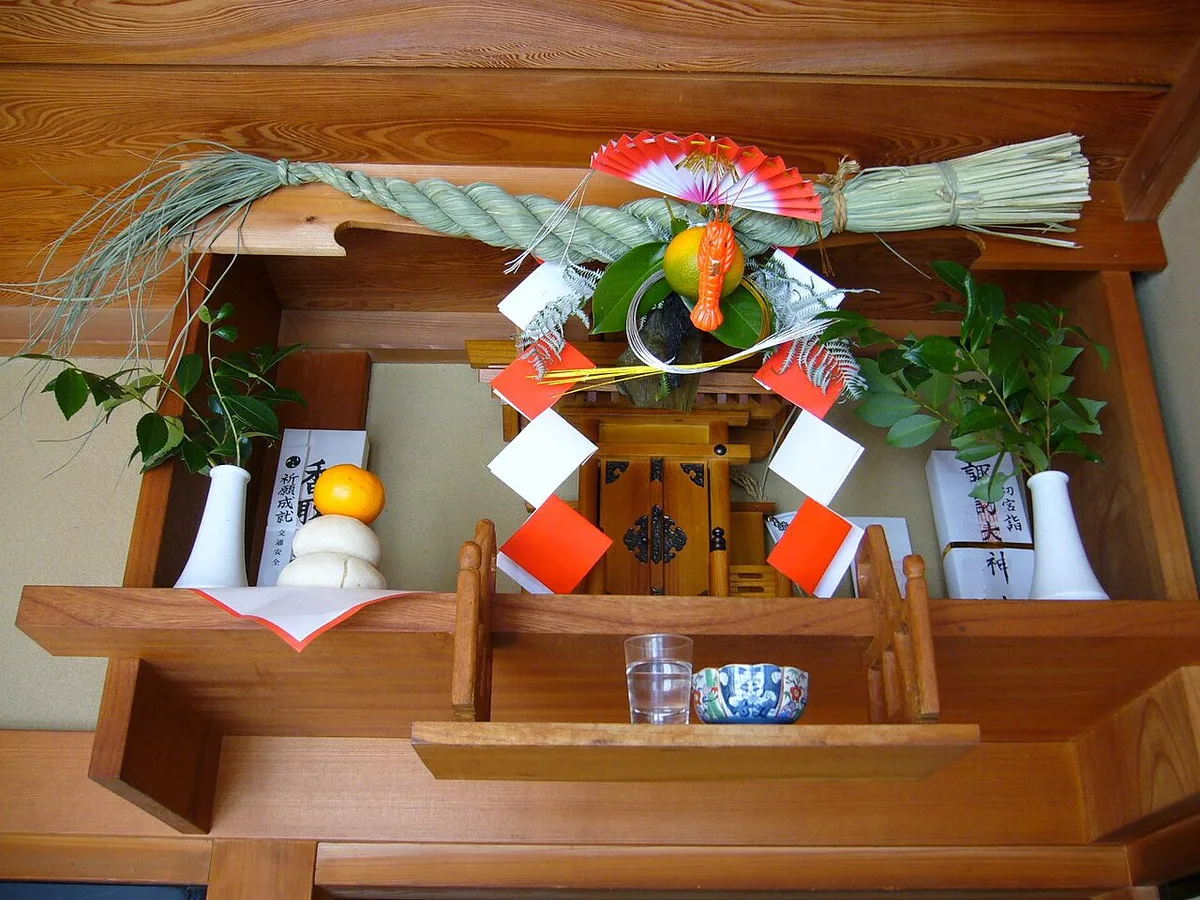
As a New Year offering, the stack welcomes Toshigami, the deity associated with the year ahead. Daidai sounds like the Japanese expression for “generation after generation.” On top of the offering, the fruit expresses a wish for the family to continue and prosper. You don’t need to identify every ornament to recognize the display. Start with the white stack and use the citrus as a clue, not as proof that the fruit is a real daidai.
Compare the stack with the pine and bamboo kadomatsu you may see at an entrance. Kadomatsu marks a place of welcome, while kagami mochi is a food offering. Both are part of the Japanese New Year customs that begin with preparing for the holiday.
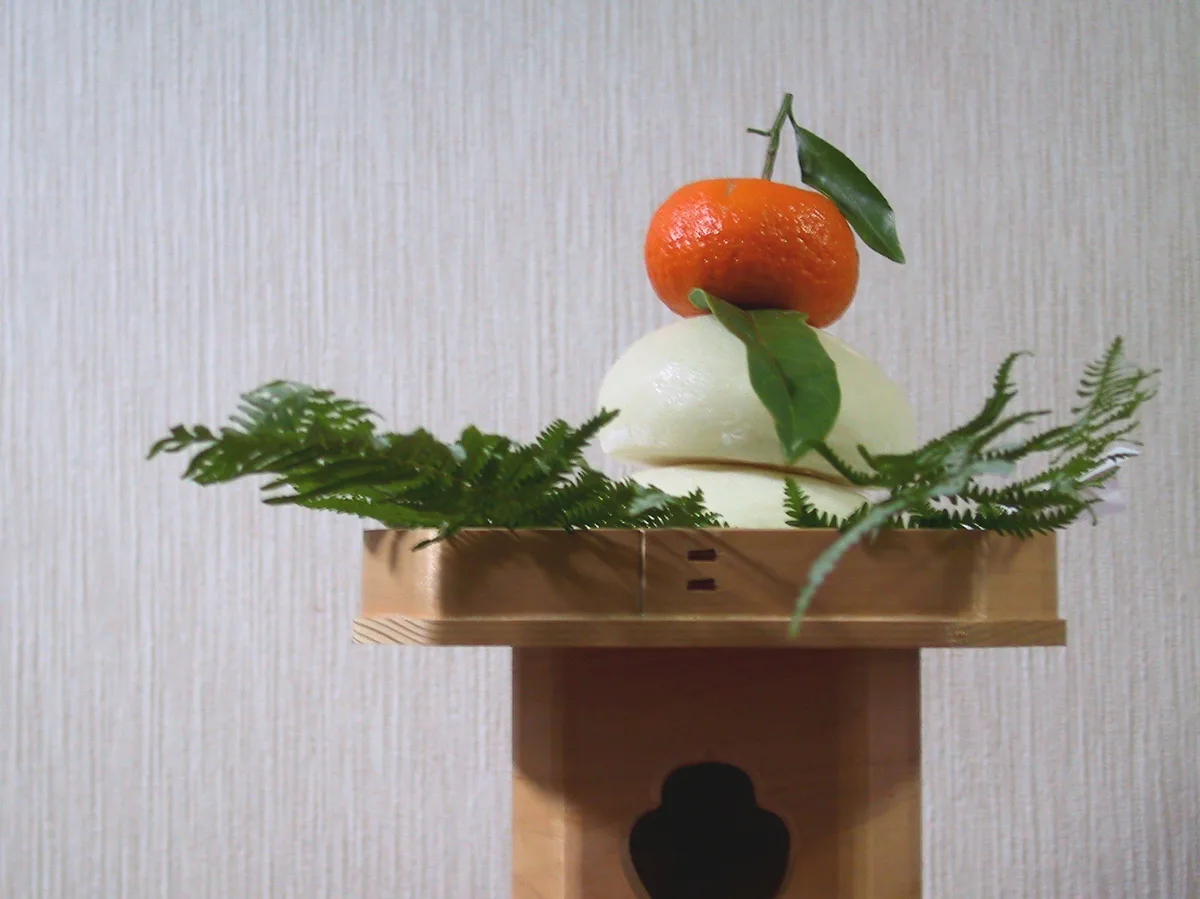
- Orange on top
- Daidai is the traditional topping. A mandarin or a decorative stand-in can give the display a similar outline.
- Stand underneath
- Some formal arrangements sit on a raised stand called a sanbō. Paper edged in red, called shihō beni, can go under the cakes. You may also see urajiro fern fronds tucked around the base.
When and where is kagami mochi displayed?
Families put the offering out before New Year’s Day, so think of January 1 as part of the display period, not as the day the cakes are opened. Setup and removal don’t follow a single schedule across Japan. If your stay ends around New Year’s Day, looking for the display is a better fit than planning around the later opening.
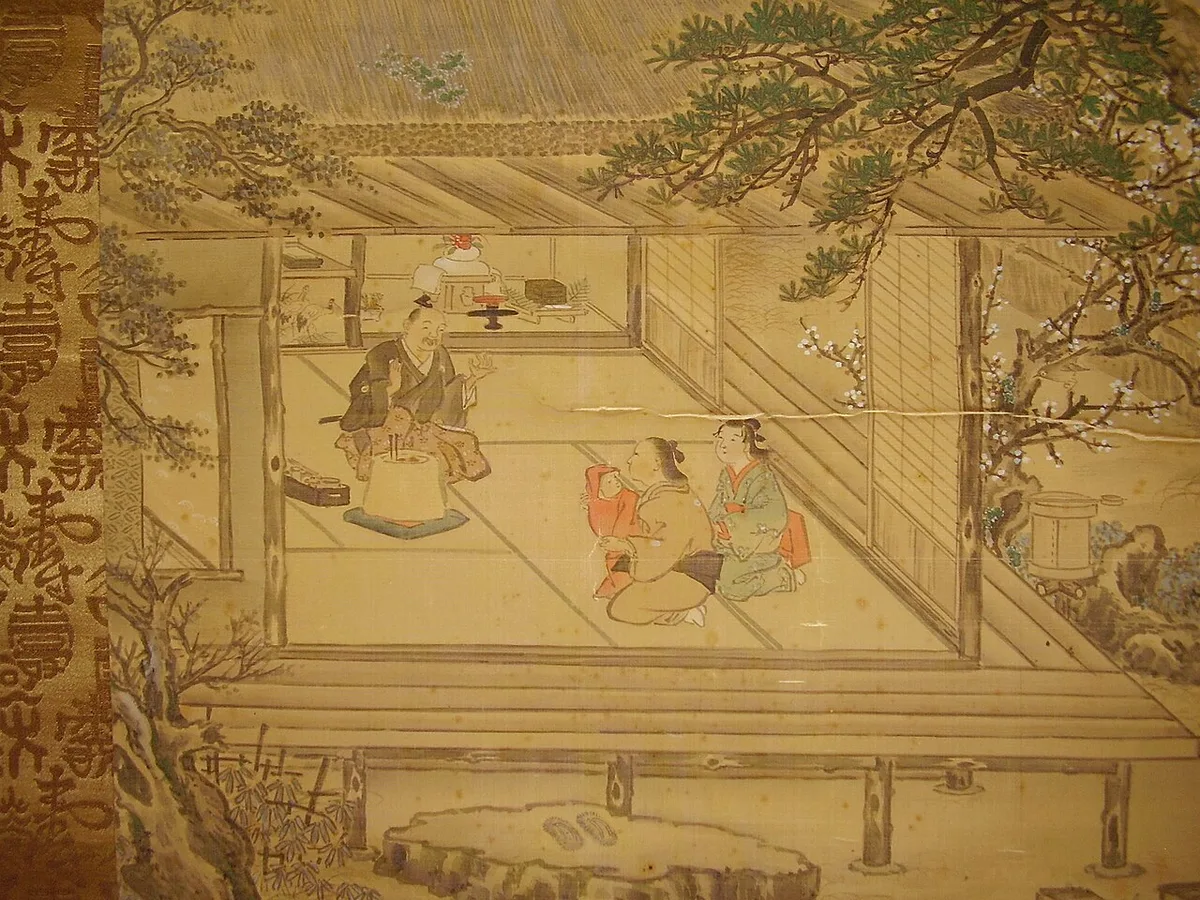
In a home, a traditional place for the offering is a kamidana, or household Shinto altar. Japan’s national tourism board describes this placement in its guide to holiday customs. In a tearoom, the offering may sit in the tokonoma, a recessed alcove used for display. Both are places set aside for display or worship, not necessarily areas open to visitors. During a tea gathering, look from the guest area and ask before taking a photo of the alcove.
For a public view, ask your accommodation if there’s a display guests can see. If you’re already visiting a site with seasonal decorations, ask staff to point it out rather than looking in private areas. Build this into your existing New Year trip plans instead of counting on a particular place to have one.
What is kagami biraki, and when is the mochi eaten?
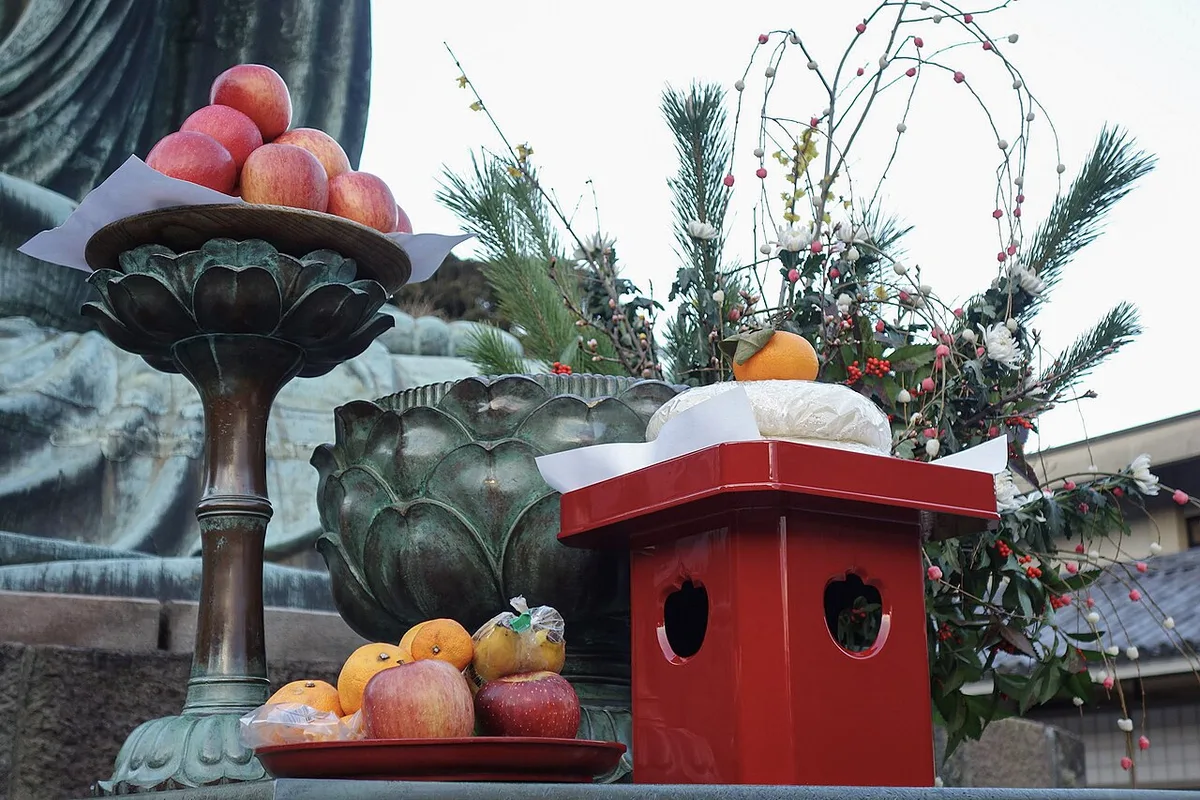
January 11 is a customary date for kagami biraki (鏡開き) in many parts of Japan, but the date differs by region. Treat it as a guide to the tradition, not as the scheduled date of a public event. An organizer’s calendar is what matters if you want to attend a particular ceremony.
At kagami biraki, the rice cakes come down from the display. Traditionally, people break the hardened mochi with a wooden mallet or by hand rather than slicing it with a knife. Using a blade on the offering is considered inauspicious. Even the name favors “opening the mirror” over “breaking” it. Afterward, the pieces are cooked and eaten as part of the observance. Eating the offering is also a way to wish for good health in the year ahead.
Watch for the action described in an event listing. Mochitsuki (餅つき) means pounding steamed rice to make fresh mochi, while the rice-cake version of kagami biraki starts with an offering that has already been made. A mallet can appear at either, but it’s doing a different job. Kagami biraki can also mean opening a sake cask. If the program talks about lifting or breaking a barrel lid, don’t expect the stacked rice cakes to be the focus.

How the rice cakes are served after opening
Broken pieces of mochi can go into shiruko, a sweet red bean soup. For a savory option, look for zōni, a soup with mochi whose broth and other ingredients vary by region. In either dish, the mochi softens as it cooks. On a Japanese menu, look for 汁粉 for shiruko and 雑煮 for zōni. Ordering a bowl is a way to taste mochi if your trip doesn’t overlap with an opening.
Around January 1, look for the stacked offering on display and order zōni if you’d like to taste mochi before the ceremonial opening.
Regional zōni styles give you different ways to try the rice cakes. A Kantō-style bowl can pair rectangular mochi with clear broth. Kansai-style zōni can use round mochi in white miso broth.
Seeing zōni on a New Year menu doesn’t tell you that the rice cake came from a ceremonial offering. You can eat mochi in soup during the holiday without taking part in kagami biraki. Likewise, boxed osechi ryori dishes belong to the festive meal, while kagami mochi starts out as an offering. Think of the ceremony as what happens to that particular stack, not as the name of a finished dish.

How to see or buy kagami mochi in Japan
Display dates and event access depend on the venue. Use the venue’s or organizer’s current notice before making a special trip.

| Option | When it makes sense | What to look up or ask |
|---|---|---|
| See a seasonal display | Fit a display into a stop you already plan to make. Choose this if you want to see the traditional arrangement without waiting for the opening. | Ask what dates the display is up and where guests can see it. Use the venue’s posted holiday hours and admission terms. |
| Buy a packaged set | Try a supermarket if you want mochi to prepare yourself. Choose by the edible contents rather than the size of the display. | Read the label for ingredients and cooking directions. Ask the seller about stock and use its current shelf price or listing. |
| Attend a public kagami biraki | Make a detour if seeing the rice cakes opened is the reason you’re going. Don’t assume a ceremony includes a tasting. | Look up the current date and start time in the organizer’s notice. Read its entry requirements and directions before setting out. |
- Before you go — Read the program, not just the title
- Search for 鏡開き alongside 鏡餅 and the name of the place you’ll visit. Look for an explicit reference to opening rice cakes. A cask opening or a mochi-pounding session is a different event.
- Before you go — Ask what visitors can do
- Ask the organizer where spectators can stand and how they enter. If you want to taste the mochi or join the opening, ask about those separately. Admission to watch may not cover a serving. For a ticketed program, find out if you need to book a tasting separately.
- At the shop — Separate food from decoration
- On a packaged set, the white stack can be a container rather than the part you cook. Some sets hold individually wrapped pieces inside. Look for the food label and package directions instead of judging by the shape. Turn the box over if the front only shows the assembled display. Look for instructions that explain how to open the case and prepare its contents. Treat the topper and base as ornaments unless the label identifies them as food. Without somewhere to prepare the rice cakes, you’re better off ordering them cooked.
Free guide: Japan's Hidden Gems
12 under-the-radar places beyond Tokyo & Kyoto — with the best season to visit each and a local tip you won't find in the guidebooks.
You might also like


Continue reading
More guides you'll find useful


