Aso Farm Restaurants and Roadside Stations
A driving-route guide to Aso farm restaurants and roadside stations, comparing Michi-no-Eki Aso and Asobo no Sato Kugino for a 2026 caldera trip.
On this page
Last updated August 2026: Aso farm restaurants and roadside stations give a caldera road trip its actual meal plan, not an afterthought squeezed between viewpoints. Two hubs anchor the route: Michi-no-Eki Aso beside JR Aso Station in the north, and Asobo no Sato Kugino in Minamiaso to the south. Each pairs farm-direct food with parking and restrooms, and several standalone farm restaurants fill the gaps between them.
Michi-no-Eki vs Bussankan: What Aso's Roadside Stops Actually Are
Michi-no-Eki are registered roadside stations that provide parking, toilets, and road or regional information. Registration does not guarantee trilingual signage or a particular language service at every station. Bussankan is a broader term for a local-product hall or market, so facilities and hours vary. Check each stop's official page rather than inferring services from the label alone. For the wider spread of dishes, see the Aso food guide.
Michi-no-Eki Aso: The Northern Hub by JR Aso Station
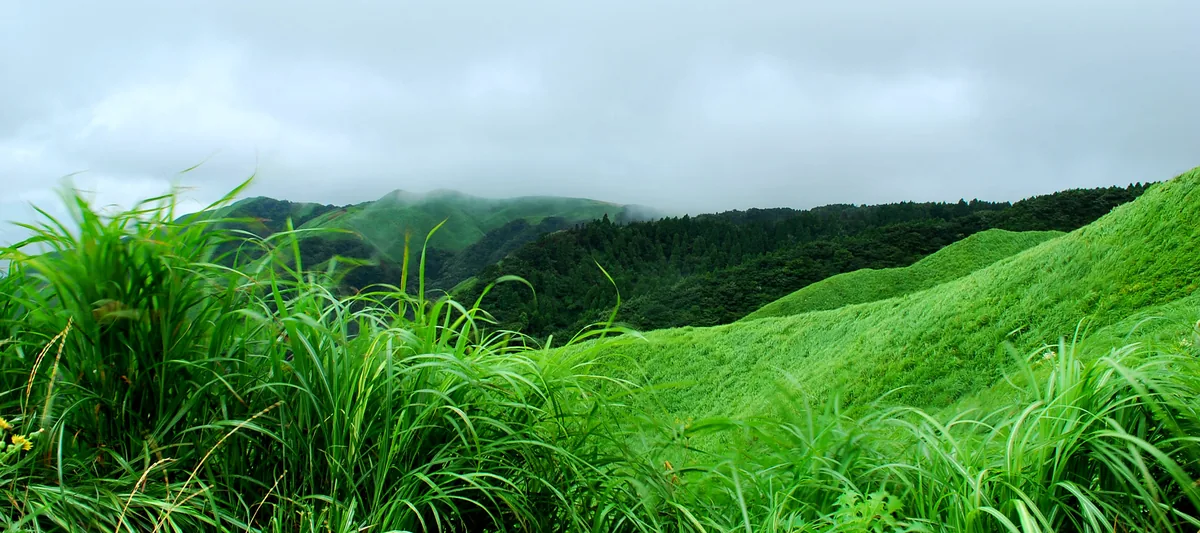
Michi-no-Eki Aso sits at 1440-1 Kurokawa in Aso City, about a one-minute walk from JR Aso Station on the Hōhi Main Line. Drivers following National Route 57 pass directly by the entrance. That adjacency to the train line makes it one of the few Michi-no-Eki reachable without a car, useful for JR Pass holders working the Aso leg by rail. Inside, a tourist information desk staffed for English and Chinese speakers doubles as a booking point for guided cycling and trekking tours into the surrounding grasslands. Reaching the station by road takes roughly 50 minutes from Kumamoto Interchange on the Kyushu Expressway.
- Hours: 9:00 a.m. to 6:00 p.m. daily, with seasonal variation
- Phone, also usable for car GPS entry: 0967-35-5088
- Storage: no coin lockers; the info desk holds bags for ¥1,000 each
- Parking: free, but the lot is limited and fills on weekends
- Payment: credit cards accepted
- Nearby: a hot spring, according to visitor reviews
Food and Shopping at Michi-no-Eki Aso
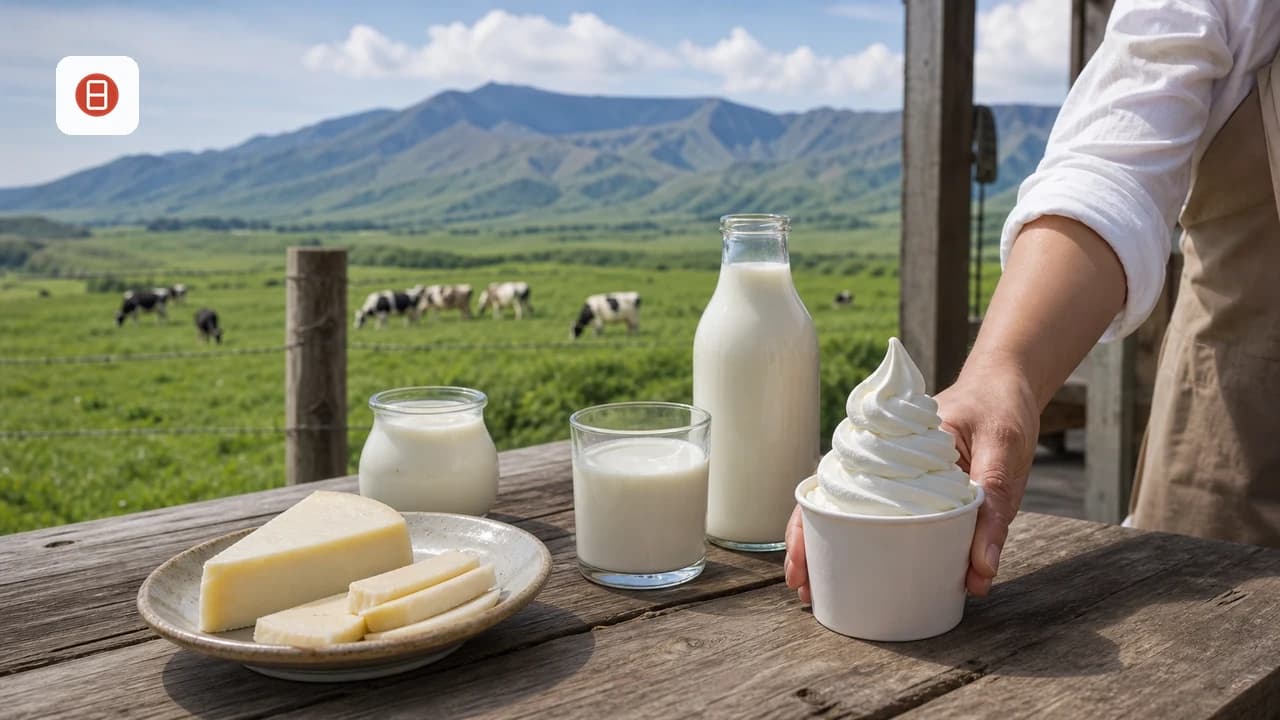
Bento boxes built around Akaushi beef anchor the food side of the station. A lineup of three soft-serve flavors, each from a different local farm, turns dessert into a side-by-side tasting instead of one house flavor. Aso milk, cheeses, and seasonal fruit fill the adjoining market shelves. Reviewers also note cheesecake wheels, chiffon cake slices, and fresh strawberries among the grab-and-go sweets. Pickled takana and handmade bento boxes are popular picks for the drive onward toward the crater.
Asobo no Sato Kugino: The Southern Hub in Minamiaso
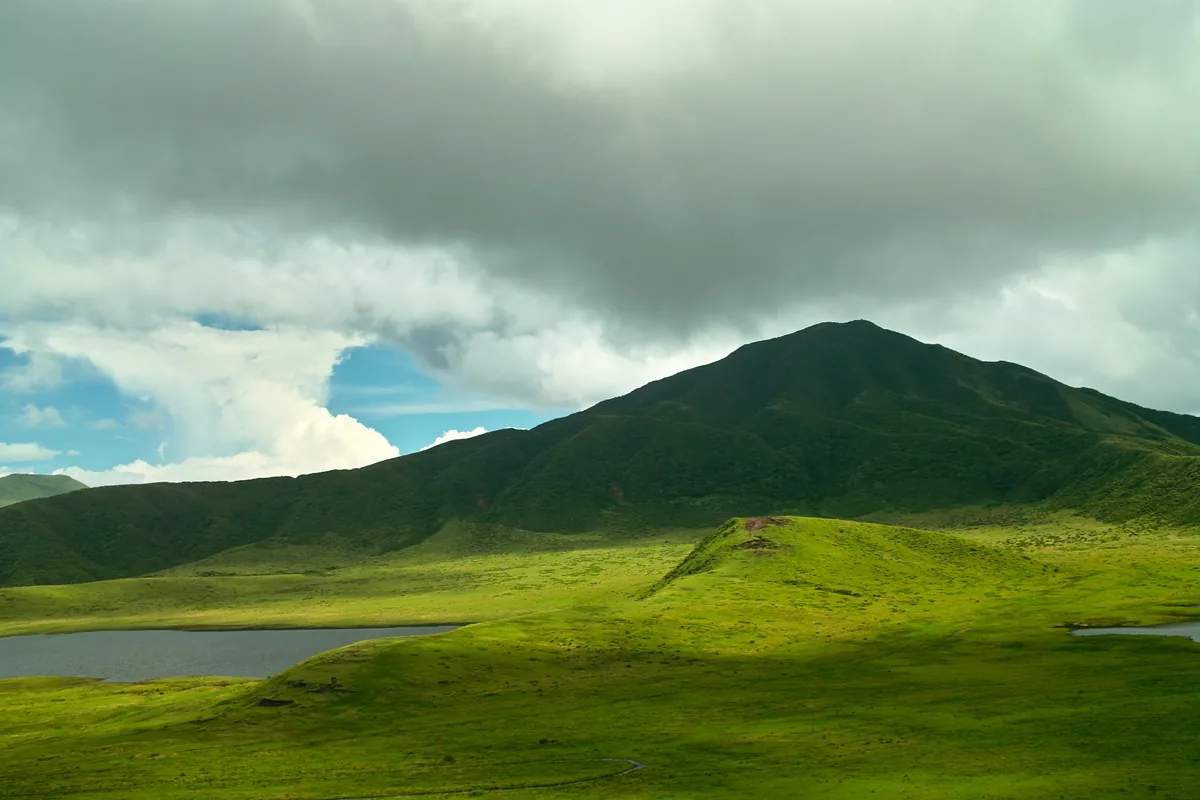
Asobo no Sato Kugino sits at 2801 Hisaichi in the Kugino area of Minamiaso, on the southern foot of Mt. Aso. Unlike the northern hub, it has no adjacent train stop, so a car or the local bus network is the only practical way in. Its restaurant faces the Aso Five Peaks from the south side, a different aspect than the north-side view from Michi-no-Eki Aso. Families and dog owners get room to spread out on a roughly 3,000-square-meter lawn, about three-quarters of an acre, plus a dedicated dog run nearby. A park golf course rounds out the grounds for travelers staying past lunch.
- Hours: 9:00 a.m. to 5:00 p.m.
- Phone, also usable for car GPS entry: 0967-67-3010
- On site: dog run, soba-making studio, water wheel, park golf course, and market hall
- Access: car or local bus only; no adjacent train station
The Ancient Spring, the Soba Dojo, and What to Eat at Kugino
Behind the market, a water wheel still turns, powered by an ancient spring. Its water fell on the outer caldera rim years earlier and resurfaced nearby. Visitors can grind and roll their own buckwheat noodles at the on-site soba-making studio. The restaurant next door serves fresh soba alongside seasonal produce from the market. Check current schedules for occasional extras like food-truck days or monkey shows. Shirakawa Suigen, a spring recognized by Japan's Ministry of Environment as one of the country's 100 Best Natural Waters, sits nearby for travelers extending the stop.
Aso Farm Restaurants and Roadside Stations: North vs South at a Glance
Choosing between the two hubs comes down to how travelers are moving through Aso and what they want from the stop. The table below lines up the practical differences side by side. Travelers with only one caldera stop to spare should weigh the table against how they're getting to Aso in the first place.
| Feature | Michi-no-Eki Aso | Asobo no Sato Kugino |
|---|---|---|
| Access | Next to JR Aso Station | Car or bus only |
| Hours | 9:00 a.m.-6:00 p.m. daily | 9:00 a.m.-5:00 p.m. |
| Best food | Akaushi beef bento, Aso milk soft-serve tasting | Fresh soba, seasonal produce |
| Vibe | Busy transit hub | Relaxed park and family setting |
| View | North side of the Aso Five Peaks | South side of the Aso Five Peaks |
| Unique asset | Trilingual info desk, tour bookings | Dog run and water wheel |
Building a Half-Day Route Between the Two Hubs
Travelers driving the full loop can treat Michi-no-Eki Aso and Asobo no Sato Kugino as bookends rather than a choice between them. Starting at Michi-no-Eki Aso in the morning takes advantage of the fuller bento selection before the late-morning rush. From there, the drive to Asobo no Sato Kugino in Minamiaso crosses the caldera floor, with Takamori Dengaku-no-sato or Akaushi no Yakata as optional lunch detours along the way. Arriving at Kugino in the early afternoon leaves time for the lawn, the dog run, and the soba-making studio before the 5:00 p.m. close. Drivers on a tighter schedule can skip the crossing and treat each hub as the anchor for a separate half of the caldera loop instead.
Asobo no Sato Kugino closes at 5:00 p.m., while Michi-no-Eki Aso stays open until 6:00 p.m. Arriving at Kugino by mid-afternoon maximizes time for its lawn, dog run, and soba studio.
Farm Restaurants Beyond the Roadside Stations
Several standalone farm restaurants round out the caldera's food map without the parking-lot feel of a Michi-no-Eki. Takamori Dengaku-no-sato serves hearth-grilled dengaku, skewered vegetables and tofu roasted over an open fire, inside a farmhouse said to be around 200 years old. It sits close enough to Asobo no Sato Kugino to add to the same southern-route lunch stop. Akaushi no Yakata, also in Minamiaso, plates beef sourced directly from area farms rather than through a wholesale distributor. Akaushi Don Iwasaki, roughly 50 minutes by car from Kumamoto city, serves a rice bowl topped with sliced Akaushi beef as its signature dish. Matsuoka Green Farm Yamato grows tomatoes and spinach through natural cultivation, suited to Aso's cool highland climate. Its produce turns up on menus and market shelves around the caldera. Farm-direct menus like these are also where Aso's Akaushi beef, dairy, and seasonal vegetables most reliably outshine what's available in Kumamoto city restaurants.
Akaushi beef appears at both Michi-no-Eki Aso and at Akaushi Don Iwasaki, roughly 50 minutes by car from Kumamoto city, giving travelers multiple stops to compare quality and value.
Other Michi-no-Eki Worth a Detour Near Aso
Two more certified roadside stations sit inside Aso City and Aso-gun, useful for travelers extending the loop beyond the two main hubs. Namino Kaguraen, in the Namino area of Aso City, centers on soba: make-your-own noodles, premade bowls, and even soba-flavored ice cream. It also hosts traditional kagura dance performances for visitors timing a stop around a show. Oguni Yu Station, in neighboring Oguni-machi, is recognizable by its dome-shaped glass building and stocks ice cream and dairy products alongside its own local soba. Both function as smaller, quieter alternatives to Michi-no-Eki Aso on a day when the main hub's parking lot is full.
What to Eat and Buy: The Aso Farm Food Checklist
Four categories cover most of what travelers eat and buy at Aso's farm stops, and each has a quick note on where to look for more detail.
- Akaushi beef: Kumamoto's native red-coated cattle produce beef that's leaner and more grass-fed than typical Japanese Wagyu, and bento boxes or don bowls keep it within a roadside lunch budget. The Akaushi beef guide covers cuts and where to try it.
- Dairy: Aso milk, soft-serve, puddings, and cheese come from farms across the caldera floor. The Aso milk and desserts guide maps where each is made.
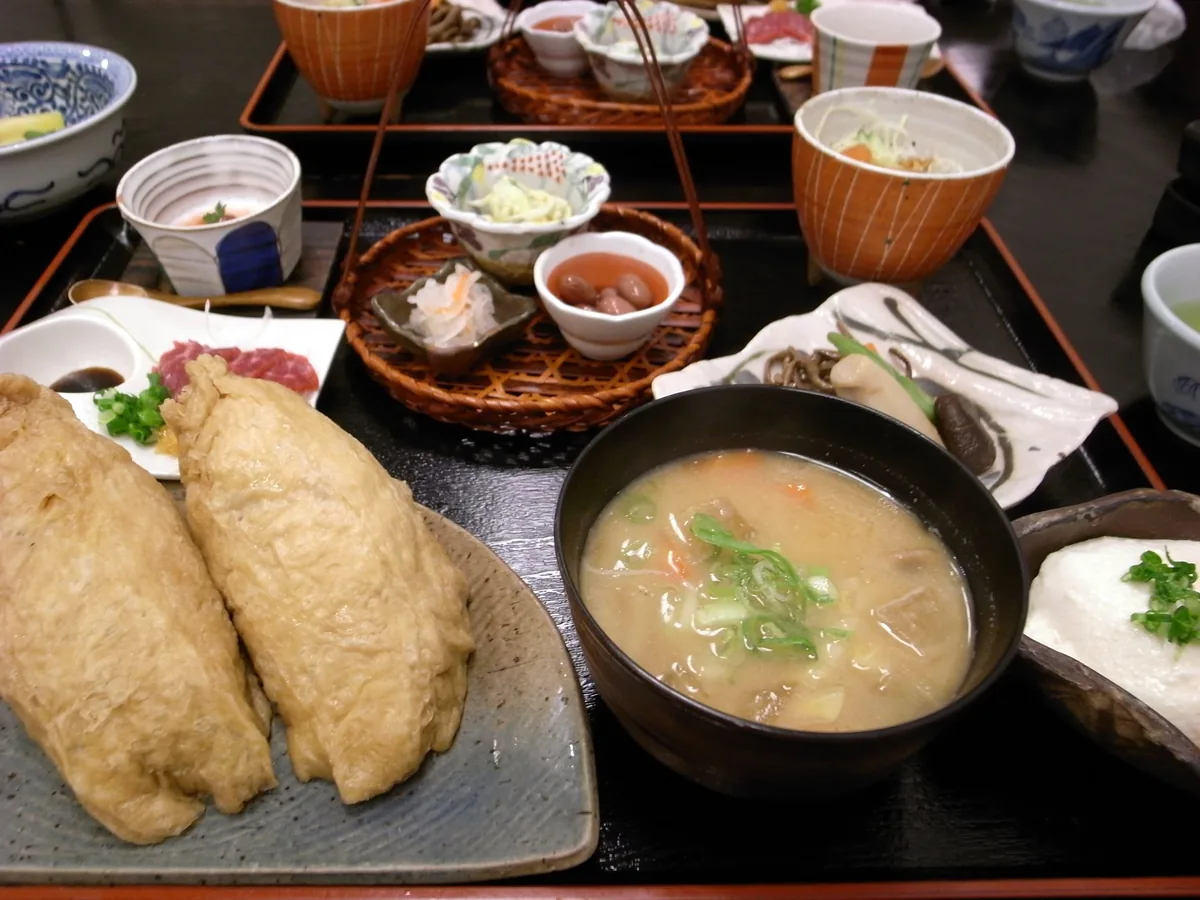
- Takana meshi and dago-jiru: pickled mustard-green rice and a flat-noodle miso soup make up the two most common local sets. See the takana meshi and dago-jiru guide for where to order them.
- Budget and vegetarian options: produce stalls and bento counters carry non-meat choices alongside the beef-forward menus. Check the budget and vegetarian dining guide before planning a stop around dietary needs.
Practical Logistics: Timing, Parking, and Navigation
Most shops and restaurants at these stops close between 17:00 and 18:00, well before a typical dinner hour. Planning around that window, rather than assuming a roadside station stays open late, avoids the most common mistake drivers make on the caldera loop. Arriving early also means shorter lines at the tourist information counter, useful for anyone planning same-day cycling or trekking tour bookings.
- Bento timing: selection changes with deliveries and demand; arrive earlier if a specific box matters, but ask the shop rather than relying on a fixed 1:00 p.m. sell-out.
- Parking: free at both Michi-no-Eki Aso and Asobo no Sato Kugino, though the northern lot fills first on weekends
- Standalone farm restaurants: parking runs to a handful of spaces, so a mid-morning or early-afternoon arrival avoids a wait
- Navigation: Japanese car GPS systems accept phone numbers as destinations; use 0967-35-5088 for Michi-no-Eki Aso or 0967-67-3010 for Asobo no Sato Kugino
Seasonal Planning: Weather and Road Access
Winter brings fog and occasional snow to the caldera rim. Either can close the mountain road up to the Aso crater, even when the roadside stations themselves stay open on schedule. Confirming the crater road status with the Michi-no-Eki Aso info desk before setting out is the most reliable check available. Spring and autumn bring the steadiest driving conditions and the widest seasonal fruit selection at both markets. Summer's clearer mountain views come with heavier weekend crowds at Michi-no-Eki Aso's parking lot. For a fuller route around the caldera, see the Aso attractions guide.
How This Guide Was Verified
Food availability, access details, seasonal rules, and the time-sensitive claims in this guide were checked on August 22, 2026 against the official sources below. Independent restaurant menus, prices, opening days, and sell-outs can change, so confirm the operator's same-day notice before making a special trip.
Frequently Asked Questions
What's the difference between a Michi-no-Eki and a Bussankan?
Michi-no-Eki certification comes from Japan's transport ministry and guarantees free parking, restrooms, and a staffed information point. Bussankan simply means a farmers' market or product hall that skipped that certification, so hours and facilities vary more.
Which is better, Michi-no-Eki Aso or Asobo no Sato Kugino?
Rail travelers and dairy lovers heading toward the crater tend to prefer Michi-no-Eki Aso, since it sits beside JR Aso Station and stocks Akaushi bento plus a soft-serve tasting. Families and dog owners with more time tend toward Asobo no Sato Kugino, thanks to its lawn, dog run, and soba-making studio, though it needs a car or bus to reach.
Can you visit Michi-no-Eki Aso without a car?
Yes, Michi-no-Eki Aso is about a one-minute walk from JR Aso Station on the Hōhi Main Line. That makes it one of the few Michi-no-Eki in the region set up as well for rail travelers as for drivers.
What time should you arrive for the best bento selection?
Earlier is generally better when a specific box matters, but there is no verified daily 1:00 p.m. cutoff. Selection depends on delivery, production, and demand, so ask the shop that day.
Do Aso's farm restaurants and roadside stations stay open for dinner?
Generally not. Most shops and restaurants at these stops close between 17:00 and 18:00, so plan them as lunch or early-afternoon stops rather than an evening meal.
What should you do if it's raining or foggy?
Michi-no-Eki Aso and Asobo no Sato Kugino both stay open through light rain and fog, since the shops and restaurants sit indoors. Heavier fog or snow is the bigger risk, since it can close the mountain road to the crater rather than the stations themselves.
Where can you park for free near these roadside stations?
Both Michi-no-Eki Aso and Asobo no Sato Kugino offer free parking on site, standard for certified roadside stations. Spaces are limited at Michi-no-Eki Aso, so arriving before the late-morning bento rush also secures easier parking.
Free guide: Japan's Hidden Gems
12 under-the-radar places beyond Tokyo & Kyoto — with the best season to visit each and a local tip you won't find in the guidebooks.
You might also like


Continue reading
More guides you'll find useful