Aso Takana-meshi and Dago-jiru Guide: Best Restaurants
Aso takana-meshi and dago-jiru guide: what the dishes are, where to eat them along the Dago Soup Highway, 2026 prices, hours, and vegetarian notes.
On this page
Last updated August 2026, Aso takana meshi and dago-jiru remain the two dishes locals name first when asked what defines Aso cooking. Takana meshi mixes rice with chopped, aged pickled mustard greens, while dago-jiru is a soup built around hand-kneaded flat wheat dumplings. Both are served daily along National Route 57, known locally as the Dago Soup Highway.
Aso Takana-meshi and Dago-jiru: What the Dishes Actually Are
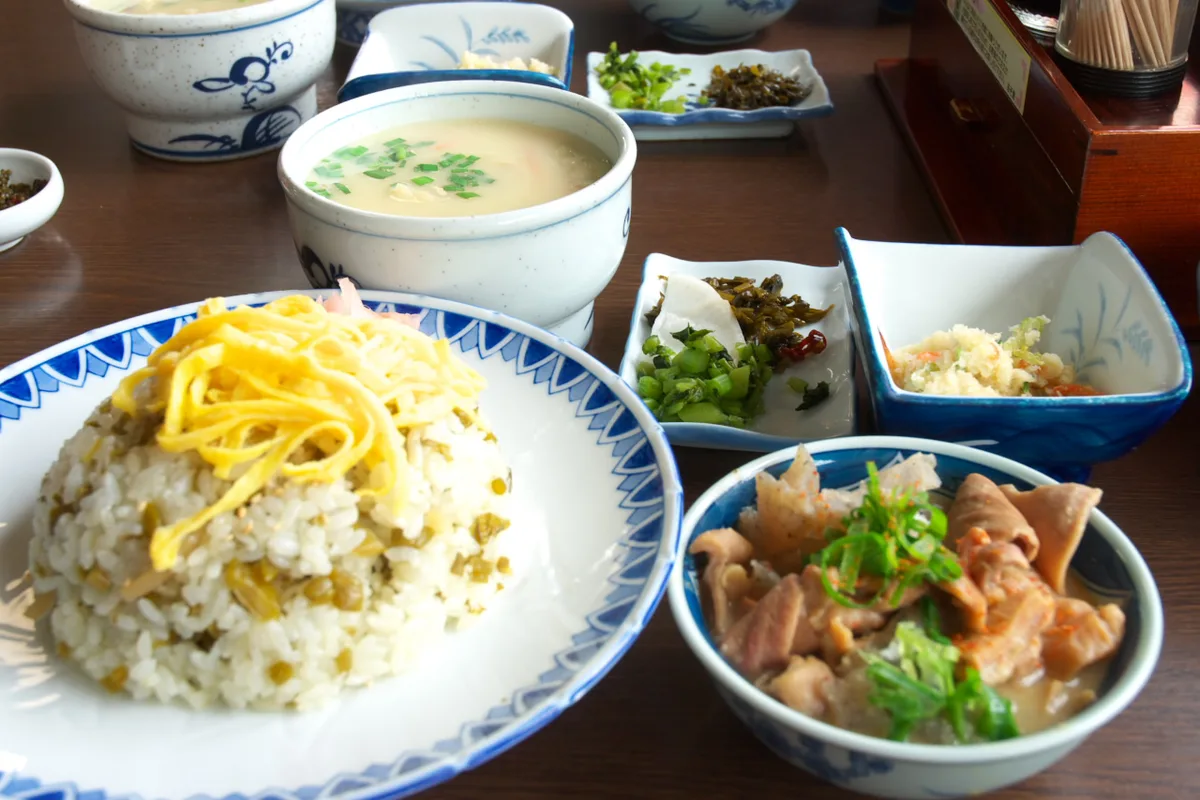
Takana is a mustard green grown in the volcanic soil around the Aso caldera, then salted and aged in barrels for months. Restaurants call fully aged pickles furuzuke. Leaves turn yellow-green as they age, and the flavor deepens into something closer to salty, fermented umami than a fresh pickle. Cooks chop the pickled stems and leaves, then fry them in oil with soy sauce. They fold the mixture through hot rice and finish it with shredded egg on top. The dish began as home cooking rather than restaurant fare, and families across Aso made their own version for generations before any restaurant put it on a menu. Farms around the caldera still supply most of the takana used in these kitchens, and travelers can see the crop growing and buy jars of pickles directly at Aso farm stands and roadside markets. Dago-jiru follows a different path entirely. Cooks knead wheat flour and water into a dough, let it rest, then flatten pieces and drop them straight into simmering miso or soy-based dashi with root vegetables. Because the dough is not pre-boiled like udon, it thickens the broth as it cooks, giving the soup a heartier texture than a typical noodle soup.
Why Aso's Takana Pickles Taste Different
Altitude and volcanic soil around the caldera give Aso takana a sharper bite than mustard greens grown at lower elevation. The crop is harvested by hand every March, and some Route 57 restaurants cultivate their own fields rather than buying pickles wholesale. Asoji's kitchen staff, for example, hand-harvest more than 13 tons of takana each March and pickle it themselves in barrels through the following spring. Flavor depends heavily on age. A pickle aged only weeks tastes bright and crunchy, closer to a fresh vegetable. Furuzuke aged six months to two years, the range Asoji uses, turns softer and saltier, with a fermented depth that defines the dish at long-running restaurants. Sanzoku Tabiji ages its own pickles a minimum of six months before chopping them into the rice, mixing leaf and stem for a range of textures in one bowl. If visiting during the March harvest, ask whether a restaurant is serving fresh-cut takana instead of aged furuzuke. The flavor and texture differ, and neither version is more correct, just seasonal.
Visiting in March lets travelers ask restaurants like Asoji—which hand-harvest more than 13 tons that month—whether they're serving fresh-cut takana instead of standard aged furuzuke, offering distinct seasonal flavors.
Dago-jiru: The Region's Dumpling Soup
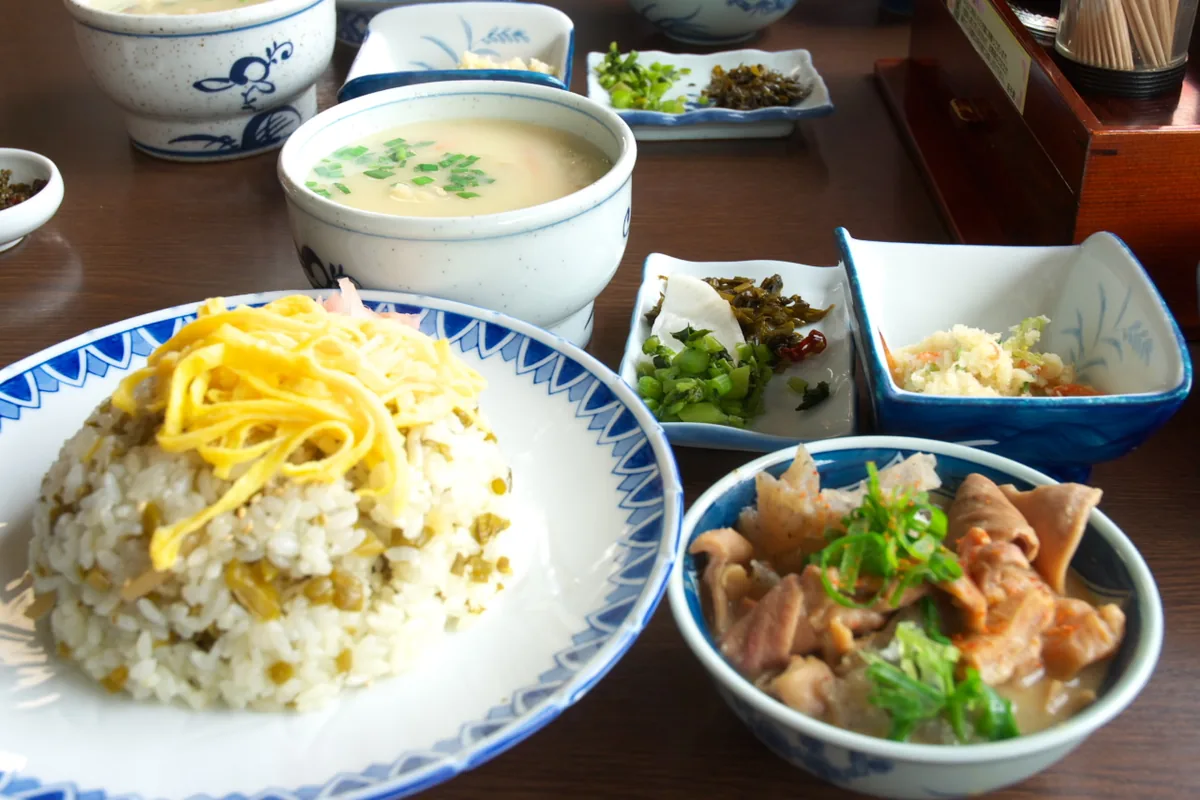
Dago-jiru is not the same as udon or ramen, even though all three involve wheat and broth. Udon noodles are pre-boiled separately and added to a finished broth. Dago dough is dropped raw into the pot, so each dumpling cooks unevenly and comes out a different size and thickness. That variation is considered part of the dish, not a flaw. Broth style varies by kitchen. Some restaurants blend rice, barley, and red miso for a rounder, sweeter base. Others lean on a soy-based dashi built from kelp, dried sardine, and mackerel flakes. Portions tend to be large regardless of style, since dago-jiru is meant to be a filling main course rather than a side soup. Because the dashi typically relies on dried fish, dago-jiru is rarely vegetarian by default, a point worth planning around before ordering. Common vegetables added to the pot include:
- Carrots and burdock root
- Shiitake mushrooms and taro
- Pumpkin, cabbage, and eggplant depending on the season
Where to Eat on the Dago Soup Highway
Four restaurants along National Route 57 and around Aso Station provide different access and menu trade-offs. Asoji is close to JR Ichinokawa Station. Sanzoku Tabiji and Himeji are easier by car or taxi and serve wider Kumamoto specialties. Do not plan either as dinner: Aso City's current tourism brochure lists Sanzoku Tabiji from 11:00 AM to 3:00 PM, closed Wednesday, and Himeji from 11:00 AM to 3:30 PM with last order at 3:00 PM, closed Tuesday. Bochutei inside Aso Station is useful for a train-timed meal when open. Check each restaurant's same-day notice before traveling.
Asoji at ¥1,430 is train-accessible, while Himeji's lowest-priced option starts at ¥1,000 but requires a car, creating a trade-off between budget and transportation independence.
| Restaurant | Signature Set | Hours | Closed | Access |
|---|---|---|---|---|
| Ganso Takana-meshi Asoji | Takana Rice Set, ¥1,430 | 11:00–15:00 (last order 14:30) | Mondays | 1-minute walk from JR Ichinokawa Station |
| Sanzoku Tabiji | Check current menu | 11:00–15:00 | Wednesdays | About 1 minute by car from Aso Cuddly Dominion |
| Himeji | Check current menu | 11:00–15:30 (LO 15:00) | Tuesdays | On Route 57; car recommended |
| Bochutei | Dagojiru and takana meshi (menu items) | 10:00–17:00 | Thursdays | Inside Aso Station building |
Ordering: Set Meals, Portions, and Prices
Most restaurants on the highway serve these dishes as a teishoku, a fixed set built around one main dish plus soup and small sides. A full set typically runs from about ¥1,000 at Himeji's simplest option up to ¥1,540 for Himeji's three-dish combination, with Asoji and Sanzoku Tabiji priced in between at ¥1,430 and ¥1,450. Its set also includes cold tofu, yam, grated daikon, boiled bamboo shoots, and shiso seeds alongside the soup and rice. Ordering a full set at every stop adds up fast, especially if you are also planning to try Akaushi beef later the same day. A lighter option exists at Asoji, where takana-meshi is sold on its own in three sizes:
- Small bowl, ¥480
- Regular bowl, ¥580
- Large bowl, ¥880
Vegetarian and Dietary Notes
Dago-jiru is difficult to order as a vegetarian dish. Most kitchens build their dashi from kelp combined with dried sardine or mackerel flakes, so the fish stock runs through the broth even when no meat is added on top. Takana-meshi has the same issue in some kitchens, since a few versions are fried with a small amount of pork or use dashi-based seasoning in the mix. Menus along Route 57 rarely mark dishes as vegetarian, so the safest approach is to ask directly before ordering. Dedicated vegetarian options are rare on the highway itself, but they exist elsewhere around the caldera. For a wider range of meat-free and lower-cost dishes, check Aso budget and vegetarian dining options before planning a Route 57 stop, since what is available at any single restaurant can change.
Rounding Out a Day of Aso Food
Takana-meshi and dago-jiru work well as a midday anchor rather than the whole day's eating. Many travelers pair a Route 57 lunch with Aso Akaushi beef for dinner, since the two cuisines rarely overlap on one menu outside Himeji. Others save room for Aso milk desserts afterward, a lighter contrast to the salty, savory set meals. If the goal is a full afternoon route along Route 57, build it around nearby sights rather than food alone. Sanzoku Tabiji sits close to Aso Cuddly Dominion, and several other stops line up near 10 Best Things to Do in Aso, Japan (2026) worth combining with a meal. Because portions run large, splitting a set between two people leaves room to keep moving rather than stopping for the day. For the fuller picture of what and where to eat across the caldera beyond these two dishes, the Aso food guide covers the rest of the region's kitchen.
How This Guide Was Verified
Food availability, access details, seasonal rules, and the time-sensitive claims in this guide were checked on August 22, 2026 against the official sources below. Independent restaurant menus, prices, opening days, and sell-outs can change, so confirm the operator's same-day notice before making a special trip.
Frequently Asked Questions
Is Aso takana-meshi spicy?
No. Takana pickles are salty and slightly pungent from fermentation, not chili-hot. The pungency comes from the mustard green itself, similar to the bite in mustard or horseradish, rather than from added spice. Fresh-cut takana served around the March harvest tastes milder than long-aged furuzuke.
Can you buy Aso takana pickles to take home?
Yes. Restaurants along Route 57, including Asoji, sell their house-made pickles for takeout, and some vacuum-pack them for travel. Ask at the register rather than assuming every location stocks retail packs on a given day, since supply depends on how much of the harvest is left.
Do you need a car to reach these restaurants?
Only for two of the four. Asoji is a 1-minute walk from JR Ichinokawa Station, and Bochutei sits inside Aso Station itself. Sanzoku Tabiji and Himeji are both on Route 57 away from a station, so a rental car or taxi is effectively required to reach them.
Which restaurant works best with children?
Sanzoku Tabiji is the most family-friendly of the four, with a 100-seat dining room, rustic decor, and a takana-meshi rice ball option that is easier for small children to eat than a full bowl. Himeji's tatami seating also works well for families who want to spread out.
What is the difference between dago-jiru and udon?
Udon uses noodles that are boiled separately, then added to finished broth. Dago-jiru uses hand-kneaded dumplings dropped directly into the simmering pot, so each piece cooks unevenly and thickens the soup as it goes. The result is heartier and less uniform than a bowl of udon.
Free guide: Japan's Hidden Gems
12 under-the-radar places beyond Tokyo & Kyoto — with the best season to visit each and a local tip you won't find in the guidebooks.
You might also like


Continue reading
More guides you'll find useful