Cheap and Vegetarian Food in Aso
Cheap and vegetarian food in Aso: real cost tiers, dashi caveats, roadside markets, and how to pair budget meals with Aso's sights.
On this page
Last updated August 2026: cheap and vegetarian food in Aso is realistic, even in a caldera town built around meat-forward specialties like akaushi beef. Convenience stores, roadside markets, and a handful of vegetable-forward cafes cover most budgets, while sit-down restaurants need a quick menu check for hidden dashi stock. This guide breaks down real cost tiers, what to ask before you order, and how to fit a meal around Aso's sights without a rental car.
Quick Answer: Is Aso Vegetarian-Friendly on a Budget?
Yes, cheap and vegetarian food in Aso works with some planning, even though options thin out compared with a major city. Three cost tiers cover almost every situation: grab-and-go self-catering, self-service cafes, and sit-down restaurants. For the full picture of Aso's food scene beyond vegetarian options, see the Aso food guide. Rural Kyushu cooking leans on dashi and meat stock by default, so vegetarian travelers need to ask questions more often than in a city with dedicated vegetarian restaurants. None of this rules out a comfortable trip; it just changes how you plan meals.
- Convenience stores and roadside markets: cheapest, no menu-reading required.
- Self-service cafes: mid-range, with some English menus and labeled vegetarian dishes.
- Sit-down restaurants: priciest, and require confirming dashi and stock ingredients before ordering.
Typical Costs for Cheap Vegetarian Food in Aso
Costs split into four rough tiers, from grab-and-go convenience food to a full sit-down meal. A self-service cafe set meal costs more than a convenience-store lunch but still counts as a budget option. Sit-down restaurants cost the most, and that's before confirming whether a dish is actually vegetarian. Prices posted on a menu or vending machine are final, since tipping isn't practiced in Japan. Use the table below to plan a daily food budget before arriving in Aso.
One sit-down meal at ¥1,000–¥1,800 costs considerably more than a convenience-store meal at ¥150–¥700. Reserve sit-down meals for one meal daily and eat market and convenience-store food for the rest to stay within budget.
| Format | Typical Cost | What You Get |
|---|---|---|
| Convenience store | ¥150–¥700 | Onigiri, salads, bottled tea |
| Roadside market (michi-no-eki) | ¥200–¥500 | Fresh produce, pickles, rice by the bag |
| Self-service cafe (vending-ticket style) | ¥700–¥1,200 | Set meal with rice, miso soup, vegetable sides |
| Sit-down restaurant | ¥1,000–¥1,800 | Full teishoku set; confirm dashi and stock first |
- Breakfast at a convenience store: roughly ¥300–¥500.
- Lunch at a self-service cafe: roughly ¥700–¥1,200.
- Dinner from a roadside market or convenience store: roughly ¥400–¥800.
- Full day total: roughly ¥1,400–¥2,500 for three meals.
Where to Save Money: Roadside Markets, Convenience Stores, and Self-Catering
Roadside markets, known locally as michi-no-eki, sell fresh produce, pickles, and rice by the bag for less than a restaurant meal costs. The farm restaurants and roadside markets guide lists specific stops across the caldera. Convenience stores fill the gaps between markets with onigiri, salads, and bottled drinks at fixed, low prices. A local supermarket, when your route passes one, extends the same self-catering approach with a wider produce selection. Self-catering from a guesthouse kitchen stretches one grocery run across two or three meals, cutting the daily food budget further.
- Roadside markets (michi-no-eki): fresh produce and pickles, typically ¥200–¥500 per bag.
- Convenience stores: onigiri and bottled tea, typically ¥150–¥250 each.
- Local supermarkets, where available: a wider produce selection than a convenience store or single roadside market.
- Self-catering: one grocery run covers two to three meals when lodging includes a kitchen.
Navigating Japanese Menus as a Vegetarian in Aso
Dashi, a fish-based stock, appears in miso soup, simmered vegetables, and sauces even when a dish reads as vegetarian on the menu. Takana meshi and dago-jiru are two Aso specialties covered in the takana meshi and dago-jiru guide. Neither is reliably vegetarian by default, since both can include meat- or fish-based stock. Confirm with the kitchen before assuming either dish qualifies. For contrast, the Aso Akaushi Beef Restaurants: Wait Times, Prices, and Where to Eat (2026) covers what to skip entirely as a vegetarian. Request a plant-based substitute before committing to a meat-forward set meal. Vegan travelers face an extra layer of checking, since dashi is not the only concern. Some commercial miso pastes include bonito extract, and desserts often contain dairy, egg, or honey. Ask about miso specifically if strict vegan sourcing matters, since dairy-based desserts are off-limits by default for vegan diets.
- Ask directly: "Dashi wa hairimasu ka?" (Does this contain dashi?)
- State your diet: "Bejitarian desu" (I'm vegetarian).
- Noodle dishes (udon, soba): confirm the broth uses vegetable stock instead of dashi.
- Tofu-based mains, such as tofu hamburg or agedashi tofu, when listed on the menu.
What's Worth Paying For in Aso
A sit-down set meal buys more than food: real seating, sometimes an English-language menu, and a slower pace than a convenience-store lunch. Aso's dairy farms supply milk-based desserts and cheese snacks, covered in the milk, cheese, and desserts guide. Treat these as an occasional extra rather than a meal replacement, since dairy desserts cost more per bite than a market snack. Budget for one real sit-down meal a day and cover the rest with market and convenience-store food. Save the splurge for a dish you can't easily recreate from a market bag, like a hot set meal on a cold day.
Vegetarian and Vegan-Friendly Picks Worth Checking
Older coverage of Asora described a self-service cafe with vegetarian-marked dishes, but its current menu and operating status were not confirmed from an official page. Treat it as a lead only: contact the business before visiting and recheck every dish, including curry, miso, pickles, and sauces. A historic vegetarian label does not guarantee today's recipe or cross-contact controls.
- Self-service cafes with vending-ticket ordering, which often list vegetarian items separately on the machine.
- Vegetable teishoku sets at any restaurant, once the stock is confirmed vegetable-based.
- Farm-to-table cafes using local produce, brown rice, and handmade miso in place of processed ingredients.
A Budget Day in Aso: Meals Paired with Sights
Pair meals with stops covered in the Aso attractions guide to keep a full day of eating on budget. The plan below works from a central Aso City base and adjusts easily around your own lodging. Swap any stop for a market or shrine closer to where you're staying.
- Morning: convenience-store or market breakfast before heading out.
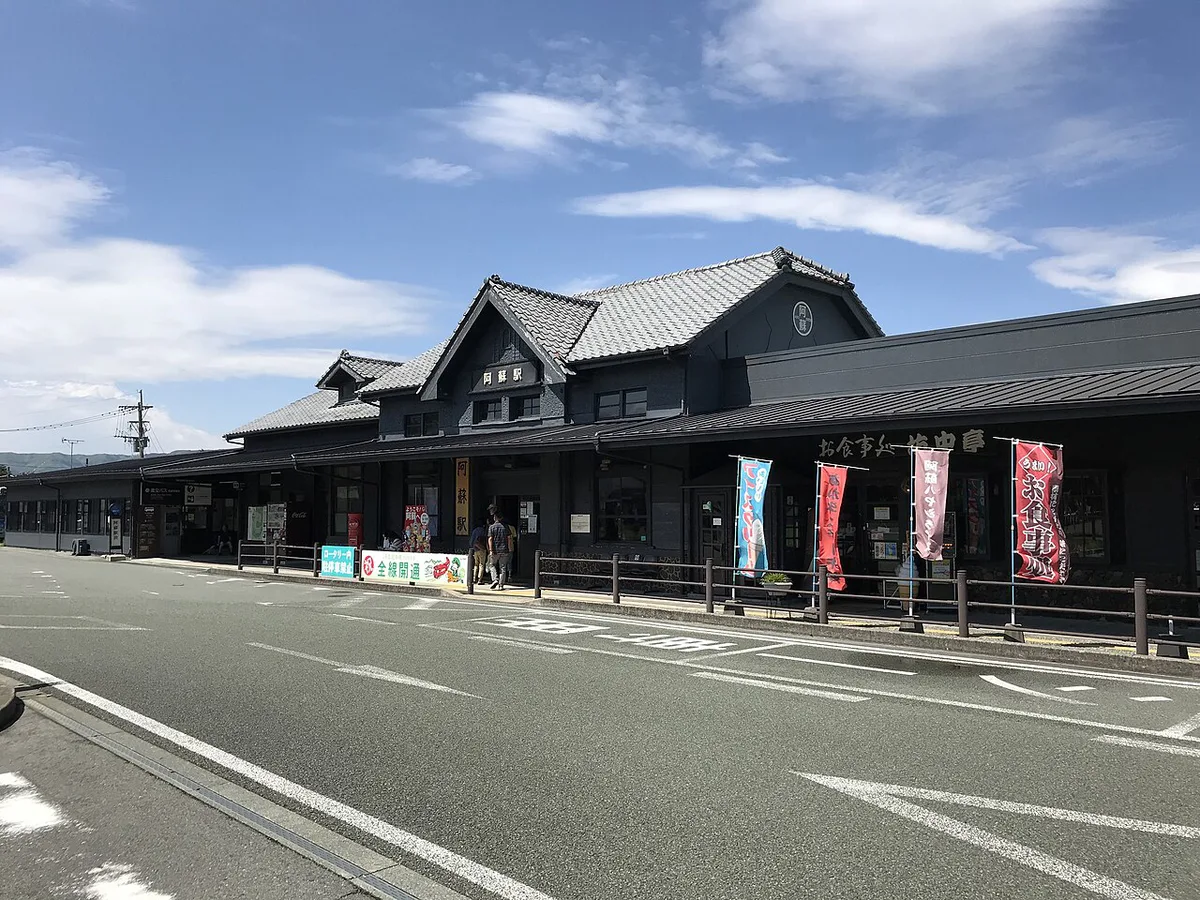
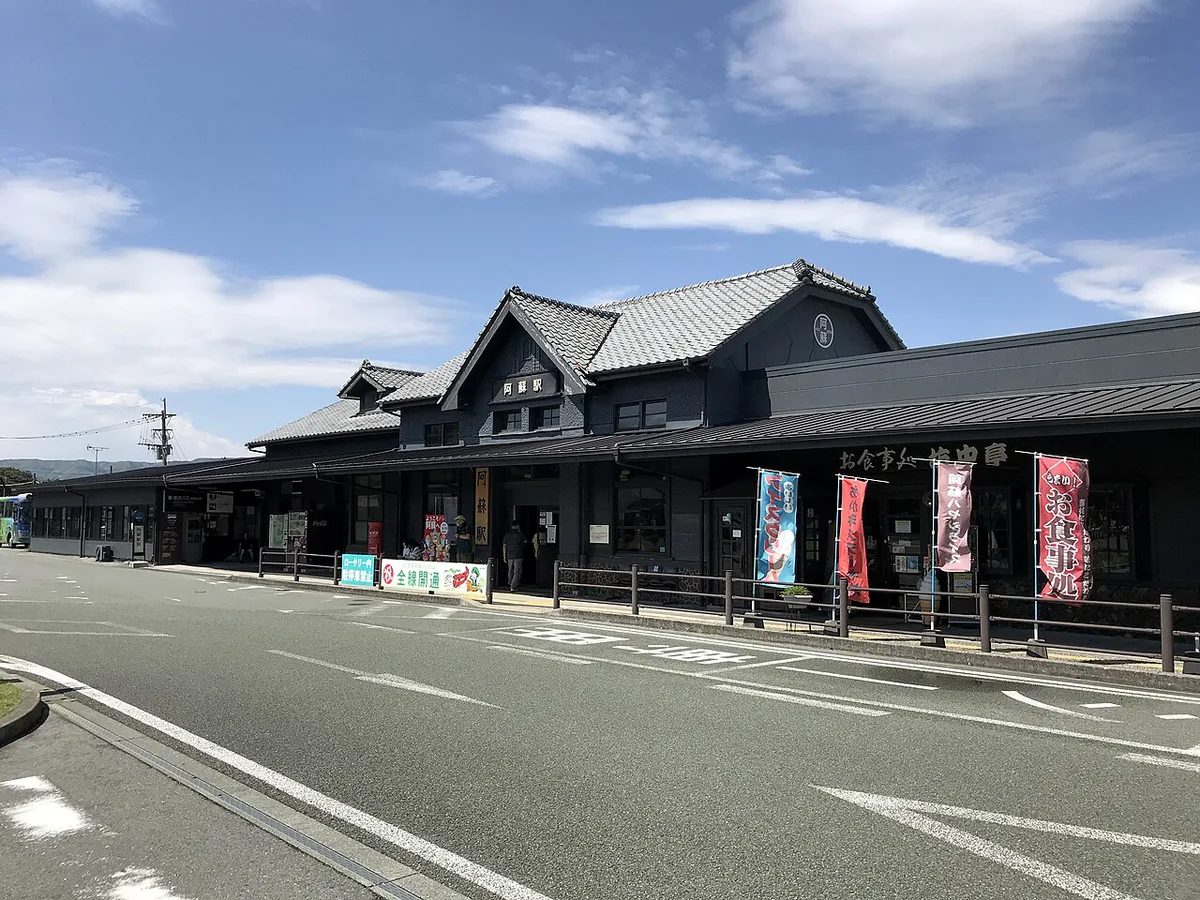
- Midday: a self-service cafe near Aso City, close enough to Aso Station to skip a taxi.
- Afternoon: Senshuikyo Gorge, roughly 15 minutes away by car.
- Late afternoon: Kokuzo Shrine, roughly 20 minutes away by car.
- Evening: a roadside-market or convenience-store meal back near your lodging.
Access and Logistics: Aso Station, Closed Days, and Car Dependency
Car dependency defines food access in Aso, since public transit between stops runs on a limited schedule. Aso Station anchors the town center, and cafes within walking distance save the cost of a rental car entirely. Roadside markets and farm restaurants tend to sit along driving routes rather than close to the station, so a car opens up far more budget options. Plan meal stops around driving routes rather than assuming a short walk will cover the whole day. Cash remains the safer default outside larger businesses, since card and mobile payment acceptance is inconsistent at small rural cafes and markets.
Three budget meals daily cost roughly ¥1,400–¥2,500, but this requires visiting roadside markets and farm restaurants that sit outside Aso Station along driving routes.
- Cafes within walking distance of Aso Station cut out rental-car costs entirely.
- Roadside markets and farm restaurants sit mostly along driving routes, better suited to a car.
- Many rural restaurants and cafes close one day a week and finish service by mid-afternoon or early evening.
- Carry yen in smaller denominations for markets and vending-ticket cafes especially.
- Confirm hours and closed days before a trip; rural schedules shift with season and demand.
How This Guide Was Verified
Food availability, access details, seasonal rules, and the time-sensitive claims in this guide were checked on August 22, 2026 against the official sources below. Independent restaurant menus, prices, opening days, and sell-outs can change, so confirm the operator's same-day notice before making a special trip.
Frequently Asked Questions
Is there good vegetarian or vegan food in Aso, Japan?
Yes, though options are limited compared with a major city. Convenience stores, roadside markets, and a small number of vegetable-forward cafes cover most budgets. Sit-down restaurants work too, once you confirm a dish doesn't rely on fish-based dashi.
What should vegetarians watch for on Japanese menus in Aso?
Watch for dashi, a fish-based stock used in miso soup, simmered vegetables, and sauces. A dish can look plant-based and still include it. Ask staff directly, or use a phrase like "Bejitarian desu" (I'm vegetarian), before ordering.
What are the cheapest ways to eat vegetarian in Aso?
Convenience stores and roadside markets are the cheapest options, with onigiri and produce priced well under a restaurant meal. Self-catering from a guesthouse kitchen stretches one grocery run across several meals. Save a sit-down cafe meal for one meal a day rather than every meal.
Are local Aso specialties like takana meshi or dago-jiru vegetarian?
Not by default. Both takana meshi and dago-jiru can include meat- or fish-based stock, so confirm with the kitchen before ordering either dish. A dedicated guide to both dishes covers exactly what to check before you order.
How far is Aso Station from central Aso dining options?
Some cafes sit within a roughly 20-minute walk of Aso Station, based on documented examples in Aso City. Roadside markets and farm restaurants are usually farther out, along driving routes rather than near the station.
Is cheap and vegetarian food in Aso realistic for a day trip?
Yes, with planning around car access and closed days. Pair a market or convenience-store meal with a midday cafe stop, then close with another market or convenience-store meal. Check hours in advance, since many rural restaurants close one day a week.
Do convenience stores in Aso carry vegan-safe food?
Some packaged items may fit, but none is safe by category. Check the complete label for fish extract, meat seasoning, dairy, egg, gelatin, and other ingredients; also consider shared preparation for unpackaged food.
Should you carry cash for vegetarian meals in Aso?
Yes. Small cafes, roadside markets, and vending-ticket restaurants often prefer cash over card or mobile payment. Carry yen in smaller denominations, especially for markets and self-service counters.
Free guide: Japan's Hidden Gems
12 under-the-radar places beyond Tokyo & Kyoto — with the best season to visit each and a local tip you won't find in the guidebooks.
You might also like


Continue reading
More guides you'll find useful