Kamikochi Mountain Hut Meals Guide
Plan Kamikochi mountain hut meals with realistic dinner and breakfast timing, reservation advice, packed-lunch options, costs, and trail etiquette.
On this page
Last updated August 2026, Kamikochi mountain hut meals follow a stricter rhythm than typical restaurant dining. These remote yamagoya inside Chubu Sangaku National Park serve a fixed dinner and breakfast to overnight guests who reserve ahead. Day hikers can usually buy curry, ramen, or a trail bento at the same huts without booking ahead.
Kamikochi Mountain Hut Meals: The Yamagoya Dining Basics
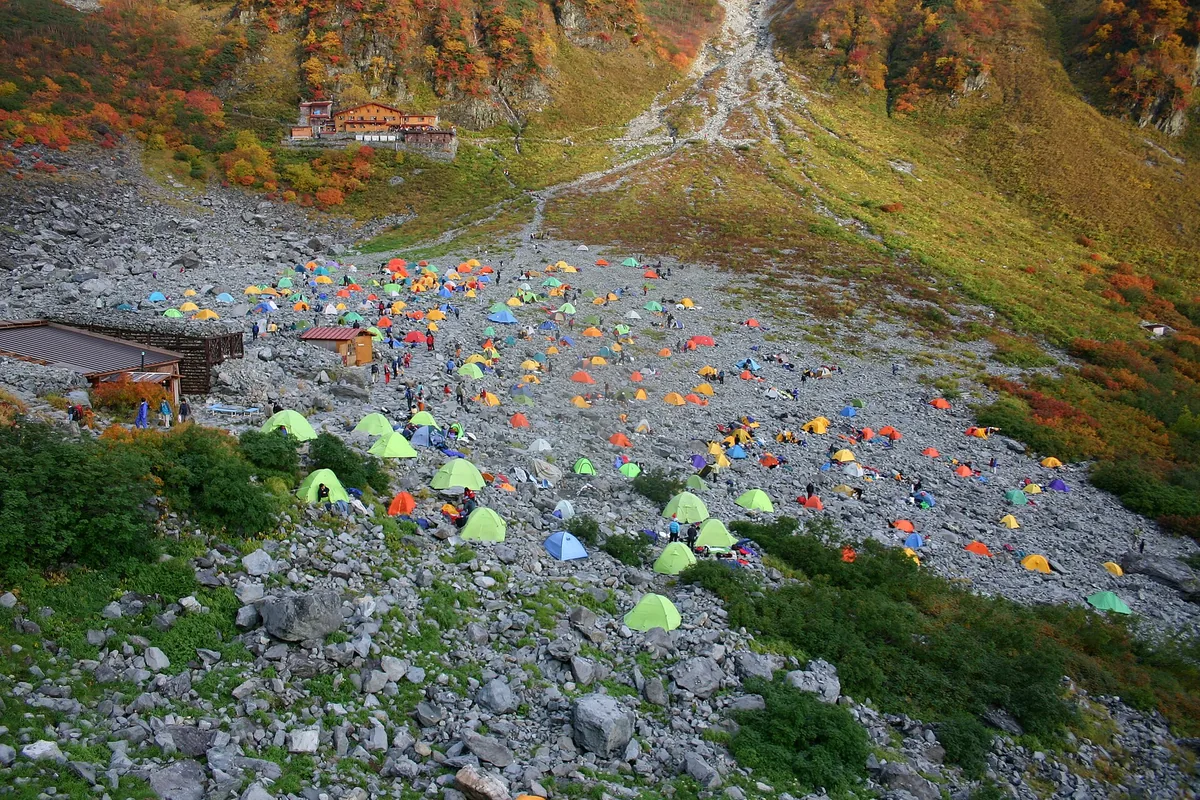
Yamagoya is the umbrella term for Kamikochi's manned mountain huts. Names typically end in -goya, -koya, -sanso, or -hyutte. Each hut supplies both bedding and food. Guests get a futon in a shared tatami room, paired with a fixed dinner and breakfast. Huts near Kappa Bridge sometimes add baths or flush toilets. Higher up, huts often have neither. Kappa Bridge hotels run on a different system, with kaiseki-ryori courses or French-style menus and card payment. The hotel dining guide covers that side of Kamikochi. Nishi-Itoya Mountain Lodge and similar inns near Kappa Bridge blend hotel comfort with a lodge feel, sitting between a full hut stay and a standard hotel. Most hut stays bundle two meals into one nightly rate, so dinner and breakfast are not ordered separately once a bed is booked. Few restaurants operate around the huts themselves, and guests without a booked dinner need to bring their own food. Camping is a third option alongside huts and hotels, permitted only in designated campgrounds or the immediate area around huts that charge a small land-use fee. Outdoor tables near the huts let campers cook their own food on portable stoves, since hut kitchens are not generally set up to serve non-guests. The Kamikochi food guide rounds up cafes, restaurants, and grocery stops near the terminal for the fuller picture.
What Kamikochi Mountain Huts Serve: Breakfast, Dinner, and Trail Lunch
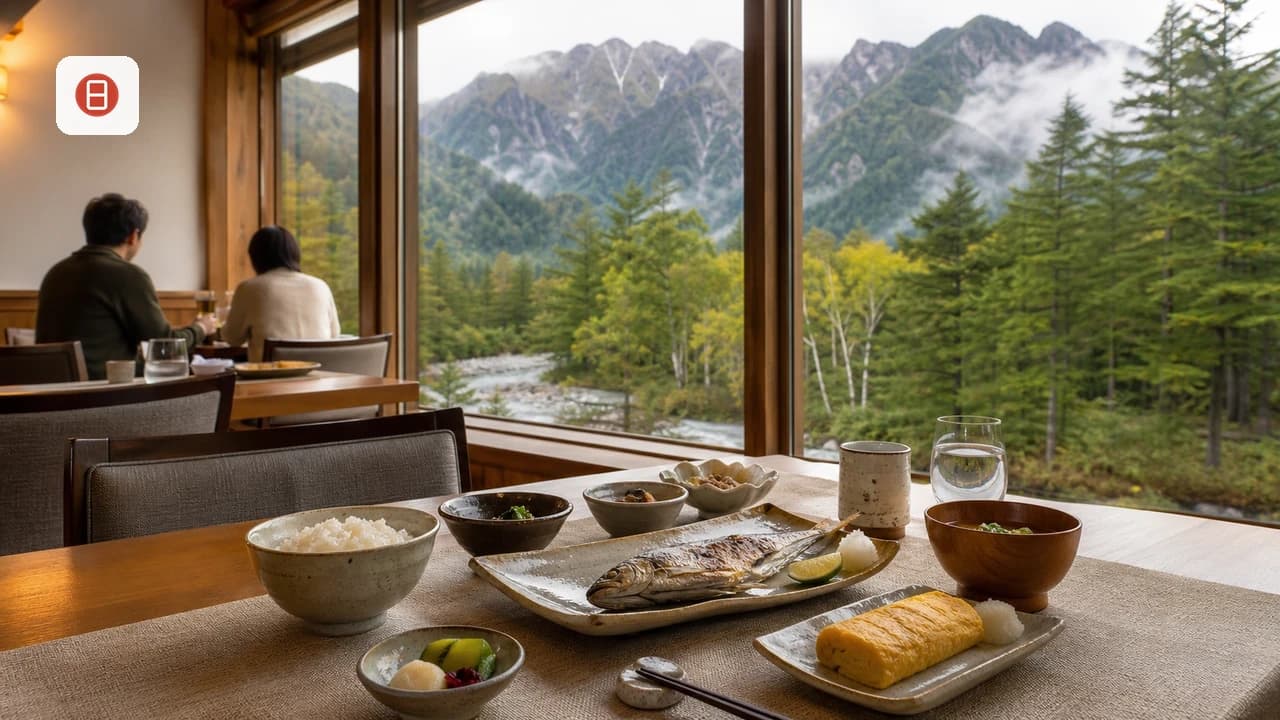
Breakfast at most huts follows a set Japanese pattern. Expect miso soup, steamed rice, a piece of grilled fish, and pickles. Dinner leans toward hearty, calorie-dense staples built for hikers. Hamburger steak, ginger pork, and curry rice are the most common mains, often served with a side of sansai, foraged mountain vegetables typical of Nagano-area cooking. Photos shared on Instagram frequently show salt-grilled fish and curry as the two dishes travelers photograph most at Kamikochi huts. Overnight guests who want food for the next day's trail can usually pre-order a boxed bento the night before. That saves waiting for a sit-down breakfast before an early departure. The trail lunch and bento guide breaks down how that ordering window works. Day hikers who are not staying overnight have a separate, simpler menu at most huts. Curry rice and ramen are the standard walk-in orders, and neither needs a reservation. Snacks and other sundries sold at hut front desks carry a premium too, since every supply arrives by helicopter or by porter along the trail. Tokusawaen adds brewed lodge coffee and a soft-serve ice cream stop that has become a minor landmark on the Myojin-to-Tokusawa trail. The cafes and sweets guide covers that stop along with other dessert breaks around the valley.
Between huts on the trail, few restaurants operate, but pre-ordering a boxed bento during the 11:00 AM-1:00 PM window solves the food gap without delaying early departures.
- Breakfast: miso soup, steamed rice, grilled fish, and pickles
- Dinner: hamburger steak, ginger pork, or curry rice with sansai
- Trail lunch: a pre-ordered bento box for the next day
- Day-hiker menu: curry rice, ramen, and Tokusawaen's soft-serve
A Day in the Life of a Mountain Hut Diner
Meal times at Kamikochi huts run on a tight, predictable schedule built around daylight and trail safety. Most overnight guests are up before dawn, since huts want rooms cleared and breakfast finished ahead of the day's hiking window. Kamikochi's hut season runs only through the warmer months, and opening and closing dates shift slightly each year, so confirm current dates before building a 2026 itinerary around this timeline.
- 4:00-5:00 AM: Breakfast service for overnight guests, timed for a pre-dawn departure
- 5:00-6:00 AM: Guests set out on the day's trail
- 11:00 AM-1:00 PM: Trail lunch, either a pre-ordered bento or a walk-in curry or ramen stop
- 3:00-4:00 PM: Check-in window at the next overnight hut
- 5:00 PM: Dinner service begins for overnight guests
Reservations, Arrival Times, and What a Hut Stay Costs
Lunch for day hikers is generally a walk-in order, paid on the spot with no booking needed. Dinner and breakfast work differently for overnight guests. Since the COVID-19 disruptions of 2020, huts have generally asked guests to contact them ahead of time. That replaces the older Northern Alps custom where no arriving hiker was turned away. Myojinkan's own booking notes recommend reserving at least two weeks before a stay. Requests need to be checked and confirmed rather than accepted instantly. Some huts complicate this further: Yama no Hidaya and Yokoo Sanso take phone reservations only, with no online English booking option. Contacting a hut directly, whether by phone or through an online form, remains the safest way to confirm both a bed and a meal before setting out. Arrival timing affects dinner more than anything else on this trail. Aim to reach the hut by 3:00 PM, and treat 4:00 PM as the latest acceptable check-in. Arriving after dark is treated as a real breach of etiquette. Dinner service typically starts around 5:00 PM. Breakfast begins as early as 4:00 AM to 5:00 AM, timed for a pre-dawn departure. During Kamikochi's peak summer weeks, huts often run meals in 30 to 40 minute seating windows. That keeps the dining room cycling through a full house, so lingering over dinner is not really an option. A can of beer runs ¥500 to ¥800 at most huts, priced high because supplies are winched or helicoptered in. Hikers on forums such as Reddit report a one-night stay with both dinner and breakfast landing around ¥10,000 total. That figure generally reflects a shared dormitory bed with two meals included, not a private room. The exact amount depends on the hut and room type, so confirm current rates when you book. Hikers on a tighter budget can camp at Tokusawa Campsite or Yokoo Campsite, both managed by their neighboring lodges, and cook their own food instead of buying hut meals. Payment is almost entirely cash at the huts themselves. The official accommodation list marks Myojinkan, Kamonjigoya, Tokusawaen, and Yokoo Sanso as cash only. Kappa Bridge hotels like Hotel Shirakabaso take credit cards as well as cash.
Top Huts for Food: Kamonjigoya, Tokusawaen, Yokoo Sanso, and More
Kamonjigoya has served hikers since 1880 and keeps an irori hearth burning in its dining room. Its salt-grilled iwana, a mountain char cooked directly over the open fire, is the hut's signature dish. That makes Kamonjigoya worth a lunch detour even for day hikers not staying overnight. The hut sits about 60 minutes on foot from the bus terminal. It also takes online English reservation requests, unusual among the cash-only huts on this list. Tokusawaen built its reputation partly through the mountaineering novel Hyoheki, which introduced the lodge to generations of Japanese climbers. Beyond dinner service, Tokusawaen is known for brewed lodge coffee, a comfort worth noting at 100 minutes from the terminal. Tokusawa Lodge, run alongside Tokusawaen, has served as a climbing base since 1956. Yokoo Sanso sits roughly 150 minutes out, the farthest of the major huts, and was refurbished in 2008. It functions as the last hearty meal stop before climbers push on toward Karasawa Hyutte and the Hotaka Mountain Range beyond. Because Yokoo Sanso only takes phone reservations, calling ahead is not optional the way it can be at huts with online booking. Myojinkan, about 55 minutes out, sits near Myojin Pond and the Hotaka Shrine's Oku-Miya. The Kamikochi attractions guide covers both stops for anyone timing a meal around the walk.
| Hut | Distance from Bus Terminal | Signature Dish or Feature | Payment |
|---|---|---|---|
| Myojinkan | 55 min | Dormitory-style meals near Myojin Pond | Cash only |
| Kamonjigoya | 60 min | Salt-grilled iwana over an irori hearth | Cash only |
| Tokusawaen | 100 min | Lodge coffee and soft-serve ice cream | Cash only |
| Yokoo Sanso | 150 min | Hearty meals before the Karasawa Hyutte climb | Cash only |
| Hotel Shirakabaso | 5 min | Kaiseki-ryori or French-style courses | Cash and credit cards |
Hut Etiquette and Mistakes to Avoid
Kamikochi sits inside Chubu Sangaku National Park, where the working rule is simple: carry out everything you carry in. Food wrappers and any scraps you cannot finish need to leave with you rather than go into a hut's trash. This carry-out standard mirrors the park's broader no-littering and no-foraging rules, which apply on the trail as much as at the dinner table. Huts that let non-guests use outdoor toilets typically expect a ¥100 tip left in a box by the door. Dietary flexibility is limited at elevation. Kitchens are built around one fixed set menu, cooked once for the whole dining room, so vegetarian or vegan requests are hard to accommodate on short notice. The dietary needs guide covers which huts can flex a set menu and which cannot. Bring enough cash rather than assuming a card machine, since credit cards remain the exception away from Kappa Bridge. On the trail between huts, a quick konnichiwa to passing hikers is standard courtesy. Yielding to hikers headed uphill, unless they wave you through first, is the expected move when paths narrow.
Breakfast at 4:00-5:00 AM follows a standardized pattern of miso soup, steamed rice, grilled fish, and pickles across all huts—this rigid menu makes vegetarian or vegan requests difficult to accommodate on short notice.
- Arriving after 4:00 PM without notice
- Expecting a card machine inside a trail hut
- Leaving food wrappers or scraps behind
- Assuming a vegetarian dinner is available without asking ahead
- Lingering past a hut's 30-40 minute meal window in peak season
Kamikochi's Hiking Culture and Who Runs the Huts
The Kamikochi Resort Hotel Association coordinates lodging, dining, and visitor information across both the Kappa Bridge hotels and the mountain huts described here. Kamikochi sits inside Chubu Sangaku National Park, along the Azusa River, with Mt. Yakedake and the Hotaka Mountain Range forming the skyline hikers walk toward. Private vehicles have been banned from the valley for decades. That ban is part of why every hut still relies on porters, helicopters, or winches to bring in supplies. That same supply chain is the direct reason a beer costs ¥500 to ¥800 partway up a mountain instead of convenience-store prices. Chubu Sangaku National Park's protected status is also why gathering plants or feeding wildlife near a hut's dining area is not permitted. Taisyoike Hotel, the only hotel directly on Taisho Pond's shore, looks out toward Mt. Yakedake from its own restaurant, a reminder that Kamikochi's dining views extend beyond the huts. Seasonal opening dates for huts and campsites shift year to year, so confirm current booking windows with each hut before finalizing a 2026 itinerary. Understanding this logistics chain makes the cash-only policy and the strict meal windows easier to accept as part of the trip rather than as an inconvenience.
How This Guide Was Verified
Operational details were checked on August 22, 2026 against official Kamikochi restaurant, accommodation, and park guidance. Individual lodges can change menus and hours seasonally, so confirm the named property before travel.
Frequently Asked Questions
Do you need a reservation for dinner at a Kamikochi mountain hut?
Yes, overnight guests should contact the hut in advance for dinner and breakfast. Since the COVID-19 disruptions of 2020, huts have generally required this instead of accepting every walk-in. Myojinkan's booking notes recommend reserving about two weeks ahead, since requests take time to confirm.
What time do Kamikochi mountain huts serve dinner and breakfast?
Dinner typically starts around 5:00 PM, and check-in should happen by 4:00 PM at the latest. Breakfast begins early, often between 4:00 AM and 5:00 AM, timed for a pre-dawn trail start. During peak season, meals often run in 30 to 40 minute seating windows.
Can day hikers eat lunch at Kamikochi mountain huts without staying overnight?
Yes, most huts sell a walk-in lunch menu of curry rice, ramen, and similar dishes. This is separate from the reservation-based dinner and breakfast served to overnight guests. No advance booking is needed for the day-hiker lunch menu.
Do Kamikochi mountain huts take credit cards?
Most mountain huts are cash only. That includes Myojinkan, Kamonjigoya, and Tokusawaen. Yokoo Sanso is cash only as well. Hotels near Kappa Bridge, such as Hotel Shirakabaso, generally accept credit cards.
What if you have vegetarian or vegan dietary needs at a mountain hut?
Hut kitchens cook one fixed set menu for the whole dining room each night. That makes vegetarian or vegan substitutions hard to arrange on short notice at elevation. Contact the hut directly before booking to ask what flexibility exists.
Is camping a cheaper alternative to a hut with meals included?
Camping near a hut usually costs a small land-use fee rather than a full room-and-meal rate. You cook your own food on a portable stove at outdoor tables instead of eating in the dining room. Tokusawa Campsite and Yokoo Campsite are both managed by their neighboring lodges.
What's the difference between hut lunch and hut dinner at Kamikochi?
Lunch is a walk-in option open to day hikers and overnight guests alike, usually curry rice, ramen, or a snack. Dinner is reserved for overnight guests only and is tied to a room booking. Breakfast follows the same overnight-guest, reservation-based rule as dinner.
Free guide: Japan's Hidden Gems
12 under-the-radar places beyond Tokyo & Kyoto — with the best season to visit each and a local tip you won't find in the guidebooks.
You might also like


Continue reading
More guides you'll find useful