Okayama Demi Katsu Guide: Best Restaurants and Local Secrets
Compare Okayama demi katsu shops, from Ajitsukasa Nomura's original recipe to Kurashiki's Kappa. Get 2026 prices, hours, and a wait-time strategy for each stop.
On this page
Last updated August 2026, Okayama demi katsu tops a crisp pork cutlet with dark demi-glace sauce, not the egg-and-dashi topping used elsewhere in Japan. Four Okayama City shops serve their own take, and one Kurashiki restaurant plates its cutlet tontei-style near the Bikan Historical Quarter. This guide compares the sauces, portions, and wait times so you can pick the right stop.
What Is Okayama Demi-Katsu (Demikatsudon)?
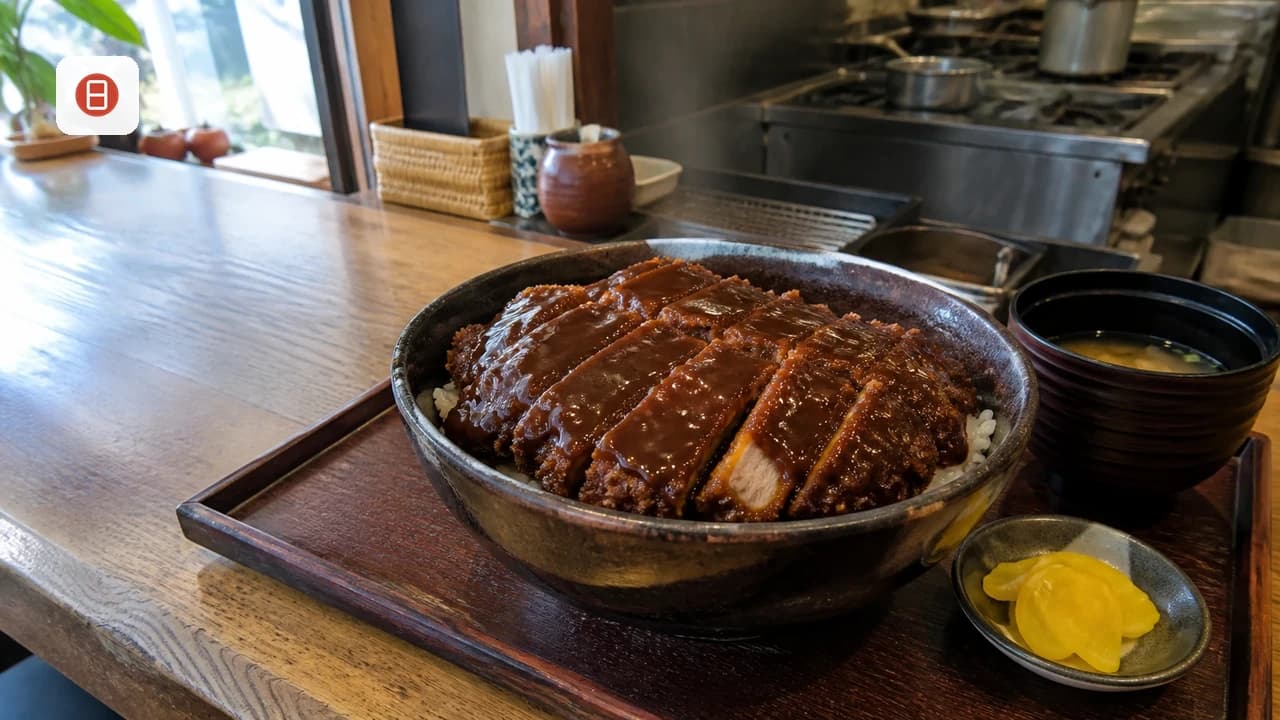
Demikatsudon swaps the usual egg-and-dashi topping for a rich demi-glace sauce poured over a freshly fried pork cutlet. Cooked rice sits under a layer of cabbage, and the sauce covers both the cutlet and the cabbage bed. Some shops boil the cabbage first, while others serve it raw and shredded, so the texture changes from restaurant to restaurant. Green peas often finish the bowl, and locals call them "Alaska," a nickname that has nothing to do with the US state. Its origin traces back to Ajitsukasa Nomura, a long-running Okayama City restaurant whose founder trained as a chef in a Tokyo hotel kitchen. Impressed by the hotel's demi-glace sauce, he adapted it for a pork cutlet bowl back home, and the format spread across the city from there. Around 30 restaurants in and around Okayama City now serve some version of the dish, according to Japan's agriculture ministry. Local shops have also promoted it together at the B-1 Grand Prix regional food festival. Menus may also list the dish as "Domikatsu" or simply "Western-style katsu," so a plain katsudon listing is not automatically the same order.
Sauce varies by restaurant despite the unified name. 30 restaurants in the Okayama area each develop their own recipe, from Nomura's chocolate-like richness to Gaho's lighter preparation.
- Cooked white rice as the base
- Boiled or raw shredded cabbage, depending on the shop
- A freshly fried pork cutlet, loin or tenderloin
- Demi-glace sauce built from simmered stock, red wine, Worcestershire-style sauce, ketchup, and consommé
- Optional green pea garnish, known locally as "Alaska"
Ajitsukasa Nomura: The Original Okayama Demi-Katsu Recipe
Ajitsukasa Nomura is the shop credited with inventing Okayama demi-katsu, and its sauce recipe still passes from father to son inside the family. Regulars describe the flavor as closer to chocolate or miso than a typical Western brown sauce. Diners can order the demi-glace cutlet on its own, in four sizes from regular to large. A set option pairs it with tamago-toji katsudon, a lighter egg-covered version. Sets come in child and grandchild portions, so a smaller appetite does not have to order the largest bowl. Pork loin (rosu) is the standard cut, and pork tenderloin (hire) costs slightly more. A food blogger who visited before the pandemic paid ¥700 for a two-thirds loin portion of both the demi-glace and egg-topped bowls. Treat that figure as a rough benchmark, and confirm current menu prices on site. Inside, the dining room mixes wooden tables, calligraphy scrolls, and koto music playing quietly in the background, along with menus printed in multiple languages for visitors. A local jingle about the restaurant plays over the in-car announcement at Nishigawa Ryokudo Park, the stop after Okayama Station on the local streetcar line, reflecting how embedded the shop is in city life.
- Address: 1-10, Okayama City, Kita Ward
- Phone: 086-222-2234
- Hours: Tuesday–Friday 11:00–16:00 (last order); Saturday, Sunday, and holidays 11:00–14:30 and 17:00–20:30 (last order)
- Closed Mondays (or the following day when Monday is a holiday)
Yamato Restaurant: Demi-Katsu With a Ramen-Broth Sauce
Yamato sits in Omotemachi, an Okayama City neighborhood reachable by heading south on Holland Street from Momotaro Boulevard. It serves only one style of katsudon, always the demi-glace version, which regulars call "dobi sauce." Yamato's sauce starts from a Chinese-noodle soup base rather than a Western stock, then gets seasoned with Worcestershire-style sauce and ketchup for a rounder, saltier finish. Its cutlet mixes two cuts, fillet and belly, so a single bowl carries more than one texture. Chuka Soba, a noodle dish unchanged since the Showa era, is Yamato's other signature order, and pairing a small bowl of it with the katsudon is common among regulars.
Gaho: A Castle-Town Option Near Korakuen Garden
Gaho has operated near Korakuen Garden and Okayama Castle since the Showa era, inside the old castle town. Its demi-katsudon set uses a lighter, tangier house-made sauce over a thin, crispy batter. The shop markets this pairing as gentle enough for a full lunch. Solo diners can order individual hot pots, and takeaway bento boxes suit those short on time between sightseeing stops.
- Address: 1-7-1, Okayama City, Kita Ward
- Phone: 086-222-5560
- Hours: 11:00–15:00 and 17:00–21:00
- Closed Tuesdays
Sanuki no Otoko Udon Nose: Katsu Meets Sanuki Udon
Sanuki no Otoko Udon Nose pairs the same demi-glace cutlet with thick Sanuki-style udon noodles instead of a plain rice bowl. Private party plans and course meals are available for groups. Location sits about a five-minute walk from the Athletic Park Exit, the west exit of JR Okayama Station, so it works well right after arrival or before a departure.
Kappa in Kurashiki: The Tontei-Style Alternative
Meishiro Tonkatsu Kappa sits inside the Kurashiki Ebisu Shopping Arcade, a covered street between Kurashiki Station and the Bikan Historical Quarter. Unlike the Okayama City bowls, Kappa serves its cutlet as a tontei, meaning the pork and rice arrive on separate plates rather than combined in a donburi. A dedicated waiting room next door handles the overflow, and on a weekday around 1:00 PM the posted list has run past 10 groups. Family recipe sauce has continued since the founder's grandfather's era, simmered from onions, carrots, and aromatic vegetables, then finished with meat drippings, butter, and tomato puree. A later owner adjusted the sweetness to suit Kurashiki's preference for milder flavors, and staff keep the same balance today. The building's exterior reads as a traditional Japanese storefront, though the kitchen runs a Western-style menu that also includes hamburger steak and fried shrimp alongside the tonkatsu. Aggregated review sites consistently rate it among Kurashiki's most popular lunch spots.
- Signature set: Meishiro Tontei with rice and miso soup, logged at ¥1,400 by a Kurashiki food blog in November 2019 — confirm current pricing before visiting
- Lighter option: Mini Tontei, logged at ¥1,000
- Address: 2-17-2 Aji, Kurashiki, Okayama Prefecture
- Phone: 086-422-0440
- Hours: 11:40–14:00 and 17:00–19:30; closed Mondays
Planning Your Visit: Costs, Timing, and Location
Expect to pay roughly ¥700 to ¥1,500 for a demi-katsu meal across these five shops, depending on portion size and whether rice and miso soup come included. Lunch rushes peak between 12:00 PM and 1:30 PM, and Kappa's weekday count of 10-plus waiting groups around 1:00 PM shows how quickly a small arcade shop fills. Arriving right at Kappa's 5:00 PM evening opening is a documented workaround. One visit logged only two groups ahead at that hour. Midday waits, by contrast, ran beyond an hour. Most Okayama City shops cluster along or near Momotaro Boulevard, within walking range of JR Okayama Station, while Kappa sits inside Kurashiki's covered arcade near the Bikan Historical Quarter. Travelers pairing a meal with sightseeing can check the Okayama attractions guide. It helps time a visit between Korakuen Garden and Okayama Castle, both near the Shiroshita Tram Station. Wider price comparisons across the city's other casual spots live in the budget eats guide.
| Shop | Signature Item & Price | Peak Hours to Avoid |
|---|---|---|
| Ajitsukasa Nomura | Demi-glace katsudon; a blogger logged about ¥700 for a two-thirds loin portion (confirm on-site) | Weekday lunch, 12:00–1:30 PM |
| Kappa (Kurashiki) | Meishiro Tontei ¥1,400 / Mini Tontei ¥1,000 | Weekday around 1:00 PM, 10+ groups waiting |
| Yamato | Demi-glace "dobi sauce" katsudon | Lunch hours; exact peak not documented |
| Gaho | Demi-katsudon set | Lunch service, 11:00 AM–3:00 PM |
Portion Strategy: Grandchild Sets, Mini Tontei, and Full-Size Loin
Portion choice matters as much as sauce style once you sit down. Ajitsukasa Nomura sells its demi-glace cutlet on its own in four sizes, plus set menus with child and grandchild portions for lighter appetites. Kappa runs a simpler split in Kurashiki: a full Meishiro Tontei with rice and miso soup, or a Mini Tontei for anyone who ate a big breakfast. Groups with mixed appetites can split between a full loin set and a Mini Tontei or grandchild portion at the same table, since most menus list both sizes side by side. Choosing tenderloin (hire) over loin (rosu) at Nomura adds a modest premium, so loin remains the practical default for a first visit.
Smaller portions like the Mini Tontei (¥1,000) pair well with strategic timing to beat crowds. Arriving at 5:00 PM at Kappa reported only two groups waiting versus 10-plus during midday service.
Decision Matrix: Which Okayama Demi-Katsu Shop Fits Your Trip
Match your priorities to the table below before choosing a shop. Each pick reflects the shop's strongest specialty rather than a ranking, since sauce style is mostly a matter of preference.
| Traveler Type | Best Pick | Why |
|---|---|---|
| The purist | Ajitsukasa Nomura | Original recipe, sauce passed down inside one family since the dish's invention |
| The ramen-and-katsu fan | Yamato | Ramen-broth-based sauce plus the Chuka Soba noodle order |
| The sightseer near the castle | Gaho | Lighter sauce, seating close to Korakuen Garden and Okayama Castle |
| The udon pairing | Sanuki no Otoko Udon Nose | Demi-glace cutlet served alongside thick Sanuki-style udon |
| The Kurashiki day-tripper | Kappa | Tontei-style plate inside the Bikan Historical Quarter arcade |
| The light eater or budget traveler | Mini Tontei at Kappa or a grandchild set at Nomura | Smaller portion, lower price |
Mistakes to Avoid and Local Etiquette
A few small missteps can cost time or lead to the wrong bowl. Keep these points in mind before ordering.
- Ordering "katsudon" alone can bring an egg-topped bowl instead of demi-glace, since Ajitsukasa Nomura and other shops list both on the same menu. Specify "demi-katsu" or point at the sauce photo.
- The 12:00 PM–1:30 PM lunch rush does not mix well with a tight train connection. JR Pass travelers on a single-day stop should plan around it, or eat during evening service instead.
- "Alaska" refers to green peas on the bowl, not the US state. Hearing the word on a menu is normal, not a translation error.
- Cabbage preparation is not universal. Some kitchens boil it, others serve it raw and shredded, so texture varies by shop rather than by mistake.
- Ordering systems are not consistent across shops. Some counters may run a self-service process while others take orders at the table, so watch for posted instructions or ask staff on arrival.
Rounding Out an Okayama Food Day
Demi-katsu pairs naturally with a wider Okayama food day, since several other specialties sit within a short walk of the same downtown core. Mamakari-zushi, a vinegared herring nigiri, and sawaradon, a Spanish mackerel rice bowl, both showcase the prefecture's coastal catch. For a lighter follow-up, check the bara-zushi guide for seafood options. Kibi dango, the soft mochi-like dumpling tied to the Momotaro folklore, makes a portable snack between stops. Find it mapped in the kibi dango sweets guide. Peaches and grapes are seasonal draws around the prefecture's orchards. Dessert options follow in the fruit parfaits guide. Beyond demi-katsu, the wider culinary map sits in the 10 Must-Eat Foods in Okayama: Your 2026 Food Guide.
Frequently Asked Questions
What makes Okayama demi katsu different from a standard katsudon?
Standard katsudon usually arrives with an egg-and-dashi sauce, while Okayama demi katsu swaps that topping for a dark demi-glace sauce built from simmered stock, red wine, and tomato. The demi-glace format is credited to Ajitsukasa Nomura's founder, who adapted the sauce after tasting it at a Tokyo hotel.
What does "Alaska" mean on an Okayama demi-katsu menu?
It is a regional nickname for green peas, not a reference to the US state. Some shops sprinkle "Alaska" peas over the bowl for color, though not every restaurant includes them, so ask if the topping matters to you.
How much should you budget for a demi-katsu meal in Okayama?
Expect roughly ¥1,000 to ¥1,500 for a standard set with rice and miso soup at most shops, and less for a mini or grandchild-sized portion. Kappa's Mini Tontei runs ¥1,000 and its full Meishiro Tontei was logged at ¥1,400 by a Kurashiki food blog. Confirm current pricing before you visit, since restaurant prices change.
When is the best time to avoid crowds at Kappa in Kurashiki?
Weekday lunch service gets busy fast, with more than 10 groups reported waiting around 1:00 PM. Arriving right at the 5:00 PM evening opening is a documented workaround, since one visit logged only two groups ahead at that hour.
Does every Okayama restaurant serve the same demi-glace sauce?
No. Ajitsukasa Nomura's sauce is described as closer to chocolate or miso in richness, Yamato's "dobi sauce" starts from a Chinese-noodle soup base, and Gaho's version is lighter and tangier. Comparing a couple of shops on one trip is the easiest way to taste the difference.
Are there vegetarian versions of Okayama demi-katsu?
None of the featured shops list a vegetarian substitution, since the dish centers on a fried pork cutlet. Travelers with dietary restrictions should call ahead to ask about substitutions, or choose a different Okayama specialty instead.
Free: The Okayama Essentials guide
Top things to do, where to stay, a perfect day plan, getting around, and the best time to go — a Okayama mini-guide you can take offline.
You might also like


Continue reading
More guides you'll find useful