Hadaka Matsuri Guide: Saidaiji Eyo Naked Festival in Okayama
Plan your Saidaiji Eyo hadaka matsuri trip: the 2027 Okayama date, spectator and participant costs, and the 10 PM shingi scramble timeline.
On this page
Last updated September 2026, hadaka matsuri is Japan's term for winter purification festivals where men wear only a fundoshi loincloth. Saidaiji Eyo in Okayama is the best-known version, drawing thousands of participants to Saidaiji Kannon-in Temple each third Saturday in February. This guide covers the 2027 date, spectator and participant costs, the evening timeline, and how to watch from Gofuku-dori and stay warm.
What Is Hadaka Matsuri? The Saidaiji Eyo Tradition
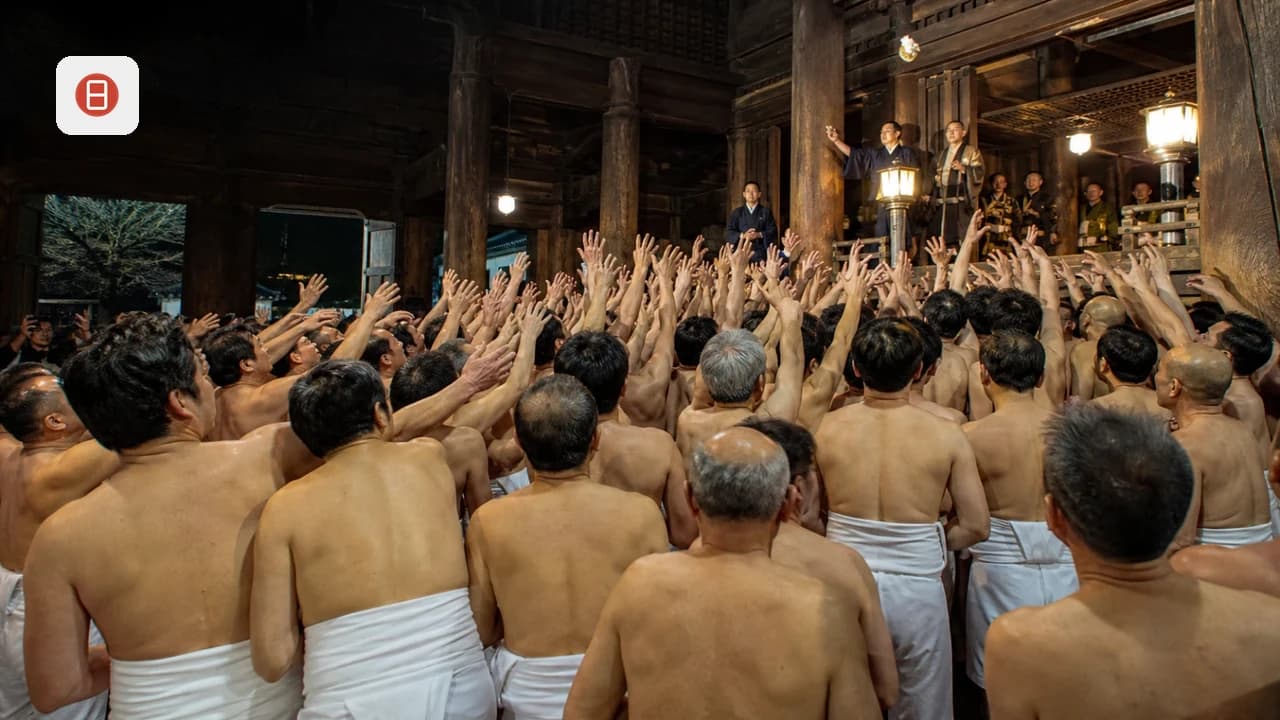
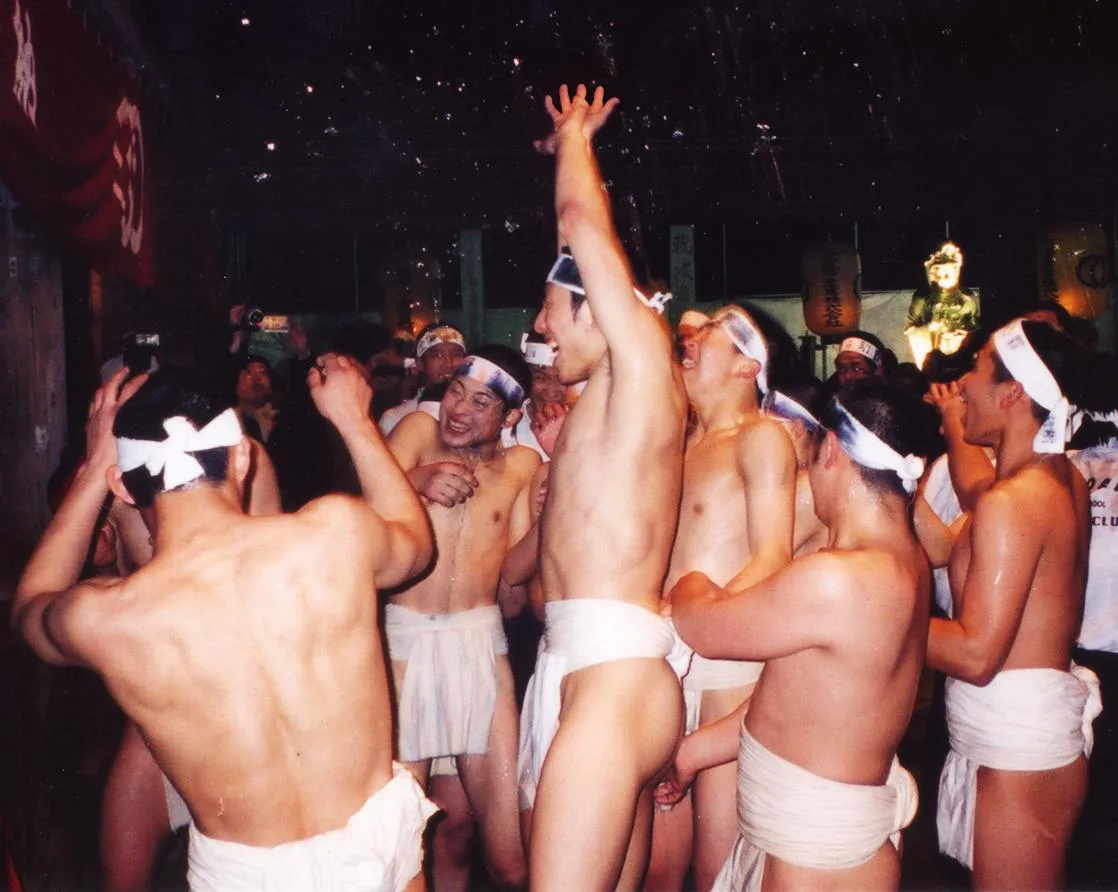
"Hadaka matsuri" translates loosely to "naked festival," though participants wear a fundoshi loincloth rather than nothing at all. Dozens of towns across Japan hold a version each winter, but the Saidaiji Eyo in Okayama is the one most people picture. This tradition traces back more than 500 years to a purification rite at Saidaiji Kannon-in Temple in Okayama's Higashi-ku ward. Every February, thousands of people converge on the temple grounds for one night. More than 9,000 men take part each year. They compete for two sacred shingi sticks and around 100 kushigo bundles of willow strips, thrown into the crowd by temple priests. Catching either object is believed to bring a year of luck and prosperity, tied to the coming harvest. Saidaiji's rite blends Shinto and Buddhist practice, a pairing common across older Japanese rites. It's one entry on Okayama's calendar of festivals and events, and arguably its most physically demanding.
More than 9,000 men annually compete for the sacred sticks, creating intense crush conditions where realistic injury risks include bruises and scrapes.
When and Where: Saidaiji Eyo Dates and Location
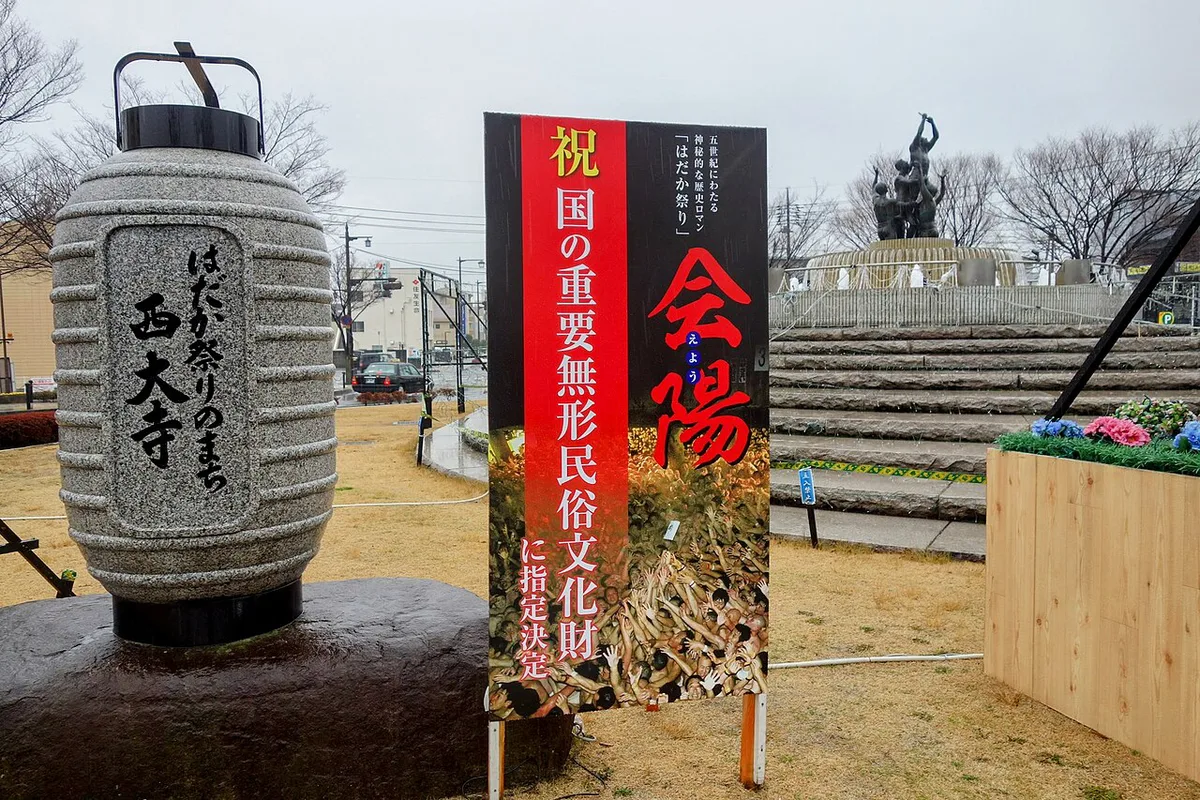
This festival always falls on the third Saturday in February. The 2026 edition took place on February 21, now behind us. Its next running lands on Saturday, February 20, 2027, worth confirming closer to the date since organizers occasionally adjust logistics. Its venue does not move. Saidaiji Kannon-in Temple sits at 3-8-8 Saidaijinaka in Okayama's Higashi-ku ward. That's a separate district from the JR Okayama Station area, so factor in travel time even though both sit within Okayama City. For broader trip timing, a guide to planning around Okayama's seasons compares February against the rest of the year. If you're mapping the trip around other stops, Okayama's month-by-month festival calendar shows how the Eyo compares to warmer-weather events. Japan's national tourism organization also covers general winter travel planning if this is your first cold-season trip.
Getting to Saidaiji Kannon-in Temple
Okayama Station connects to Saidaiji Station via the JR Ako Line, a short ride east. Saidaiji Station is a regular JR stop, not a shinkansen station, so plan a same-day connection from Okayama Station rather than a direct bullet-train link. From Saidaiji Station, Saidaiji Kannon-in Temple is a 10-minute walk to the south. That walk turns into a slow shuffle once evening crowds build, so leave extra time if you're aiming to catch the 3:20 PM community events. Okayama's city tourism association lists current access details worth checking before you travel, since a fixed festival date doesn't guarantee fixed train schedules. Trains back toward Okayama Station run packed after 10 PM, once the main event lets out, so budget patience rather than a fast exit.
Spectator Guide: Where and How to Watch
Watching costs nothing if you're happy standing in the general crowd outside the temple's main hall. Recent event guides list reserved standing at ¥500 to ¥1,000, and reserved seating at about ¥5,000. Confirm current prices before you go, since festival costs can shift year to year. Vantage points closest to the action sit near the temple hall, where priests release the kushigo bundles before the chief priest drops the two shingi sticks at 10 PM. Arrive well before that hour if you want a spot with any real view. Not everyone wants to stand outside in near-freezing air for hours. Gofuku-dori, the retro shopping street near the temple, stays open through the festival with food stalls and a calmer atmosphere. It's the fallback for spectators who want festival energy without the cold.
| Viewing Option | Price |
|---|---|
| General standing | Free |
| Reserved standing | ¥500–¥1,000 |
| Reserved seating | ¥5,000 |
Can Foreigners Join? A Participant's Guide
Foreign visitors can take part, and no advance paperwork from home is required. Registration happens at the temple itself, typically on the day of the festival or in the days just before. Entry costs about ¥3,000, covering a fundoshi loincloth, tabi socks, and access to a changing area. Staff wrap the loincloth tightly, a small but serious ritual in itself before you're pushed out into the street. Participants link arms in rows and move toward the temple gates chanting "Washoi," with temperatures hovering near 0°C (33°F) that night. Inside the temple grounds, the crowd tightens into a genuine crush once the shingi drop. Expect to be pinned in place at times among thousands of other participants, unable to move your arms if you don't keep them raised. Minor injuries such as bruises and scrapes are a realistic risk in a scrum this size, so weigh the physical intensity honestly before signing up. It's a markedly different experience from the summer energy at Okayama's Uraja dance festival, where crowds dance rather than collide.
Festival Timeline: From Afternoon Drums to the 10 PM Climax
Afternoon events build slowly before the night gets serious. Community contests open the schedule at 3:20 PM, including a youth version of the festival and a mochi-throwing contest. Dance performances follow at 5:40 PM, then Eyo Daiko drumming at 6:30 PM and again at 7:30 PM. Fireworks light up the sky along the Yoshii River at 7:00 PM. Everything builds to 10:00 PM. Just before the hour, temple staff cut every light inside the main hall, plunging thousands of packed bodies into darkness. That blackout is the "lights out" ritual first-timers hear about but rarely see explained. It's the deliberate final beat before the drop, not a technical glitch. Once the lights go, roughly 100 kushigo bundles scatter into the crowd, followed by the two shingi sticks themselves. What follows is a scramble that can run about 30 minutes, hands and bodies pressed together until someone secures a stick and fights back toward the temple gate. Little is documented for outside visitors about what happens next, but tradition holds that whoever secures a stick carries its luck through the coming year.
The festival climaxes at 10:00 PM, after which trains back to Okayama Station run packed, making quick departure impossible for the evening's participants.
| Time | Event |
|---|---|
| 3:20 PM | Community events: youth festival, mochi-throwing contests |
| 5:40 PM | Hounou Enbu dance performances |
| 6:30 PM & 7:30 PM | Eyo Daiko drum performances |
| 7:00 PM | Eyo Fuyu Hanabi fireworks over the Yoshii River |
| 10:00 PM | Shingi Touka: lights out, kushigo release, shingi drop |
Surviving the February Cold
Okayama in February sits close to freezing after dark, and standing still for hours makes it feel colder than the number suggests. Dress in layers for the wait outside. Hot drinks from the yatai food stalls help more than extra gear does. Sake flows freely among participants as part of the tradition, since a warm drink and a bit of nerve both help before stepping into the cold water and crowd. Spectators should treat that differently. Public intoxication draws attention from event staff and police in a crowd this dense, so pace yourself if you're drinking to stay warm rather than to compete. Photography is generally fine from spectator areas, but stay respectful with close-up shots of participants changing or being wrapped into their fundoshi. Treat those moments the way you'd treat a changing room anywhere else.
- A warm base layer
- A windproof outer shell
- Something to cover your hands and ears
Where to Stay and Mistakes First-Timers Make
Hotel rooms across Okayama City book out months ahead of the festival weekend. Reserve early, and check lodging options in Okayama for neighborhoods within easy reach of the station. Weekend availability disappears fastest, so a Friday-to-Sunday stay needs earlier booking than a weekday visit. Most visitors treat the Eyo as an evening add-on to a full day of sightseeing. Korakuen Garden fills a pleasant morning. Okayama Castle works just as well if you'd rather tour a castle first. Either way, head toward Saidaiji by mid-afternoon, in time for the 3:20 PM community events. If you're staying longer, a day trip to Kurashiki's Bikan historic quarter pairs well with a festival-weekend base in Okayama. First-timers most often misjudge the cold, arriving without enough layers and leaving before the 10 PM climax because the wait feels longer than expected. Another common mistake is treating the festival as a quick photo stop. Between travel time, the wait for a vantage point, and the trains back, budget the whole evening rather than an hour. How much time to budget for Okayama helps fit the festival into a longer visit. A multi-day Okayama route shows where the festival weekend slots in alongside the city's other sights. If the date doesn't line up with your trip, free activities around Okayama give you a no-cost backup plan for the same evening.
Beyond Saidaiji: Other Naked Festivals and Nearby Events
Saidaiji isn't the only hadaka matsuri in Japan, just the most famous one. Konomiya's Owari Ōkunitama Shrine holds a similarly old naked festival in Inazawa, Aichi Prefecture, dated to the lunar calendar rather than a fixed Saturday. Osaka's Shitennoji Temple holds its own version, called Doya Doya, where two teams compete for an amulet tied to a central pillar while shouting "Doya! Doya!" In 2024, a group of 41 women took part in the Konomiya festival for the first time, in a clothed, non-contact role. That's a notable shift for a festival with a history of more than 1,300 years, though it remains a separate event from Saidaiji. If that detail draws you to plan a second trip, confirm current participation rules directly with organizers before you go. If you're routing a wider trip through the region, Hiroshima's event calendar covers festivals to the west. Kobe's festival listings are another option if your route continues east toward Kansai. Back in Okayama, the Eyo is one entry among many worth checking on the city's attractions overview before you lock in a festival-season visit.
What Happens After the Shingi Are Found
The scramble does not end the instant someone touches a shingi. A participant who secures one of the two sacred sticks must protect it while moving through the packed temple hall. Temple officials then confirm the result, and the successful holders become known as fuku-otoko, or “lucky men.”
The title carries religious meaning rather than a cash prize. The winners are believed to receive good fortune and prosperity for the year ahead. Their success is also linked to the community’s hopes for a fruitful harvest.
For spectators, this explains why the crowd can remain intense after the sticks drop. The action shifts from the initial rush to the effort of getting clear with the sacred object. Do not expect a simple podium finish or an easy view of the winners. The conclusion is part of a temple rite, not a sporting contest.
Frequently Asked Questions
What is hadaka matsuri, and why do participants wear so little?
Hadaka matsuri is a category name for winter purification festivals held across Japan, not one single event. Participants wear a fundoshi loincloth rather than going fully nude. That state of undress represents purification before contact with the gods, not shock value. At Saidaiji, the goal after that purification is a physical scramble for the shingi sticks.
When is the Saidaiji Eyo hadaka matsuri in 2027?
This festival is fixed to the third Saturday in February every year. Its most recent running was February 21, 2026. Mark Saturday, February 20, 2027, for the next edition. Confirm the exact date with Okayama's official tourism channels closer to your trip.
Can foreigners join Hadaka Matsuri as participants?
Yes, registration happens at Saidaiji Kannon-in Temple itself, typically on the day of the festival. Entry costs about ¥3,000 and covers a fundoshi loincloth, tabi socks, and a changing area. No advance application from overseas is required. Expect a genuine physical scrum once inside the temple grounds, so only join if you're comfortable with close, crowded contact.
How much does it cost to watch Hadaka Matsuri?
General standing viewing around the temple grounds is free. Reserved standing areas cost ¥500 to ¥1,000. A clearer view from reserved seating costs about ¥5,000. Most spectators skip paid seating and simply arrive early enough to claim a decent free spot.
What should you wear to watch or join Hadaka Matsuri?
Spectators should dress in layers, since Okayama's February nights hover near 0°C (33°F). A warm base layer, a windproof coat, and warm socks matter more than anything else you pack. Participants receive a fundoshi loincloth and tabi socks as part of the ¥3,000 entry kit, so no special clothing is needed beforehand. Bring a change of warm, dry clothes for afterward regardless of which role you choose.
Is Hadaka Matsuri dangerous to attend?
Spectating from the designated viewing areas carries no unusual risk beyond a cold, crowded evening. Joining as a participant is different. The crush of thousands of men competing for the shingi sticks carries a real risk of bruises and scrapes. Serious injuries are uncommon but not unheard of in a scrum this size. Anyone with mobility limitations or a low tolerance for tight crowds should watch rather than join.
Free: The Okayama Essentials guide
Top things to do, where to stay, a perfect day plan, getting around, and the best time to go — a Okayama mini-guide you can take offline.
You might also like

Continue reading
More guides you'll find useful