Okinawa Food Road Trip: A 3-5 Day Culinary Itinerary & Guide
Plan a 3 to 5 day Okinawa food road trip: Route 58 stops, longevity-diet eateries, Yanbaru farms, and the IDP, GPS, and parking logistics for 2026.
On this page
Last updated August 2026, this Okinawa food road trip itinerary maps the route serious eaters need. It links Makishi Public Market, island soba counters, and the Yanbaru farm stalls that public transit rarely reaches. Plan three days to cover Naha through Nago, or extend to five to seven days for a fuller northern-southern loop.
The Nuchigusui Philosophy Behind an Okinawa Food Road Trip
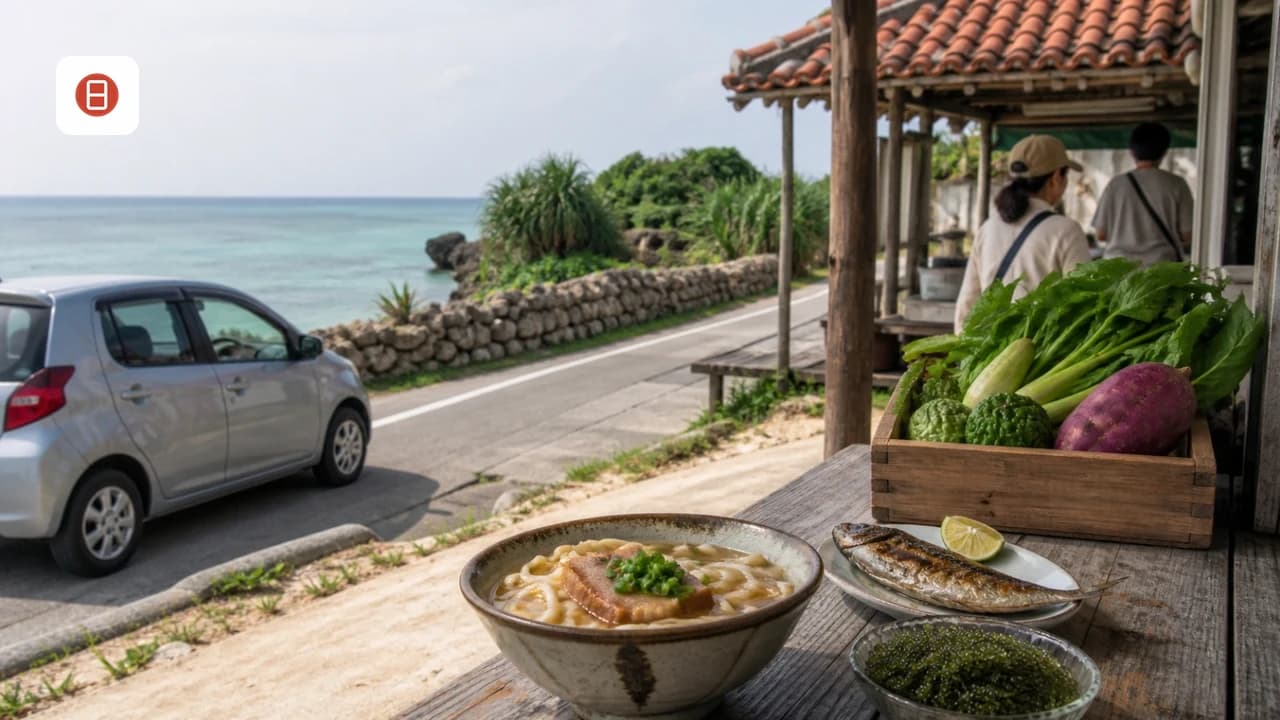
Okinawans call their cuisine nuchigusui, meaning medicine of life. Meals function as nourishment for the body and the mind, not just fuel between stops. Okinawa Prefecture is one of the world's Blue Zones, where residents live unusually long, and diet is widely cited as a major contributing factor. The Okinawa Food Guide: 11 Must-Try Dishes & Best Restaurants (2026) covers that longevity diet in full, and this itinerary turns it into a drivable route. A rental car matters here, because many standout soba shops and farm-to-table spots sit in the Yanbaru forest region, well outside bus routes. Expect to see goya (bitter melon), purple sweet potato, and shikuwasa citrus repeat across markets, soba shops, and farm stalls the whole way north. Diet on the islands leans vegetable-heavy. Even so, dashi and pork fat flavor most broths. Check the vegetarian and vegan local food guide before assuming every dish is meat-free. A tight three-day trip covers Naha through Nago. Add five to seven days for a fuller version that also covers the northern forests and the southern ruins sites.
Road Trip Logistics: IDP, GPS Codes, and Parking Costs
Renting a car unlocks this itinerary, since many of the best stops sit well past the last bus stop. Several decisions upfront keep the week running smoothly.
Parking at resort hotels costs around ¥1,000 daily, modest compared to a ¥20,000 family dinner at high-end restaurants like Ufuya—food is the trip's primary expense.
- International Driving Permit: most foreign drivers need a 1949 Convention IDP alongside their home license to legally rent and drive.
- Driving side: Japan drives on the left, with the steering wheel on the right side of the car. Budget a few minutes in the rental lot to get used to it before merging onto Route 58.
- GPS by phone number: Japanese car navigation accepts a business's phone number instead of a street address. Save numbers for each stop before leaving the airport.
- Vehicle size: pick a compact car for the narrow village roads around Yomitan and Ogimi.
- Parking and fuel: resort hotels often charge around ¥1,000 a day for parking. Rental companies may ask for your latest fuel receipt at drop-off.
Day 1: Naha and the Ryukyu Roots
Start the morning at Makishi Public Market off Kokusai Dori, Naha's main street. Vendors sell fresh catch, goya, and purple sweet potato on the first floor. Carry your pick upstairs, and a market kitchen will grill or steam it for a modest per-item fee. Order umibudo, sea grapes with a distinctive pop, and soki, slow-cooked pork ribs, while you're there. A coffee stand housed in a repurposed shipping container near the market is a good alternative if seafood isn't your morning move.
Be at Shimujo before 11:30am since many traditional soba shops close one or two weekdays each week, and broth sells out by afternoon with no backup.
- Lunch: Shimujo, traditional Okinawan soba served in a heritage house recognized as a National Tangible Cultural Property. Arrive by 11:30am. The broth has a reputation for selling out by early afternoon, with no backup bowl once it's gone.
- Afternoon: Shuri Castle, the former Ryukyu Kingdom palace rebuilt after a 2019 fire. Check current status before visiting, since parts of the reconstruction may still be under scaffolding or closed.
- Late afternoon: Tsuboya pottery district, walkable on foot, where wood-fired kilns produce the shisa figures that guard restaurant doorways across the island.
Day 2: The Central Coast Along Route 58
Route 58 runs roughly 70 miles along Okinawa's coast, linking Naha to the island's northern reaches. Today's drive follows its central stretch, with stops timed around food rather than mileage. Traffic moves easily here, since the road is wide and mostly straight compared to the village lanes further north.
- Stop: Yomitan Pottery Village (Yachimun no Sato), home to more than 40 potters. Park in the lot at the entrance and walk the path between studios on foot. Bowls and small shisa figures range from inexpensive souvenirs to higher-end pieces.
- Lunch: Nakamura Soba, where asa (sea lettuce) gets kneaded into the noodles and soki (pork rib) tops the bowl. Complimentary water comes with the meal, and the dining room looks out over the East China Sea. It's a good entry point into the wider soba island styles found around Okinawa. Call ahead to confirm hours: 098-966-8005.
- Dinner: taco rice in Kin Town, the dish's reputed birthplace, or an Agu pork shabu-shabu, Okinawa's heirloom pig breed, at a central-coast restaurant.
Day 3: Yanbaru and the Village of Longevity
Cross onto Kouri Island via the toll-free Kouri Bridge, more than 6,000 feet long with water on both sides. Continue north into Yanbaru, Okinawa's forested northern region, where the pace of the drive slows considerably.
- Morning: Kouri Island, reached by the Kouri Bridge. Beaches sit near the base of the bridge on the island side, a short stop before continuing inland.
- Midday: Ogimi Village, known locally as the village of longevity. Small roadside stalls sell shikuwasa citrus and other produce grown a few steps from the stand.
- Lunch option: a longevity-focused restaurant in Ogimi has served a tasting menu built around purple sweet potato, shikuwasa, azuki beans, and bitter melon with tofu. Past reporting noted reservations were required a day ahead by email; confirm the current booking method before you go.
- Dinner: Ufuya, a restored heritage house serving high-end Agu pork shabu-shabu. It doesn't take reservations, so arrive early and expect a line. Past visitor reports put a family-of-four meal around ¥20,000, depending on the set chosen.
Coastal Route or Nature Route: Matching the Drive to Your Trip
Okinawa's food road trip splits into two distinct drives, and most travelers lean toward one over the other.
| Factor | Coastal route (Route 58, west) | Nature route (Yanbaru, north) |
|---|---|---|
| Food style | Modern fusion, taco rice, seafood | Traditional soba, wild vegetables, Agu pork |
| Driving ease | High: Route 58 is wide and mostly straight | Moderate: narrow, winding forest roads |
| Time needed | 1 to 2 days | 2 to 3 days |
| Best for | First-time visitors and families | Food purists and nature-focused travelers |
Mistakes to Avoid on an Okinawa Food Road Trip
A few recurring errors turn a food-focused drive into a frustrating one.
- The Monday-Tuesday trap: many family-run eateries close one or two weekdays. Call ahead or check hours before driving out of your way for a closed kitchen.
- Toll road versus local road: Route 58 is scenic but slower. The Okinawa Expressway moves faster but skips the coastal food stops entirely, so use it only when you need to cover distance quickly.
- Zero-tolerance drink driving: Japan enforces a strict no-alcohol standard for anyone behind the wheel. Treat awamori distillery visits as tasting-only unless a sober driver is in the car. Ship bottles home or buy at the airport instead of sampling and driving the same afternoon.
Frequently Asked Questions
How many days do you need for an Okinawa food road trip?
Three days covers the core route from Naha through Nago. Five to seven days allows a full loop that adds the northern Yanbaru forests and the southern ruins.
Do you need an international driving permit to rent a car in Okinawa?
Yes. Most foreign visitors need a 1949 Convention International Driving Permit alongside their home license before a rental counter will hand over keys.
What is the GPS phone-number trick for driving in Okinawa?
Japanese car navigation systems let you enter a business's phone number instead of a street address. Nakamura Soba's number, 098-966-8005, is one example worth saving before departure.
Is Okinawan food easy to eat vegetarian or vegan?
The base diet is vegetable-heavy, with goya, sweet potato, and seaweed as staples. Even so, dashi and pork fat flavor many broths and stir-fries, so check dishes individually rather than assuming.
What time should you arrive at popular soba shops like Shimujo?
Arrive by 11:30am. Shimujo and similar family-run soba shops sell out their broth by early afternoon, and there is no backup batch once it runs out.
Do restaurants on this route take reservations?
Policies vary by restaurant. Ufuya in the north does not accept reservations and often has a line, while some longevity-focused set-menu spots have required advance booking by email. Confirm the current policy directly with each restaurant before you go.
Free guide: Japan's Hidden Gems
12 under-the-radar places beyond Tokyo & Kyoto — with the best season to visit each and a local tip you won't find in the guidebooks.
You might also like


Continue reading
More guides you'll find useful