Shirahama Kue Hot Pot: Where to Eat Wakayama's Phantom Fish
Plan a Shirahama kue hot pot dinner: peak season, wild versus farmed fish, price tiers, and booking lead times for 2026.
On this page
Last updated August 2026, Shirahama kue hot pot centers on kue, the longtooth grouper that Wakayama fishing crews and fish farmers nickname the phantom fish for its rarity and price. Winter visitors book a kue-nabe course to taste its gelatinous skin, collagen-rich fat, and clean white meat in a light kombu broth. This guide covers the season, the wild-versus-farmed decision, group sizes, and what a full course costs before you call a restaurant.
What Is Kue, Shirahama's Phantom Fish Hot Pot?
Kue is the longtooth grouper, a deepwater fish that Wakayama's fishing crews and fish farmers nickname the phantom fish. The name comes from its rarity: wild kue are hard to net, grow slowly, and never show up in the volume that mackerel or tuna do. Shirahama sits on the Kii Channel, where deep, warm currents support both the wild fishery and decades of local aquaculture know-how. That combination of wild access and farming expertise is why kue hot pot shows up on menus here more reliably than in most other coastal towns. Local food coverage lists kue-nabe as one of the highlights of Shirahama's food scene, alongside sashimi bowls and grilled seafood.
Inside the Pot: Broth, Cuts, and the Zosui Finish
Kue-nabe starts simple: a light kombu dashi broth, kept clear so the fish flavor stays forward instead of a heavy miso or soy base. Cooks add tofu, mushrooms, and leafy greens as the pot simmers, but the fish is the point. Unlike a standard white-fish nabe, kue is prized less for its fillet and more for its skin and the collagen-rich fat just beneath it. Simmered kue skin turns gelatinous rather than chewy, and the fatty layers around the belly carry most of the dish's umami. Once the fish and vegetables are eaten, servers finish the meal with zosui: rice simmered in the leftover broth until it thickens into a savory porridge. Skipping the zosui means skipping the part of the meal built to use every bit of flavor left in the pot.
- Light kombu dashi broth, not a miso or soy base
- Tofu, mushrooms, and leafy greens as the simmered base
- Gelatinous skin and collagen-rich belly fat as the prized cuts
- Zosui: rice simmered in the leftover broth to close the meal
When to Order Kue-Nabe: Season and Timing in Shirahama
Kue-nabe is a winter dish, and Shirahama restaurants treat late October through March as peak season. Cold water firms up the fish's fat, which is part of why the collagen-rich cuts taste richer in December and January than in summer. Farmed kue is often available year-round, so travelers visiting outside the winter window can still order a version of the dish. The wild catch, though, follows the cold season and effectively disappears from menus once spring arrives. Pair a winter kue dinner with a day at Shirahama's winter attractions to make the trip worth the season.
Wild (Ten-nen) or Farmed (Yoshoku) Kue: How to Choose
Restaurants label kue two ways: ten-nen, meaning wild-caught, and yoshoku, meaning farmed. Wild kue depends on what boats bring in that week, so availability and price swing with the catch. Farmed kue comes from aquaculture operations that have spent decades refining kue-rearing techniques, including research commonly associated with Kindai University. That work has made farmed kue steadier in supply and gentler on the wallet than the wild version, though exact current output figures aren't published for travelers. Choose wild kue for a special-occasion dinner where scarcity is part of the appeal. Choose farmed kue when you want the same flavor profile on a tighter schedule or budget, since set menus don't always specify which one you're getting unless you ask.
Wild kue courses reach the top of the ¥10,000–¥20,000+ range, with peak flavor in cold months when the fish fatty layers are best; wild catch disappears once spring arrives, leaving farmed kue as the only year-round option.
Where to Eat Shirahama Kue Hot Pot: Ryokan, Restaurant, or Market
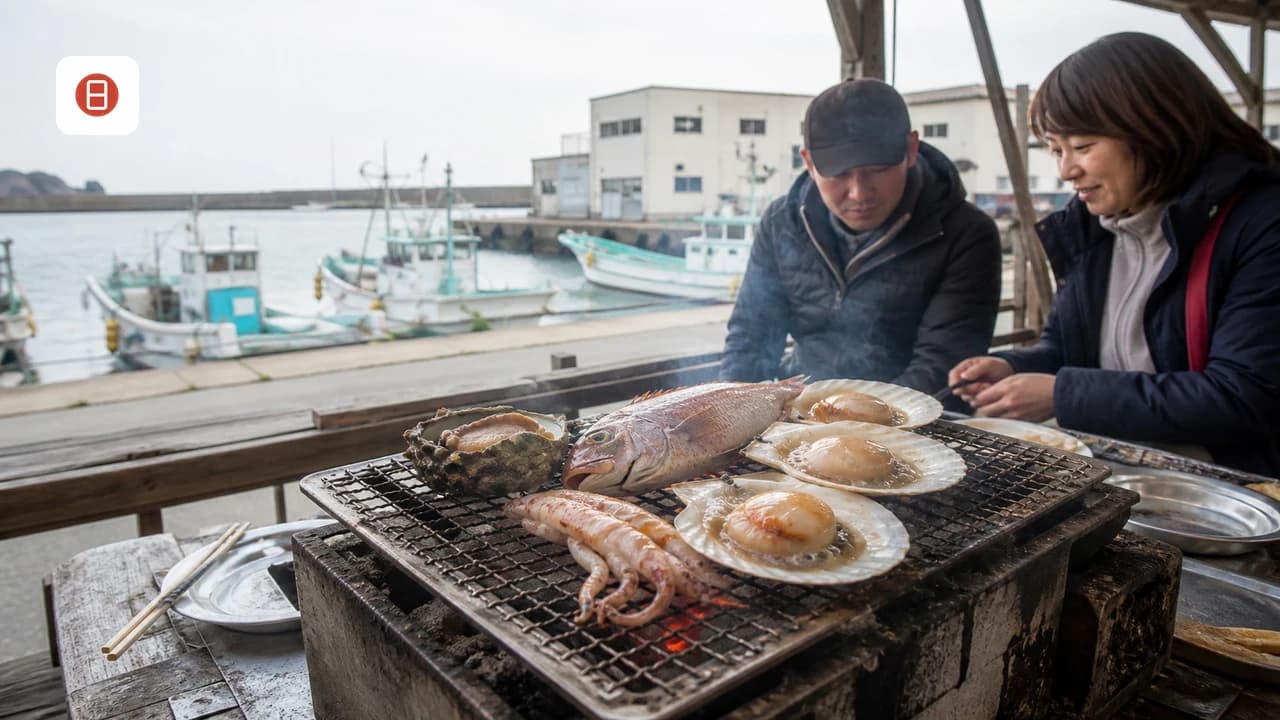
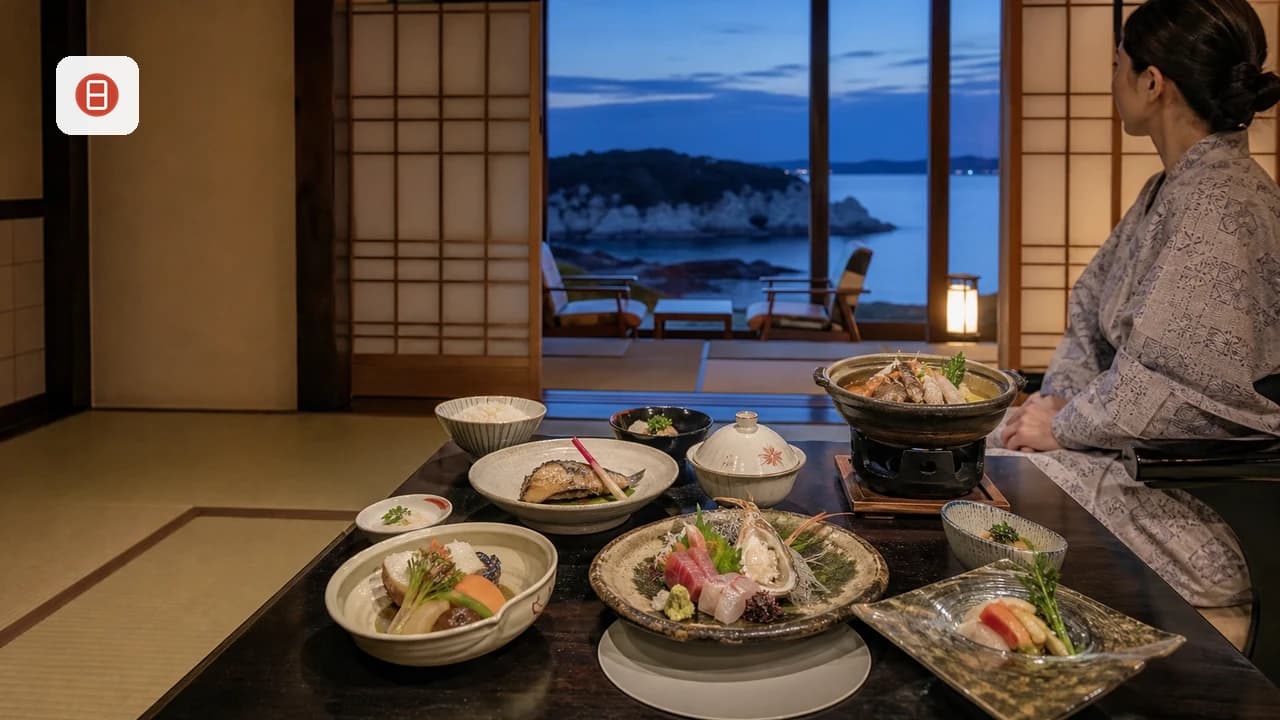
Three types of venues serve kue hot pot in Shirahama, and each suits a different kind of trip. A ryokan kaiseki dinner folds kue-nabe into a multi-course meal, which suits travelers already staying overnight who want a full seasonal menu built around it. Specialty seafood restaurants, often run in a fishermen's-style setting, focus the whole meal on the hot pot itself rather than folding it into a longer course. For a lower-cost taste without committing to a full course, the Toretore Market food stalls sell kue sashimi or smaller cooked portions by the piece. That market option also works for solo travelers, since most nabe courses at ryokan and specialty restaurants set a two-person minimum.
| Venue | Format | Best For |
|---|---|---|
| Ryokan kaiseki | Multi-course dinner with kue-nabe included | Overnight guests wanting a full seasonal menu |
| Specialty seafood restaurant | Kue-nabe as the main event | Diners focused on the fish itself |
| Toretore Market | Sashimi or smaller cooked portions | Solo travelers and lower budgets |
Kue-Nabe Cost: What a Full Course Actually Runs
A full kue-nabe course in Shirahama typically runs ¥10,000 to ¥20,000 or more per person. Where you land in that range depends mostly on wild versus farmed and on how many courses come with the pot. Farmed kue sits toward the lower end of that range, since supply is steadier and the fish costs less to source. Wild kue pushes toward the top of the range, and a rare, large specimen can exceed it. Most kue-nabe courses set a minimum of two diners, since restaurants portion and source a whole fish per table rather than per person. Splitting a course between two people is usually the most efficient way to taste kue without paying for more fish than you can eat.
Courses at ¥10,000 to ¥20,000 or more per person reflect fresh sourcing rather than menu inventory—restaurants need two to three days' notice to secure each fish, making advance booking essential during peak season.
| Tier | Typical Price (per person) | Notes |
|---|---|---|
| Farmed (yoshoku) kue-nabe | Lower end of ¥10,000–¥20,000+ | More consistent availability |
| Wild (ten-nen) kue-nabe | Upper end of ¥10,000–¥20,000+, sometimes more | Depends on that week's catch |
| Market-style tasting | Priced by the cut at market rate | No set-course minimum, solo-friendly |
Booking, Getting There, and What to Drink
Book a kue hot pot dinner as early as you can, since many specialty restaurants need two to three days' notice to source the fish. Sourcing a whole kue to order isn't like restocking a standard seafood case, so last-minute walk-ins often get turned away in peak season. Some restaurants only take reservations in Japanese, so asking a hotel concierge to call ahead solves that gap for most visitors. Dining districts sit within reach of both Shirahama Station and the onsen area, so confirm which side of town your restaurant is on when you book. Round out the meal with Kishu ume-shu, the plum liqueur produced across the region, which pairs well against kue's fat without competing with the broth. For more on regional flavors to pair with the meal, see the ume and mikan sweets guide.
Frequently Asked Questions
Is Shirahama kue hot pot available for solo diners?
Many kue-nabe courses set a two-person minimum, but solo travelers can still taste kue as sashimi or smaller cooked cuts at Toretore Market's seafood stalls.
What if you don't like raw fish, can you still order kue-nabe?
Kue-nabe is a cooked hot pot, not sashimi, so the fish simmers in kombu broth at the table. Some restaurants open the course with a few slices of sashimi first, but you can ask to skip that part.
Is Shirahama kue hot pot worth the price?
In our editorial assessment, the collagen-rich texture and finishing zosui set kue apart from a generic white-fish nabe. Paying toward the top of the ¥10,000–¥20,000+ range for wild kue reflects real scarcity, not just markup. Travelers on a budget can taste the same flavor profile for less by choosing farmed kue or a market-style portion.
How far ahead should you book a kue hot pot dinner in Shirahama?
Plan on giving restaurants two to three days' notice, since many specialty kitchens source kue fresh for each reservation rather than holding stock. Asking a hotel concierge to call ahead helps if the restaurant only takes bookings in Japanese.
When is peak season for Shirahama kue hot pot?
Late October through March is peak season, when cold water firms up the fish's fat and the collagen-rich cuts taste richest. Farmed kue is available outside that window, so a visit at any time of year can still include the dish.
Free guide: Japan's Hidden Gems
12 under-the-radar places beyond Tokyo & Kyoto — with the best season to visit each and a local tip you won't find in the guidebooks.
You might also like


Continue reading
More guides you'll find useful