Shirahama Ryokan Dinner and Kaiseki: A 2026 Planning Guide
A practical 2026 guide to Shirahama ryokan dinner and kaiseki, covering course structure, timing, allergies, children, half-board logistics, and Kue season.
On this page
Last updated August 2026, a Shirahama ryokan dinner and kaiseki course centers on two things: Kuroshio Current seafood and Wakayama mountain ingredients. Expect raw tuna, spiny lobster, and abalone alongside plum and citrus accents pulled from the surrounding hills. This guide covers half-board logistics, in-room versus dining-hall service, and how dinner fits into the wider Shirahama food scene.
What Makes Shirahama Ryokan Dinner and Kaiseki Different
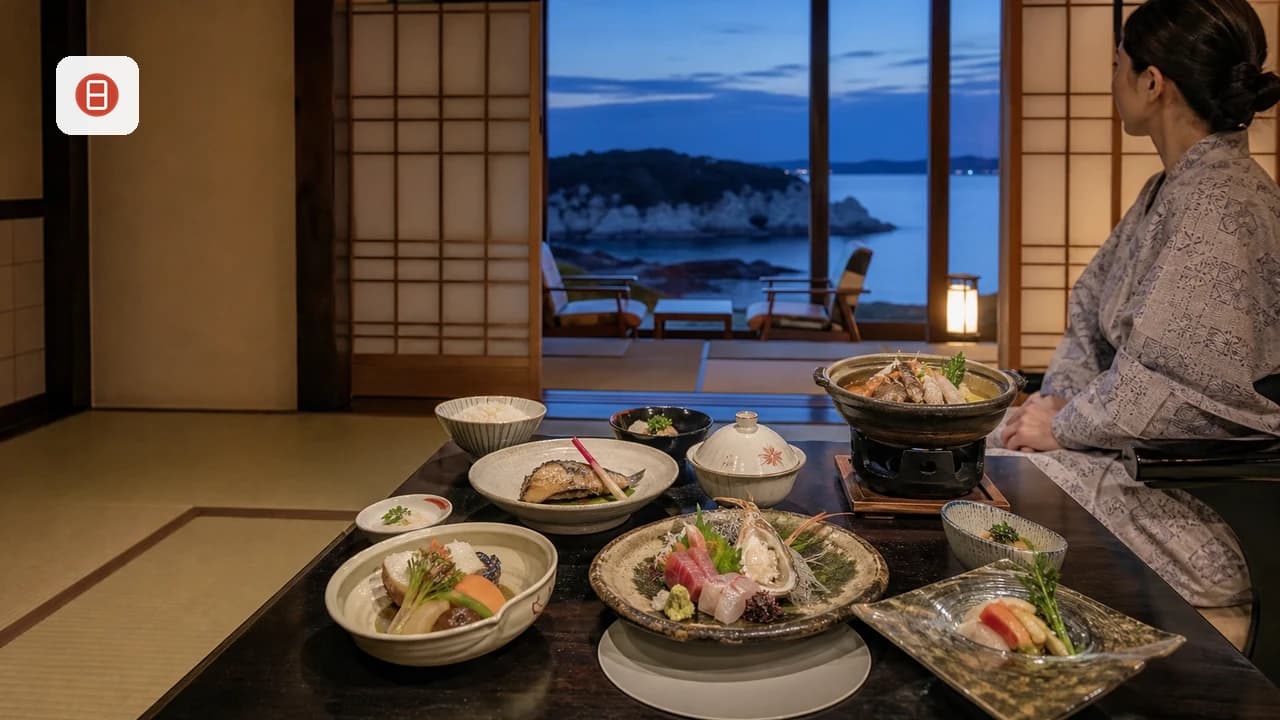
The Kuroshio Current runs warm water along this coast, and it's why Shirahama seafood differs from catches further north. Tuna, spiny lobster, and abalone reach ryokan kitchens within hours of landing, often the same day they're caught. Winter menus add Kue, or longtooth grouper, a fish rare enough elsewhere in Japan. Shirahama kitchens build entire courses around it rather than serving it as one dish among many. Wakayama's inland orchards supply the other half of the flavor profile. Kishu ume plum and mikan citrus show up in marinades, dipping sauces, and dessert courses throughout the year. Regardless of dinner format, in-room, private room, or buffet hybrid, these ingredients remain the backbone of the course.
- Kuroshio Current seafood: tuna, spiny lobster, and abalone, typically landed and served within the same day
- Kue (longtooth grouper): a winter specialty generally available October through March
- Kishu ume and mikan: plum and citrus in marinades and desserts, covered in the Kishu ume and mikan guide
Dinner Setting: Heya-Shoku, Private Rooms, and Buffet-Kaiseki Hybrids
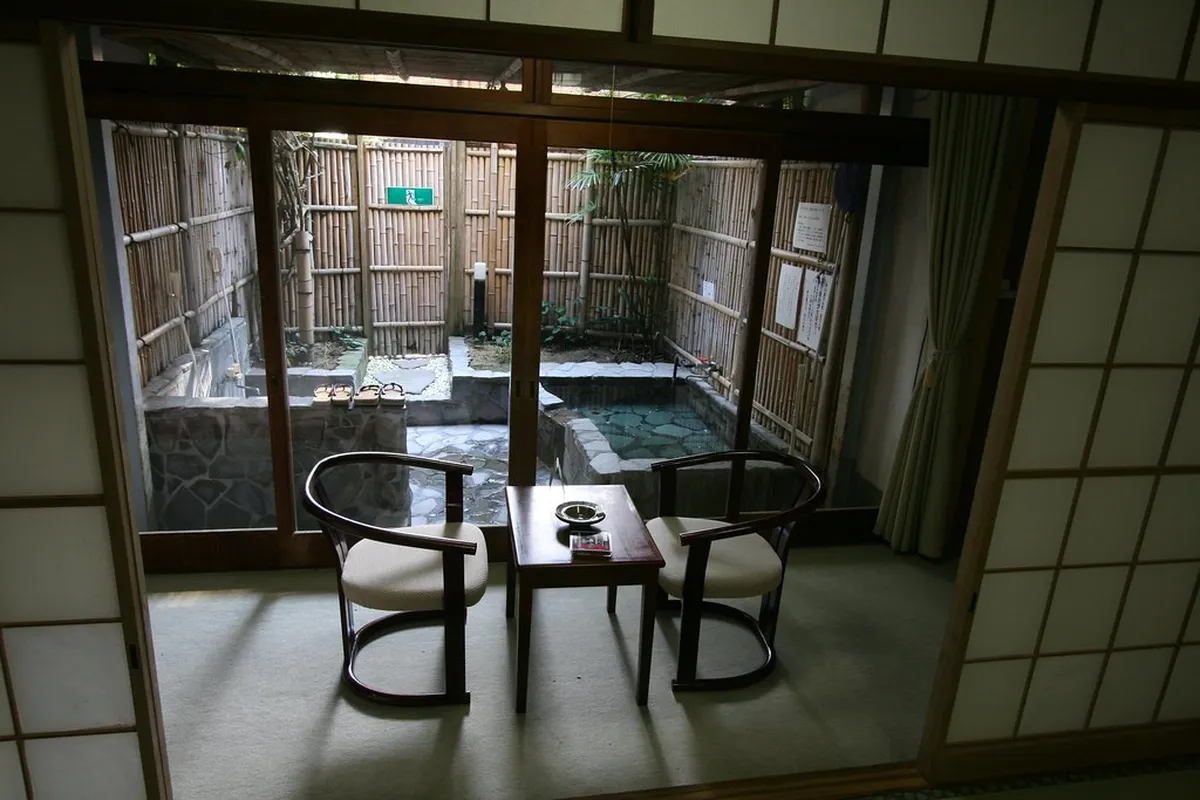
Most Shirahama ryokans start dinner service between 6:00 PM and 7:30 PM, with a single seating time confirmed at check-in. Traditional heya-shoku, or in-room dining, brings each course to your room on a low table. You eat at your own pace, course by course, without other guests nearby. Many mid-size properties instead use a private dining room, where a small party gets its own space but staff still deliver each course individually. Larger Shirahama resorts increasingly offer a buffet-kaiseki hybrid, where set courses are supplemented by a buffet section for rice, soup, or dessert. That hybrid format trades some of the paced, course-by-course structure for faster turnover and more choice. None of the three formats change the seafood itself, only how and when it reaches your table. Yukata is standard dinner wear across all three, including shared dining halls.
Cliff-top Senjojiki ryokans fix dinner between 6:00 PM and 7:30 PM and rely on shuttle or taxi service, limiting spontaneous evening plans after the meal.
| Dining Format | Service Style | Pacing | Common at |
|---|---|---|---|
| Heya-shoku (in-room) | Staff brings courses to your room | Guest controls pace | Traditional ryokans |
| Private dining room | Staff serves individual courses to your party | Fixed intervals | Mid-size properties |
| Buffet-kaiseki hybrid | Set courses plus self-serve buffet section | Faster with self-serve choice | Larger resorts |
- Heya-shoku (in-room): private, paced by the guest, delivered course by course
- Private dining room: a dedicated space for your party, staff-served like heya-shoku
- Buffet-kaiseki hybrid: set courses plus a self-serve section, common at larger resorts
- Dress code: yukata is standard dinner wear in all three formats
When to Book and How Course Selection Works
Shirahama ryokans typically ask you to confirm your dinner course, and any specialty upgrade, at the time of booking. Reserve further ahead during Kue season and around Japanese holiday periods such as New Year and Obon. Rooms and premium courses sell out first during those windows. Most booking pages let you flag allergies, children's ages, and any upgrade request in the same step. Gather those details before you book. If a specific dining format, such as a private room or the buffet hybrid, matters to you, confirm it's available before locking in your reservation. Confirm the property's change and cancellation window too, since course ingredients are often ordered for your specific date. That can be hard to adjust close to arrival. Book directly through the ryokan's own site or a travel agent, both of which typically show current course options and pricing.
Choosing a Kaiseki Course: Standard vs Specialty Upgrades
A standard kaiseki dinner in Shirahama typically runs eight to twelve courses. That structure is built around the Kuroshio Current specialties most travelers come for. Many ryokans also sell upgrades built around a single luxury ingredient, most often Ise ebi (spiny lobster) or awabi (abalone). These are prepared grilled, steamed, or as sashimi depending on the property. Upgrades cost more than the standard course. Weigh them against how much you specifically want that one ingredient, rather than treating them as an automatic add-on. Course pricing and seasonal availability vary by property. Confirm current course details and any upgrade cost directly on each ryokan's own booking page before you reserve. Menu content also shifts with the season, so the same course name in July can look different in January.
- Appetizer (sakizuke)
- Sashimi course
- Grilled dish (yakimono)
- Simmered dish (nimono)
- Rice and soup
- Dessert
Allergies, Dietary Restrictions, and Dining with Children
Ryokan kitchens build each night's kaiseki course in advance. Allergy or dietary requests need advance notice, generally three to seven days before arrival. Contact the property directly, ideally in writing, and list specific allergens rather than general restrictions. Shellfish and fish are structural to a Shirahama kaiseki course. A substitution can mean a materially different menu, not a simple swap. Strict vegan requests are the hardest to accommodate, since dashi stock and seafood run through most of a standard course. Confirm in advance whether the kitchen can build an alternative course at all. If your ryokan uses a buffet-kaiseki hybrid, ask specifically how the buffet section handles cross-contact for allergies, since a self-serve section is harder to control than a fully plated course. Many larger ryokans handle English-language allergy requests directly, but a Japanese-language travel agent or booking platform can reduce miscommunication. If you're traveling with children, ask at booking whether the ryokan offers a modified children's course. That course typically means smaller portions and less raw fish, though policies and minimum ages vary by property.
The Half-Board Trap: Why Room-Only Bookings Backfire
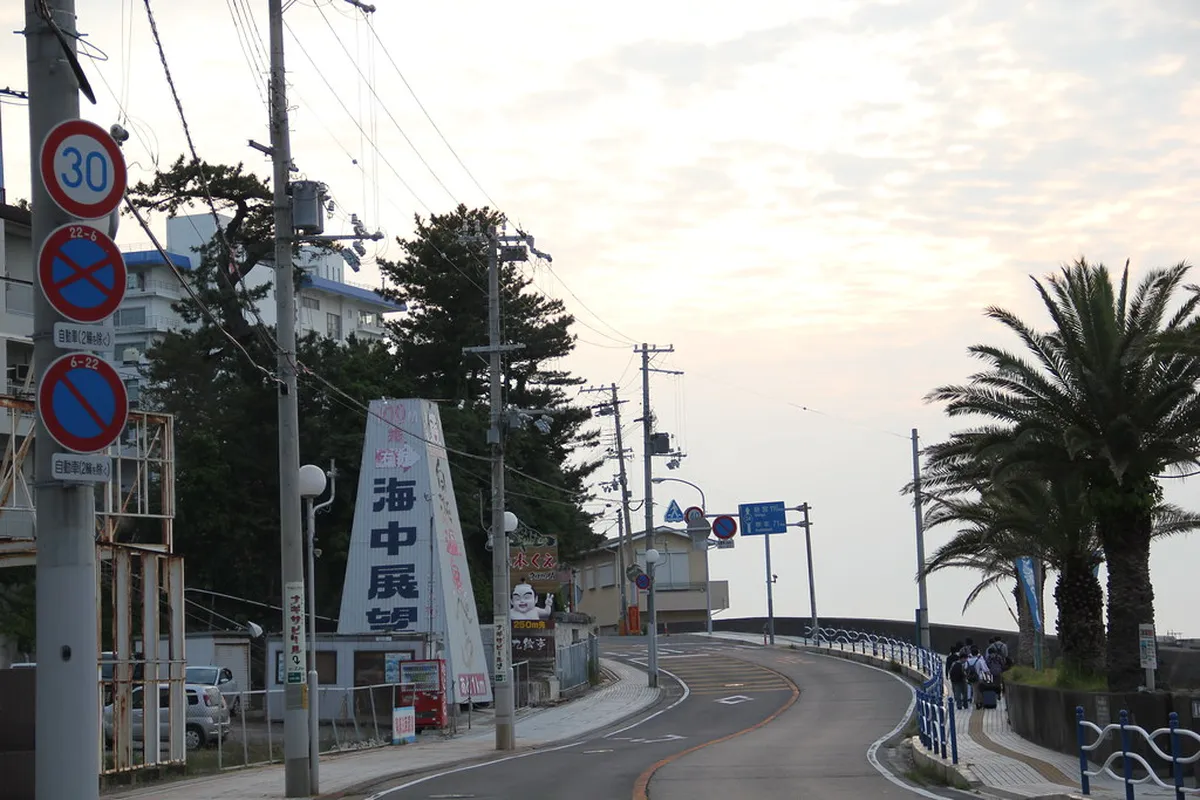
Booking a Shirahama ryokan on a room-only rate can look like a way to save money. The town's restaurant scene works against that plan. Many independent restaurants near the ryokan district take last orders early in the evening, well before a typical big-city dinner hour. Skip the half-board package, and you may spend part of the evening hunting for an open kitchen. That search often starts right after a full day of sightseeing. Half-board, meaning dinner and breakfast included, removes that risk entirely. It delivers the kaiseki course the property is actually built around. This matters most for smaller independent ryokans without an on-site buffet-kaiseki option, where dinner is fully dependent on the fixed seating time. For most one- or two-night Shirahama stays, half-board is the more reliable choice. Check the specific inclusions in your rate before booking, since some platforms list dinner-only or breakfast-only plans as half-board.
Seasonality and Location: Kue Season and Cliff-Top Access
Winter travel, roughly October through March, lines up with Kue season. A winter kaiseki course is the best chance to try longtooth grouper as a featured dish, not a side plate. During Kue season, upgrade courses and private dining rooms both see higher demand, so book earlier than you would in summer. Summer courses shift toward lighter preparations of tuna and seasonal shellfish. They pair with the town's summer festival calendar. Where your ryokan sits also affects the evening. Properties in the cliff-top Senjojiki area often sit apart from the town center. They rely on a hotel shuttle or taxi for anything beyond the property itself. Beachfront ryokans nearer central Shirahama put dinner, the hot spring, and a post-dinner walk within a few minutes of each other on foot. Factor that access difference in before booking, especially if evening plans extend beyond the dining room.
Kue season runs October through March, when premium upgrade courses and private dining rooms see higher demand; book earlier during these months than in summer.
Kaiseki Dinner Without an Overnight Stay
Not every visit to Shirahama includes a ryokan room. Some properties address that with higaeri, or day-trip, plans. A higaeri plan typically bundles a kaiseki-style dinner or lunch course with hot spring bath access. No overnight room booking is required. Availability and timing change by property and season. Confirm directly with the ryokan whether a day-trip dining plan is currently offered before building an evening around it. Day-trip plans are usually more limited than the full overnight kaiseki course. Treat them as a way to sample the format, not a full substitute for an overnight stay. If a day plan isn't available at your preferred ryokan, casual seafood dinner options elsewhere in town remain a solid alternative.
Etiquette and Value: Getting the Most from Your Course
A ryokan kaiseki dinner moves at a set pace. Avoid rushing between courses even if the hot spring bath is calling. Most guests bathe either before dinner, to relax into the meal, or after dinner, to close out the evening. Either order is normal. Staff, often called nakai, manage timing and course delivery. Tell them directly if you need to finish earlier for a specific reason. Tipping is not expected at Japanese ryokans. The quoted course or half-board rate is the full cost of dinner service. The standard course is enough for most travelers, since it already covers the region's Kuroshio Current seafood. Reserve a premium single-ingredient upgrade only when one specific item, such as Ise ebi or awabi, is the reason for the trip. A buffet-kaiseki hybrid can also simplify dinner with young children, since a self-serve section lets them pick a smaller variety without a fixed course sequence. Because dinner has a fixed seating time, coordinate any spa, shop, or evening activity around it rather than the other way around.
Beyond the Ryokan: Lunch, BBQ, and an Evening Walk
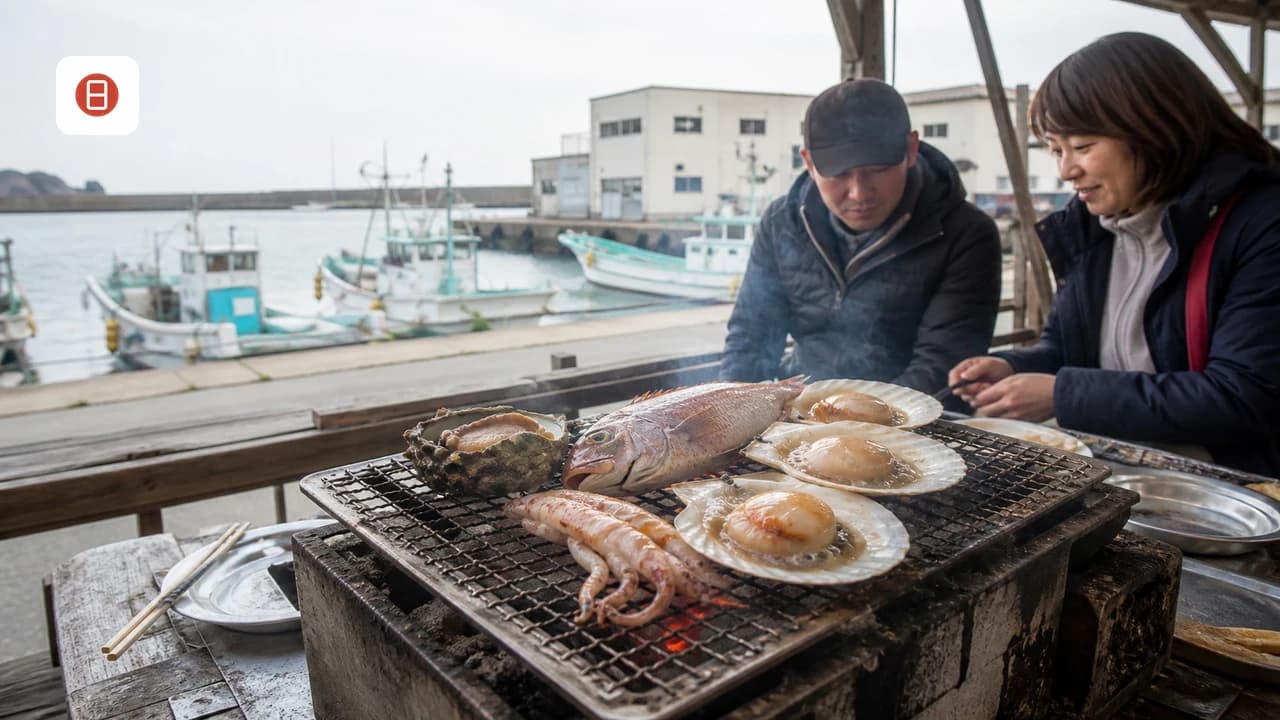
Ryokan kaiseki covers dinner, but daytime seafood options round out a Shirahama food itinerary. The Toretore Market is a standard lunch stop for fresh seafood outside the ryokan system. It has a market-hall setting instead of a formal course. For a more casual dinner, or a second dinner on a longer stay, seafood BBQ restaurants let you grill your own catch. That's a different format from a fixed multi-course menu. Both fit around a ryokan stay rather than replace it, since neither offers the full kaiseki format. Combining a market lunch or a grilled seafood dinner earlier in the trip gives a fuller sense of Shirahama's seafood before the ryokan's kaiseki course. After dinner, many guests use the evening for a short walk instead of heading straight to the hot spring bath. Central 10 Best Things to Do in Shirahama (2026) near the coast are walkable from most beachfront properties. The pace after a multi-course dinner tends to be slow, not sightseeing-heavy.
Frequently Asked Questions
Is sake or beer included in a ryokan kaiseki dinner price?
Usually not. Most Shirahama ryokans price kaiseki as a food-only course. Sake, beer, and soft drinks are charged separately, often from a dedicated drinks menu. A few premium plans bundle a welcome drink, so check your specific package. Otherwise, budget for drinks as a separate line item.
Can you book a kaiseki dinner without staying overnight?
Some Shirahama ryokans sell higaeri, or day-trip, plans. These combine a kaiseki-style dinner with hot spring bath access, without an overnight room. Availability changes by property and season. Confirm directly with the ryokan before building an evening around one.
What's the difference between a kaiseki course and a Kue hot pot course?
A standard kaiseki course moves through several small dishes: sashimi, a grilled dish, a simmered dish, rice, and dessert. A Kue hot pot course instead centers the whole meal around longtooth grouper cooked tableside in a shared pot. The Kue hot pot guide covers how that format works and when ryokans typically offer it.
How far ahead should you request allergy accommodations?
Contact the ryokan three to seven days before arrival. List specific allergens rather than general dietary categories. Kitchens build each night's course in advance, so late requests limit how much they can adjust. For strict vegan requests, confirm whether an alternative course exists at all before booking.
Do you need to wear a yukata to the dining hall?
At most Shirahama ryokans, yes. A yukata is standard dinner wear, including in shared dining halls and open-kitchen dining rooms. Properties provide one in your room, so no separate packing is needed for dinner.
Do ryokans offer a separate children's menu for kaiseki dinner?
Many do, though policies vary by property. Confirm at booking rather than assuming one is available. A children's course typically trims portion sizes and reduces raw fish compared with the standard course. Ask about minimum ages for the adult course too, since some ryokans set a cutoff for full kaiseki service.
What's the difference between a private dining room and a buffet-kaiseki hybrid dinner?
A private dining room serves the full kaiseki course to your party only, staff-delivered course by course. A buffet-kaiseki hybrid keeps some set courses but adds a self-serve section for rice, soup, or dessert. Larger Shirahama resorts use the hybrid format more often than smaller traditional ryokans.
Should you choose a beachfront or cliff-top Senjojiki ryokan for dinner logistics?
Beachfront ryokans put dinner, the bath, and a post-dinner walk within a few minutes of each other on foot. Cliff-top Senjojiki properties often rely on a hotel shuttle or taxi for anything beyond the ryokan itself. Choose beachfront for walkable evening access, and Senjojiki if the setting matters more than that walkability.
Free guide: Japan's Hidden Gems
12 under-the-radar places beyond Tokyo & Kyoto — with the best season to visit each and a local tip you won't find in the guidebooks.
You might also like


Continue reading
More guides you'll find useful