Toretore Market Food Guide: What to Eat in Shirahama (2026)
Toretore Market food guide: DIY seafood BBQ, kaisendon, the tuna dismantling show, souvenirs, and timing tips for a Shirahama market visit.
On this page
Last updated August 2026, this Toretore Market food guide covers what to eat, how the DIY BBQ works, and when to arrive. The market sits in Katata, Shirahama, and combines a seafood floor, grill area, and food court under one roof. You will find kaisendon bowls, a tuna dismantling show, and enough grilled options to fill an afternoon.
Toretore Market Food Guide: Layout and First Impressions
Toretore Market sits at 2521 Katata in Shirahama, a short ride from JR Shirahama Station and the town's beach hotels. This Toretore Market food guide starts on the market floor, where the building splits into two sides. One side holds fresh seafood shipped in from across Japan, arranged in open cases and tanks. Dry goods, souvenirs, and the food court fill the other side, separated by a central walkway. For a wider view of where this market fits into the town's dining scene, see this Shirahama food overview. Photo menus line the counters, so you can point at a bowl even without reading Japanese. According to Japan's national tourism site, the kaisendon rice bowls change daily and arrive with picture menus built for exactly that purpose. Staff at the seafood counters also process a purchase for grilling or sashimi on request, which sets up the BBQ-versus-food-court decision covered next.
Tuna Dismantling Show and Market Highlights
A tuna dismantling show runs on the market floor, typically around 11:00am. The exact schedule shifts by day, so confirm the posted time when you arrive. Staff break down a whole tuna in front of the crowd, then slice the fattiest cuts straight onto rice bowls for sale nearby. Japan's national tourism site calls this fresh-cut toro one of the market's signature draws. Beyond the show, expect a seafood floor stocked with fish and shellfish from across Japan, plus a souvenir wing on the far side of the building. Arriving in time for the show also means arriving in time for the best picks at the sashimi and BBQ counters, since both draw a crowd once the tuna is cut.
DIY Seafood BBQ vs the Food Court: Which to Pick
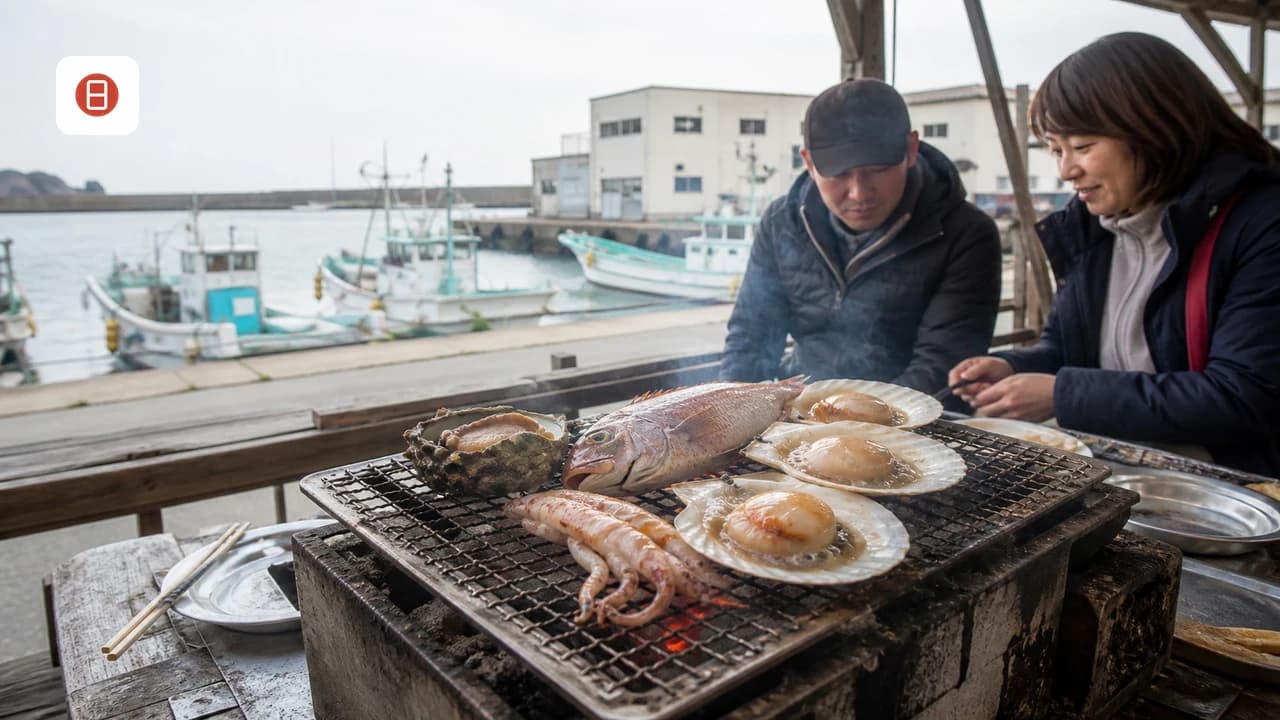
Toretore Market offers two distinct ways to eat: an outdoor DIY BBQ pit and an indoor food court called the yokocho. At the BBQ counter, buy raw seafood and tell staff it is for grilling. Then carry it out to the pits yourself. Budget for a per-person seating fee on top of what you spend on seafood. Check current pricing at the counter, since it can shift with the season. The food court skips that fee entirely: order a kaisendon or a plate of grilled skewers and sit down within minutes. Some visitors split the difference, ordering a small kaisendon first and buying extra seafood for the grill later. For a sit-down alternative with table service instead of a grill, compare it against Shirahama's fisherman restaurants. Travelers planning a formal multi-course dinner later the same day can also look at a ryokan kaiseki dinner instead. The table below breaks down the trade-off between cost, time, and effort.
After 4:00pm, the BBQ pit may stop accepting new entries entirely, making mid-afternoon the deadline for groups planning DIY grilling to secure their cooking slot.
| Feature | DIY BBQ Pit | Food Court (Yokocho) |
|---|---|---|
| Cost | Seafood price plus a per-person seating fee | Pay per dish, no seating fee |
| Time needed | 90 minutes or more | 30-45 minutes |
| Best for | Groups grilling scallops, squid, or shellfish | Solo travelers and quick kaisendon lunches |
| Effort | High: shop, carry, and grill yourself | Low: order and sit down |
What to Eat: Kue, Spiny Lobster and Signature Dishes
Wakayama's coastal waters are known for kue (longtooth grouper), spiny lobster, and cutlassfish. This seafood floor sells all three, depending on season and the day's catch. Kue is Shirahama's signature winter catch, prized locally for hot pot. See the dedicated kue hot pot guide for where to eat it as a full meal beyond the market. At Toretore, look for these dishes on a typical visit:
- Sashimi platters built around the day's tuna slicing
- Kaisendon rice bowls topped with salmon and ikura
- Grilled squid on skewers from the food court
- Grilled scallops, sold raw for the BBQ pit or cooked to order
- Cheese-topped grilled sticks, a food-court snack that sells out on busy days
Souvenirs: Kishu Ume, Sake and Local Sweets
The souvenir side of the market sells pickled ume, known regionally as Kishu ume, alongside locally brewed sake and spirits. Bags of umeboshi travel well and make a compact gift compared to fresh seafood. For the fuller lineup of plum and citrus products, browse the Kishu ume and mikan sweets guide. Typical souvenir picks include:
- Kishu ume, salt-pickled plums sold in gift-ready bags
- Local sake and regional spirits from Wakayama breweries
- Mikan-flavored sweets and snacks near the sake shelves
- Dried and packaged seafood snacks for travel
Getting to Toretore Market from Shirahama Station
Most visitors reach Toretore Market on the Meiko Bus from JR Shirahama Station, getting off at the Toretore Ichiba-mae stop. Drivers coming off the Hanwa Expressway should exit at Nanki-Tanabe, then follow National Route 42 and Prefectural Road 33. A large parking lot at the market is free, with accessible spaces included, which matters for anyone road-tripping down the Kii Peninsula.
- Meiko Bus: JR Shirahama Station to Toretore Ichiba-mae, about 30 minutes, per Japan's national tourism site
- Train: Kuroshio limited express, Shin-Osaka to Shirahama Station, about 2.5 hours
- Airport: Nanki-Shirahama Airport to Shirahama Station, about 15 minutes by bus
- Car: Nanki-Tanabe interchange via Route 42 and Prefectural Road 33, about 7 miles
Timing Your Visit: Golden Window and the Late-Afternoon Trap
Late morning through early afternoon is the golden window for the freshest selection, roughly 10:00am to 2:00pm. Posted hours run 8:30am to 6:30pm, but many stalls start closing between 5:00pm and 6:00pm, well ahead of that final time. Arrive after 4:00pm and expect the best sashimi platters to already be gone, along with a BBQ pit that may stop taking new entries. Crowd levels run medium in the morning and taper off by late afternoon, right as the freshest picks disappear too. Plan the tuna dismantling show and BBQ shopping for the same late-morning window so neither gets rushed. Most stalls accept cards, but keep cash on hand for smaller vendors and for the BBQ seating fee, since some counters are cash-only.
The Kuroshio limited express takes about 2.5 hours from Shin-Osaka to Shirahama Station, so early departures are needed to arrive within the golden-window hours of roughly 10:00am to 2:00pm for the best seafood selection.
Pairing the Market With Toretore Village and Nearby Attractions
Toretore Village, a dome-cottage resort next to the market, includes more than 130 dome-shaped cottages and sits close enough to combine with a meal here in one stop. Its onsen, Toretore no Yu, makes a practical follow-up soak after a BBQ session or a plate of grilled squid. Adventure World and Engetsu Island both sit within reach of the market. Check the full Shirahama attractions guide for how to sequence a visit around them. Families heading to Adventure World often stop at the market first, since the wide aisles and flat floors work well with strollers. Treat the market as a midday anchor between a morning beach stop and an evening onsen.
A Simple Visit Order for First-Timers
First visits go smoother with a rough order of operations, especially if you want both the tuna show and a BBQ session in one trip.
- Arrive by 10:00am and check the day's tuna dismantling show time near the entrance
- Walk the seafood floor first and note prices before buying anything
- Buy seafood for the BBQ pit if grilling, or head to the food court for kaisendon instead
- Watch the tuna show around 11:00am, then buy fresh-cut toro while it is available
- Finish at the souvenir side for Kishu ume, sake, and mikan sweets before stalls start closing
Frequently Asked Questions
Is Toretore Market worth visiting if you do not eat raw fish?
Yes. The BBQ pit lets you grill shrimp, scallops, and squid fully cooked, and the food court sells grilled skewers, cheese-topped sticks, and rice bowls that skip raw fish entirely. Non-seafood snacks and mikan-flavored sweets round out the food court for anyone avoiding sashimi altogether.
How much should you budget for a meal at Toretore Market?
A kaisendon bowl from the food court costs less than a full BBQ session, since the BBQ pit adds a per-person seating fee on top of whatever seafood you buy. Check current pricing at the market itself, since seafood prices shift with the day's catch and the season.
Is Toretore Market wheelchair and stroller accessible?
Yes. The market has wide, flat aisles and accessible parking, which also works well for strollers. Families often visit before or after a stop at Adventure World for that reason.
What time should you arrive to get the best selection?
Aim for the late-morning window, roughly 10:00am to 2:00pm, before the best sashimi and BBQ counters thin out. Many stalls start closing between 5:00pm and 6:00pm, so a visit after 4:00pm risks missing both the best cuts and a spot at the BBQ pit.
How do you get to Toretore Market without a car?
Take the Meiko Bus from JR Shirahama Station to the Toretore Ichiba-mae stop, a ride of about 30 minutes according to Japan's national tourism site. Shirahama Station also connects to Nanki-Shirahama Airport by a roughly 15-minute bus ride, and to Shin-Osaka by the Kuroshio limited express in about two and a half hours.
Free guide: Japan's Hidden Gems
12 under-the-radar places beyond Tokyo & Kyoto — with the best season to visit each and a local tip you won't find in the guidebooks.
You might also like


Continue reading
More guides you'll find useful