Takayama Hoba Miso Guide: Where to Eat & How to Buy
Takayama hoba miso guide: what it is, where to eat the Hida beef version, and how to buy a kit at Kusakabe Miso Shoyu Jozo or the morning markets.
On this page
Last updated August 2026, this guide explains Takayama hoba miso for travelers who want to eat it well, not just photograph it. The dish pairs koji miso with a dried magnolia leaf, and Takayama serves it two distinct ways. Ryokans plate it plain at breakfast, while restaurants dress it with Hida beef for a pricier dinner, a split the broader Takayama Food Guide: What to Eat and Where to Eat also flags.
What Is Takayama Hoba Miso? The Magnolia Leaf Tradition
Hoba miso is grilled miso served on a dried magnolia leaf, a dish tied to Takayama and the wider Hida region of Gifu Prefecture. It traces back to somabito, the loggers and mountain workers who felled and hauled timber in Hida's forests and grilled miso on a large magnolia leaf they used as a makeshift plate. Hida winters run long, and fresh vegetables were once unavailable until April or May, so families made their own miso and pickles to get through the season. Grilled miso on a leaf became a filling side dish for rice during those months, and later a snack offered to guests. Traditional recipes mix koji miso with sake, sugar, and ginger, though most cooks today buy pre-seasoned miso rather than blending their own. In early summer, cooks use the same tree's fresh green leaves for a different dish, hoba-zushi, wrapping vinegared rice instead of grilling miso.
- Magnolia leaves are collected in late fall, when frost causes the trees to shed them.
- Fresh leaves are cured in salted water for three days before drying.
- Dried leaves are soaked in water for about 20 minutes before grilling, which keeps them from scorching over the flame.
Why It's Grilled on a Magnolia Leaf: The Sensory Experience
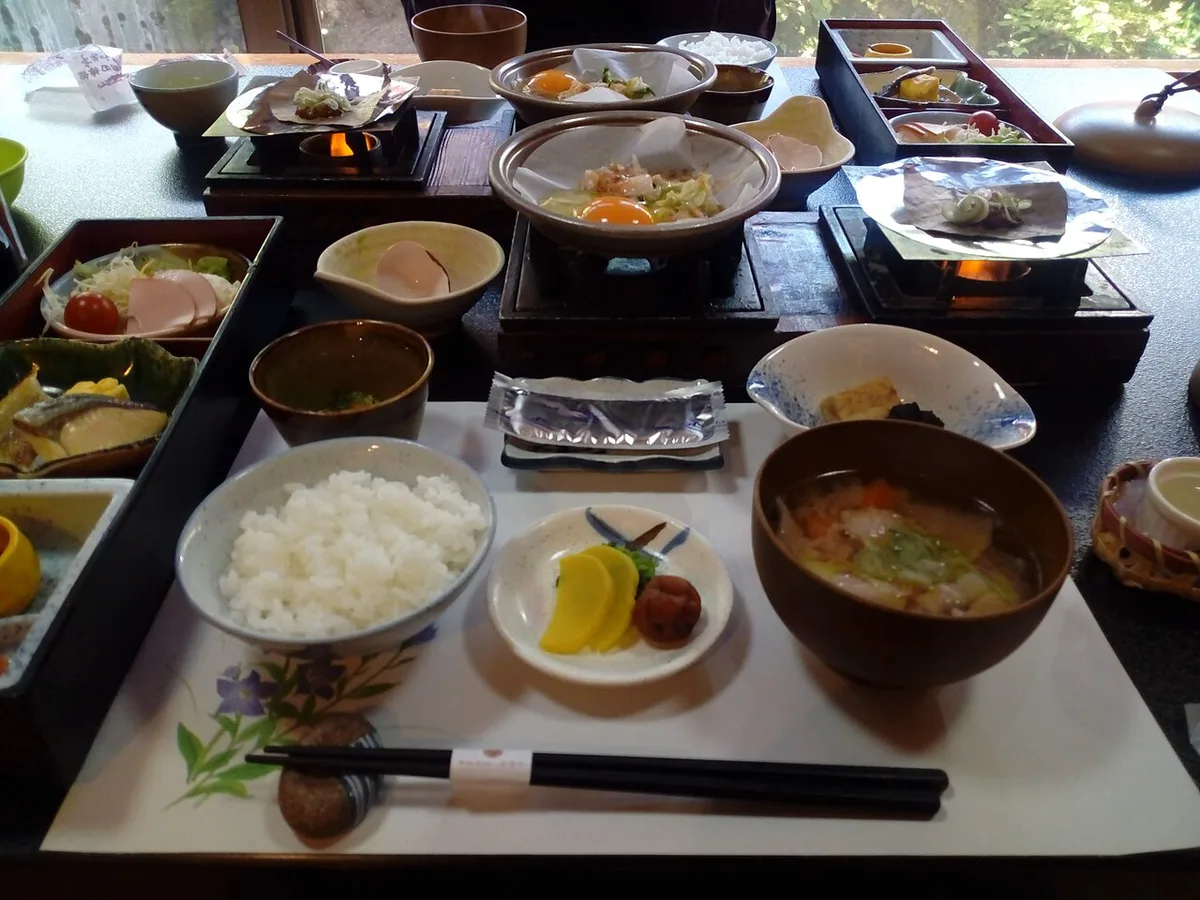
Grilling on the leaf changes the dish, not just the presentation. As the leaf heats, it releases its own aroma, and the miso absorbs that scent while it cooks. Cooks watch for the miso to bubble gently around the edges, a sign it's ready to eat, rather than timing the dish by the clock. Diners then use chopsticks to scoop small amounts of the bubbling miso onto steamed rice, working outward from the center as the edges finish first. Because the leaf itself works like a natural non-stick surface, no oil goes into the pan or onto the stove. At home, soaking the leaf for about 20 minutes remains the key step: pat it dry afterward, spread the miso mixture across the surface, and cook it over medium-high heat until the edges bubble. If a shichirin clay stove isn't available, a plain frying pan works just as well, since the leaf itself needs no oil underneath it. Aluminum foil can stand in for the leaf too, though it won't carry the same aroma into the miso.
Soaking the leaf for about 20 minutes before grilling isn't just technique—it's the difference between the historical convenience loggers found (a makeshift plate that prevented burning) and modern cooks' advantage: natural non-stick cooking that releases aromatic compounds into the miso.
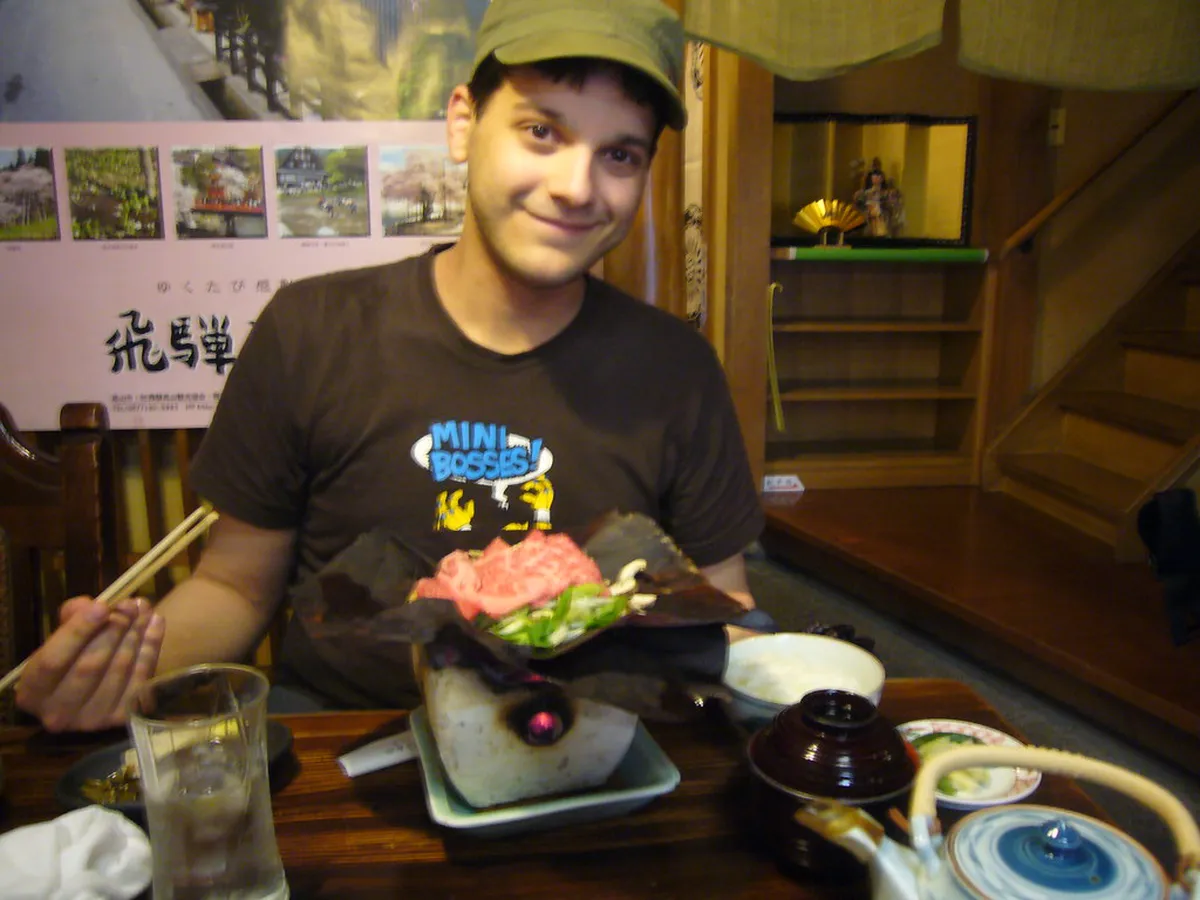
Hoba Miso with Hida Beef: The Ultimate Regional Pairing
Restaurants and some ryokans dress the plain dish up with sliced, well-marbled Hida beef and local mushrooms for a dinner-level version. Kyoya, a longtime Old Town restaurant, serves hoba miso alongside Hida beef and locally grown mushrooms as a dish aimed at visitors who want the full pairing. This combination marks a modern turn for a dish that started as a poor farmer's winter staple; today the same format carries one of the region's more expensive proteins. Hida beef's marbling renders slowly against the grill heat, basting the miso underneath as it cooks. Chefs typically slice the beef about half an inch thick, thinner if the cut is very marbled, so it doesn't overcook on the leaf. Expect the beef version to cost noticeably more than a plain breakfast portion, closer to the price of other Hida beef specialties. For current menu prices before booking a table, check the Hida beef dining guide, since restaurant pricing shifts through the year.
Where to Eat Hoba Miso in Takayama
Most visitors meet hoba miso first at a ryokan breakfast table, where it usually appears plain, cooked with little more than scallions, and is included in the overnight rate rather than ordered separately. Restaurants serve a fuller version built for a sit-down meal instead of a quick side dish. Kyoya, at 1-77 Oshinmachi in the Old Town, has served local cuisine since 1979 under Kyoko Nishimura, a Takayama native raised on hoba miso at home. Its version mixes koji miso with Korean perilla and wild vegetables such as fern shoots, nameko, and shiitake mushrooms, finished with a generous amount of green onions. Its dining room sits inside a building that keeps the look of the old castle town intact. Ask about the Hida beef pairing directly if a menu doesn't list it, since it's often served as a specialty request for visitors.
Visiting Kusakabe Miso Shoyu Jozo: An 1890s Miso Maker in the Old Town
Kusakabe Miso Shoyu Jozo K.K. Kakuichi Honten has made miso and soy sauce in Takayama since 1890, and its storehouse still sits in Kamiichinomachi, part of the Old Town closest to the former castle site. Wooden vats over two meters tall, some in continuous use for around 130 years, fill the storehouse, kept cool by thick mud walls even in summer heat. Miso-making peaks in late March, and each batch matures through summer before it's aged slowly until ready. Koji, the fermentation starter behind the miso's sweetness, is what separates small-batch Hida miso from mass-produced supermarket blends. A shop inside the storehouse sells hoba miso kits made with the company's own koji miso, a practical stop for travelers who want to recreate the dish at home. Its address is 90 Kamiichinocho, within the same Old Town trader district described above. Check current opening hours before visiting, since retail storehouse hours can shift seasonally.
Buying Hoba Miso Souvenirs at the Morning Markets
Takayama's two morning markets, Miyagawa and Jinya-mae, are practical stops for a hoba miso kit to bring home. Vendors at both markets sell pre-packaged sets alongside other local specialties, making it easy to combine the errand with a normal market walk covered in the Takayama morning markets guide. A worthwhile kit should include a few basics. Dried plant material like the magnolia leaf can fall under agricultural import rules in some countries, so check current customs guidance for the destination before packing a kit. Kits sold as miso paste only, without the leaf, sidestep that question entirely. Most travelers can't recreate an open-flame shichirin setup at home, so look specifically for kits labeled as frying-pan compatible before buying. A kit built around an open stove is harder to use safely indoors, while a frying-pan version travels well and works on a normal stovetop.
- A dried magnolia leaf or two, already cut to size.
- A pouch or small tub of pre-seasoned koji miso.
- Sometimes a compact portable stove or grill stand, though many kits are frying-pan compatible instead.
Plain vs Hida Beef Hoba Miso: A Quick Comparison
Two common styles suit different parts of a Takayama day. Use this comparison to decide which to order first.
| Style | Typical Setting | Flavor Profile | Cost Tier | Best Time to Order |
|---|---|---|---|---|
| Plain (breakfast style) | Ryokan breakfast course | Salty-sweet koji miso with scallions | Usually bundled into the room's breakfast rate | Morning |
| Hida beef version | Old Town restaurants such as Kyoya | Marbled beef fat with sweet miso and wild mushrooms | Priced as a specialty dish, above the plain version | Lunch or dinner |
How to Enjoy Hoba Miso Like a Local
Eating hoba miso well comes down to timing and restraint rather than any strict ritual. Let the miso bubble at the edges before scooping it, since that bubbling is the cue that it's actually cooked through. Take small amounts with chopsticks and eat them over steamed rice rather than alone. Add extra scallions or shiitake if the kitchen offers them, since Hida cooks lean on those toppings to balance the miso's saltiness. Hoba miso began as a way to stretch a small amount of miso across a meal, so portions are traditionally small. Treat it as a side rather than the main plate. Locals sometimes wash the dish down with a drier regional sake instead of wine, so a stop on the Takayama sake brewery tour pairs naturally with a hoba miso dinner.
Common Mistakes to Avoid
A few habits separate a good hoba miso meal from a frustrating one.
- Leave the leaf on the plate; it's a cooking surface, not food, and gets discarded after the meal.
- Avoid over-grilling the miso, since it burns quickly once it starts bubbling and a scorched batch turns bitter fast.
- Skip reusing leftover miso or the same leaf for a second round; save extra miso as a condiment for rice instead.
- Ryokan breakfasts rarely include beef, since the Hida beef version is mainly a restaurant dinner item.
- Budget for a specialty dinner price on the Hida beef version, rather than expecting plain-breakfast pricing.
Planning Your Time Around Takayama's Food Scene
Hoba miso works well as one course in a longer food-focused day rather than a meal on its own. Pair a ryokan breakfast with a walk through the sights covered in the Takayama attractions guide, since most of the Old Town sits within easy walking distance of the miso makers and restaurants mentioned here. Save noodles for later, since the shops detailed in the 5 Best Takayama Ramen Shops for Chuka Soba in 2026 make a practical lunch after a morning of miso and market browsing. Splitting the two heavier dishes across breakfast and lunch also leaves room for a Hida beef dinner without over-ordering. Morning works best for both miso and market browsing, since Old Town foot traffic and market stalls both peak before midday.
Frequently Asked Questions
What does hoba miso taste like?
Hoba miso tastes salty-sweet, driven by koji miso rather than straight saltiness. Grilling on the magnolia leaf adds a faint smoky, herbal aroma that a frying pan alone won't produce. Toppings like scallions or shiitake round out the flavor without turning it sweet like a glaze.
Can you eat the magnolia leaf?
No, it's a cooking surface rather than food. Diners scoop the miso off with chopsticks and leave the leaf itself on the plate afterward.
Is hoba miso served at breakfast or dinner?
Both, though the styles differ. Ryokans commonly serve a plain, scallion-forward version as part of an included breakfast course. Restaurants such as Kyoya reserve the Hida beef version mainly for lunch and dinner menus.
Where can you buy hoba miso to take home?
Kusakabe Miso Shoyu Jozo sells kits with its own koji miso from its Old Town storehouse shop, and vendors at the Miyagawa and Jinya-mae markets carry similar sets during regular market hours.
Can you cook hoba miso without a shichirin stove at home?
Yes. A non-stick frying pan substitutes for the clay shichirin stove without any issue. Aluminum foil can stand in for the leaf if a real one isn't available, though both swaps lose some of the magnolia aroma.
Is hoba-zushi the same as hoba miso?
No, they share only the leaf itself. Hoba-zushi is a summer dish of vinegared rice wrapped in fresh green magnolia leaves. Hoba miso is a winter-rooted dish built around grilling miso on a dried leaf instead.
Free: The Takayama Essentials guide
Top things to do, where to stay, a perfect day plan, getting around, and the best time to go — a Takayama mini-guide you can take offline.
You might also like


Continue reading
More guides you'll find useful