

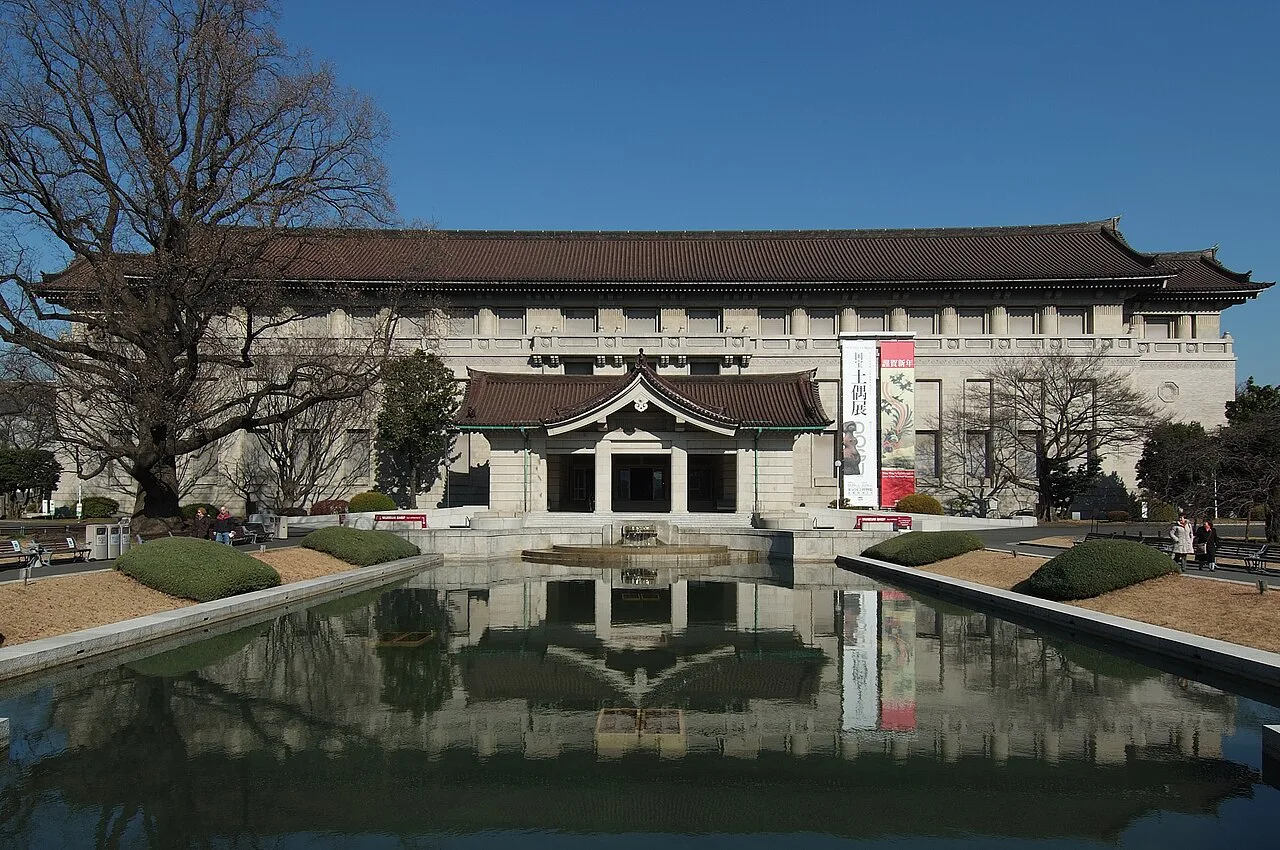
Tokyo National Museum is Japan's most important starting point for Japanese art and archaeology. Its Ueno Park campus holds more than 120,000 objects, including national treasures, Buddhist sculpture, samurai armour, ceramics, ukiyo-e, and archaeological material. The collection is distributed across several buildings, so a useful visit depends on choosing priorities rather than trying to see every room.
For first-time visitors, this is the essential museum inside the Tokyo attractions cluster. Allow at least two hours, start in the Honkan Japanese Gallery, then add either the Gallery of Horyuji Treasures or the Toyokan Asian Gallery. The official collection ticket is inexpensive enough that a focused visit still feels worthwhile.
2026 Tickets, Hours, and Closures
The TNM Collection Exhibitions cost ¥1,000 for adults and ¥500 for university students. Visitors under 18 or over 70 enter the collection free with proof of age, and disability access includes one attendant. Special exhibitions are priced separately and may use their own timed tickets. The museum recommends online purchase because queues at the main gate can exceed 30 minutes on busy days.
Standard hours are 9:30–17:00, extended to 20:00 on Fridays and Saturdays, with last admission 30 minutes before closing. Mondays are normally closed; if Monday is a public holiday, the following working day may close instead. Gallery maintenance can also create partial closures, so verify the official 2026 visitor calendar.
Collection admission is free for everyone on selected cultural dates. In 2026 those include May 19, September 21, and November 3. Free days attract larger crowds, so paying for a quiet weekday can be the better use of limited time.
What to See First
Honkan (Japanese Gallery) is the non-negotiable first stop. The route presents Japanese art chronologically and by medium: Buddhist sculpture, court art, samurai weapons and armour, tea ceramics, screens, textiles, ukiyo-e, and decorative arts. Displays rotate for conservation, which means even repeat visitors see different fragile works.
Gallery of Horyuji Treasures offers a quieter, more concentrated experience. Ancient Buddhist bronzes and objects donated from Horyuji Temple sit in a restrained modern building designed by Yoshio Taniguchi. Choose it if religious art or architecture interests you.
Toyokan (Asian Gallery) expands beyond Japan to China, Korea, Southeast Asia, Central Asia, India, and Egypt. It is valuable context, but it can double the length of a visit. Heiseikan contains Japanese archaeology and many special exhibitions; look for haniwa clay figures and prehistoric material when those rooms are open.
A Practical Two-Hour Route
- Enter at opening and go directly to Honkan rather than stopping in the shop.
- Spend 75–90 minutes following the Japanese Gallery route, slowing down for sculpture, samurai objects, and rotating prints or screens.
- Use the final 30–45 minutes for Horyuji Treasures if you prefer a calm finish, or Japanese Archaeology in Heiseikan if historical sequence matters more.
- Return to the main gate shop only after the galleries; its books and high-quality reproductions are among Tokyo's better museum souvenirs.
For a half-day, add Toyokan and lunch in or around Ueno Park. Photography rules vary by object: a camera icon indicates permission, while crossed-out signage means no photography. Flash, tripods, and disruptive filming are not appropriate in gallery spaces.
Access from Ueno Station
The most intuitive route is from JR Ueno Station's Park Exit, walking north through Ueno Park for about 10 minutes. JR Uguisudani Station is similarly close and can be quieter. Keisei Ueno and Tokyo Metro Ueno are about 15 minutes away depending on the exit.
The museum has no visitor parking, so public transport is simpler. The campus and major galleries have accessible routes and elevators. If you are combining sights, place the museum first while your attention is fresh, then continue to Ueno's outdoor monuments, Ameya-Yokocho, or Yanaka.
How to Build a Ueno Day
A culture-heavy day can include Tokyo National Museum in the morning, lunch near Ueno Station, and the National Museum of Nature and Science or Tokyo Metropolitan Art Museum afterward. Most travelers should choose two major museums, not three. For contrast, finish with the market lanes of Ameya-Yokocho. During late March and early April, use the Tokyo cherry blossom guide to time the museum around Ueno Park's peak crowds.
A slower route continues north through temple streets to Yanaka. That shift from national collections to a surviving old-town neighborhood makes more sense than crossing Tokyo for another indoor attraction. Travelers more interested in the history of the city itself can instead pair a separate half-day with the reopened Edo-Tokyo Museum in the Ryogoku sumo district.
Frequently Asked Questions
How long do you need at Tokyo National Museum?
Two hours covers Honkan and one additional gallery. Allow three to four hours for Toyokan, archaeology, and breaks.
Is the museum free?
Regular collection admission is ¥1,000 for adults. Under-18 and over-70 visitors enter free with proof, and selected 2026 dates are free for everyone.
Is it worth visiting if you do not know Japanese art?
Yes. The chronological Honkan route and multilingual labels make it the clearest single introduction to Japanese visual culture in Tokyo.


