

Himeji Oden Guide: Ginger-Soy Style, Where to Eat, and How to Order
Learn what makes Himeji oden different: grated ginger soy sauce, dipping versus pouring, where to eat near Himeji Station and Himeji Castle, and 2026 prices.
On this page
Last updated August 2026, Himeji oden means oden finished with grated ginger stirred into soy sauce, whatever broth sits underneath. The ginger-soy habit is roughly 80 years old, though the name itself only dates to a 2006 local rebranding push. This guide covers where to order Himeji oden near Himeji Station and Himeji Castle, plus dipping-versus-pouring etiquette and 2026 pricing.
What Is Himeji Oden? The Ginger-Soy Difference
Standard Japanese oden usually arrives with a dab of karashi mustard. In Himeji and the surrounding Harima area, cooks and diners use grated ginger stirred into soy sauce instead. According to the Ministry of Agriculture, Forestry and Fisheries, ginger soy sauce is the defining trait of Himeji oden, regardless of which broth sits underneath. This dish shares its base ingredients with other regional oden, simmered for about an hour in a stock built from dashi, soy sauce, and mirin.
Grated ginger brings a sharp, bright edge that cuts through the richer, longer-simmered pieces. Daikon turns soft enough to cut with a spoon after an hour in the stock. Egg keeps a firm white around a creamy yolk, and konjac stays distinctly chewy through the same simmer. Ginger soy sauce adds a clean, warming aroma over the dashi, closer to fresh ginger tea than to chili heat.
MAFF-published recipe guidance describes a home version of the dish: radish and konjac boiled first, beef tendon boiled and rinsed separately, then everything simmered together for about an hour before serving with ginger soy sauce on the side or poured on top. Recipes vary by household and by restaurant, but the ginger-soy step stays constant.
- Daikon radish
- Kelp knot
- Chikuwa tube-shaped fish cake
- Konjac and konjac noodle
- Boiled egg
- Tempura burdock and hiraten fish cake
- Beef tendon (gyusuji)
Kanto-Style Versus Kansai-Style Broth, One Signature Sauce
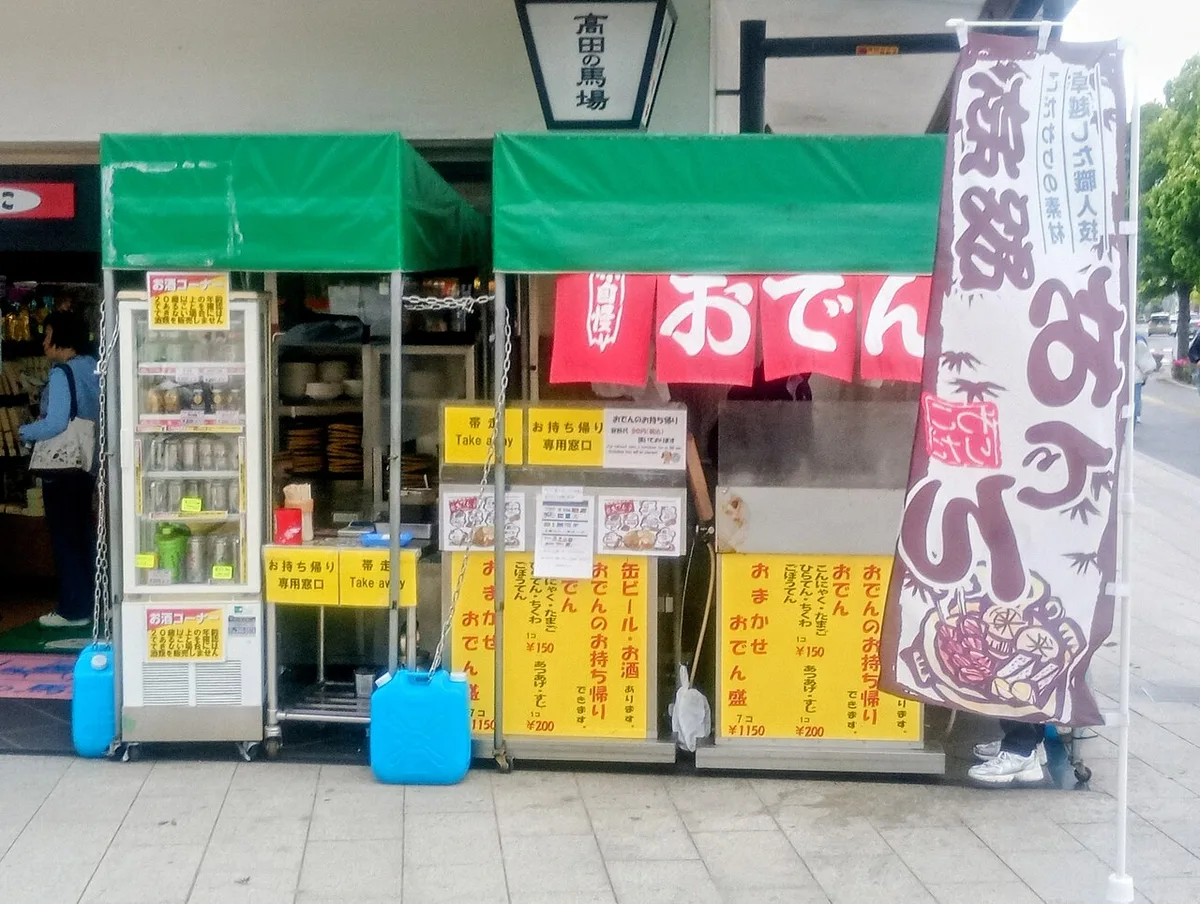
Himeji recognizes two broth traditions under the same name. One is a thick, sweetened Kanto-style stock, sometimes called kantodaki locally. Its counterpart is a lighter Kansai-style dashi, built from bonito and kelp. Either broth counts as Himeji oden the moment ginger soy sauce joins the bowl; broth style is a household or restaurant preference, not a rule.
Some kitchens blend both traditions, simmering ingredients in a Kansai-style dashi with extra soy sauce and mirin folded in for depth. Nadagiku Kappa Tei leans toward a thicker, Kanto-style stock for its black oden, while Noko Restaurant keeps to a lighter Kansai-style dashi. What stays constant across every version is the ginger-soy finish, poured on or served alongside for dipping, a distinction covered later in this guide.
From Postwar Home Cooking to a 2006 Local Brand
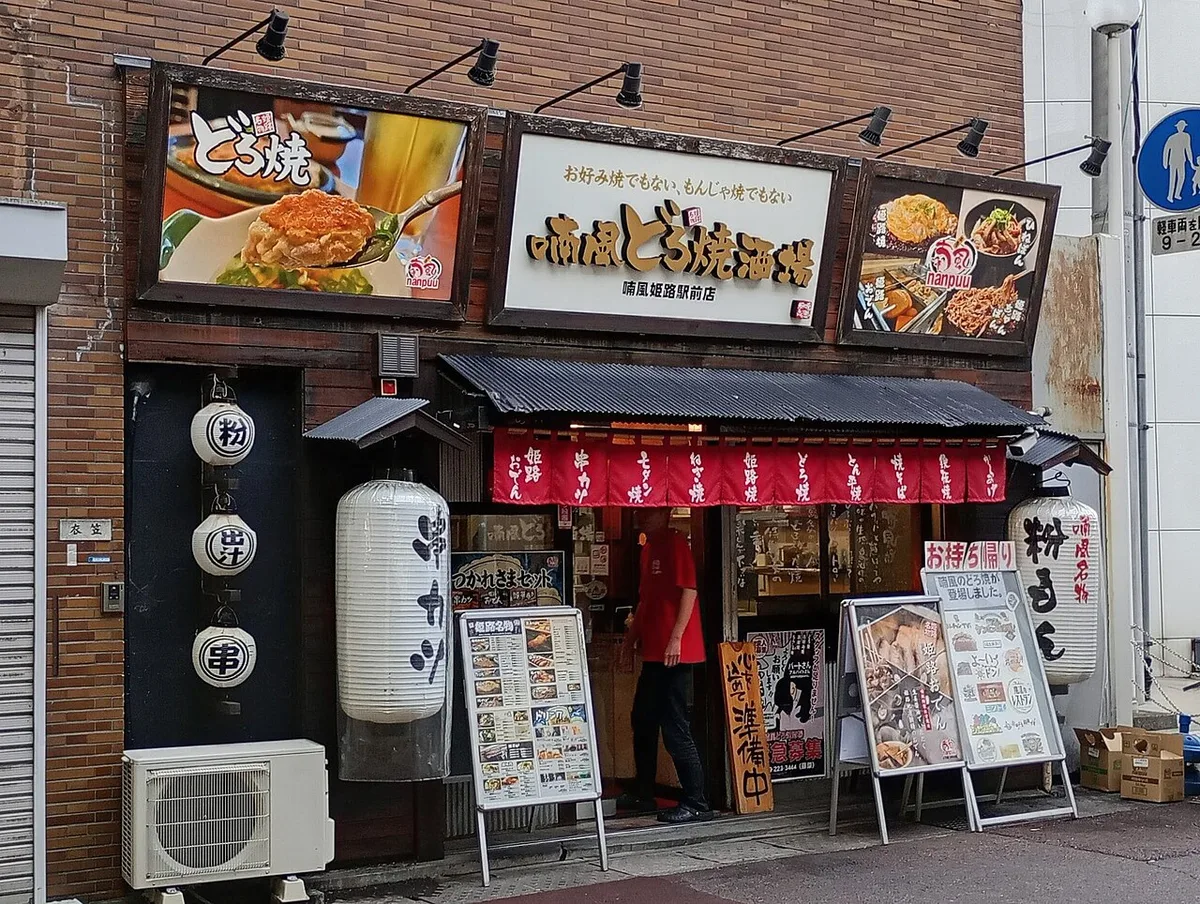
The ginger-soy habit is old; the branding is not. Cooks in Himeji and nearby Kakogawa and Aioi have paired oden with ginger soy sauce for roughly 80 years, tracing back to the early Showa era. Himeji and neighboring Tatsuno were soy sauce production areas. Shirahama, within Himeji, produced ginger until the early Showa period, and that local supply likely shaped the habit of pairing the two ingredients.
The name Himeji oden did not exist until 2006. That year, a volunteer group behind a town-revitalization campaign coined the name and entered the dish in the B-1 Grand Prix, a competition for regional comfort food. A Himeji Oden Promotion Committee formed afterward to promote the dish across the city. As of 2021, more than 100 restaurants in Himeji served it, and the dish has also appeared in local school lunches. A 2019 Himeji Food Expo, hosted by the Himeji Food Culture Association, featured a Himeji oden stall alongside other regional dishes.
Where to Eat Himeji Oden: Four Local Names
Four restaurants come up repeatedly in local coverage of Himeji oden. Addresses and hours below reflect the sources behind this guide; confirm current hours before a visit, since restaurant schedules can shift.
Out of more than 100 restaurants serving Himeji oden as of 2021, these four stand out in local coverage for enduring presence and recognized expertise in the dish.
Stopper sits near Himeji Castle, useful for pairing a bowl with a castle visit. Local accounts credit it as a long-running originator of the dish, and its name reportedly comes from Noko Island, a local landmark once tied to the area. Himeji Oden Honpo operates inside the Piolet Himeji Souvenir Hall, next to Himeji Station, which makes it a fast stop between trains. Nadagiku Kappa Tei is run directly by a sake brewery, so it doubles as a stop for oden plus a sake pairing. For a broader view of Himeji's casual food scene, see the wider food guide.
| Restaurant | Area | Hours | Phone | Known For |
|---|---|---|---|---|
| Nadagiku Kappa Tei | 58 Higashiekimaecho, near Himeji Station | Weekdays and Sat 11:30-21:00 (LO 20:30); Sun/holidays 11:30-20:00 (LO 19:30) | 079-221-3573 | Run by Nadagiku Sake Brewery; black oden poured with ginger soy sauce, white oden finished with sake lees |
| Noko Restaurant | Silver Town, 107 Silver Building 1F | 17:00-22:00, closed Sundays and public holidays | 079-284-7345 | Kansai-style bonito-and-kelp dashi, with ginger soy sauce served on a separate plate |
| Stopper | 68 Honmachi, near Himeji Castle | 18:00-24:00, closed Mondays | 079-222-8592 | Oden simmered about three days in a sweet Kanto-style stock; open at this address roughly 57 years, per local coverage |
| Himeji Oden Honpo | Piolet Himeji Souvenir Hall, 188-1 Ekimaecho | 11:00-21:30 (LO 21:00) | 079-284-6677 | Five-piece sampler plate for ¥500; a food-court setting with about 120 seats |
Dipping or Pouring: How to Order Himeji Oden Like a Local
Ordering comes down to one choice: pouring or dipping. In the pouring style, a server or diner pours ginger soy sauce directly over the ingredients in the bowl. In the dipping style, more common with lighter Kansai-style broths, the sauce arrives on a small side plate for dipping each piece. Neither style ranks above the other; the choice tends to follow the restaurant's broth.
Look for a Himeji Oden Association seal in the window or on the menu. Participating shops display it to signal an officially recognized version of the dish, separate from any restaurant that simply offers ginger as a garnish. At Nadagiku Kappa Tei specifically, black oden comes with ginger soy sauce poured on, while a separate white oden option is finished with sake lees instead and can take shichimi pepper to taste. Counter seating is common at oden specialists like Noko Restaurant, so ordering piece by piece and watching the pot is normal, not rushed.
Planning Your Visit: Costs, Locations, and the Station-vs-Castle Trade-off
Budget for Himeji oden splits into two rough categories: quick station-side eating and slower sit-down meals. At Himeji Oden Honpo, inside the Piolet Himeji Souvenir Hall, a five-piece sampler plate costs ¥500. That price covers items like Kanbe lotus root sticks and a castle-shaped konjac piece, for close to what a single skewer costs elsewhere. Sit-down spots like Nadagiku Kappa Tei or Stopper price items per skewer or bowl, closer to a full izakaya tab once sake and sides are added.
If time is tight before a train, Himeji Oden Honpo sits at the station side, inside Piolet Himeji. If the visit centers on Himeji Castle instead, Stopper is a longer-established option nearby, open from 18:00. Either way, build the meal around opening hours. Nadagiku Kappa Tei takes its last order at 20:30 on weekdays and Saturdays, and at 19:30 on Sundays and holidays. Noko Restaurant opens later still, from 17:00, and closes on Sundays and public holidays. A fast sampler at the station and a slower sit-down bowl near the castle answer two different trip needs, so pick based on how much time is left in the day.
Pair Himeji Oden With Harima Sake and Other Himeji Dishes
Himeji sits inside the Harima sake-producing area, home to breweries like Nadagiku, whose own restaurant doubles as an oden counter. A dry Harima sake profile pairs well with the sharp ginger-soy finish, since a cleaner, drier edge cuts through the ginger rather than competing with it. For a wider rundown of where to drink locally after an oden stop, see the Himeji sake and evening food guide.
Nadagiku Kappa Tei, open 11:30-21:00 on weekdays and Saturdays near Himeji Station, doubles as both a brewery restaurant and oden counter, letting diners taste how dry Harima sake complements the sharp ginger-soy finish.
Anago eel is another Himeji specialty worth building into the same trip. Read the Himeji Anago Restaurants: Where to Eat Saltwater Eel in 2026 for where to order it. Ekisoba, a station-platform noodle dish, works as a faster lunch option on days when oden bars are not yet open for dinner. See the Himeji Ekisoba: Where and How to Order Maneki's Station Noodles for details. For a break between the castle and an evening oden bar, the Himeji almond toast guide covers the city's cafe scene.
Mistakes to Avoid When Ordering Himeji Oden
A few assumptions trip up first-time visitors ordering Himeji oden.
- Expecting chili heat: the ginger soy sauce brings a warm, aromatic bite, not chili spice.
- Skipping the beef tendon: gyusuji is a signature ingredient in many Himeji oden pots.
- Assuming one fixed broth: both thick Kanto-style and light Kansai-style broths count as Himeji oden.
- Treating it as winter-only: many Himeji izakaya and oden counters serve it year-round, not only in colder months.
- Ignoring the certification seal: the Himeji Oden Association seal marks shops that treat the dish as a specialty rather than an afterthought.
- Confusing the two organizations: the Himeji Oden Promotion Committee grew out of the 2006 naming campaign, while the Himeji Oden Association issues the shop-level certification seal.
Frequently Asked Questions
What is the difference between Himeji oden and regular oden?
Regular Japanese oden is typically served with karashi mustard on the side. Himeji oden is oden finished with grated ginger stirred into soy sauce, and either a Kanto-style or Kansai-style broth qualifies as long as that ginger-soy sauce is present.
Is Himeji oden spicy?
Not in the chili sense. The ginger soy sauce carries a warm, aromatic sharpness rather than heat, closer to fresh ginger than to chili spice, so it suits diners who avoid spicy food.
Where can you find Himeji oden near Himeji Station?
Himeji Oden Honpo, inside the Piolet Himeji Souvenir Hall at 188-1 Ekimaecho, sits directly on the station side and is open 11:00 to 21:30. Nadagiku Kappa Tei, a short walk away at 58 Higashiekimaecho, is another station-area option.
What are the must-order ingredients in a bowl of Himeji oden?
Daikon radish, a boiled egg, konjac, and chikuwa fish cake form the base of most bowls. Beef tendon, known locally as gyusuji, is the ingredient most closely associated with the dish specifically.
How much does Himeji oden cost?
A five-piece sampler at Himeji Oden Honpo, inside the Piolet Himeji Souvenir Hall, costs ¥500. Sit-down restaurants like Nadagiku Kappa Tei or Stopper price items individually per skewer or bowl, so a full meal with sake runs closer to a standard izakaya tab.
Is Himeji oden available year-round, or only in a particular season?
It is most associated with autumn and winter, when warm simmered dishes are most popular. Many Himeji izakaya and oden counters, including the restaurants listed in this guide, serve it throughout the year.
Free guide: Japan's Hidden Gems
12 under-the-radar places beyond Tokyo & Kyoto — with the best season to visit each and a local tip you won't find in the guidebooks.
You might also like


Continue reading
More guides you'll find useful


