

Himeji Ekisoba: Where and How to Order Maneki's Station Noodles
A 2026 guide to Himeji ekisoba: which JR Himeji Station counters require a ticket, current menu prices, and how to order Maneki's noodles in minutes.
On this page
Last updated August 2026. Himeji ekisoba pairs yellow, alkaline Chinese-style noodles with a light Japanese dashi broth at standing counters in and around JR Himeji Station, a Maneki Shokuhin format running since 1949. This guide covers which counters need a platform ticket, current menu prices, and how to fit a bowl into a tight Shinkansen transfer.
What Is Himeji Ekisoba?
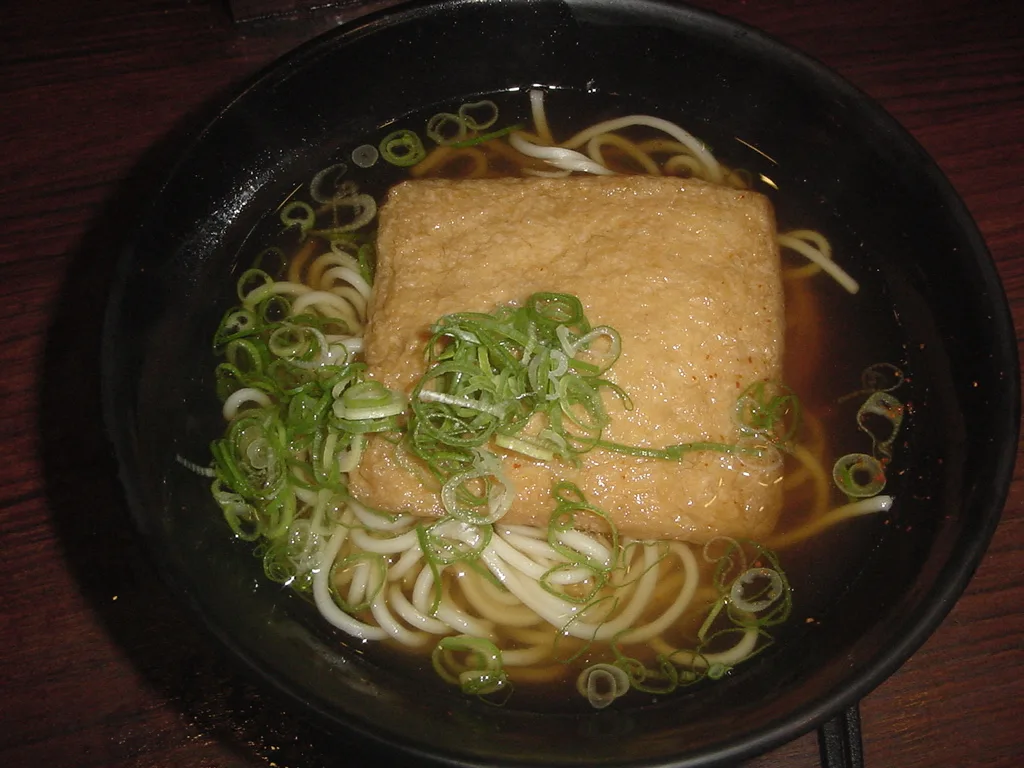
Himeji ekisoba is a station noodle dish built on a contradiction. Japanese dashi broth gets poured over Chinese-style noodles, not buckwheat soba. Noodles run yellow and slightly angular, alkaline like ramen rather than the brown, earthy strands used in traditional soba. Color is the clearest tell apart from taste: the broth runs a light brown-gold, and the noodles stay pale yellow, next to the darker strands typical of buckwheat soba. Broth stays light and salty, a Kansai-style dashi that lets the noodles carry the texture instead of the seasoning. Locals and station staff still call the dish soba out of habit, even though the ingredients underneath are closer to ramen in a soba-style bowl. It works as an entry point into the wider Himeji food guide, alongside sit-down dishes like oden and anago eel.
The History Behind Maneki's Noodles Since 1949
Maneki Shokuhin created ekisoba in 1949, four years after the war ended, when wheat flour was a controlled commodity across Japan. Its first version used a mix of konjac flour and buckwheat, styled closer to udon than soba. Those noodles turned soggy fast and spoiled within a day, a problem for a station counter selling to travelers on a schedule. Switching to Chinese-style noodles solved both issues. Alkaline dough held its texture longer and kept better through a service shift. That 1949 recipe change is still the version served at Himeji Station today, more than seven decades later.
Where to Eat Himeji Ekisoba: Platform vs. Concourse Counters
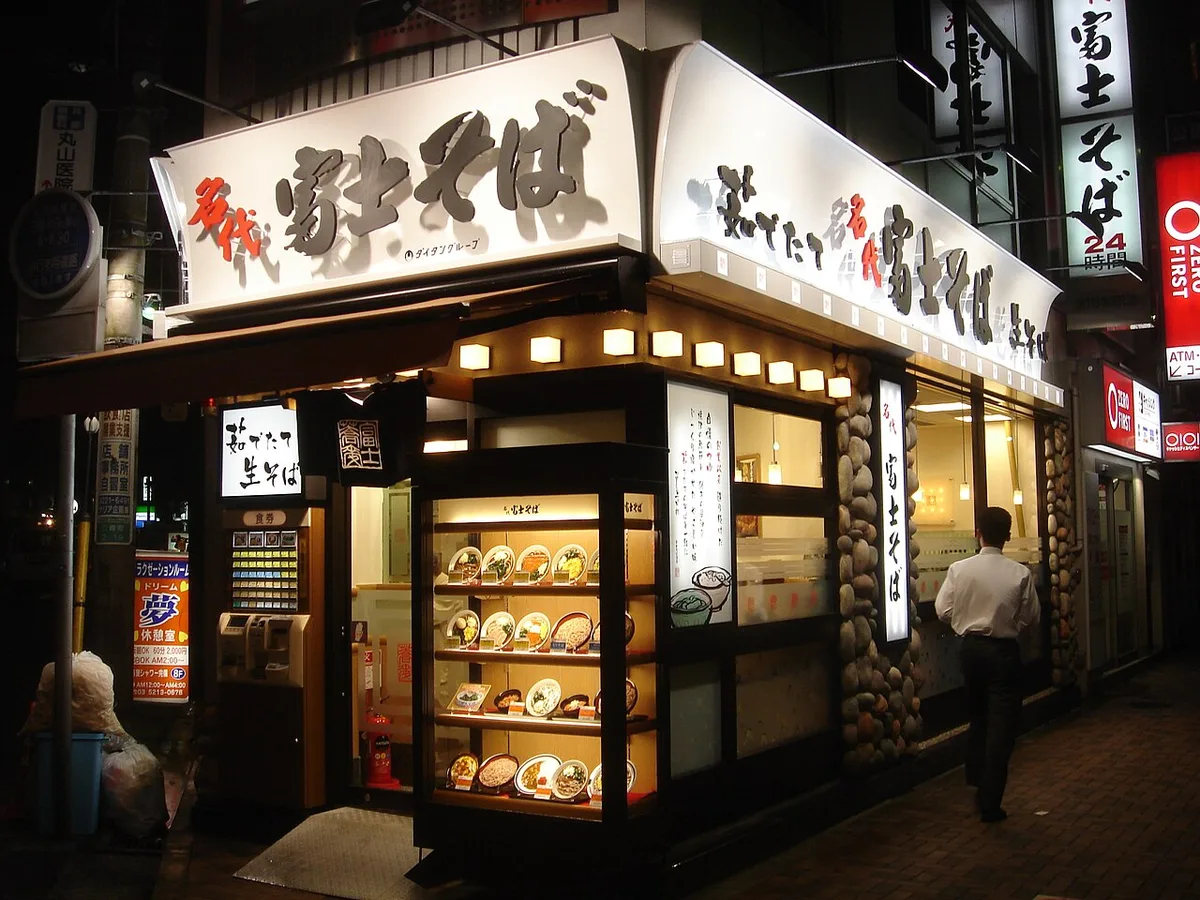
Two counters sit on the conventional-line platforms just inside the ticket gates. The Upbound Store serves trains toward Kobe and Osaka, and the Downbound Store serves trains toward Aioi and Okayama. Reaching either one means holding a valid ticket or IC fare for the platform, since both sit past the gate line. A separate counter operates in the Shinkansen concourse, useful for travelers already through the shinkansen gates on a same-day transfer. Three more counters don't require a ticket at all. Piole Himeji's souvenir hall, the underground Grand Festa mall on the station's north side, and the Ootemae branch near the castle route sit outside the gates. Anyone passing through the station can walk up and order at those three without showing a ticket. Counting every location, at least six ekisoba counters operate in and around the station.
| Location | Ticket Needed | Seating |
|---|---|---|
| Conventional Line Upbound Store (platform) | Yes - inside the ticket gates | Standing counter |
| Conventional Line Downbound Store (platform) | Yes - inside the ticket gates | Standing counter |
| Shinkansen concourse counter | Yes - inside the Shinkansen gates | Standing counter |
| Piole Himeji souvenir hall | No | Standing counter |
| Grand Festa underground mall | No | Standing counter |
| Ootemae branch (Otemae Parking, 1F) | No | 9-seat counter plus a 2-seat table |
- Platform and concourse counters generally track train service hours, though exact posted times aren't published in English.
- The Ootemae branch keeps to 10:00 AM to 6:00 PM daily.
- Travelers with a JR Pass or a same-day ticket can use either platform counter at no extra cost.
- Same-day sightseers without a ticket should default to Piole, Grand Festa, or Ootemae instead.
What to Order: Himeji Ekisoba Menu and Prices
Tempura Ekisoba and Kitsune Ekisoba are the two standard bowls, both priced at ¥480 on the most recently published menu. Tempura adds small shrimp fritters that soak up the broth without overpowering the noodles, a common first-timer pick. Kitsune swaps in deep-fried tofu simmered in a sweeter dashi, a pairing some travelers find odd against the salty broth. Burdock Tempura Ekisoba runs ¥530, and Chicken Tempura Ekisoba runs ¥610 for a heartier topping. Winter brings a seasonal Setouchi Oyster Ekisoba, listed at ¥680, with a cloudy broth and whole oyster meat rather than a garnish-sized portion. Set combinations pair a bowl with a mini rice dish and save roughly ¥100 over ordering both separately. Some fuller-menu counters also serve non-ekisoba items, including Tatsuno Shoyu Ramen at ¥780 and rice bowls like Katsudon at ¥730 and Oyakodon at ¥630. Treat these figures as a reliable order of magnitude and confirm the board price on-site, since counter menus can shift over a two-year gap.
| Item | Price |
|---|---|
| Tempura Ekisoba | ¥480 |
| Kitsune Ekisoba | ¥480 |
| Burdock Tempura Ekisoba | ¥530 |
| Chicken Tempura Ekisoba | ¥610 |
| Setouchi Oyster Ekisoba (winter only) | ¥680 |
| Ekisoba and Chashudon Set (tempura or kitsune) | ¥950 |
| Ekisoba and Mini Katsudon Set | ¥900 |
| Ekisoba and Mini Oyakodon Set | ¥800 |
| Inari Sushi | ¥200 |
| Rice Ball | ¥180 |
How to Order at a Standing Counter
Every ekisoba counter, whether on the platform or inside Piole Himeji, runs on the same ticket system. Ordering takes a few defined steps and moves fast enough to fit a transfer window. A straightforward order like Kitsune Ekisoba on a quiet platform comes out in about three minutes. Bowls that need extra prep, like the seasonal oyster version at a souvenir-hall counter, can take closer to eight minutes.
- Buy a meal ticket from the vending machine outside or just inside the counter, selecting the item by its button.
- Carry the ticket to the counter and set it on the stacking board in arrival order; there is no numbered queue.
- Listen for staff to call the item name followed by customer, then step up to collect the bowl.
- Remove any backpack before entering, since the aisle between the counter and the wall runs narrow.
- Eat standing at the counter rail, since most locations outside Ootemae have no seating.
Ekisoba vs. Soba vs. Ramen: How the Noodles Differ
Traditional soba uses buckwheat flour and turns out brown, thin strands with an earthy flavor. Ekisoba noodles are wheat-based and alkaline, the same chemistry used in ramen, which gives them a pale yellow color and a springy bite. Broth is where ekisoba breaks from ramen. Instead of a rich tare-based stock, it uses a light Kansai-style dashi closer to what a soba or udon shop would pour. That combination is why some Himeji regulars describe it as ramen-style noodles in a soba-style soup, a pairing not found at a standard noodle shop. Soba survives as a name from the dish's original konjac-and-buckwheat recipe, not from what's in the bowl today.
Dietary Notes: Why Ekisoba Isn't Vegetarian-Friendly
Despite the name, ekisoba noodles are wheat-based, not buckwheat, so they carry gluten like any wheat noodle. Dashi broth is built on fish stock, and most toppings, including the fried tofu in Kitsune Ekisoba, sit in a soy-based sauce. Between the fish stock and the soy seasoning, there's no confirmed vegetarian or vegan bowl on the standard menu. Travelers avoiding fish or gluten should treat every ekisoba counter as off-limits for this particular dish, even with a hearty rice-bowl menu nearby.
The 1949 shift to alkaline wheat preserved quality through service shifts, but modern travelers with gluten concerns now face a dietary barrier from those same noodles.
Planning Your Stop: Timing, Luggage, and Castle Pairing
Weekday mornings around the commuter rush get tight at the platform counters, especially with roller luggage in a narrow aisle. Piole Himeji and Grand Festa sit outside the ticket gates, so luggage doesn't need to clear the platform turnstiles at all. Most itineraries pair a quick bowl with the walk out to Himeji Castle attractions, reachable by a 5-minute bus ride or a 20-minute walk from the station's Castle Exit. For a slower, sit-down version of the same station-food culture later in the day, the Himeji Oden Guide: Ginger-Soy Style, Where to Eat, and How to Order covers a dinner alternative. For a tight Shinkansen transfer, stick to the platform counter that matches the direction of the next train rather than crossing to Piole or Grand Festa.
The seasonal Setouchi Oyster Ekisoba at ¥680 takes up to eight minutes to prepare, versus three minutes for standard items, making premium selections risky for tight Shinkansen transfers.
Beyond the Station: Ootemae Branch and the Banshu Food Scene
The Ootemae branch opened in 2015 on the first floor of Otemae Parking, about 345 meters from Sanyo Himeji Station along the route toward the castle. Hours run 10:00 AM to 6:00 PM daily, with nine seats at the counter and a two-person table, and cash-only payment. Unlike the standing platform counters, Ootemae gives travelers an actual seat, though the exact topping and rice-dish lineup can vary by location. Tabelog lists the Ootemae branch at 3.37 out of 5 across 137 user reviews, reflecting its role as a reliable stop rather than a destination restaurant. Piole Himeji's location is branded Banshu Umaimono-dokoro, a name that ties ekisoba into the wider Banshu food identity of southwestern Hyogo rather than treating it as a one-off station snack. Maneki also runs counters farther from the station, including a branch in Osaka and one inside a highway service area, plus Yamada Store Shin-Aoyama in Himeji's Hirohata Ward. For a same-day visit, though, the station counters remain the most convenient stop. Travelers extending the day into the evening can find a fuller lineup of local drinking food in the Himeji Sake Bars and Evening Food: Best Spots and Local Flavors guide. Anago eel is another Himeji specialty worth building into the same trip, covered separately in the Himeji Anago Restaurants: Where to Eat Saltwater Eel in 2026. For dessert or a coffee break afterward, the Himeji Almond Toast Cafes: A Local Breakfast Guide guide rounds out a full day of eating near the castle.
Frequently Asked Questions
Do you need a train ticket to eat Himeji ekisoba?
Only for the two conventional-line platform counters and the Shinkansen concourse counter, since all three sit past a ticket gate. Piole Himeji, Grand Festa, and the Ootemae branch are all outside the gates and open to anyone.
Is Himeji ekisoba actually made with buckwheat soba noodles?
No. The noodles are wheat-based and alkaline, closer to ramen noodles, even though the dish keeps the word soba in its name from an earlier recipe.
How much does a bowl of Himeji ekisoba cost?
Tempura Ekisoba and Kitsune Ekisoba run ¥480 each on the standard menu, with Burdock Tempura at ¥530 and Chicken Tempura at ¥610. Set combinations that add a mini rice dish run ¥800 to ¥950.
Can vegetarian or vegan travelers eat ekisoba?
Not comfortably. The broth is a fish-based dashi, and toppings like the fried tofu in Kitsune Ekisoba sit in a soy sauce, so there's no confirmed meat-free bowl on the standard menu.
How long does ordering take at a standing counter?
Expect about three minutes for a standard bowl on a quiet platform. Bowls needing extra prep, like the seasonal oyster version, can take closer to eight minutes.
Where is the Ootemae branch, and what are its hours?
It sits on the first floor of Otemae Parking, about 345 meters from Sanyo Himeji Station toward the castle. Hours run 10:00 AM to 6:00 PM daily, and the counter takes cash only.
Is ekisoba only available at Himeji Station?
No. Maneki also operates counters in Osaka, at a highway service area on the Nishi-Meihan Expressway, and at other Himeji locations like Yamada Store Shin-Aoyama. The station counters stay the most convenient choice for a same-day visit.
Free guide: Japan's Hidden Gems
12 under-the-radar places beyond Tokyo & Kyoto — with the best season to visit each and a local tip you won't find in the guidebooks.
You might also like


Continue reading
More guides you'll find useful


